
REVIEW · DRINKS TOURS
From Avignon: Wine Tour with Visit to Châteauneuf du Pape
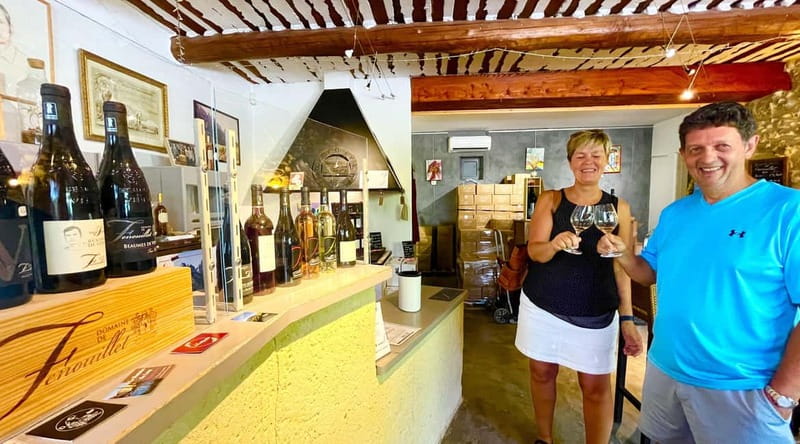
Southern Rhône wine makes more sense once you see the hills, vineyards, river stones, and villages behind the labels. This small-group outing with Arnaud of Ventourisme connects three very different appellations, from sweet Muscat in Beaumes-de-Venise to the bold reds of Châteauneuf-du-Pape.
I like the maximum of six people, which keeps the tastings personal and lets you ask questions without holding up a busload of wine drinkers. I also like the local picnic on morning tours from April through October, with goat cheese, tapenades, eggs, fruit, and grape juice from nearby producers.
The main drawback is the vehicle. A few people found the black Ventourisme car tight with a full group, so this is best for travelers who value a personal guide more than spacious transport. The schedule also changes by season, and the afternoon option does not include food.
Key points at a glance
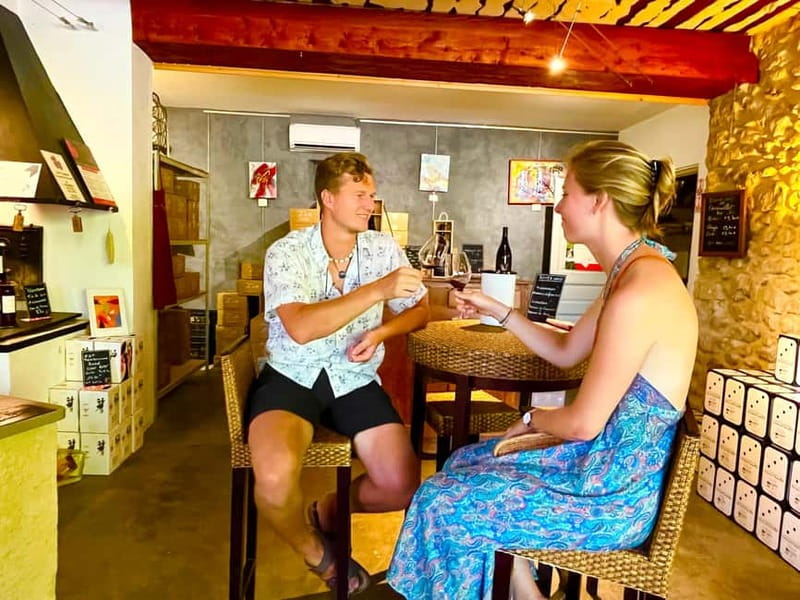
- Three appellations in one outing: Compare Beaumes-de-Venise, Gigondas, and Châteauneuf-du-Pape rather than tasting one style all day.
- At least nine wines: You taste a minimum of three wines at each of three wineries.
- A guide with local connections: Arnaud knows the producers and explains how soil, wind, altitude, and weather affect the wine.
- A real Provençal picnic: Morning tours from April to October include fresh local foods, including goat cheese, olive tapenade, seasonal fruit, and grape juice.
- Small-group format: The car holds no more than six participants, making conversation easy but space limited.
- Seasonal planning matters: The full morning route runs from April through October, while winter tours visit only two estates.
Why this Rhône wine tour works from Avignon
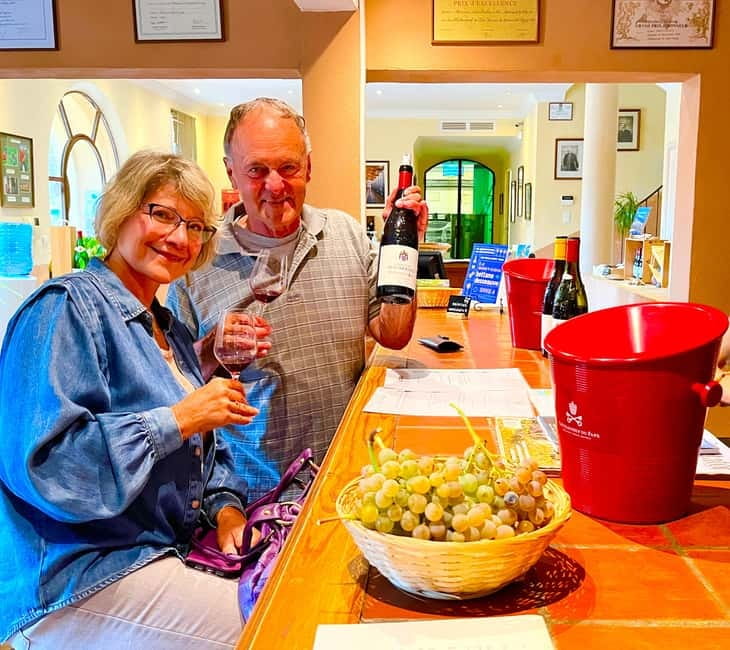
Avignon is an excellent base for exploring the southern Rhône, but the wine villages are spread across the countryside. Renting a car means navigating unfamiliar roads after tastings. This tour gives you a driver, a local interpreter, and three appointments in one day for $93 per person.
That price is strong value if you want more than a single cellar visit. You receive transport from central Avignon, at least nine tastings, access to three separate wineries, and, on the seasonal morning tour, a picnic. Personal wine purchases cost extra, but there is no pressure to buy.
The experience is not a formal wine-school lesson. It is more like a well-planned country outing with serious wine along the way. Arnaud talks during the drives, pointing out the natural features of the southern Rhône and explaining why nearby appellations can produce such different bottles.
The maximum group size of six is important. You can ask about grape varieties, blending, aging, or pronunciation without shouting across a coach. It also helps at smaller family-run wineries, where a quiet conversation feels more natural than a timed group presentation.
More Drinks Tours in France:
- Bordeaux: Cité du Vin Entry Ticket and Wine Tasting
★ 4.6 · 3,885 reviews - Bordeaux: River Garonne Cruise with Glass of Wine and Canelé
★ 4.5 · 3,630 reviews - Montmartre Hill French Gourmet Food and Wine Tasting Walking Tour
★ 5.0 · 2,588 reviews
Choosing the right departure time
The most complete version runs in the morning from April through October, leaving Hôtel Le Bristol in Avignon at 9:30 a.m. You return around 3:30 p.m. This route visits Beaumes-de-Venise first, then Gigondas, then Châteauneuf-du-Pape, with the picnic during the middle of the day.
The afternoon version runs all year, generally from 2 p.m. until about 6:30 p.m. It follows the reverse order: Châteauneuf-du-Pape, Gigondas, then Beaumes-de-Venise. It includes the same wine focus but no meal.
From November through March, the morning tour is shorter, usually from 9:30 a.m. to around 12:30 p.m. You visit two estates, in Gigondas or Beaumes-de-Venise, followed by Châteauneuf-du-Pape. There is no picnic during the winter morning outing.
Check the exact date and departure time before booking. The advertised duration can appear as three hours or up to 330 minutes, depending on the selected option. The longer morning route is the best choice if you want the countryside, picnic, and full three-estate experience.
Beaumes-de-Venise and its sweet Muscat
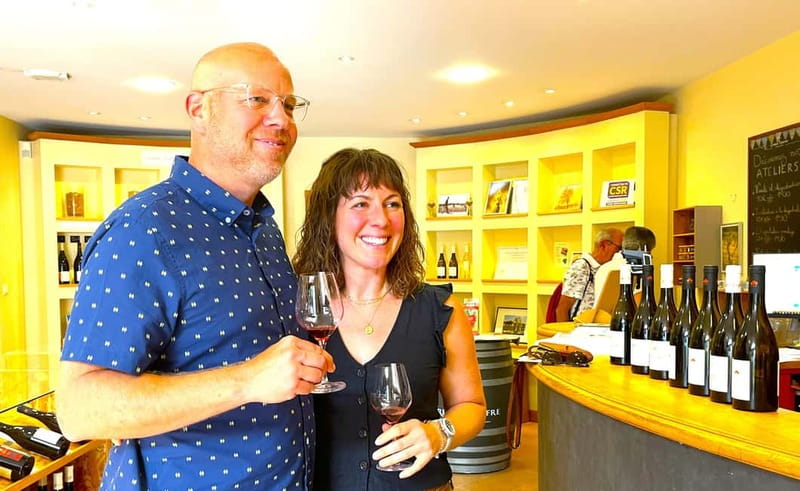
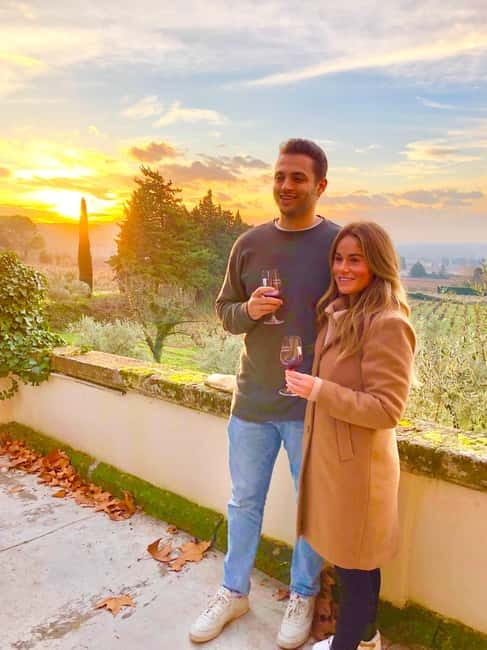
The first stop on the spring-to-autumn morning route is Beaumes-de-Venise, on the southern side of the Dentelles de Montmirail. These three pointed mountain ranges protect the area from some of the wind and help create a warmer setting than nearby wine zones.
That climate helps explain Beaumes-de-Venise’s best-known wine: Muscat, a naturally sweet wine with its own appellation since 1943. You might drink it as an aperitif, but it also works with dessert, blue cheese, or charcuterie. The tasting gives you a useful reminder that Rhône wine is not only powerful red wine.
Beaumes-de-Venise also has a red appellation, established in 2005. Winemakers may use up to 10 percent white grapes in the blend. The soils include limestone, sandstone, sand, and clay, giving Arnaud plenty to explain as you move through the area.
This stop can be especially interesting if you usually drink dry reds. The sweet Muscat offers a clear contrast in style, and the local setting helps you understand why the wine developed here. One particularly memorable estate on this route has been praised for its variety and biological wine production, though the exact producer can vary.
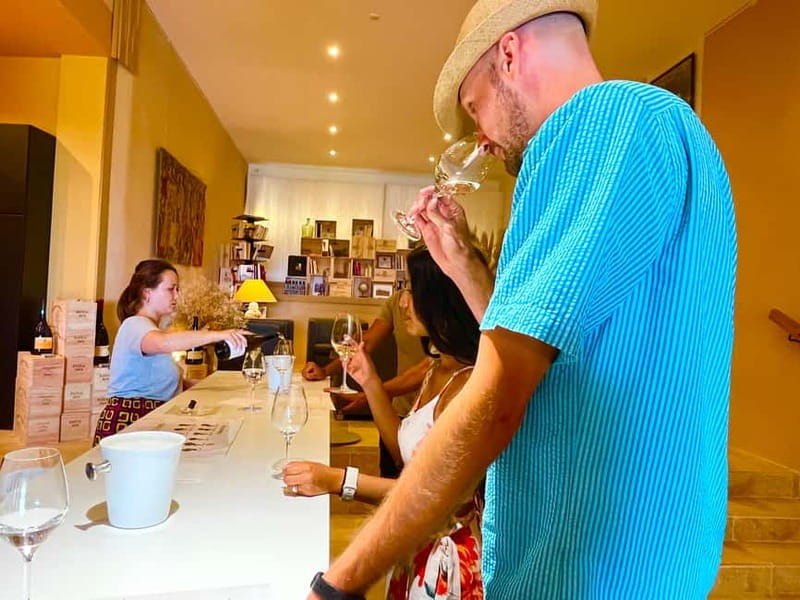
Allow about 45 minutes for the tasting. You are not simply sampling bottles from one shelf. The point is to see how one appellation can make both its famous sweet wine and a newer red style.
Gigondas, wind, altitude, and bold reds
Gigondas sits on the northern side of the Dentelles de Montmirail. The setting changes quickly. This side is much more exposed to the Mistral, which can blow for roughly 150 days each year.
The Mistral is cold, but it helps winemakers by clearing clouds and drying the vines after damp weather. That reduces the risk of disease. It is a simple piece of practical geography, but it makes the wine easier to understand when you see the open slopes for yourself.
Gigondas also reaches higher ground, from about 100 to 600 meters, or roughly 300 to 1,800 feet. Its sandy marl is a distinctive soil type, alongside clay, sand, limestone, and sandstone.
The appellation has been famous for red wine since 1971. Rosé is also permitted, while white wine became part of the appellation only in 2023. That recent change gives you a chance to ask about how a traditional wine region continues to develop.
The Gigondas tasting lasts about an hour. You can expect a range of wines rather than one quick pour. The estates visited are often smaller family producers, and Arnaud’s relationships with the people pouring the wine add a personal touch.
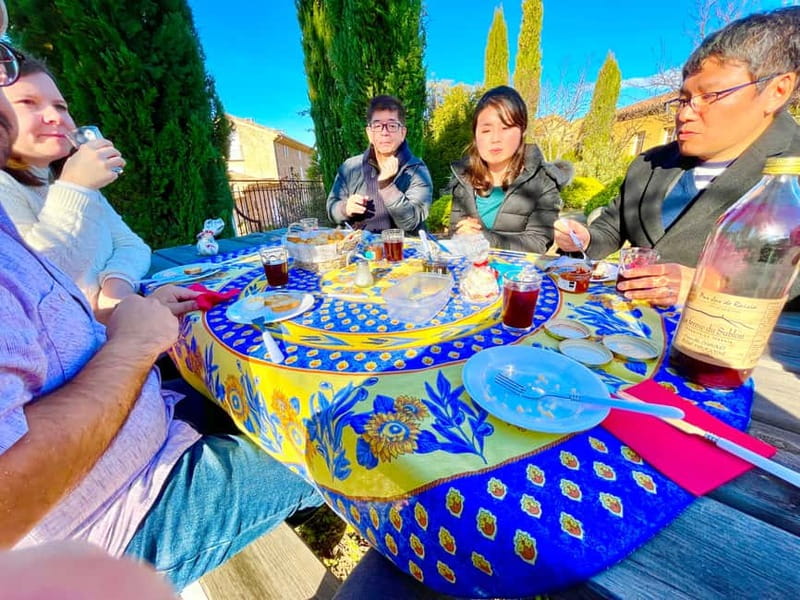
The middle of the day is also where the morning tour earns its extra time. The picnic is served near Gigondas, often in a vineyard setting or under trees. It is not a restaurant lunch, and you should not book it expecting a large meal. Think of it as a generous Provençal snack that keeps the day moving.
Same town, a different bottle:
- From Paris: Loire Valley Castles Day Trip With Wine Tasting
★ 4.6 · 1,727 reviews - From Bordeaux: Afternoon Saint-Emilion Wine Tasting & snack
★ 4.8 · 1,581 reviews - From Paris: Day Trip to Champagne with 8 Tastings & Lunch
★ 4.8 · 1,501 reviews - Medoc or Saint Emilion Wine Tasting and Chateau from Bordeaux
★ 5.0 · 1,415 reviews
What comes with the local picnic
The picnic uses fresh products from local farms and nearby villages. Items can include boiled eggs, bread, black olive tapenade, sweet pepper tapenade, fresh goat cheese, seasonal fruit, fruit juice, and other local produce.
The details may change with the season. That is part of the appeal. You may taste grape juice alongside Muscat grapes and Muscat wine, making the same local fruit easier to understand in three forms.
I like that the picnic is tied to the place rather than treated as a generic packed lunch. It gives you a break between tastings and brings local food into the wine discussion. The goat cheese, tapenades, fruit, and bread are also practical choices after several pours.
Still, keep your expectations in check. It is a picnic or substantial snack, not a full restaurant meal. If you need a large lunch, plan accordingly before or after the tour.
Châteauneuf-du-Pape, the famous final stop
Châteauneuf-du-Pape is the best-known name on the route. It was France’s first appellation contrôlée, established in 1936, and its bottles are sold around the world.
Red wine accounts for about 92 percent of production, while white wine makes up the remaining 8 percent. The region is famous for its large rounded river stones, which are easy to spot in the vineyards. Clay, sand, sandstone, and limestone also contribute to the soil.
Those stones help create the warm, powerful character associated with the area. Châteauneuf-du-Pape wines are generally full-bodied and can often be kept in a cellar for 20 to 30 years. You do not need a cellar or decades of wine experience to enjoy the tasting, but the explanation gives useful context to a bottle you may have seen on a restaurant list.
On the morning route, Châteauneuf-du-Pape is the final winery. On the afternoon route, it comes first. The tasting usually lasts about an hour, and the exact character of the wines depends on the estate selected.
One practical point is worth noting: a famous appellation does not guarantee that every poured wine will be your favorite. Some tastings may focus on younger bottles. If you prefer older or more premium samples, ask what is being poured and what other bottles are available for purchase.
If time and interest allow, Arnaud may also show you the castle area in Châteauneuf-du-Pape. That extra stop is not presented as a fixed part of every tour, so treat it as a possible bonus rather than a promise.
The guide makes the difference
Arnaud is central to the experience. He drives, explains the villages and wine zones, introduces you to producers, and adjusts the pace when the group has questions.
His English is described as excellent, and he also guides in French. He can handle a mixed-language group and explain regional terms without making the tasting feel like a language exam. If you want help pronouncing French names, he is happy to slow down and work through them.
The most useful part of his guiding is the connection between the road and the glass. Instead of giving disconnected facts about wine, he points out the Dentelles, the exposed slopes, the river stones, and the changes in soil. You begin to understand why Beaumes-de-Venise, Gigondas, and Châteauneuf-du-Pape taste different even though they are close together.
He also knows the people at the wineries. That matters at small estates, where the visit can feel more direct and less like a standard sales stop. You may see barrel storage or hear about a producer’s methods, depending on the estate and the day.
Transport, comfort, and practical limits
Pickup and drop-off are in front of Hôtel Le Bristol in Avignon. Look for a black car marked Ventourisme. If you stay outside Avignon itself, contact the provider before the tour, since another pickup point may be possible.
The car is a strength and a limitation. It allows the group to reach smaller producers and keeps the outing personal. It also means less room than a minibus. One person found the vehicle cramped with three people, while another advised keeping the group to five for maximum comfort.
Do not bring large luggage, oversized bags, or a walking frame. The car is not suitable for transporting those items. Pregnant people and those with heart problems are advised not to book this experience.
The tour can also be canceled because of weather. That is sensible for a countryside route, but it means you should avoid placing this outing on the one day of a tightly packed itinerary if your schedule cannot shift.
Free cancellation is available up to 24 hours before departure, and you can reserve now and pay later. Those terms make it easier to choose a date before all your Avignon plans are fixed.
Who should book this experience
I would choose this tour if you want to understand southern Rhône wine without renting a car or trying to arrange three separate estate visits. It suits curious beginners, casual wine drinkers, and experienced enthusiasts who enjoy meeting small producers.
It is also a good fit if you care about scenery and regional food as much as tasting notes. The drive through the Dentelles de Montmirail, vineyards, villages, and Châteauneuf-du-Pape country gives the day a wider purpose.
You may prefer another option if you want a formal vineyard walk, a large vehicle, a full sit-down lunch, or a tasting built around older and more expensive wines. The exact estates and samples can vary, and the compact car will not suit everyone.
For the fullest experience, choose the morning departure between April and October. You get all three appellations, at least nine wines, the longer countryside outing, and the local picnic.
Should you book it?
Book this tour if you want three distinct Rhône wine regions in one day, a small group, and a guide who can explain what you are seeing as well as what you are drinking. The $93 price is fair for transport, three winery visits, at least nine tastings, and the seasonal picnic.
Skip it if you need lots of personal space in the vehicle or want a substantial restaurant lunch. For most people staying in Avignon, though, this is an efficient and personal way to reach Beaumes-de-Venise, Gigondas, and Châteauneuf-du-Pape without sacrificing the pleasure of the countryside.
FAQ
Where does the tour start and finish?
The tour starts and ends in front of Hôtel Le Bristol in Avignon. The vehicle is a black car with Ventourisme written on the sides.
How many wines will I taste?
You will taste at least three wines at each of three wineries, for a minimum of nine wines in total. The wineries are in Beaumes-de-Venise, Gigondas, and Châteauneuf-du-Pape on the full route.
Is the picnic included?
The picnic is included only on the morning tour from April through October. It is not included on afternoon tours or on winter morning tours from November through March.
How many people are in the group?
The group is limited to six participants. The small car can feel tight when it is full, especially for people who prefer extra legroom.
What languages are available?
The tour is offered in English and French. The guide can accommodate groups using both languages.
Can I cancel the booking?
You can cancel up to 24 hours before the tour for a full refund. You can also reserve now and pay later.
Just poured in France
- Pinot Noir Masterclass – Wine tasting in Dijon★ 5.0 · 147 reviews
- Chardonnay Masterclass – Wine tasting in Dijon★ 5.0 · 91 reviews
- Small-Group Full-Day Tour of Côte de Nuits, Côte de Beaune Vineyards and Beaune Historical District★ 5.0 · 364 reviews
- Small group Burgundy tour of Beaune with Wine Tasting from Dijon★ 4.5 · 85 reviews
- Half Day Tour of the Cote de Nuits Vineyards from Dijon★ 5.0 · 108 reviews
- The Emblematic: visit of villages, Haut-Koenigsbourg, Wine tasting★ 5.0 · 81 reviews
- Au Cœur du Château – VSOP D’USSÉ & XO BARON OTARD★ 4.5 · 108 reviews
- Alsace Full Day Wine Tour from Colmar★ 5.0 · 104 reviews
Drinks Tours, compared.
Douro Valley w/ Boat Tour, Wine Tasting & Lunch
Read our review →
Chichen Itza, Cenote & Valladolid Tour with Tequila and Lunch
Read our review →
Complete Douro Valley Wine Tour with Lunch, Wine Tastings and River Cruise
Read our review →
Zakopane: Cable Car, Chocholow Baths, Cheese & Vodka
Read our review →
Zakopane: Cable Car, Chocholow Baths, Cheese & Vodka
Read our review →
Small-Group Wine Tasting Experience in the Tuscan Countryside
Read our review →Browse the lists this tour appears in