
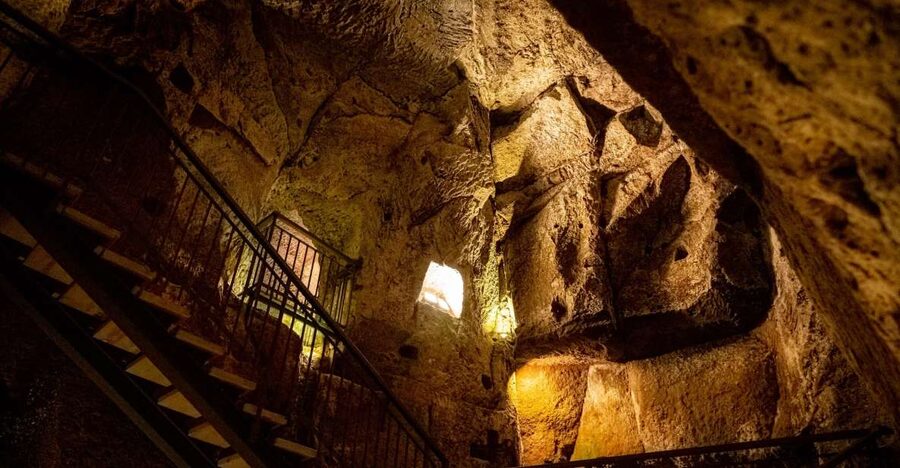
REVIEW · CAVA & SPARKLING WINE TOURS
Orvieto: Pozzo della Cava Entry Ticket
Orvieto’s oldest Etruscan well sits beneath the medieval Cava district, where nine underground caverns preserve traces of daily life across 28 centuries. For about $5, you walk through cisterns, passageways, work spaces, and archaeological remains at your own pace.
I like the clear signs in Italian, English, and French, and I like the cool underground temperature on a hot day. The main drawback is scale: this is a small, self-guided site, not the larger underground tour near the Duomo, and many people finish in 30 minutes.
Key points to know before you go
- Nine underground caverns: Follow a compact route beneath Orvieto’s oldest district, with remains from Etruscan, medieval, and Renaissance periods.
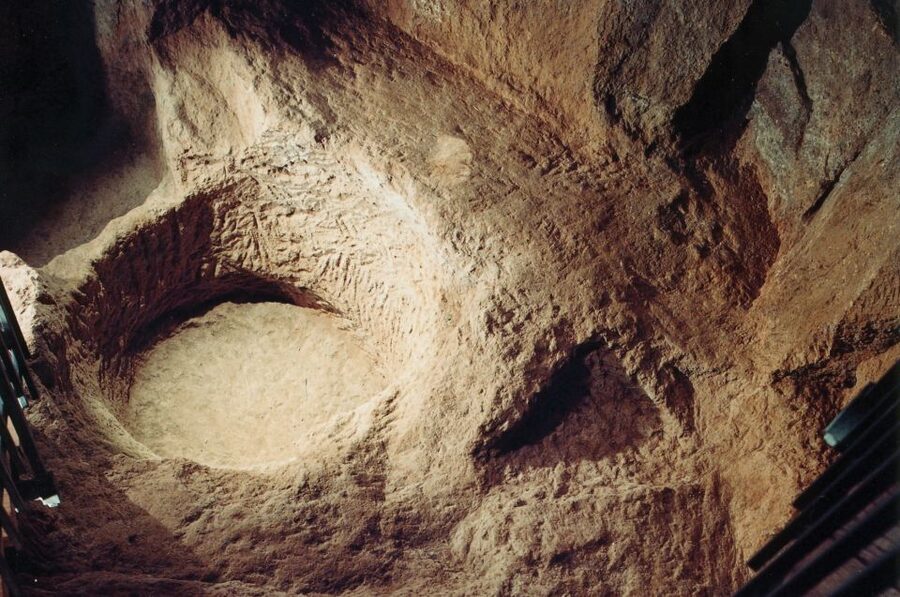
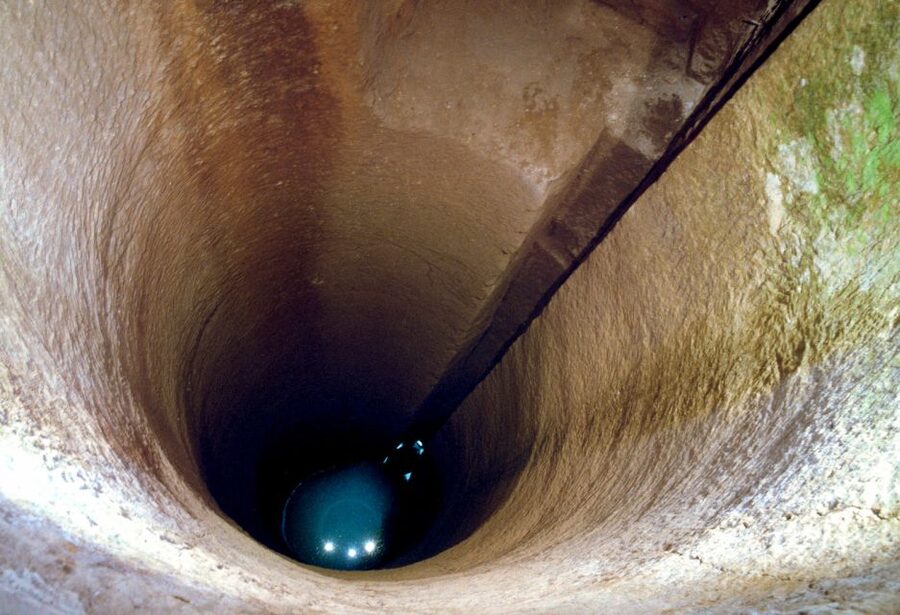
- The ancient cistern comes first: See the early well area, lined with cocciopesto plaster, along with preserved archaeological traces.
- Self-guided, not escorted: You read the information panels and move through the site independently. No guided tour is included.
- Easy value at $5: The visit is short, but the low ticket price makes it a useful addition to a day in Orvieto.
- Good on a hot afternoon: The caves offer a cooler break from the streets above.
- Children have their own route: The special explanations help younger visitors follow the story without needing a formal guide.
What Pozzo della Cava reveals beneath Orvieto
Orvieto is famous for its cathedral, hilltop setting, and dramatic medieval streets. But much of the town’s story sits below your feet. At Pozzo della Cava, you enter the underground spaces cut into the volcanic rock beneath the Cava neighborhood, one of the city’s oldest areas.
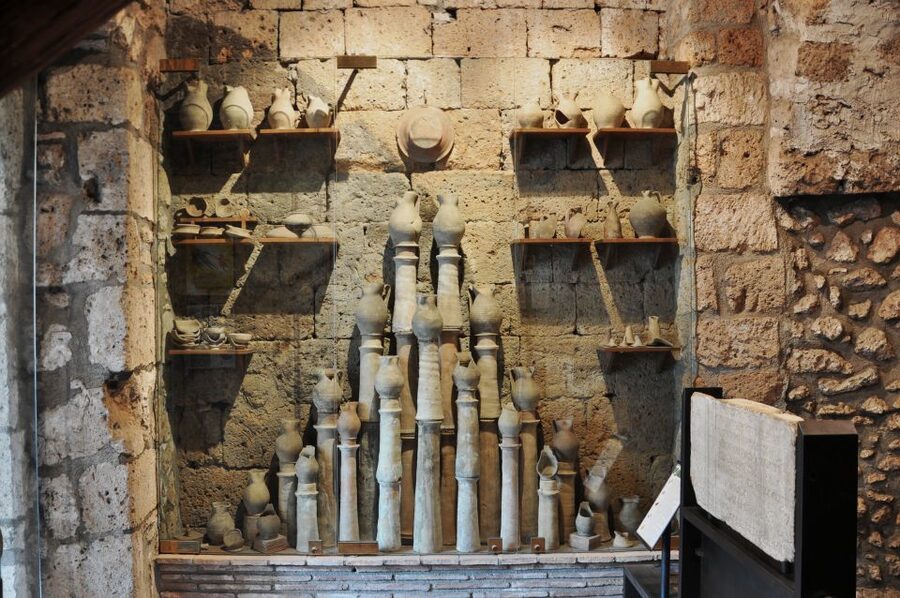
The site is not presented as one grand monument. Instead, it is a compact chain of rooms and passages. Each space shows another layer of use. The oldest sections relate to Etruscan water management and burial remains. Later residents adapted the underground rooms for homes, storage, work, and other practical needs. Renaissance alterations add another chapter.
I find this approach useful because it connects archaeology with ordinary life. You are not looking only at a polished object in a display case. You are seeing the spaces that helped people collect water, build homes, and make use of the ground below a crowded medieval town.
The route also helps explain Orvieto’s old name, Urbs Vetus, meaning old city. Above ground, the streets can feel like a finished medieval picture. Below ground, you see how that picture was built up over centuries.
More Sparkling Wine Tours in Italy:
- From Barcelona: Penedés Vineyards Tour by 4WD w/Wine & Cava
★ 4.8 · 808 reviews - Barcelona Old Town Tapas Night: Hidden Bars, Cava & Vermut
★ 4.9 · 454 reviews - Penedes Wine & Cava Tasting & 4WD Vineyards Tour from Barcelona
★ 4.5 · 374 reviews
Starting with the Etruscan well
Your visit begins in the oldest part of the complex. The key feature is a cistern lined with cocciopesto plaster, a waterproof material used in ancient construction. It offers a practical look at how people handled water long before modern pipes and public systems.
This is the part to take slowly. The well is not simply an empty shaft with a date attached to it. It helps explain why the underground area mattered in the first place. Water was central to settlement, and the structure shows the planning required to collect and protect it.
You may also see traces connected with ancient Etruscan burial practices. These remains are a reminder that the space did not have one fixed purpose throughout its history. The same underground setting could be used, altered, and reused as the town changed.
The information panels give you the needed context without requiring a guide. English explanations are available, and the signs are arranged so you can read as you go. If you want a detailed academic treatment, you may find the presentation brief. For a short sightseeing stop, the amount of information is well judged.
Moving through the medieval underground rooms
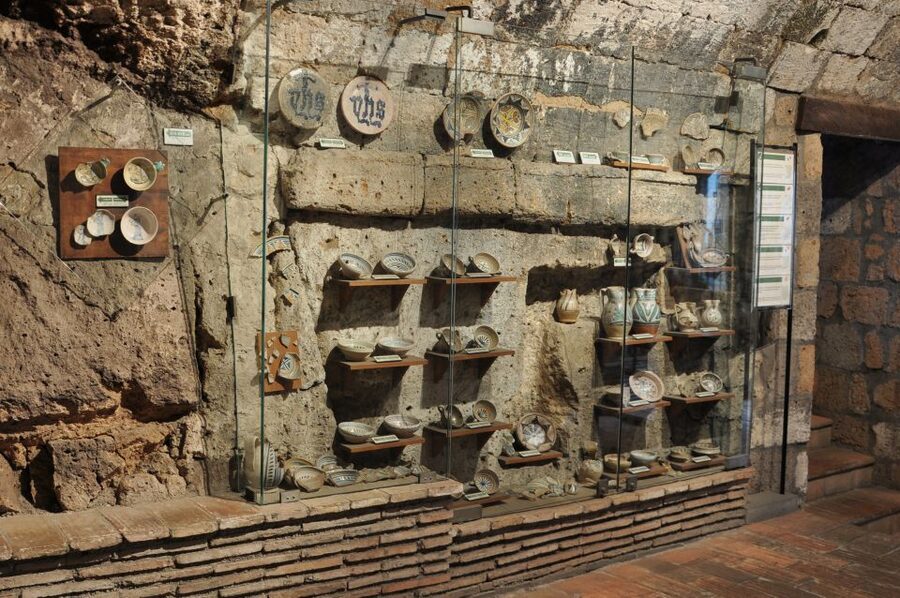
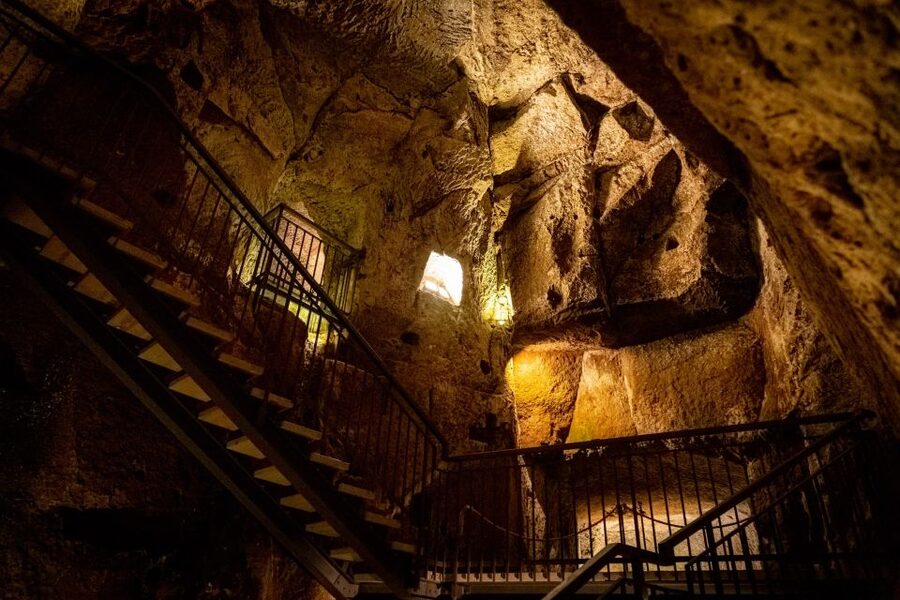
The central part of the route leads into the hypogeum maze beneath the medieval neighborhood. This is where the visit becomes a little more personal. You get a sense of the three-story basements connected with houses above.
That arrangement helps you picture medieval Orvieto as more than a collection of attractive facades. Homes extended downward as well as upward. Underground rooms could support the work and storage needs of families living on the narrow streets above.
The route is self-guided, so you control the pace. I would pause at the panels that explain how the spaces changed over time, then look closely at the shape of the rooms and the traces left in the walls. You will get more from the visit if you treat each cavern as part of a working building rather than rushing through it as a series of dark chambers.
This section is also where the difference between Pozzo della Cava and Orvieto’s other underground attraction matters. The larger underground cave tour begins near the Duomo and covers a different area. Pozzo della Cava is on the far side of town, though still close enough to reach on foot. If you accidentally book one expecting the other, you may be surprised by the smaller size. Seeing both can be worthwhile because they show separate underground areas.
The Renaissance section and the final cavern
The final part of the route focuses on later changes, especially the Renaissance work that created the most recent sections of the complex. This gives the visit a useful ending. You are not left with the idea that the well belongs only to the Etruscan age.
The last cavern preserves traces of changes made over 28 centuries. That long span is the main reason to pay attention here. The site works best when you notice the sequence: early water use, medieval adaptation, and later excavation and rebuilding.
Do not expect a large museum at the end. The appeal is the physical setting and the visible layers of use. You are walking through the remains themselves, with short explanations helping you understand what you see.
The presentation is modest but effective. It does not try to turn a small archaeological complex into a full-day attraction. Instead, it gives you a focused look at one piece of Orvieto’s underground past.
More Tickets Worth Buying in Italy:
- Pisa: Cathedral Guided Tour and Tower tickets & wine tasting
★ 4.8 · 78 reviews - Bordeaux: Cité du Vin Entry Ticket and Wine Tasting
★ 4.6 · 3,885 reviews - Tennent’s Brewery Tours Ticket
★ 5.0 · 1,938 reviews - Bols Cocktail Experience Entrance ticket plus Cocktail
★ 4.5 · 1,169 reviews
How long the visit really takes
The ticket is valid for one day, but the actual visit is much shorter. Allow about 30 minutes if you read some panels and keep moving. An hour is reasonable if you want to stop often, study the displays, and let children follow the special itinerary.
That short length is both a strength and a limitation. You can fit Pozzo della Cava around the cathedral, lunch, and a walk through the medieval streets without giving up half your day. On the other hand, anyone expecting a large cave system or a long guided program may feel finished sooner than expected.
The compact format makes the site especially useful as a planned stop between other sights. It is also a practical choice during the warmer months. Several visitors found the cool interior a welcome break from the heat outside, while still getting a solid history lesson.
I would avoid rushing in simply because the route is short. Read the signs in the first rooms, then compare those early structures with the later spaces. The value comes from seeing the changes over time, not from counting how quickly you can reach the exit.
A self-guided experience with clear explanations
There is no guided tour included. Instead, you follow the route and use the interpretive panels. A host or greeter may be available in Italian, English, or French, but the main experience is independent.
That arrangement suits me here. The caves are compact, and the signs provide enough information to understand the main periods and uses. You can stop where you like, move on when a room interests you less, and avoid being tied to a group schedule.
The English material is an important practical detail. You do not need to speak Italian to follow the basic story, and French explanations are also provided. The wording is designed for general visitors rather than specialists.
Families get an additional advantage. A special child-friendly itinerary offers explanations aimed at younger visitors. The site still involves archaeology and underground rooms, so very young children may need help staying engaged, but the separate route makes the visit easier to share as a family.
Because the route is self-guided, it is also worth setting your expectations correctly. You will not receive a long narrative from a local guide, a live demonstration, or an included audio tour. If personal storytelling is what you want most, choose a guided underground visit instead.
The value of a $5 ticket
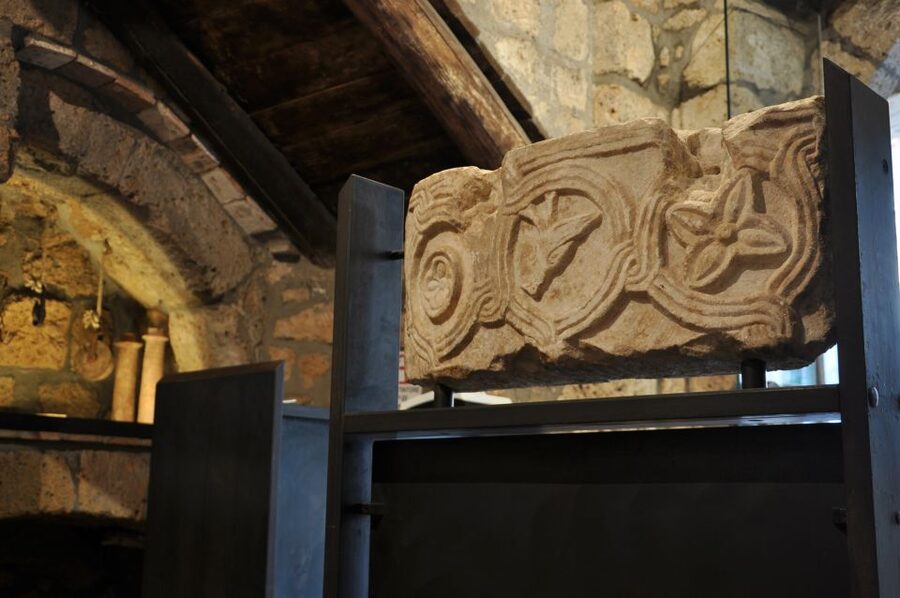
At $5 per person, Pozzo della Cava is an easy purchase to justify if you are already spending time in Orvieto. Even a 30-minute visit offers more than a quick photo stop. You see a real underground complex, original structural features, and artifacts linked to several periods of Italian history.
The low price also reduces the risk of disappointment. This is not a substitute for the Duomo or a major museum, and it does not need to be. Think of it as a compact historical stop that adds depth to your walk through the city.
The strongest value comes from the combination of three things:
- You can see Etruscan, medieval, and Renaissance remains in one short route.
- The panels explain what you are looking at in several languages.
- The cool underground setting offers a useful pause in warm weather.
The price may feel less compelling if you are visiting Orvieto for only a few hours and have not yet seen the major sights. One visitor considered it somewhat out of the way and felt there was more important sightseeing to do. That is fair advice. I would place the cathedral, the main piazzas, and the city’s best-known monuments first if time is tight.
Finding a good time to visit
The site can be visited at the starting time shown when you check availability. Morning can be a calm choice, particularly if you want to move slowly through the rooms. Some visits have been quiet, with no line, but crowd levels can change by date and season.
The skip-the-ticket-line feature is helpful if there is a queue, though you should not assume you need to reserve far ahead on a quiet day. The booking also allows you to reserve now and pay later, and cancellation is free up to 24 hours in advance.
The underground temperature is another planning point. In summer, it can feel refreshingly cool compared with the streets. In cooler weather, you may notice the change in temperature more, so a light layer can be useful, though the available information does not specify a required dress code.
Since the visit is short, it fits well before or after a meal. It is also a natural stop while walking through the Cava district, but remember that it is not located beside the Duomo. Give yourself time to cross town rather than treating the two sites as the same attraction.
Who will enjoy Pozzo della Cava most
I would recommend this experience to you if you enjoy archaeology, old building methods, and the practical side of history. It rewards curiosity more than spectacle. The best moments come from noticing how water systems, homes, and underground rooms changed over long periods.
It suits families because of the child-friendly explanations. It also works well for visitors who prefer to explore alone rather than join a scheduled group.
History-minded visitors should allow closer to an hour. If you are mainly looking for a quick break from the heat, 30 minutes may be enough. The site is also a good fit for budget-conscious sightseeing, since the admission cost is modest.
You may want to skip it if your Orvieto schedule is very short, if you dislike enclosed underground spaces, or if you are specifically seeking a full guided cave tour. It is a smaller stop, and its strength is its focused, independent format.
Should you book the Pozzo della Cava ticket?
Book it if you have at least half an hour to spare and want a low-cost look at the layers beneath Orvieto. The Etruscan cistern, medieval house basements, and Renaissance excavations create a clear story, while the multilingual signs keep the visit simple.
I would not make it your only underground experience, and I would not put it ahead of Orvieto’s essential sights when time is limited. But at $5, it is a sensible addition, especially in hot weather or when you want a quiet, self-paced stop away from the busiest streets.
The final decision comes down to your expectations. If you want a compact archaeological visit with real remains and no formal guide, book it. If you want a large cave network, extended narration, or a major museum experience, choose a different tour.
FAQ
What does the Pozzo della Cava ticket include?
The ticket includes entry to the underground Pozzo della Cava complex, multilingual explanations, and a special itinerary for children.
Is a guided tour included?
No. The visit is self-guided. You follow the route and read the interpretive panels. A guided tour is not included.
Which languages are available?
Explanations are available in Italian, English, and French. Hosts or greeters are also listed as speaking those three languages.
How long does the visit take?
The route commonly takes about 30 minutes, though you may spend up to an hour if you read the panels carefully and stop at the points of interest.
Is the site suitable for children?
Yes. A special itinerary for children is included, with explanations designed to make the underground history easier for younger visitors to follow.
Can I cancel the booking?
Yes. You can cancel up to 24 hours in advance for a full refund. You can also reserve now and pay later.
Just poured in Italy
- Montefioralle Winery – Tour and Wine Tasting in Chianti★ 4.5 · 92 reviews
- Tour and Tasting at an Organic Winery in the Heart of Chianti Classico Area★ 5.0 · 132 reviews
- Greve in Chianti Wine Tasting and Winery Tour★ 4.5 · 119 reviews
- Livorno Shore Excursion: Chianti and Tuscany Countryside Private Wine Tour★ 5.0 · 56 reviews
- Private tour of Etna and Winery Visit with Food and Wine Tasting from Taormina★ 5.0 · 221 reviews
- Mt Etna and Wine tasting tour from Catania★ 5.0 · 282 reviews
- Etna Tour and Lunch in a Winery with Wine Tasting★ 5.0 · 97 reviews
- Capri and Anacapri Guided Tour with Limoncello Tasting from Capri★ 4.0 · 104 reviews
Cava & Sparkling Wine Tours, compared.


Barcelona Old Town Tapas Night: Hidden Bars, Cava & Vermut
Read our review →
Penedes Wine & Cava Tasting & 4WD Vineyards Tour from Barcelona
Read our review →
High-End Vineyard Escape: Cava, Tapas & Wine | Private Tour
Read our review →
Cava tour to 3 family wineries with hotel pick-up
Read our review →
Montserrat & Cava Wineries Day Trip from Barcelona w/ Pickup
Read our review →

Browse the lists this tour appears in