
REVIEW · DRINKS TOURS
Barcelona Gothic Quarter’s Deepest Secrets & Sangria
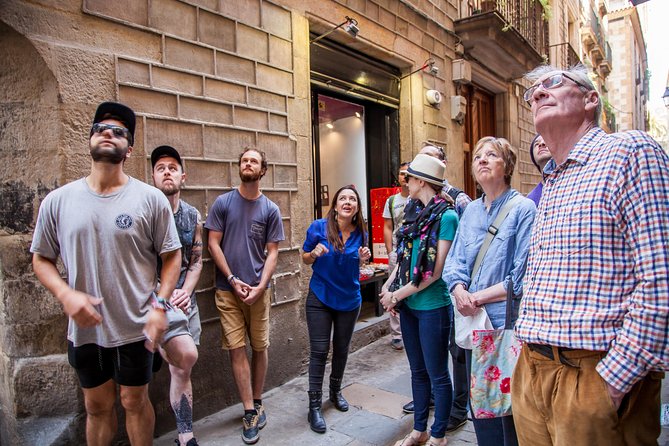
Barcelona’s old center is easy to walk into and surprisingly easy to misunderstand. Behind the cathedral and Las Ramblas, a maze of lanes holds Roman walls, medieval churches, Civil War scars, Jewish heritage, artists’ haunts, and political power. This three-hour walking tour gives those pieces a human story, then finishes with sangria near the water.
I like the small group of no more than 15 because narrow lanes and busy squares are far easier to manage without a large crowd. I also like that guides such as Juliana, Valentina, Sabrina, and Daniel offer practical advice for the rest of your visit, not just a recital of dates. The main consideration is stamina: you walk a lot, and the schedule touches many places quickly rather than offering long visits inside each monument.
Key points to know before booking
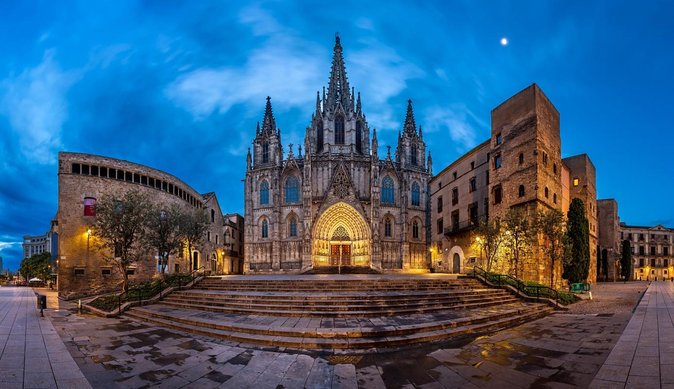
- Roman Barcelona in plain view: See ancient walls, Roman ruins, and remains of the old city beneath the medieval streets.
- More than postcard sights: The route includes Plaça Sant Felip Neri, the Jewish quarter, George Orwell Square, and other corners easy to miss alone.
- A guide-led introduction: Juliana, Valentina, Sabrina, Daniel, or another assigned guide may lead the walk, with history and local suggestions woven into the route.
- A useful first-day tour: It helps you find your way around the Gothic Quarter, Las Ramblas, Barceloneta, and Port Vell early in your stay.
- Sangria at the finish: The included drink gives the tour a relaxed ending and time for questions.
- A real walking workout: Expect streets, squares, and stops across the old center, ending near the harbor rather than back at the starting point.
Why this Gothic Quarter walk works
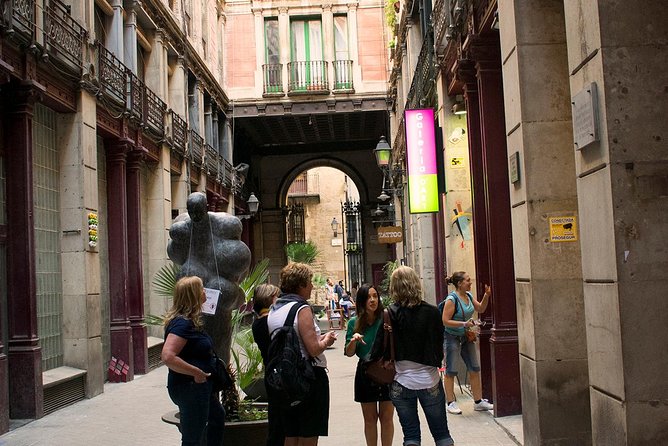
Barcelona’s Gothic Quarter is not a single monument. It is a layered district where Roman foundations sit below medieval buildings, modern political life shares space with old churches, and narrow lanes open suddenly into quiet squares.
That makes a guide useful. You can walk past a wall without realizing it is Roman, or pass through Plaça Sant Felip Neri without understanding the marks left by the Spanish Civil War. A good guide connects those details instead of treating each stop as an isolated photo opportunity.
This experience also covers more ground than a short cathedral tour. You begin at Café Zurich beside Plaça de Catalunya and finish at Port Vell, passing through Las Ramblas, the Gothic Quarter, the Jewish quarter, and Barceloneta. You get an introduction to the city’s layout as well as its past.
The tour is offered in English and uses a mobile ticket. It costs $65.33 per person, which is not a bargain-priced walking tour. The value depends on how much you want interpretation, navigation, and local advice. If you only want to stroll through the lanes and read signs, you can spend less by exploring alone. If you want the obscure corners explained and prefer not to get lost, the price is easier to justify.
More Drinks Tours in Barcelona:
- Montserrat & Cogwheel Train, Gourmet Wine Tasting & Tapas/Lunch
★ 5.0 · 6,290 reviews - Barcelona: Montserrat, Cogwheel, Black Madonna & Winery Tour
★ 4.8 · 5,633 reviews - Montserrat with Black Madonna & Medieval Winery with Tapas/Lunch
★ 5.0 · 5,209 reviews
Starting at Plaça de Catalunya and Las Ramblas
The meeting point is Café Zurich at Plaça de Catalunya, a practical place to begin because it sits between the newer Eixample district and the old city. The guide uses the opening minutes to introduce the route and set the historical frame.
From there, the walk moves toward Las Ramblas. This broad, famous avenue is Barcelona’s best-known pedestrian corridor, but the tour does not treat it as the whole city. Instead, it uses Las Ramblas as a gateway into older streets and more revealing neighborhoods.
You also pass Carrer Petritxol, known as one of Barcelona’s sweetest streets. This is a short stop, but it adds a more everyday side of the old center. The route may include time for chocolate shopping, and one particularly detailed account described a generous pause for sampling and buying chocolates. Since the official inclusion is the guided walk and sangria, treat any tasting or shopping time as guide-dependent rather than guaranteed.
The churches and squares of the Gothic Quarter
The Basilica of Santa Maria del Pi is one of the route’s Gothic churches. The stop is brief, and admission is not included, so you should not assume that the tour includes an interior visit. Even from outside, it helps place the quarter in its medieval setting.
Barcelona Cathedral receives another short stop. This is a useful orientation before a separate cathedral visit, especially if you plan one later. A guide may point out details that make a future visit more rewarding. One account even noted learning the reason for the cathedral’s famous 13 geese, a detail that gives the building more personality than a list of architectural terms.
The route continues to Plaça Sant Jaume, Barcelona’s government square. This is where the city’s political life comes into view, and it helps explain why the old center remains more than a preserved historic district.
The Archivo Histórico de la Ciudad de Barcelona provides another layer. The stop concerns the Crown of Aragon and the records connected with Barcelona’s past. It is short, but it shows how the city’s story reaches beyond a simple Gothic label.
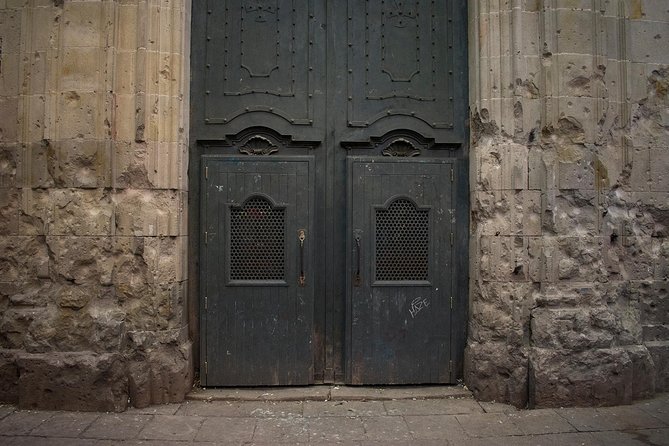
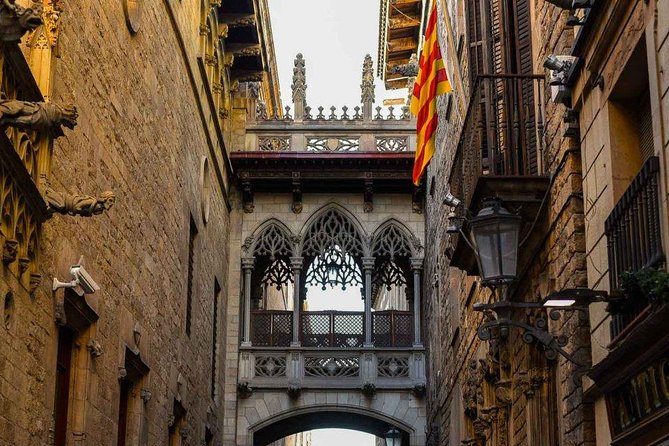
Plaça Sant Felip Neri is one of the more powerful stops. The square is attractive and quiet, but its walls carry the marks and memory of the Civil War. This is where the tour’s darker side comes through. If you prefer only architecture and food, the subject matter may feel heavy. If you want a fuller view of Barcelona, it is an important pause.
Roman walls, Jewish heritage, and Barcelona’s older layers
The Roman remains are among the best reasons to take a guided route. Barcelona’s ancient foundations are not always presented in one obvious archaeological park. Pieces appear within later streets and buildings, and the guide helps you recognize what you are seeing.
The Jewish quarter adds another layer to the walk. The route includes the old Jewish area and the synagogue, giving you a chance to consider the communities that shaped medieval Barcelona. The synagogue visit is not described as a paid interior admission, so expect interpretation from the street or a brief exterior stop unless your guide confirms otherwise.
This part of the tour rewards curiosity. The Gothic Quarter is often sold as a medieval setting, but the route shows that its story reaches from Roman times through religious change, political conflict, war, and modern tourism.
The pace matters here. Many stops are listed at five to eight minutes, so you get a broad survey rather than a museum-style examination. I see that as a strength if you are new to Barcelona and want a map in your head. It is a limitation if you want long, quiet time at each site.
Same town, a different bottle:
- Barcelona Paella Cooking Class with Market Visit, Tapas & Sangria
★ 5.0 · 2,531 reviews - From Barcelona: Montserrat Half-Day Wine and Tapas Trip
★ 4.8 · 1,918 reviews - Barcelona Gothic Quarter Tapas & Taverns Food & Wine Tour
★ 5.0 · 1,470 reviews - Barcelona Food Tour: Tapas, Paella, Sangria & 8+ Local Tastings
★ 5.0 · 1,275 reviews
Picasso, Miró, Gaudí, and George Orwell
Barcelona’s art story appears in unexpected places. The route passes the Royal Artistic Circle of Barcelona, linked with one of Gaudí’s first works, and the Escuela de Artes Aplicadas y Oficios Artísticos, associated with students such as Picasso, Miró, and Dalí.
The value here is not an art lecture. It is the connection between ordinary streets and the city’s creative life. You begin to see that Barcelona’s famous artists did not exist apart from the city. Their training, early work, and daily surroundings were tied to these older neighborhoods.
The tour also includes the reported birthplace of Miró and George Orwell Square, commonly called Plaça Tripi. Orwell’s connection to the Spanish Civil War gives the square a political edge, while the unusual nickname adds a lighter local detail.
These stops are best for travelers who enjoy stories about people and places rather than only grand buildings. They also help break up the church-and-wall pattern, giving the walk a broader view of Barcelona’s culture.
Barceloneta, the port, and the end of the route
The walk eventually heads toward Barceloneta, where Barcelona’s old city meets the beach and harbor. This shift from tight medieval lanes to open waterfront gives the route a satisfying change of mood.
You finish at Port Vell, not back at Plaça de Catalunya. That matters when planning your evening. Port Vell puts you near the waterfront, Barceloneta, and onward dining options, but you will need to arrange your own return if your hotel is elsewhere.
The route also includes Pailebot Santa Eulalia, a historic sailing vessel connected in the tour description with stories about the torture of Barcelona’s patron saint. This is a quick stop, so do not expect an extended ship visit. It is another example of how the walk uses small details to connect the city’s religious, maritime, and civic past.
Sangria, conversation, and local suggestions
Sangria is included at the end, and it changes the tone from formal sightseeing to conversation. You have a chance to ask about restaurants, neighborhoods, transport, and what to see next.
That local guidance may be the most useful part for a first visit. Several accounts describe guides helping with later plans, explaining how to navigate the old city, and recommending places to eat. One departure ended at a local restaurant in or near Barceloneta, with sangria, tapas, olives, and paella described as highlights. The official experience specifically includes sangria, not a full meal, so confirm what is planned on your date before counting on dinner.
You should also remember that the guide may vary. Juliana receives especially strong praise for storytelling, personal attention, and practical help. Valentina is described as warm and very well informed about the quarter. Sabrina and Daniel are also named as engaging guides. The experience may feel different depending on who leads it, but the format gives the guide room to answer questions and adjust the conversation.
Group size, walking pace, and practical comfort
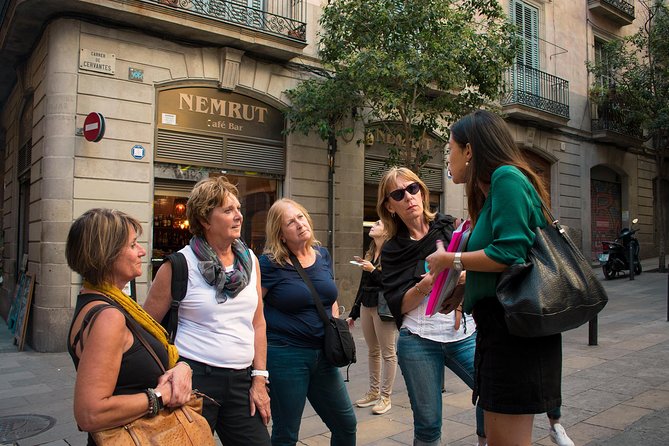
The maximum group size is 15. That is small enough for questions to be realistic and for the guide to keep the group together in narrow streets. On some departures, the group may be much smaller, even just two people, which can make the outing feel close to a private tour without the private-tour price.
You should wear comfortable shoes. The route covers a lot of ground, includes many short stops, and ends several neighborhoods away from the start. The information says most people can participate, but it does not promise a step-free or specially adapted route.
The mobile ticket is convenient, and confirmation arrives at booking. Public transportation is available near the meeting point. Arrive ready to walk rather than expecting a vehicle transfer between sights.
The tour is often booked well ahead, with an average booking lead time of 52 days. That does not mean you must reserve that early, but it suggests that popular dates can fill. The maximum group size and the small-group format are part of the appeal.
Free cancellation is available up to 24 hours before the local start time. Changes or cancellations inside that window are not accepted for a refund. The experience also needs a minimum number of participants, so a cancellation by the operator can result in another date, another experience, or a full refund.
How the $65.33 price measures up
At $65.33, this is a mid-to-high priced walking tour. You are paying for a professional guide, a small group, and the included sangria. You are not paying for admission to Santa Maria del Pi or Barcelona Cathedral, and the tour does not appear to include a full meal or extended interior visits.
The cost makes the most sense in three situations. First, you are new to Barcelona and want a strong introduction on your first full day. Second, you enjoy political and social history, not only architecture. Third, you value having a local person explain the city and suggest what to do next.
It makes less sense if you have already studied the Gothic Quarter, prefer to move at your own pace, or plan to spend much of the same afternoon inside the cathedral and other paid sights. In that case, the short stops may feel too quick.
The 4.9 rating from 230 reviews and 98 percent recommendation rate show a very strong record, though those numbers cannot guarantee that every guide or departure will suit every person. The repeated praise centers on storytelling, warmth, small groups, and help with navigation. Those are the qualities that matter most here.
Who should book this walk?
I would choose this for a first or second day in Barcelona. It gives you a working map of the old center, introduces several places you might pass without noticing, and leaves you near the beach and port with ideas for the evening.
It suits adults, couples, families with older children, and curious first-time visitors. One account specifically described a son becoming fascinated by the political history, which suggests the tour can work well for young people who like stories rather than long formal lectures.
I would be more cautious if you have limited mobility, dislike long walks, or want substantial time inside each church. I would also avoid scheduling a major cathedral visit immediately afterward unless you are comfortable with a quick, active afternoon.
Should you book Barcelona Gothic Quarter’s Deepest Secrets & Sangria?
Book it if you want the Gothic Quarter explained rather than simply photographed. The best parts are the Roman remains, Civil War stories, Jewish quarter, artist connections, and the guide’s practical help with finding your way.
Skip it if you only want a cheap orientation walk or a full meal with drinks. For $65.33, the strongest value is the guide, the small group, and the range of stories. Schedule it early in your stay, wear good shoes, and leave room afterward to continue around Port Vell or Barceloneta.
FAQ
How long does the tour last?
The experience lasts approximately three hours.
Where does the tour begin?
It begins at Café Zurich, Plaça de Catalunya 1, in Barcelona.
Where does the tour end?
The tour ends at Port Vell in the Ciutat Vella district.
What language is the tour offered in?
The tour is offered in English.
How many people can join the tour?
The maximum group size is 15 people.
Is sangria included?
Yes. Sangria and conversation are included at the end of the experience.
Are admission fees to the churches included?
No. Admission to Santa Maria del Pi and Barcelona Cathedral is not included.
Can most people participate?
The activity information says most people can participate. It is a walking tour, so you should be prepared to cover substantial ground.
Can I cancel for a refund?
You can cancel up to 24 hours before the experience for a full refund. Cancellations or changes made less than 24 hours before the start time are not accepted for a refund.
Just poured in Barcelona
- 2 Wineries Small Group Tour with Free Hotel PickUp from Sitges★ 5.0 · 83 reviews
- Barcelona: Wine Tasting and 5 Course Tapas Pairing Dinner★ 4.5 · 129 reviews
- Bohemian Barcelona Neighborhood Evening Tapas & Wine Tour★ 5.0 · 419 reviews
- Wine Tasting Experience in Barcelona★ 5.0 · 172 reviews
- Barcelona Gothic Quarter VIP Tapas & Wine Tour★ 5.0 · 276 reviews
- Barcelona: Guided Rooftop Wine Tasting – Enjoy 6 Spanish Wines★ 4.5 · 61 reviews
- Barcelona Sunset Cruise with Open Bar of Cava and Snacks★ 4.5 · 79 reviews
- Barcelona Tapas & Wine Experience as a Local at Hidden Wineries★ 5.0 · 71 reviews
Drinks Tours, compared.

Douro Valley w/ Boat Tour, Wine Tasting & Lunch
Read our review →
Chichen Itza, Cenote & Valladolid Tour with Tequila and Lunch
Read our review →
Complete Douro Valley Wine Tour with Lunch, Wine Tastings and River Cruise
Read our review →
Zakopane: Cable Car, Chocholow Baths, Cheese & Vodka
Read our review →

Zakopane: Cable Car, Chocholow Baths, Cheese & Vodka
Read our review →
Small-Group Wine Tasting Experience in the Tuscan Countryside
Read our review →Browse the lists this tour appears in