
REVIEW · WINERY TOURS
Barcelona Tapas & Wine Experience as a Local at Hidden Wineries
Barcelona’s best food lessons often happen at a worn neighborhood counter, not in a formal dining room. This three-hour evening walk links the Gothic Quarter, El Born, and Barceloneta with stops for tapas, wine, and local specialties in long-running family businesses.
I like two things here: you get a useful first look at several old parts of town, and the tasting list is broad enough to go well beyond patatas bravas. The small group, capped at 12, also gives guides such as Libor, Eli, and Alfonso room to explain what you are eating and answer questions. The main drawback is the pace: three hours on foot, with several food and drink stops, can feel long if you have mobility limits, arrive jet-lagged, or prefer a seated meal.
Key points at a glance
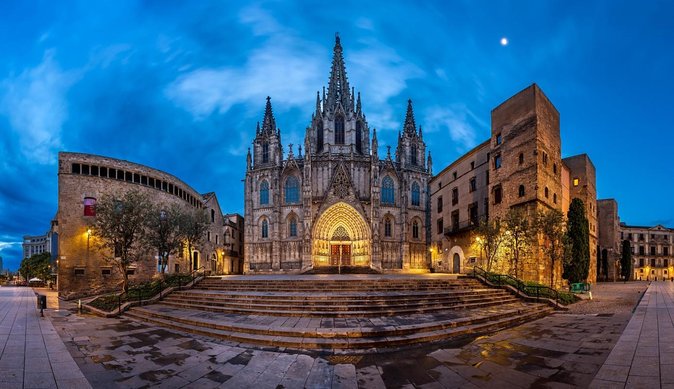
- Three historic districts in one evening: Walk from La Rambla through the Gothic Quarter and El Born before reaching Barceloneta.
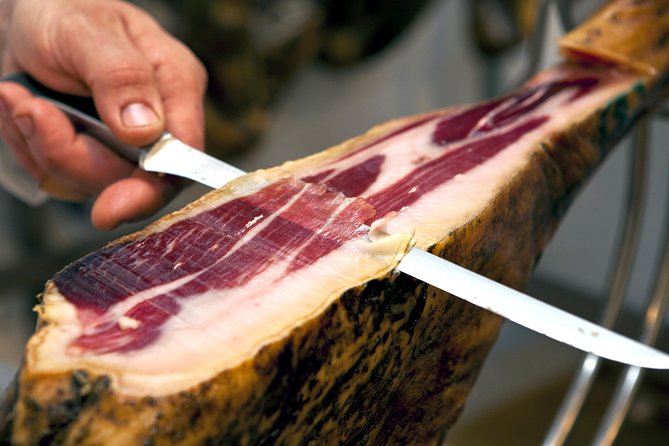
- A serious Catalan tasting list: Expect Iberian ham, six local cheeses, croquettes, tortilla, spicy potatoes, tomato bread, tuna, sardine, and a Gilda pintxo.
- Three regional drinks: Taste Terra Alta white wine, Montsant red wine, and craft vermouth, with cava also mentioned in the experience.
- Small-group format: No more than 12 people makes it easier to hear the guide and keep the group moving.
- Local personalities matter: Guides including Libor, Eli, and Alfonso are praised for their city stories, humor, and care with dietary needs.
- Best booked early in your stay: The food tips and neighborhood orientation can help you choose where to eat later.
Why this food walk works so well in Barcelona
This experience joins two things that belong together in Barcelona: walking and eating. You do not simply arrive at a restaurant, order a plate, and leave. You move through old streets, hear how the neighborhoods fit together, and stop for small portions that show different parts of Catalan food culture.
I like the balance. The tour is not only a history walk with a token snack, and it is not only a bar crawl with no sense of place. The route brings you past major sights such as the Basilica de Santa Maria del Mar and Placeta del Pi, then uses food to make the city easier to understand.
The group size matters. With a maximum of 12 people, you should be able to stay close to the guide in narrow streets and hear the explanations at the food stops. Guides named in the feedback include Libor, Eli, Alfonso, and Naomi. Libor is often praised for his humor and city knowledge, while Eli is described as a Catalan local with strong insight into the area. One note about Naomi says she handled her first evening with warmth and helped a mixed group become comfortable.
The tour has earned a 4.9 rating from 71 reviews, with 99 percent of people recommending it. That is a strong record, though you should still view the experience for what it is: an active social evening with a set route, not a private food consultation.
More Winery Tours in Barcelona
- Barcelona: Montserrat, Cogwheel, Black Madonna & Winery Tour
★ 4.8 · 5,633 reviews - Montserrat with Black Madonna & Medieval Winery with Tapas/Lunch
★ 5.0 · 5,209 reviews - Montserrat Full Day Tour with Farmhouse Lunch and Winery Visit
★ 5.0 · 1,068 reviews
Starting at La Rambla and the old market area
The meeting point is at La Rambla 97, in Ciutat Vella. That places you in one of Barcelona’s most recognizable central areas, close to public transportation and near the old market setting that forms part of the evening’s opening atmosphere.
La Rambla is easy to reach, but it can be crowded and confusing at busy times. Give yourself extra time to find number 97. The tour ends back at the same meeting point, which makes the evening simpler if you are staying in the old city or using public transportation.
The market connection is useful because it gives you a quick look at how food fits into daily life here. The market itself is described as 800 years old, and the range of fruits and vegetables can be a memorable start to the night. You may not spend a long time browsing, so think of this as a meeting and orientation point rather than a full market tour.
If you want the smoothest start, arrive early. One account of the evening notes that late arrivals missed the opening portion. That is especially important here because the walking route and first food stop set the rhythm for everything that follows.
Gothic Quarter: food among Roman-era lanes
The Gothic Quarter is the natural first chapter. Its lanes are tight, uneven in places, and full of turns that make a local guide useful. The route is designed to mix sightseeing with stops for tapas, so you get context without sitting through a long lecture.
This is where the guide’s personality can make the largest difference. Libor is repeatedly praised for explaining the places along the route while keeping the group relaxed. Eli is also singled out for her local background and enthusiasm for Catalan culture.
The food begins to establish the range of the evening. Iberian ham brings a salty, finely sliced start. The six local cheeses should give you more variety than the standard one-cheese sample found on many food walks. Catalan tomato bread, known locally as pa amb tomàquet, adds a simple but important staple to the table.
You will also likely encounter croquettes, spicy potatoes known as patates braves, and tortilla, the familiar potato omelette. These are modest foods, but they are central to the tapas tradition. The point is not luxury. It is learning how a few basic ingredients become different bar snacks through texture, seasoning, and preparation.
El Born and La Ribera: a stronger food focus
From the Gothic Quarter, the walk continues toward El Born and La Ribera. This part of the route is especially good for people who want to see a more local side of central Barcelona while still staying near major sights.
The food stops here are described as family-run places with long connections to the neighborhood. That matters because the setting is part of the meal. A small bodega or old bar can tell you more about how people eat in Barcelona than a polished restaurant designed mainly for visitors.
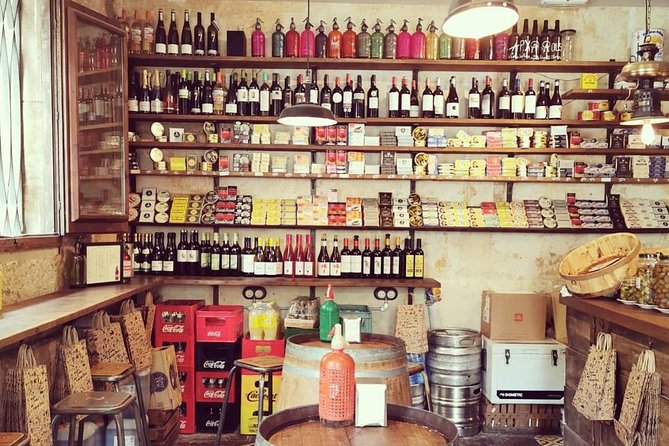
Expect more than one stop, with each place offering something different. One might focus on drinks and preserved foods, while another serves hot tapas. The experience includes salted cured tuna called mojama, smoked sardine with tomato bread, and a Gilda pintxo. A Gilda usually combines an olive, pickled pepper, and anchovy, though the exact presentation can vary.
The pace may be quick. You are walking between stops, listening, tasting, and making room for the next dish. That suits you if you like variety and conversation. If you want to linger over each glass or take careful food photographs, the schedule may feel tight.
More Winery Tours in Spain
- Montserrat & Winery Visit Tour with Traditional Farmhouse Lunch
★ 4.5 · 1,035 reviews - Barcelona: Montserrat with Winery, Lunch, and Train Options
★ 4.8 · 525 reviews - Barcelona Sailing Adventure and Small Group Winery Tasting Tour
★ 4.5 · 394 reviews - Familia Torres Winery: Gastronomic Tapas & Wine Experience
★ 4.5 · 240 reviews
Santa Maria del Mar and Placeta del Pi
The Basilica de Santa Maria del Mar is one of Barcelona’s most striking Gothic churches, and its appearance gives the food walk a strong visual pause. You may view it from outside as part of the walking route, with the guide explaining its place in the city and the surrounding district.
Placeta del Pi offers a different mood. This small square near the Church of Santa Maria del Pi brings you into one of the Gothic Quarter’s more atmospheric corners. The route benefits from these stops because your evening is not reduced to a list of bars. You are building a mental map of Barcelona as you go.
These sightseeing moments also help break up the tasting. A three-hour food experience can become heavy if every stop involves eating and drinking. Moving through the old streets gives you time to reset before the next plate.
You should not expect detailed interior visits or a full church tour unless the guide specifically includes one that evening. The provided schedule identifies these places as stops on the walking route, so treat them as cultural landmarks along the way rather than the main attraction.
Barceloneta: the former fishing neighborhood
The final district is La Barceloneta, the famous fishing neighborhood beside the water. Its inclusion broadens the experience beyond the oldest inland quarters and gives you a look at a part of Barcelona shaped by the sea.
The seafood-related bites fit the setting. Smoked sardine with tomato bread and salted cured tuna connect the food to coastal traditions without turning the evening into a seafood-only meal. The Gilda also adds a sharp, salty bite that works well with a drink.
Barceloneta is popular and can feel busier than the smaller lanes of El Born. That is part of the trade-off. You get a recognizable neighborhood with a strong identity, but not every street will feel quiet or untouched by tourism.
The walk ends back at the original meeting point rather than at Barceloneta. This is practical if you want to return to your hotel or continue your night from central Barcelona, but it also means the group completes the full route instead of stopping near the beach.
What you will eat and drink
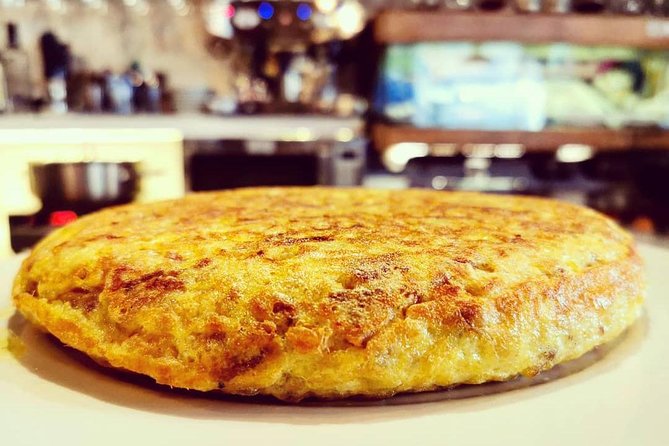
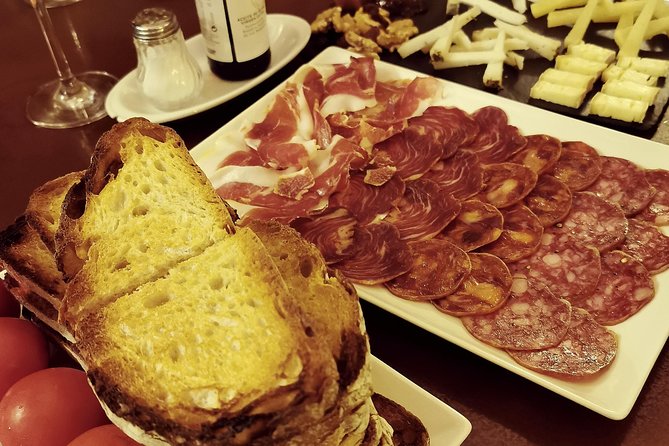
The sample menu is generous for a three-hour experience. It includes:
- Iberian ham
- Six local cheeses
- Croquettes
- Patates braves
- Potato omelette, or tortilla
- Catalan tomato bread
- Gilda pintxo
- Salted cured tuna, or mojama
- Smoked sardine with tomato bread
The drink pairings include Terra Alta white wine, craft vermouth, and Montsant red wine. Cava is also mentioned in the experience, so the exact drink sequence may vary by evening or venue.
This selection gives you a useful map of Spanish and Catalan bar food. You get cured meat, cheese, fried bites, potatoes, eggs, bread, fish, pickled flavors, white wine, red wine, and vermouth. It is a much better introduction than ordering one large paella and assuming you have covered local food.
Portions are best understood as shared tastings rather than a private dinner plate. Dinner is included, but you should not assume every person receives a full restaurant-sized serving of each item. The total amount is intended to build across several stops.
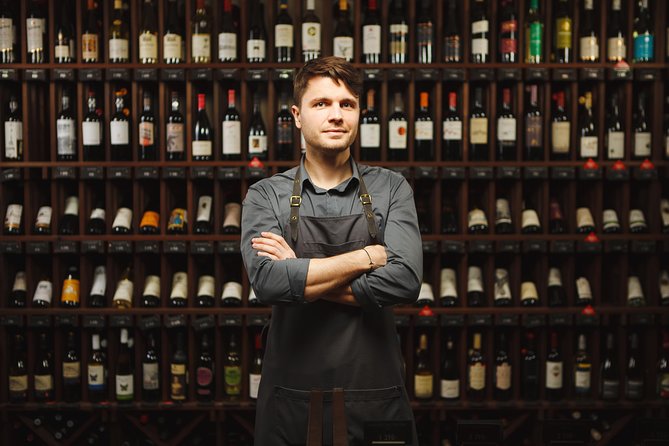
The wine focus is another advantage. Terra Alta and Montsant are both Catalan wine regions, so the tasting adds a sense of place beyond generic house wine. Vermouth is important too. Barcelona has a strong tradition of meeting for vermouth with small savory bites, and this part of the experience can help you recognize the custom later in your trip.
One unusual detail is the borron, a traditional way of drinking wine from a special vessel. It is messy, playful, and not something you need to master. If the guide offers it, take it as a cultural bit of fun rather than a test of coordination.
Price, group size, and the value of the evening
At $102.58 per person, this is not a bargain bar snack crawl. It is also more than a simple guided walk. Your price covers dinner, alcoholic drinks, several food stops, the guide, and a three-hour route through central Barcelona.
I think the value depends on how you normally build an evening. If you would pay separately for tapas, three or more drinks, and a guided orientation to the Gothic Quarter and Barceloneta, the price can make sense. You are also paying for access to established family-run places and for someone else to organize the route.
The maximum group size of 12 keeps the experience more personal than a large coach outing. That does not make it private, and the social side is part of the design. You may share tables and conversation with people from different places. Several accounts describe the group atmosphere as a major part of the fun.
The best financial value comes when you book this early in your Barcelona stay. You can use the food tips, neighborhood knowledge, and restaurant ideas for the rest of your visit. If you take the tour on your final night, it can still be enjoyable, but you lose that practical benefit.
Who should book this experience
I would choose this for you if you want a compact introduction to Barcelona’s old center and prefer tasting many small dishes instead of committing to one restaurant. It fits couples, friends, solo visitors who enjoy meeting people, and anyone who wants an evening with a social rhythm.
It is also a good pick if you like guides who tell stories as you walk. Libor, Eli, Alfonso, and Naomi are specifically associated with warm, personal guiding styles in the available accounts. Dietary restrictions can be accommodated according to one account, but you should communicate them in advance rather than assume every stop can adjust on the spot.
You may want another option if you dislike group dining, do not drink alcohol, or have difficulty walking for three hours. The route covers several districts, and the experience includes alcoholic beverages as a central feature. Service animals are allowed, and the tour is near public transportation, but the route still involves city streets and multiple stops.
The cancellation terms are straightforward: cancel at least 24 hours before the start time for a full refund. Changes made inside that window are not accepted, and the operator may offer another date or a full refund if the minimum group size is not reached.
Should you book it?
Book this Barcelona tapas and wine experience if you want a social first-night orientation, a broad tasting menu, and local stories tied to real neighborhoods. The combination of Gothic streets, El Born bodegas, Santa Maria del Mar, Placeta del Pi, and Barceloneta gives the evening more substance than a stand-alone dinner.
I would be less quick to book it for a quiet, slow meal or a private food lesson. The route is active, the group can include up to 12 people, and the evening depends partly on arriving on time and enjoying a shared pace.
For most food-minded visitors, the strongest plan is to schedule it during your first few days in Barcelona. You get a practical introduction to tapas, wine, vermouth, and local districts, then have the rest of the trip to return to the places and flavors that suited you best.
FAQ
How long does the Barcelona tapas and wine experience last?
The experience lasts approximately three hours.
Where does the tour begin?
It begins at La Rambla, 97, Ciutat Vella, 08002 Barcelona, Spain.
Where does the tour end?
The activity ends back at the meeting point on La Rambla.
Which Barcelona neighborhoods are included?
The route includes the Gothic Quarter, El Born or La Ribera, Santa Maria del Mar, Placeta del Pi, and La Barceloneta.
How many people can join the tour?
The maximum group size is 12 people.
What food is included?
The tasting can include Iberian ham, six local cheeses, croquettes, patatas braves, potato omelette, Catalan tomato bread, a Gilda pintxo, salted cured tuna, and smoked sardine with tomato bread.
Which drinks are included?
Included drinks can include Terra Alta white wine, craft vermouth, and Montsant red wine. Cava is also mentioned as part of the tasting experience.
Is the tour offered in English?
Yes. The experience is offered in English.
Can I cancel for a full refund?
Yes. You can cancel at least 24 hours before the start time for a full refund. Cancellations or changes made less than 24 hours before the start time are not accepted for a refund.
Just poured in Barcelona
- 2 Wineries Small Group Tour with Free Hotel PickUp from Sitges★ 5.0 · 83 reviews
- Barcelona: Wine Tasting and 5 Course Tapas Pairing Dinner★ 4.5 · 129 reviews
- Bohemian Barcelona Neighborhood Evening Tapas & Wine Tour★ 5.0 · 419 reviews
- Wine Tasting Experience in Barcelona★ 5.0 · 172 reviews
- Barcelona Gothic Quarter VIP Tapas & Wine Tour★ 5.0 · 276 reviews
- Barcelona: Guided Rooftop Wine Tasting – Enjoy 6 Spanish Wines★ 4.5 · 61 reviews
- Barcelona Sunset Cruise with Open Bar of Cava and Snacks★ 4.5 · 79 reviews
- Barcelona Wine and Gourmet Tapas Tour★ 5.0 · 188 reviews
Winery Tours, compared.
Douro Valley with Winery Lunch, Tastings & Cruise
Read our review →
Montserrat, Cogwheel, Black Madonna & Winery Tour
Read our review →
Montserrat with Black Madonna & Medieval Winery with Tapas/Lunch
Read our review →
Siena, San Gimignano, Pisa & Lunch at Winery
Read our review →
Wine Tour: Paarl, Franschhoek & Stellenbosch incl 3 wineries
Read our review →
Douro Valley Tour: 2 Vineyard Visits, River Cruise, Winery Lunch
Read our review →
5-Hour Traverse City Wine Tour: 4 Wineries on Old Mission Peninsula
Read our review →Browse the lists this tour appears in