
REVIEW · DRINKS TOURS
Coffee tasting experience at Divino Café Especial
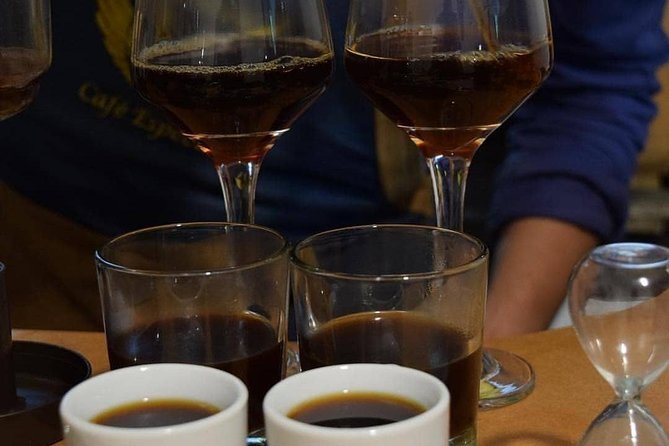
Colombian coffee gets the full treatment here: you do not simply drink a cup and move on. At Divino Café Especial, you train your senses, compare four specialty coffees, and watch them prepared through methods such as espresso, Japanese siphon, Chemex, V60, AeroPress, or French press. Leandro, Jason, and Sebastian are the guides named in the feedback, and each is praised for making technical ideas easy to follow.
I like the small maximum group of eight, which leaves room for questions and hands-on tasting. I also like the practical finish: four steps for making better coffee at home, plus a portion of house cake. The main consideration is caffeine. This is a concentrated tasting of at least four coffees, sometimes more, so it may be a lot for anyone sensitive to it.
Key points to know
- Four coffees, several brewing methods: Compare how espresso, siphon, Chemex, V60, AeroPress, and French press affect the cup.
- Sensory training comes first: You learn to separate fragrance, aroma, flavor, and body instead of treating coffee as one vague taste.
- A genuinely small group: The experience accepts no more than eight people, making discussion and questions easier.
- In central La Candelaria: Meet at DV Café Especial, Cl. 12b #4-06, close to public transportation.
- Useful for beginners and coffee fans: The guides explain production, harvesting, roasting, and preparation without requiring prior knowledge.
- Home-brewing advice is included: You leave with four practical steps for improving coffee at home, and the provider can send a file of memories afterward.
Four Colombian coffees, not one rushed sample
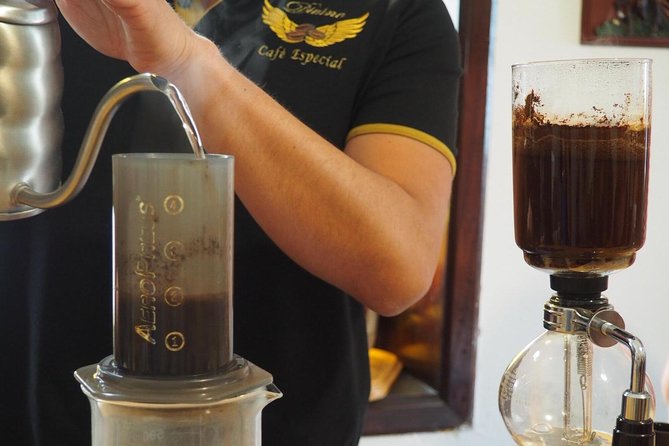
The heart of this experience is comparison. You taste four different varieties of Colombian specialty coffee, and each is prepared using a different extraction method. That matters because the same bean can taste quite different when pressure, water flow, steeping time, or filtering changes.
You begin with a sensory exercise. The guide leads you through fragrance, aroma, flavor, and body, helping you notice how each quality works. Fragrance is what you pick up before tasting. Aroma develops once the coffee is brewed. Flavor is the character on your palate, while body describes how the coffee feels in your mouth.
This structure gives the tasting a clear purpose. You are not asked to announce grand tasting notes or pretend to detect every fruit and spice. Instead, you get a simple vocabulary for paying attention. If you know little about coffee, that is useful. If you already buy specialty beans, it gives you a better way to compare what you drink at home.
The session is described as lasting about one hour and thirty minutes, though one account describes it as closer to two hours. I would plan for roughly 90 minutes and allow a little extra time if the conversation runs long.
More Coffee Tastings in the world:
- Dublin: Irish Coffee Masterclass at the Irish Whiskey Museum
★ 4.6 · 279 reviews - Puerto Vallarta: City Tour, Tequila and Coffee Factory Tour
★ 4.2 · 212 reviews
What happens inside Divino Café Especial
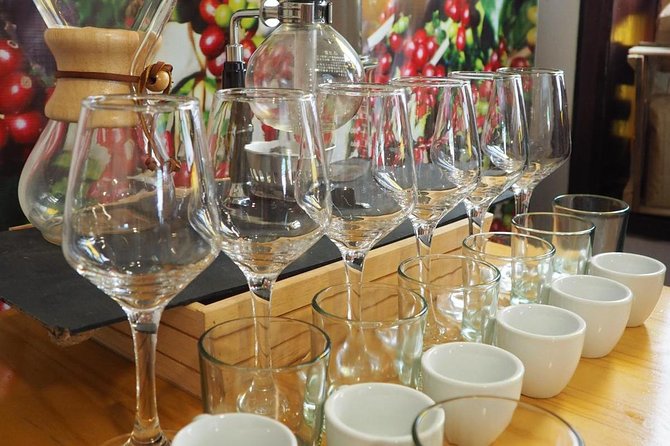
The meeting point is DV Café Especial in Bogotá’s historic La Candelaria district. The activity begins and ends at the café, so there is no separate transfer between several stops. That makes this an easy addition to a morning of sightseeing in the center.
The café setting is part of the appeal. This is not a large production with a crowd moving from station to station. The maximum is eight people, and the format is built around tasting, explanation, and conversation. A group this size also suits solo visitors, who can join without needing to arrange a private party.
The guides named in the feedback include Leandro, Jason, and Sebastian. Their approaches may differ, but the common thread is a calm, personal teaching style. Leandro is described as especially strong at explaining the coffee process from farm to cup, while Jason is praised for helping a beginner feel comfortable. Sebastian is noted for explaining production, harvesting, and preparation with patience.
That range matters. Coffee tasting can become intimidating when the guide assumes everyone already knows the jargon. Here, the teaching is aimed at ordinary coffee drinkers as well as serious enthusiasts. You can ask basic questions without feeling out of place.
Why the sensory lesson is worth your time
Many people drink coffee every day but rarely stop to identify what they are tasting. This session gives you a way to slow down and compare.
You first work with the smell and fragrance of the coffee. Then you taste it and consider flavor and body. The lesson is simple, but it changes how you approach the next cup. Instead of saying only that one coffee is stronger, you might notice that it is heavier in body, more aromatic, more bitter, or brighter in flavor.
The experience also explains coffee beyond the final drink. You learn about the path from production and harvesting through roasting and brewing. That context helps you understand why specialty coffee costs more and why preparation is not just a matter of pouring hot water over ground beans.
I especially like this for anyone beginning to explore Colombian coffee. You do not need to know the names of growing regions or own expensive equipment. The session starts with the senses and builds from there.
Six brewing methods and why they matter
The listed preparation methods include an espresso machine, Japanese siphon, Chemex or V60, AeroPress or French press. The wording suggests that not every method may be used in exactly the same combination at every session, but you should expect several different extraction styles.
Espresso uses pressure and produces a concentrated cup. It gives you a useful contrast with slower filter methods.
The Japanese siphon is one of the more unusual parts of the tasting. It uses a visually distinctive brewing process and offers a chance to see how controlled heat and movement affect the drink.
Chemex and V60 are filter methods. They are often associated with a cleaner, lighter cup, so they help show how paper filtration changes texture and clarity.
AeroPress and French press offer another contrast. Both are approachable home methods, but they produce different textures and require different handling. The French press leaves more oils and fine particles in the cup, while an AeroPress can be adjusted in several ways.
You are not simply watching equipment operate. The point is to taste the effect of the method. That is where the session earns its value. A machine display alone would be easy to forget, but comparing several cups gives you a reason to remember what you learned.
More Drinks Tours in the world:
- From Porto: Douro Valley w/ Boat Tour, Wine Tasting & Lunch
★ 4.7 · 19,061 reviews - Chichen Itza, Cenote & Valladolid Tour with Tequila and Lunch
★ 4.5 · 15,789 reviews - Complete Douro Valley Wine Tour with Lunch, Wine Tastings and River Cruise
★ 5.0 · 12,920 reviews - Krakow–Zakopane: Cable Car, Chocholow Baths, Cheese & Vodka
★ 5.0 · 10,720 reviews
The coffee knowledge stays practical
The experience includes four steps for making coffee at home. The exact steps are not specified in advance, so you should not expect a printed technical manual covering every possible brewing problem. Still, the advice is aimed at something useful: making your everyday coffee better with the equipment you already have.
That practical angle is important. A tasting can be enjoyable for an hour and then disappear from memory. Advice for home preparation gives you a way to use the lesson after you leave. You may begin paying closer attention to how you grind, how you pour, or how your brewing method changes the final cup.
The guides also explain how to choose or taste coffee. One account specifically highlights recommendations for selecting and trying different coffees. This is helpful if you want to buy Colombian beans during your stay but do not know what to look for.
Do not expect the experience to turn you into a professional barista in one sitting. Ninety minutes is enough for a clear introduction, not a full technical course. Its strength is showing you what to notice and giving you a better starting point.
The house cake and the caffeine question
A portion of house cake is served with the tasting. It is a small detail, but a welcome one. Coffee prepared several ways can be filling in its own way, and a little food helps balance the session.
The bigger issue is caffeine. The tasting includes four varieties and may involve at least five distinct tastes depending on how the session is presented. If you normally drink only one cup a day, this could feel like a caffeine-heavy morning.
You can plan around that. Choose an earlier start if you want the experience before sightseeing, or avoid scheduling it close to bedtime if caffeine affects you strongly. The available English start times are listed as 9 a.m., 11 a.m., and 3 p.m. Confirm the exact time when booking, since the information presents the times in more than one line.
A good fit for solo visitors and small groups
This is one of the better formats for a person traveling alone. You meet at a public café, join a group capped at eight, and have a built-in social setting without committing to a full-day group tour.
It also works well for couples, friends, and small family groups. Coffee drinkers with different levels of interest can take part together because the guide starts with basic sensory ideas and then adds more detail.
I would particularly recommend it to:
- People who want an introduction to Colombian specialty coffee
- Coffee drinkers who are curious about brewing methods
- Beginners who worry that tasting terminology will be too technical
- Solo visitors looking for a short, social activity in La Candelaria
- Experienced coffee fans who want to compare several methods in one sitting
It may be less suitable if you want a farm visit, a full roasting workshop, or a long tour outside Bogotá. This is a café-based tasting. Its focus is the cup, the senses, and the brewing process rather than a trip to a coffee-growing area.
The location works well with a day in La Candelaria
Divino Café Especial is at Cl. 12b #4-06 in La Candelaria, one of Bogotá’s best-known historic sectors. The activity begins and ends at the same address, and the meeting point is near public transportation.
That makes the timing easy to manage. You can start with coffee and continue exploring the central district afterward, or schedule the tasting in the afternoon after other plans. Since the activity lasts about 90 minutes, it does not take over an entire day.
You should give yourself enough time to locate the café before the start. The supplied information does not provide a separate pickup service, so you are responsible for reaching the meeting point. This is a city-center meeting rather than a hotel-based excursion.
Is $33 a fair price?
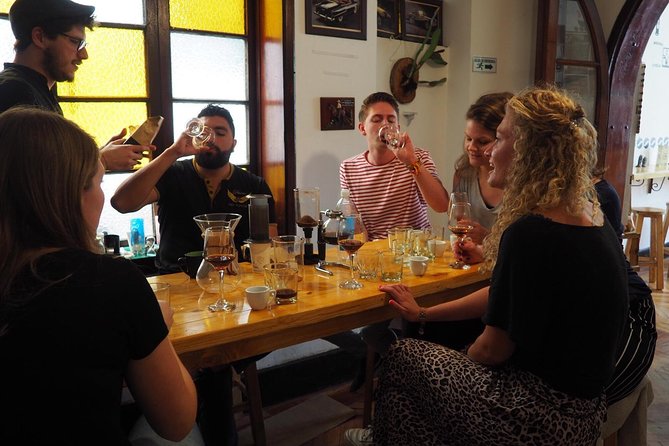
At $33 per person, the price is reasonable if you value instruction as much as the coffee itself. You are paying for four specialty varieties, multiple brewing methods, sensory training, a guide-led lesson, house cake, and home-brewing advice.
If you only want to drink a good Colombian coffee, you can spend far less in Bogotá. The value here comes from comparison and explanation. You are paying to understand why the cups taste different and how to make better choices later.
The small group improves that value. With no more than eight people, the guide has a better chance to answer individual questions and keep the tasting interactive. A large class might offer the same number of samples but less personal attention.
The experience is also short enough to fit into a city break. You do not lose a whole day or pay for transport into the countryside. For a visitor who wants an accessible introduction to Colombian specialty coffee, $33 is a sensible spend.
Booking ahead and cancellation details
The experience is booked about 16 days in advance on average, so do not assume you can always walk in at the last moment. If your dates are fixed, booking ahead is sensible, especially if you want a particular English start time.
Confirmation is provided at booking. Free cancellation is available up to 24 hours before the start time for a full refund. Changes or cancellations made less than 24 hours before the start are not accepted for a refund.
The stated policy also says the activity requires good weather. If poor weather causes cancellation, you are offered another date or a full refund. That condition is worth noting even though the tasting takes place at a café.
If you want a record of the session, ask about the file of memories mentioned by the provider. It is available if you wish, rather than an automatic part of the experience.
Should you book the Divino Café Especial tasting?
Book it if you want more than a good cup of coffee. The strongest part is the combination of sensory instruction and side-by-side brewing. You learn to notice fragrance, aroma, flavor, and body, then see how different methods shape the result.
I would also choose it early in a Bogotá visit. The coffee vocabulary and buying advice can help you make better choices for the rest of your trip, and the activity gives you a friendly introduction to a central neighborhood.
Skip it if your main goal is a coffee farm, a roasting factory, or a full-day trip into Colombia’s growing regions. This is a compact, café-based lesson, not a countryside excursion. Also think twice if several caffeinated samples in one sitting will leave you uncomfortable.
For most coffee drinkers, especially beginners and curious solo visitors, the combination of four coffees, several brewing methods, a small group, and a $33 price makes this a strong short experience in Bogotá.
FAQ
Where does the coffee tasting take place?
It takes place at DV Café Especial, Cl. 12b #4-06, in La Candelaria, Bogotá. The activity ends back at the meeting point.
How long does the experience last?
The stated duration is approximately one hour and 30 minutes. One description refers to a session of about two hours, so allowing a little extra time is sensible.
What English start times are available?
English sessions are listed at 9 a.m., 11 a.m., and 3 p.m. Confirm the exact available time when booking.
How many people can join?
The activity has a maximum of eight travelers, keeping the tasting small and interactive.
What do you taste and learn?
You taste four different Colombian specialty coffees prepared through several methods, including espresso, Japanese siphon, Chemex or V60, AeroPress, and French press. The session covers fragrance, aroma, flavor, body, coffee production, harvesting, roasting, and home preparation.
Can I cancel for a full refund?
Yes. You can cancel at least 24 hours before the local start time for a full refund. Cancellations or changes made less than 24 hours before the start are not accepted for a refund.
Just poured in the world
- Valle de Guadalupe winery and brewery tours★ 5.0 · 123 reviews
- Private Wine Tour at Valle de Guadalupe (A wine tasting included).★ 5.0 · 99 reviews
- Off Road Tour Experience plus Winery visit in Baja★ 5.0 · 174 reviews
- Shared Gin, Vodka & Rum Making Experience at Nelson’s Distillery★ 5.0 · 64 reviews
- ATV Off-Road Adventure through Valle de Guadalupe + Winery Visit★ 4.5 · 201 reviews
- Private Wine Tour by Ansell Tours★ 5.0 · 174 reviews
- Discover Malt Whisky Day Tour Including Admissions from Edinburgh★ 4.5 · 285 reviews
- Edinburgh: Holyrood Distillery ‘Journey to Whisky’ Tour & Tasting★ 5.0 · 126 reviews
Drinks Tours, compared.

Douro Valley w/ Boat Tour, Wine Tasting & Lunch
Read our review →
Chichen Itza, Cenote & Valladolid Tour with Tequila and Lunch
Read our review →
Complete Douro Valley Wine Tour with Lunch, Wine Tastings and River Cruise
Read our review →
Zakopane: Cable Car, Chocholow Baths, Cheese & Vodka
Read our review →

Zakopane: Cable Car, Chocholow Baths, Cheese & Vodka
Read our review →
Small-Group Wine Tasting Experience in the Tuscan Countryside
Read our review →Browse the lists this tour appears in