REVIEW · DRINKS TOURS
Vesterbro Tour With Beer & Pub Visits – Max 10 People
Vesterbro’s best stories are found between the beer stops: a former red-light district, old worker pubs, sanctioned graffiti, royal shooting grounds, and a Meatpacking District now packed with restaurants. This three-hour walking tour connects those pieces with a beer in hand.
I like the contrast between Freddy’s traditional brown-bar atmosphere and Mikkeller’s clean, modern beer room. I also like the small group size, which gives guides such as Kenneth, Liva, Oskar, and Lucas room to chat rather than deliver a canned speech. The main caution is indoor smoking at one pub, which can be a real problem if you have asthma or dislike smoky rooms.
Key points at a glance
- Three very different beer stops: Expect one classic Danish beer and two craft beers, with venues chosen to show how Vesterbro drinks.
- A walk through changing Vesterbro: See Istedgade, Viktoriagade, Westend, Skydebanehaven, Sønder Boulevard, and the Meatpacking District.
- Small groups capped at 10: The format suits solo visitors and couples who want conversation with the guide.
- History beyond beer: Stories cover prostitution, working-class bars, Nazi occupation, street art, urban planning, and royal shooting traditions.
- About $72.59 per person: The price makes more sense if you value local guidance and conversation, not simply three beers.
- Ends near dinner: Finish at Halmtorvet, close to the Meatpacking District’s restaurants and evening bars.
Why Vesterbro makes such a good setting
Vesterbro is one of Copenhagen’s most useful neighborhoods for understanding how a city changes without erasing every trace of its past. Near Copenhagen Central Station, you quickly move from transport hub to streets shaped by workers, nightlife, prostitution, drugs, migration, design, and new urban planning.
The tour begins at Reventlowsgade 7, right by the old gates of Copenhagen Central Station. Your guide uses the station and its surroundings to explain how Vesterbro developed and why its identity still feels a little rough around the edges.
That context matters. Without it, Istedgade can look like an ordinary city street and the Meatpacking District can look like a fashionable collection of restaurants. With a local guide, the same streets become a record of changing social policy, local pride, and commercial redevelopment.
The group is limited to 10 people, a useful size for this kind of walk. You can hear the guide, ask questions, and speak with the other people in the group without the awkward crowd control of a large city tour.
More Drinks Tours in the world:
- From Porto: Douro Valley w/ Boat Tour, Wine Tasting & Lunch
★ 4.7 · 19,061 reviews - Chichen Itza, Cenote & Valladolid Tour with Tequila and Lunch
★ 4.5 · 15,789 reviews - Complete Douro Valley Wine Tour with Lunch, Wine Tastings and River Cruise
★ 5.0 · 12,920 reviews
From Central Station to Istedgade’s rougher past
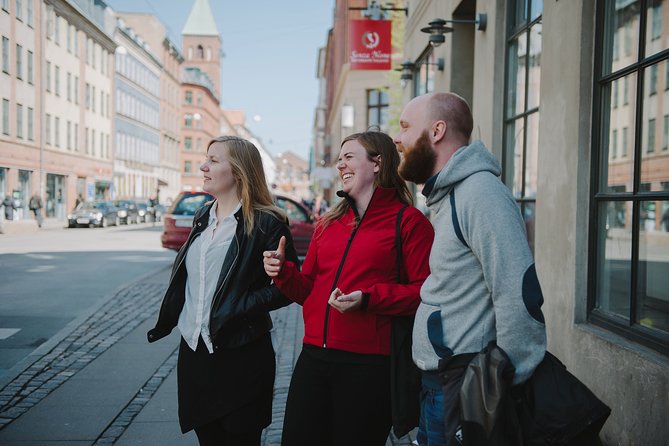
The opening walk takes about 15 minutes and starts with Vesterbro’s origins. Your guide sets up the neighborhood story before leading you along Istedgade, once Copenhagen’s best-known red-light district.
The tour does not treat the area’s past as a cheap shock story. Instead, it looks at how Copenhagen has tried to keep some of Vesterbro’s more unconventional character while making the streets safer. You hear about prostitution, drugs, and the government programs that helped change the area without wiping away every sign of its former life.
Istedgade is safe to visit today, but the guide’s explanation gives the street a sharper edge. This is a good early section for anyone interested in how cities handle difficult social issues. It is also brief, about five minutes, so do not expect a detailed social-history lecture.
Freddy’s shows the old brown-bar tradition
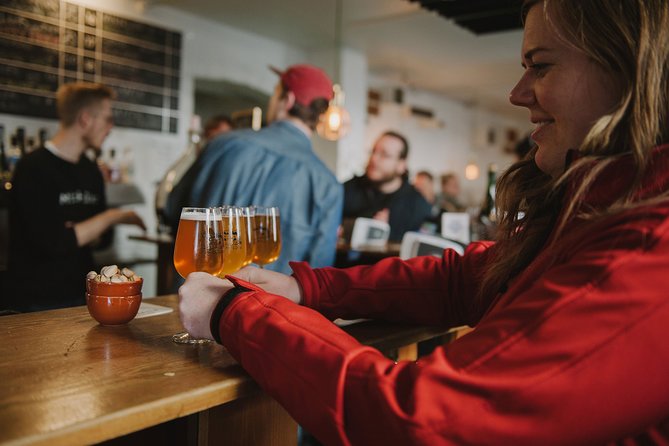
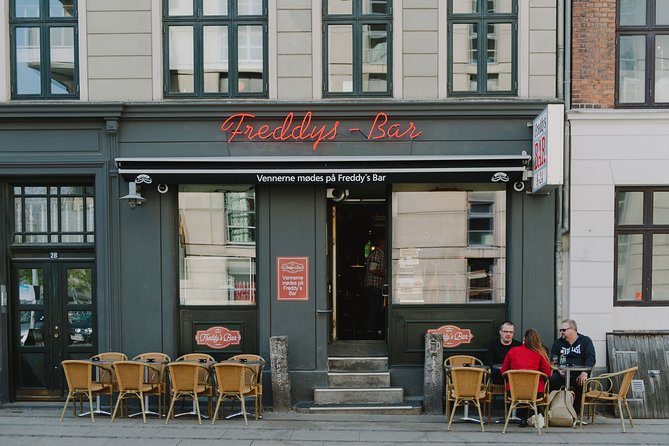
Freddy’s Bar is the first proper beer stop, and it supplies the tour’s most important contrast. Here you get a traditional Danish pilsner in a local brown bar, the sort of pub associated with working people, regulars, and after-work conversation.
The guide tells stories about Carlsberg workers and the role these bars played in neighborhood life. The point is not just to drink a pilsner. It is to understand why a simple pub could act as a meeting room, living room, and social safety net for people who worked nearby.
Allow about 30 minutes. You have time to drink, listen, and take in the room. The atmosphere is intentionally old-fashioned, and indoor smoking has been a recurring issue at this stop. Smoking indoors is not a small detail if you have asthma or are sensitive to smoke. One useful part of the format is that the guide is showing you a real piece of pub culture, not a polished bar selected only for comfort.
If you want a completely smoke-free beer outing, this tour may not be the right pick. If you want to understand the difference between an old brown bar and a modern craft-beer room, Freddy’s is central to the experience.
Meatpacking District: old workspaces, new evening life

After Freddy’s, the group walks through Copenhagen’s Meatpacking District. The guide explains how the district’s three sections were used in the past and how old industrial buildings found a new life through design, food, nightlife, and creative businesses.
This is one of the tour’s more practical features. You are not only passing through a famous area for a quick look. You are getting enough background to return later and make your own choices about restaurants, bars, and shops.
The tour ends nearby, so you can continue into the district after the final beer. That makes the timing useful. A 3 pm start leaves you near one of Copenhagen’s popular evening areas at about the point when you may be ready for dinner.
Same town, a different bottle:
- Krakow–Zakopane: Cable Car, Chocholow Baths, Cheese & Vodka
★ 5.0 · 10,720 reviews - Florence: Chianti Wineries Tour with Wine Tasting
★ 4.5 · 10,071 reviews - From Split: Krka Waterfalls, Food & Wine Tasting Tour
★ 5.0 · 9,326 reviews - Krakow–Zakopane: Cable Car, Chocholow Baths, Cheese & Vodka
★ 4.8 · 8,989 reviews
Viktoriagade, Mikkeller, and Copenhagen’s new beer culture
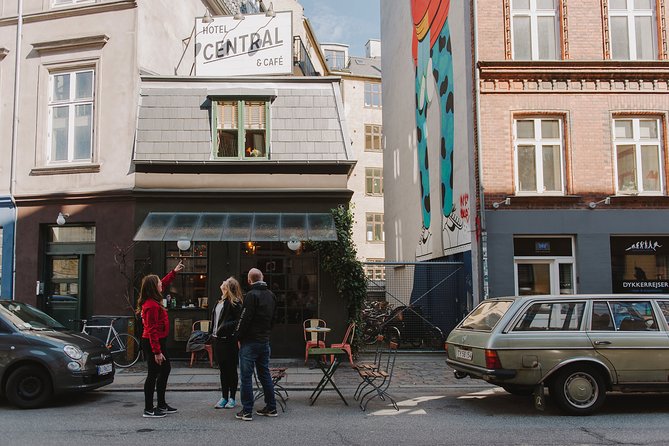
Viktoriagade takes the group to a small but meaningful part of Vesterbro. It may not look impressive at first, yet it represents the neighborhood’s rebellious and chaotic past. If the guide has a pen, you may even be invited to add a small drawing in an approved spot.
This is a good example of the tour’s approach. It notices modest details that you could easily miss on your own. You are not being led only to grand buildings and famous viewpoints. The guide is showing you the clues locals use to read their neighborhood.
Next comes Mikkeller Bar, another 30-minute stop. The story here concerns two siblings with a serious interest in beer who built a highly successful brand. This is where the contrast with Freddy’s becomes clear: one pub is traditional, smoky, and tied to working-class custom; Mikkeller is minimal, modern, and linked to Copenhagen’s craft-beer scene.
You can taste one of the early beers associated with Mikkeller, depending on the selection available. The focus is on the people and story behind the brand as much as the drink itself. If you want technical information about malt, yeast, fermentation temperatures, or brewing methods, this is not a specialist brewing course. The guide may know a lot about beer, but the main subject is Copenhagen culture through its bars.
The beer selection can also be adjusted in conversation. Guides such as Kenneth have helped people choose something closer to their usual taste, while Liva has been praised for offering different choices when someone has a preference. That personal help is useful if you enjoy beer but do not know Danish breweries well.
Small details near the New Theatre and French Quarter
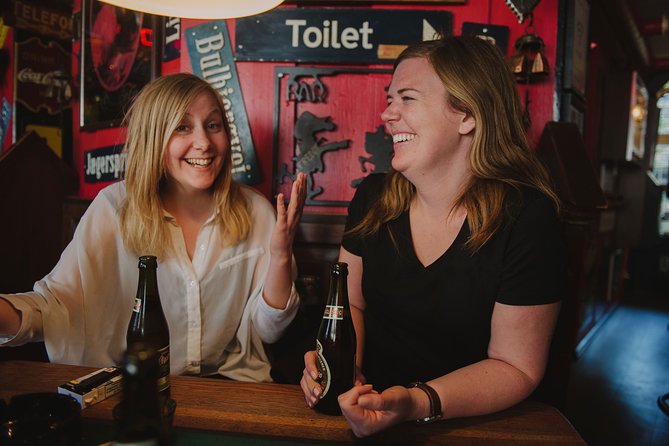
The walking sections between the bars are short, but they keep the tour from becoming a simple pub crawl. Near the New Theatre, the guide points out a small detail that marks the change from Vesterbro to Frederiksberg. It is a minor feature with a larger meaning tied to the neighborhood’s past.
The route then passes a charming small building with an upper floor and a single window. The guide uses it to tell another local story. These moments are easy to overlook when you walk alone, and they help give the tour its local feel.
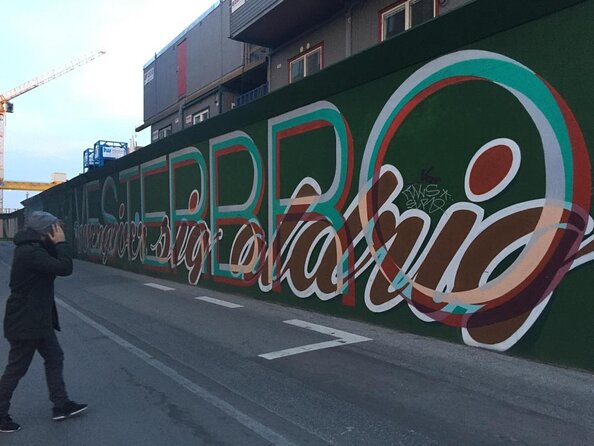
In Westend, the group enters the French Quarter and sees graffiti pieces approved by the municipality. Your guide explains why sanctioned spaces matter in a historic city where unapproved graffiti can create conflict.
I like this section because it avoids the simple idea that street art is either good or bad. Copenhagen is balancing preservation, public space, local expression, and regulation. The approved works offer a way for artists to contribute without treating every old wall as a blank canvas.
Skydebanehaven and the curious parrot story
At Skydebanehaven, the group passes through a gate that may suggest a castle entrance. There is no castle waiting inside, but the guide explains what the site once meant to royalty and why a seemingly pointless wall was built beside the green space.
This is also where you hear the origin of the Danish expression To Shoot the Parrot. The phrase comes from the site’s former use and gives the stop an unusual bit of local color.
Skydebanehaven adds a welcome change of pace. After streets and bars, you get a green public space and a glimpse of how older private or royal uses can become part of modern city life. The stop lasts about 10 minutes, so it is more of a focused explanation than a long park visit.
Sønder Boulevard and the city’s change of direction
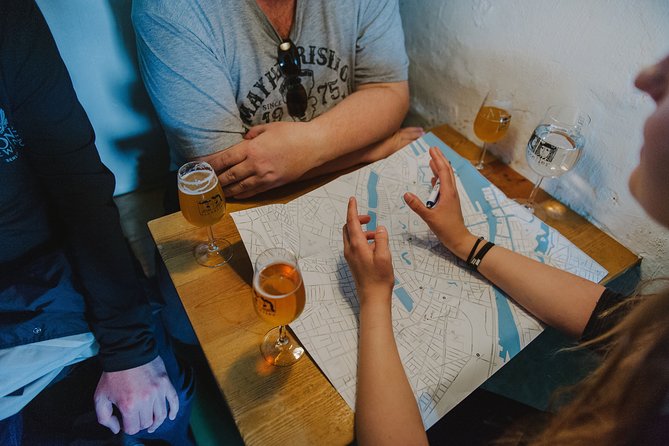
The route continues toward Sønder Boulevard, an area that once suffered from heavy traffic and pollution. Public planning changes in the late 1990s helped turn it into a place where local people could relax among green leisure areas.
This section gives useful background for understanding Vesterbro’s improvement. The neighborhood did not simply become fashionable by accident. Streets were redesigned, public space was reconsidered, and parts of the old working district were given a different future.
The amount of walking is fairly modest for a three-hour city tour. You should still wear comfortable shoes, but this is not a strenuous hike. The route has plenty of stops, and the beer breaks divide the walking into manageable sections.
Fermentoren brings old and new together
The final planned beer stop is Fermentoren Beer Bar. If outdoor beer service is not practical because of the weather, the group finishes indoors here instead. Fermentoren combines the welcoming feel of the old traditional pub with a large and changing selection of craft beer.
The taps change regularly, and the range can feel wide if you do not already know what you want. The guide can help you choose, or you can keep it simple and let chance decide. The included drink is one of the two craft beers on the tour.
You can remain at the bar after the formal tour ends, though any extra drinks are your responsibility. Your guide can also suggest nearby places for dinner. That is a strong ending because you do not have to cross the city after your last beer. Halmtorvet 27E is close to the Meatpacking District, where you can continue the evening.
What the $72.59 price really covers
At $72.59 per person, this is not the cheapest way to drink three beers in Copenhagen. If you measure the price only by the drinks, you will probably find it expensive.
The value lies in the setting, the small group, and the local conversation. You get one traditional Danish beer and two craft beers, but you also get a guide who connects those drinks to working life, urban change, street art, public planning, and neighborhood identity.
Guide quality matters a great deal here. Kenneth has been praised for making solo visitors feel included, adding humor, and adapting the route when the group showed interest. Liva has been singled out for combining beer knowledge with stories about Copenhagen and World War II. Oskar has been appreciated for historical details and help with beer choices. Jacqueline and Lucas have also led tours praised for their warmth and local insight.
The assigned guide can vary, so you should book this for the overall format rather than expecting one particular person. The strongest part of the tour is the human exchange. If you want a formal lecture or a technical tasting, spend your money elsewhere.
Who should book this Vesterbro walk
I would choose this tour if you want to see a Copenhagen neighborhood through everyday places rather than major sights. It suits solo visitors, couples, and small groups who like talking with a local and trying several kinds of beer.
It is also a good first or second-day activity. You learn where the Meatpacking District is, get suggestions for dinner, and receive one-on-one recommendations for exploring the rest of Copenhagen.
Beer fans will enjoy the range, but you do not need to be a serious beer enthusiast. One person who does not usually like beer still found the mix of stories, conversation, and different drinks enjoyable. The history and neighborhood material carries much of the experience.
I would be more cautious if you dislike walking between stops, dislike group conversation, cannot drink beer, or need a smoke-free environment. The tour is for people aged 18 and over, and additional food and drinks are not included.
Book at least a day ahead if your schedule is fixed. The tour is often reserved well in advance, and cancellation is free if you cancel at least 24 hours before the 3 pm start time. Meet at Reventlowsgade 7, near Copenhagen Central Station, and look for the guide about 10 minutes early. If you cannot find the guide when the tour begins, call the operator promptly.
Should you book it?
Book this tour if you want three beers with a strong sense of place, not just a tasting flight. The best parts are the contrast between Freddy’s and Mikkeller, the stories that turn ordinary streets into meaningful stops, and the easy finish near dinner in the Meatpacking District.
Skip it if $72.59 feels too high for three included drinks, or if indoor smoke would ruin your afternoon. For everyone else, this is a personable way to understand why Vesterbro is both rough-edged and polished, old-fashioned and newly fashionable.
FAQ
How long does the Vesterbro beer tour last?
The tour lasts about three hours and begins at 3 pm.
Where does the tour start?
The meeting point is Reventlowsgade 7, 1651 København, Denmark, near the gates of Copenhagen Central Station.
Where does the tour end?
The tour ends at Halmtorvet 27E, 1700 København, close to the Meatpacking District and its restaurants and evening bars.
How many people can join?
The group has a maximum of 10 people.
How many beers are included?
You receive one traditional Danish beer and two craft beers. Additional food and drinks cost extra.
Are people under 18 allowed?
No. Passengers under 18 are not permitted to join this tour.
What should I bring?
Wear comfortable footwear for walking and bring an umbrella or rain jacket if rain is possible. Service animals are allowed, and the tour is near public transportation.
Just poured in the world
- Valle de Guadalupe winery and brewery tours★ 5.0 · 123 reviews
- Private Wine Tour at Valle de Guadalupe (A wine tasting included).★ 5.0 · 99 reviews
- Off Road Tour Experience plus Winery visit in Baja★ 5.0 · 174 reviews
- ATV Off-Road Adventure through Valle de Guadalupe + Winery Visit★ 4.5 · 201 reviews
- Shared Gin, Vodka & Rum Making Experience at Nelson’s Distillery★ 5.0 · 64 reviews
- Private Wine Tour by Ansell Tours★ 5.0 · 174 reviews
- Discover Malt Whisky Day Tour Including Admissions from Edinburgh★ 4.5 · 285 reviews
- Edinburgh: Holyrood Distillery ‘Journey to Whisky’ Tour & Tasting★ 5.0 · 126 reviews
Drinks Tours, compared.

Douro Valley w/ Boat Tour, Wine Tasting & Lunch
Read our review →
Chichen Itza, Cenote & Valladolid Tour with Tequila and Lunch
Read our review →
Complete Douro Valley Wine Tour with Lunch, Wine Tastings and River Cruise
Read our review →
Zakopane: Cable Car, Chocholow Baths, Cheese & Vodka
Read our review →

Zakopane: Cable Car, Chocholow Baths, Cheese & Vodka
Read our review →