
REVIEW · WINE TASTING TOURS
Pinot Noir Masterclass – Wine tasting in Dijon
The clever part of this Dijon tasting is its side-by-side climb through Burgundy’s four main quality levels, from Village to Grand Cru. In 45 minutes, you get a useful map of Pinot Noir before spending more time in the vineyards or choosing bottles for dinner.
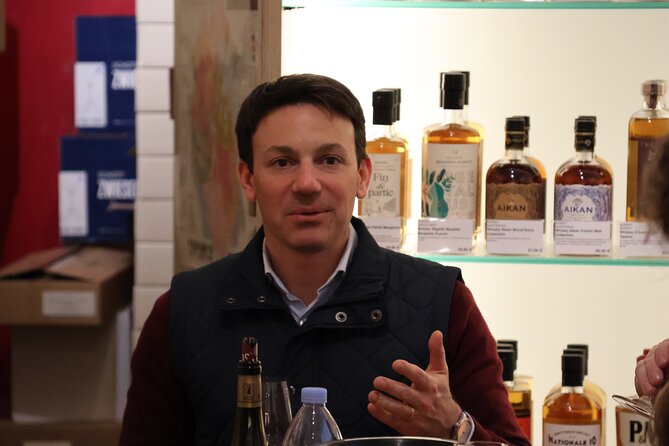
I like the small group, capped at six, and the clear teaching from guides such as Matteo, Emily, Adrien, Pierre, and Valentin. I also like the setting: a real wine shop in central Dijon, where you can keep browsing after the tasting. The main consideration is comfort. This is a compact shop tasting, not a quiet seated lounge, and you may spend much of the session standing.
Key points to know before booking
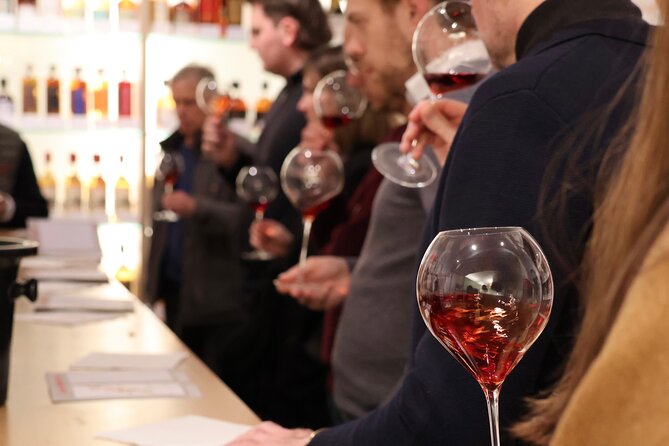
- Four Burgundy wines in a clear progression: Taste from Village appellation through Premier Cru and Grand Cru levels, making the structure of Burgundy easier to understand.
- A useful first lesson in terroir: Guides explain how geography and local vineyard areas affect Pinot Noir.
- Small groups of up to six: The format allows time for questions and personal attention.
- Held at a working wine shop: You taste at 1 Bis Rue Musette in Dijon’s historic center, with bottles and shop activity around you.
- Short and sharply focused: The 45-minute session fits neatly into an afternoon or evening in Dijon.
- Good preparation for vineyard visits: The basics can help you make more sense of winery tastings around the Côte d’Or.
Four Pinot Noirs that explain Burgundy
Burgundy can make wine labels feel like a puzzle. The grape may be Pinot Noir, but the name on the bottle often tells you more about the place than the variety. This tasting gives you a simple way into that system.
You taste four Burgundy wines in sequence, beginning with the Village level and moving toward Grand Cru. That order matters. Instead of tasting four unrelated bottles, you can compare how the appellation and vineyard status affect the wine’s character, price, and sense of place.
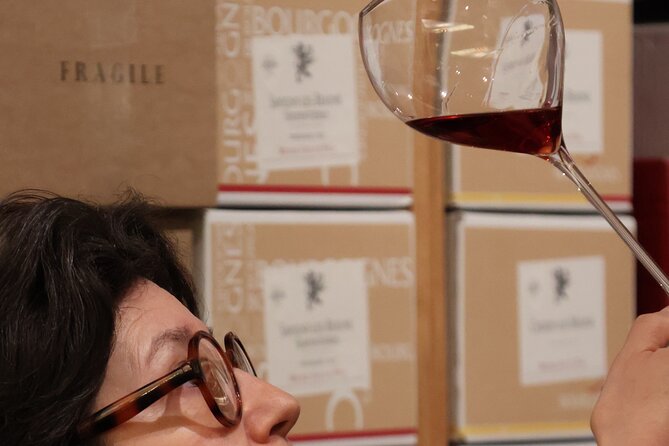
The session is designed as an introduction, not a technical certification course. You will learn how to look, smell, taste, and compare. The guide also explains Burgundy’s Climats, the precise vineyard parcels recognized for their distinctive growing conditions and cultural importance.
That progression is the strongest reason to book. If you are new to Burgundy, a Grand Cru can taste impressive, but you may not know what makes it different. Tasting several levels together gives you a reference point. The Village wine becomes your starting line, and the later wines show how the region builds its hierarchy.
You should not expect a full survey of every Burgundy appellation. Four wines cannot cover the entire Côte d’Or, and the experience focuses on Pinot Noir rather than white Burgundy. Still, for a first lesson, the narrow focus works well.
More Wine Tasting Tours in France
- Bordeaux: Cité du Vin Entry Ticket and Wine Tasting
★ 4.6 · 3,885 reviews - Montmartre Hill French Gourmet Food and Wine Tasting Walking Tour
★ 5.0 · 2,588 reviews - From Paris: Loire Valley Castles Day Trip With Wine Tasting
★ 4.6 · 1,727 reviews
What happens at 5 p.m. on Rue Musette
The tasting begins at 5 p.m. at 1 Bis Rue Musette, 21000 Dijon. You return to the same place at the end, so there is no separate drop-off or second meeting point to find.
The address is in central Dijon, near public transportation. That makes the experience easy to add after sightseeing, before dinner, or at the start of an evening in town. The mobile ticket is useful if you are moving around with your phone rather than carrying printed paperwork.
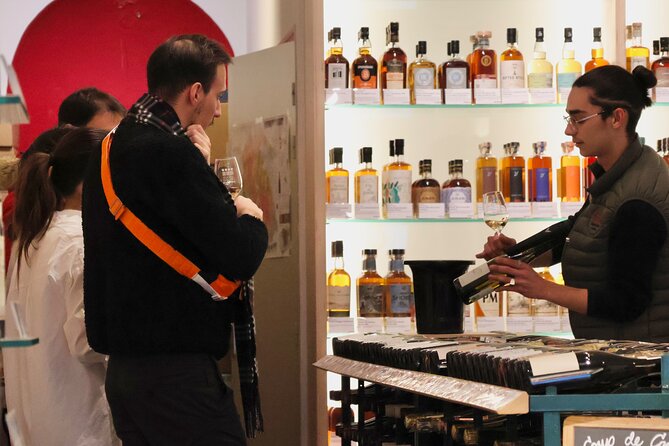
The shop is not just a backdrop. It is the place where the tasting happens. You are surrounded by bottles for sale, and ordinary shop activity may continue nearby. That gives the session an honest, local feel, but it also means you should set your expectations correctly.
This is not a polished cellar with soft lighting and a long table. It is a working wine merchant in the heart of Dijon. Some people will enjoy the direct connection to buying and discussing wine. Others may find the space cramped, especially when customers pass through.
Seating has been a point of variation. One account describes the tasting as entirely standing, while the provider says chairs are available and that a staff member is assigned to the workshop. The sensible approach is to ask for a chair if you need one rather than assume a seat will be ready.
Meeting Matteo, Emily, Adrien, Pierre, or Valentin
The experience may be led by Matteo, Emily, Adrien, Pierre, or Valentin. The exact guide depends on the session, but the teaching style is consistent in its main aim: give you a practical grasp of Burgundy’s wines and how to taste them.
Adrien is the wine merchant behind the experience and presents himself as an ambassador for the Climats of the Burgundy Vineyard, a UNESCO World Heritage site. Pierre is praised for patient answers and a good sense of humor. Matteo is described as especially enthusiastic about teaching, while Emily has led sessions that balance regional detail with an easy manner. Valentin is also noted for explaining both wine and places to stop in the area.
Those details matter because a short tasting depends heavily on the person guiding it. You need someone who can explain complicated terms without turning the session into a lecture. The best parts of this experience appear to come from that personal exchange: asking why one wine tastes different from another, how the region’s geography affects the grape, and what the appellation names actually mean.
The English-language option is useful for international visitors. One less positive experience involved switching between French and English, which became tiring. That does not mean every session has this problem, but the pace may feel full if the guide is serving a mixed-language group.
You can help yourself by asking direct questions. If you want more detail on terroir, say so. If you are new to wine tasting, say that too. The session is intended for beginners, and you do not need to arrive with technical vocabulary.
Why the appellation ladder is worth your time
Burgundy’s classification system is not just a pricing ladder. It reflects how the region divides vineyards into different named places, villages, Premier Cru sites, and Grand Cru parcels. The tasting introduces these four broad levels in a way you can taste rather than simply read about.
A Village wine gives you a broad sense of a named village area. The next steps narrow the focus and generally point to more specific vineyard locations. By the time you reach Grand Cru, you are dealing with the most prestigious classification in the tasting, but prestige does not always mean you will personally prefer the wine.
That is an important lesson. A higher classification may offer greater detail, rarity, or length, but taste is personal. I like that this format lets you make your own comparison. You are not simply told that one bottle is better. You can decide what changes for you as the classification rises.
The guide also explains the role of geography. Slope, soil, exposure, and location all help shape Burgundy’s differences. You may not leave able to identify every vineyard, but you should have a better idea of why two Pinot Noirs from the same region can feel so different.
For someone planning a week of winery visits, this is a useful primer. You will recognize the terms sooner and have better questions ready. For someone with only one afternoon in Dijon, it offers a compact taste of the Côte d’Or without requiring transport into the countryside.
Same town, a different bottle:
- Bordeaux: River Garonne Cruise with Glass of Wine and Canelé
★ 4.5 · 3,630 reviews - From Bordeaux: Afternoon Saint-Emilion Wine Tasting & snack
★ 4.8 · 1,581 reviews - From Paris: Day Trip to Champagne with 8 Tastings & Lunch
★ 4.8 · 1,501 reviews - Medoc or Saint Emilion Wine Tasting and Chateau from Bordeaux
★ 5.0 · 1,415 reviews
The shop setting: useful, lively, and sometimes tight
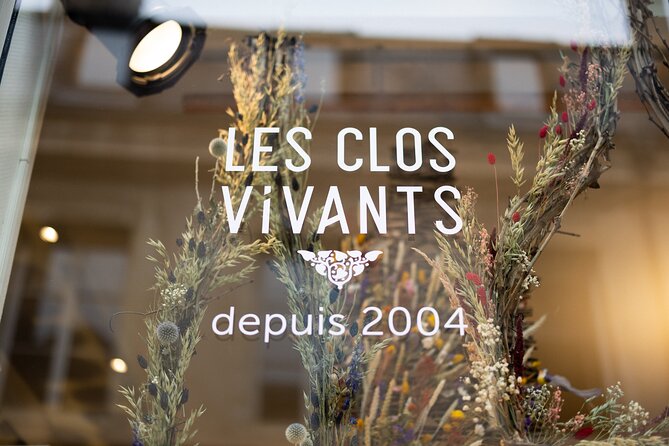
The wine-shop setting gives you one practical advantage: you can buy a bottle after tasting. Several people have purchased wine to take home, and the staff can continue the conversation while you browse. One session also finished with cassis liqueur from Maison Briottet, a Dijon specialty, though the advertised tasting includes four Burgundy wines and does not promise a liqueur sample.
The shop atmosphere can also be part of the fun. You are not separated from the local wine trade. Bottles, labels, and customers provide a sense of how wine is actually sold in Dijon.
The trade-off is space. You may stand close to the stock, and passing customers can interrupt the calm. If you want a slow, private tasting with plenty of room, this may not be the right choice.
I would also avoid booking it with the expectation of food. Food is not included. The four wines are the center of the session, so eat beforehand if you need more than a tasting pour. This is especially sensible because the activity begins at 5 p.m., a time that may fall between lunch and dinner.
Is $42.34 a fair price for 45 minutes?
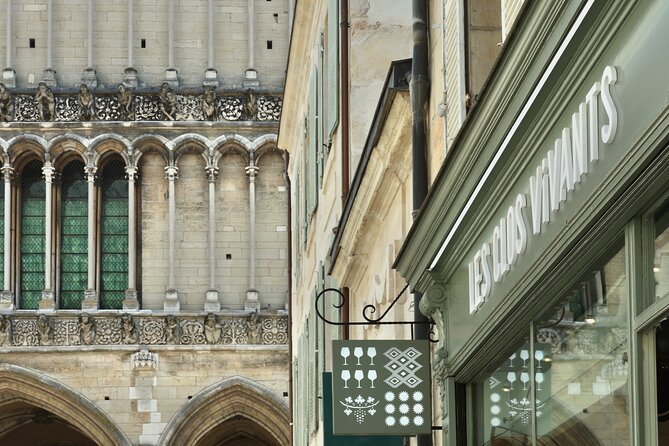
At $42.34 per person, the cost is not low for a 45-minute activity. The value depends on how you use it.
You are paying for four Burgundy wines, a guide who can explain the region in English, and a small group limited to six. Grand Cru wines can be expensive to sample on their own, so the chance to compare four classification levels in one sitting gives the price a reasonable foundation.
The value is strongest for a beginner or for someone with limited time. If you are not heading into the vineyards, this may be one of the easiest ways to get a structured introduction in Dijon. It can also save you from buying several bottles without knowing what you are looking for.
The value is less clear if you already understand Burgundy’s appellations and regularly taste Pinot Noir. You may prefer a longer vineyard tour, a food pairing, or a more private tasting. This experience is an introductory class, not a full day in the Côte d’Or.
I would think of it as a short orientation with wine included, not as an evening of entertainment. The more you want to learn, the better the price feels. The more you want a luxurious setting, the less convincing it becomes.
Who will get the most from this Dijon tasting?
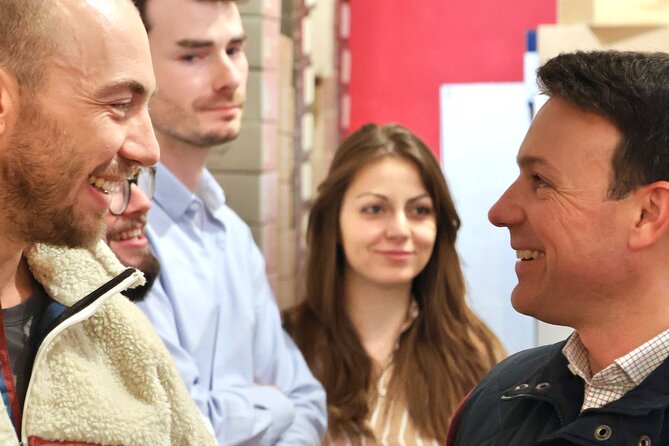
This is a good fit for you if Burgundy wine is new territory. The guides explain the basic tasting process and the four classification levels without requiring prior knowledge. You can arrive curious and leave with a working vocabulary.
It also suits people planning vineyard visits. A little preparation in Dijon can make later tastings more rewarding because you will understand the difference between a village name, a vineyard classification, and a broader regional idea.
The format works well for solo visitors, couples, and small groups. With a maximum of six people, you have a better chance to ask questions than you would in a large commercial tasting.
It is less suitable if you want a full meal, a long seated session, or a quiet private room. It may also disappoint if you expect a guided drive through the vineyards. The activity remains at the shop, and it ends where it begins.
The 45-minute length is a strength for some and a limitation for others. It fits neatly into a Dijon itinerary, but the guide has to pack in a lot of information. If you prefer a relaxed pace, ask questions as you go and accept that the session is built around a compact overview.
Practical details that affect your choice
The experience is offered in English and uses a mobile ticket. Service animals are allowed, and the location is near public transportation. Confirmation is provided at booking.
You can cancel for a full refund if you do so at least 24 hours before the 5 p.m. start time. Cancellations or changes made within 24 hours are not accepted for a refund, and the cut-off follows local Dijon time.
The activity is usually booked about 22 days ahead. That suggests you should reserve before your trip if the 5 p.m. slot matters, especially since the group is limited to six. The small capacity is good for the teaching, but it leaves less room for last-minute plans.
Bring an open mind and a few questions. You do not need special equipment, and there is no need to know how to pronounce every French vineyard name. The guide’s job is to provide the framework.
Should you book it?
Book this Pinot Noir Masterclass if you want a short, practical introduction to Burgundy before exploring Dijon or the surrounding vineyards. The four-wine progression is the main attraction, and the small group makes it easier to learn from Matteo, Emily, Adrien, Pierre, or Valentin.
Skip it if your priority is a spacious seated room, food pairings, or a countryside visit. The shop is compact, seating may be limited, and the session is over in about 45 minutes.
For most first-time Burgundy visitors, I think it is a smart opening move. It gives you enough background to read a wine label, ask better questions, and understand why Burgundy’s Pinot Noir is organized around place as much as grape.
FAQ
Where does the Pinot Noir Masterclass take place?
It takes place at 1 Bis Rue Musette, 21000 Dijon, France. The activity ends back at the same meeting point.
What time does the tasting begin?
The scheduled start time is 5:00 p.m.
How long does the tasting last?
The tasting lasts approximately 45 minutes.
How many wines are included?
Four Burgundy wines are included. The tasting progresses from the Village appellation to the Grand Cru level.
Is food included?
No. Food is not included in the price.
Is the tasting offered in English?
Yes. The experience is offered in English.
How large is the group?
The activity has a maximum of six people.
Who may lead the tasting?
The introduction may be led by Matteo, Emily, Adrien, Pierre, or Valentin.
Can I cancel for a full refund?
Yes. You can cancel for a full refund at least 24 hours before the experience begins. Cancellations or changes made less than 24 hours before the start time are not refunded.
Just poured in France
- Chardonnay Masterclass – Wine tasting in Dijon★ 5.0 · 91 reviews
- Small-Group Full-Day Tour of Côte de Nuits, Côte de Beaune Vineyards and Beaune Historical District★ 5.0 · 364 reviews
- Small group Burgundy tour of Beaune with Wine Tasting from Dijon★ 4.5 · 85 reviews
- Half Day Tour of the Cote de Nuits Vineyards from Dijon★ 5.0 · 108 reviews
- The Emblematic: visit of villages, Haut-Koenigsbourg, Wine tasting★ 5.0 · 81 reviews
- Au Cœur du Château – VSOP D’USSÉ & XO BARON OTARD★ 4.5 · 108 reviews
- Alsace Full Day Wine Tour from Colmar★ 5.0 · 104 reviews
- Safari-Tour Villages and vineyard, 1/2 day afternoon★ 5.0 · 65 reviews
Wine Tasting Tours, compared.
Douro Valley w/ Boat Tour, Wine Tasting & Lunch
Read our review →
Complete Douro Valley Wine Tour with Lunch, Wine Tastings and River Cruise
Read our review →

Small-Group Wine Tasting Experience in the Tuscan Countryside
Read our review →
Montserrat & Cogwheel Train, Gourmet Wine Tasting & Tapas/Lunch
Read our review →
Tuscany & Montepulciano Day Trip with Lunch & Wine Tasting
Read our review →Browse the lists this tour appears in