
REVIEW · DRINKS TOURS
Cusco: Historic Walking Tour with Pisco Sour and Music Show
Cusco’s best introduction may be a walk that moves from the Plaza de Armas to Inca stonework, colonial churches, San Blas lanes, and a high viewpoint in only two hours. You finish with a pisco sour or chicha morada, so the tour has a pleasant local payoff rather than ending at the last monument.
I like the way the route mixes famous sights such as Qoricancha with smaller stops, including a luthier’s workshop and 7 Borreguitos Street. I also like the small groups, limited to 10 people, and the lively guides. Erick, Nilo, and Niki have all led praised tours, with Erick especially good at mixing history, practical tips, and humor.
The main thing to check is the tour’s exact arrangement. It is described as a paid experience, but some participants found a free walking tour meeting at the same square and then tipping the guide. The music stop can also change if the venue is closed, so confirm what your $10 payment covers before you set out.
Key points
- A compact route through central Cusco: See the Cathedral, Company of Jesus, Qoricancha, Inca stonework, and San Blas without spending a full day on your feet.
- The guide makes the difference: English and Spanish tours are available, with guides such as Erick, Nilo, and Niki praised for clear explanations and good group energy.
- Local culture is built into the walk: Visit an instrument maker, hear Andean music, and learn about the Condor, Puma, and Snake.
- A scenic finish: The route includes San Blas views and 7 Borreguitos Street, often described as the city’s most picturesque street.
- A simple local drink at the end: Choose a pisco sour or non-alcoholic chicha morada.
- Good first-day value, with one price question: The $10 fee is modest, but ask whether it is a booking charge for a free-style walking tour and how tipping works.
Starting beside the Inca Fountain in the Plaza de Armas
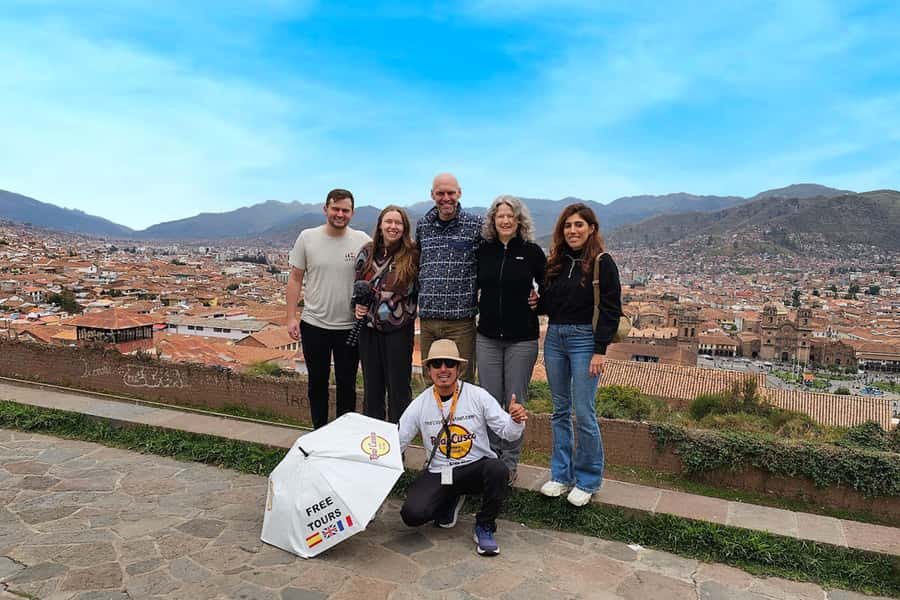
Meet beside the Inca Fountain in Cusco’s main square, at approximately -13.516772, -71.9787231. Your guide carries a white umbrella, which matters in a crowded square where several walking groups may gather.
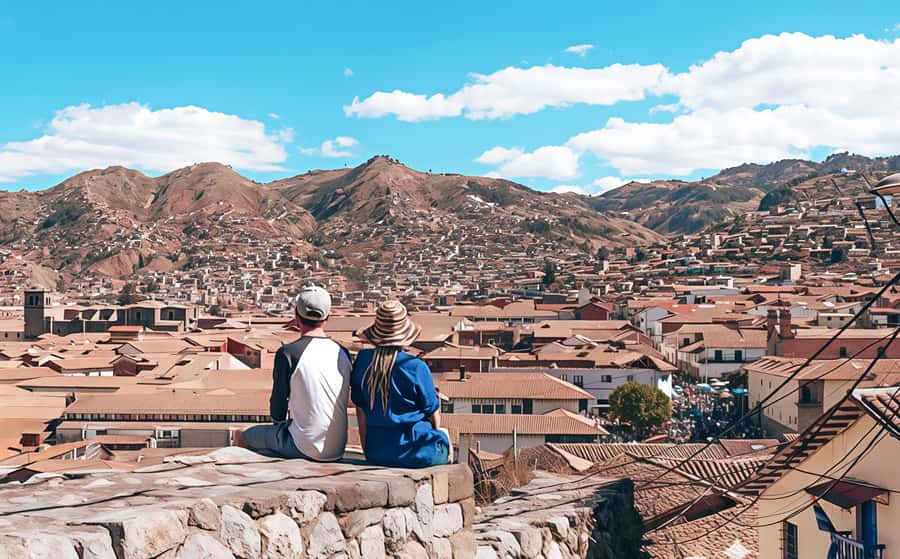
The Plaza de Armas is a useful starting point because the tour begins right in the middle of Cusco’s Spanish colonial center. You do not spend the first part of the morning getting to the sights. Instead, the guide can begin with the city’s public heart and explain how Cusco’s Inca foundations and colonial buildings occupy the same streets.
The small-group limit is 10 people. That is a practical size for a walking tour in narrow streets. You should be able to hear the guide more easily than in a large coach group, and you can ask questions without holding up a crowd. English and Spanish are offered, though the French option requires at least four customers to proceed.
This is a two-hour tour, so expect a quick-moving overview rather than a slow study of every building. If you have just arrived in Cusco, that pace is useful. You get a sense of direction, hear basic historical context, and collect ideas for places to revisit at your own speed.
More History Tours in the world:
- Sevilla Food Tour: Tapas, Wine, History & Traditions
★ 5.0 · 3,468 reviews - Valencia Old Town Tour with Wine & Tapas in 11th Century Historic Monument
★ 5.0 · 3,234 reviews - Edinburgh: Whisky Tasting with History and Storytelling
★ 4.9 · 2,451 reviews
The Cathedral and Company of Jesus set the colonial scene
The first major sights are the Cathedral and the Company of Jesus. Both face the Plaza de Armas and help explain the Spanish layer of Cusco.
The Cathedral gives the walk a grand opening. Your guide discusses the building and its place in the square, but entry to museums is not included. That means you should not expect an extended interior visit as part of the $10 experience. If you want to see museum collections, treat admission as an optional extra and plan separate time.
The Company of Jesus adds another strong architectural stop. From the outside, it contributes to the dramatic colonial frame of the plaza. The value here is not only the building itself, but the comparison between Spanish religious architecture and the Inca construction you see later in the route.
I appreciate this kind of order. You begin with familiar public landmarks, then move into the less obvious details of Cusco. The guide can connect what you are looking at now with the stone walls and beliefs discussed later, instead of presenting each sight as an isolated photo stop.
Qoricancha shows where two eras meet
Qoricancha, also called the Sun Temple, is one of the tour’s most important stops. It represents the Inca religious center beneath the later colonial presence, making it a key place to hear about the change from Inca rule to Spanish rule.
The tour gives you an explanation of Qoricancha, but museum entry is not included. This is an important distinction. You can learn about the site during the walk, then decide if you want to pay for admission and return for a longer visit.
For a short city tour, Qoricancha is a strong choice because it carries more meaning than a quick photograph. The guide can place the temple within Cusco’s wider story and show how the city’s past remains visible in its buildings and walls.
Do not expect every part of the complex to receive a detailed archaeological lecture. Two hours covers several stops, and the tour’s aim is to connect the city rather than focus on one monument. If Qoricancha is your main reason for booking, ask how much time the current route allows there.
Inca stones, the Andean Trilogy, and a famous balcony
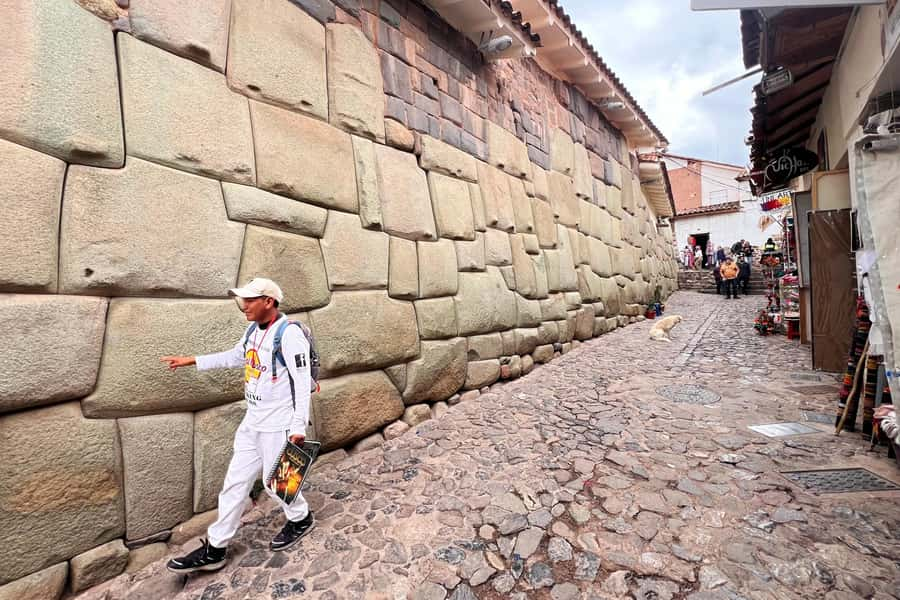
The walk continues through streets known for unusual Inca masonry. One stop focuses on the 12 and 13 angled stones, details that reward close attention. These are not grand plazas or monumental gateways. They are the sort of urban details you can easily miss when walking alone.
The guide also points out the Andean Trilogy, represented by the Condor, Puma, and Snake carved into an Inca wall. This gives you a simple way to understand an important Andean idea through the city’s actual stonework.
The route includes Cusco’s most beautiful balcony, according to the experience description. That is a quick visual stop rather than a separate attraction, but it adds variety to the walk. You move from religious buildings to walls, carvings, and small pieces of street architecture.
This is where a good guide earns the modest price. Without context, angled stones can look like attractive masonry and carved figures can pass unnoticed. With an explanation, you begin to see the city as a record of different cultures and beliefs.
More Shows and Performances in the world:
- Porto: Cálem Cellar Tour, Fado Show & Wine Tasting
★ 4.4 · 3,530 reviews - Lisbon: Live Fado Show in Historic Alfama with Port Wine
★ 4.8 · 572 reviews - Paris: Moulin Rouge Dinner Show, Champagne, and Transport
★ 4.6 · 368 reviews - Mexico City: Lucha Libre Show, Walking Tour & Tequila
★ 4.6 · 156 reviews
San Blas brings uphill streets and wider views
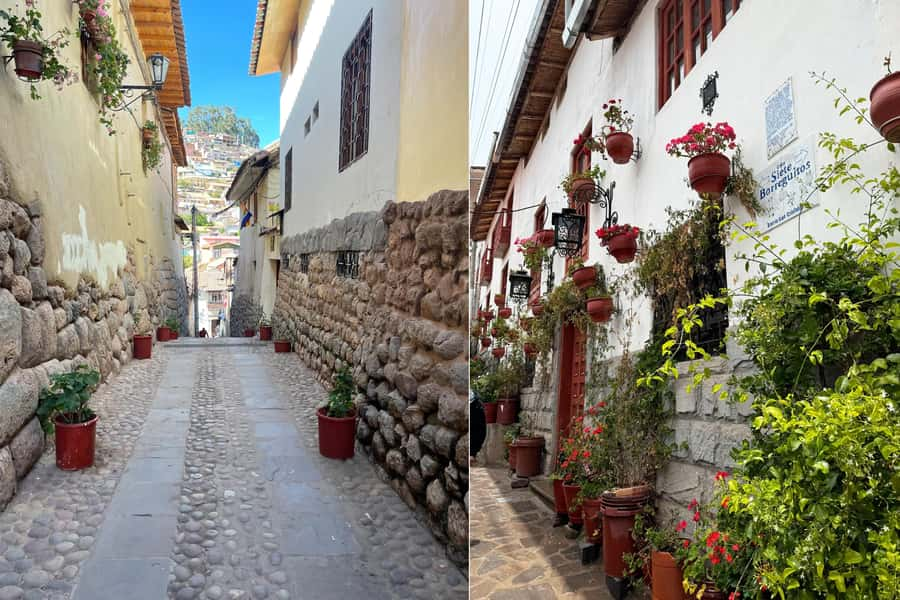
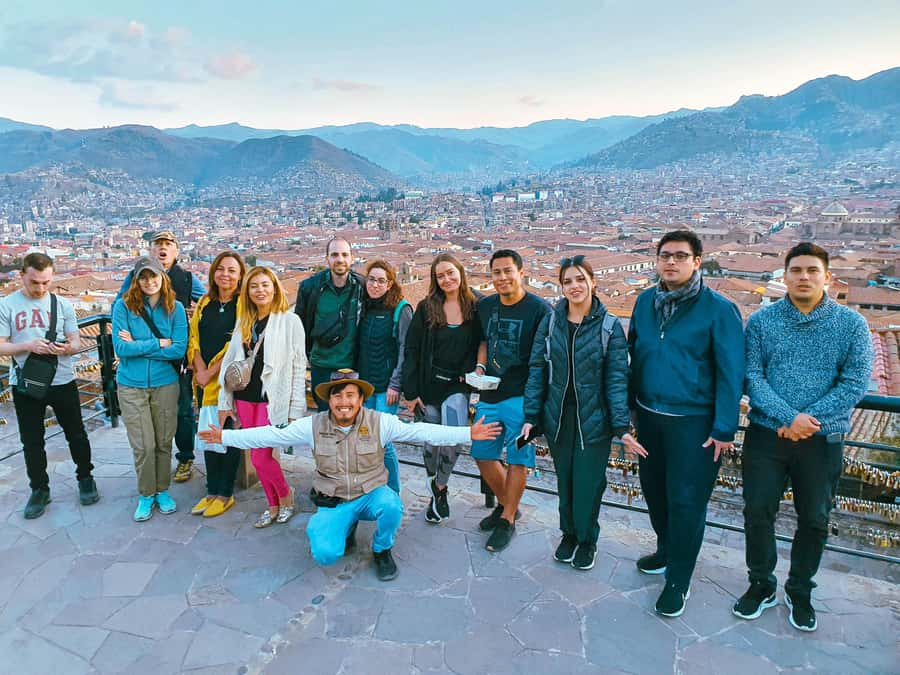
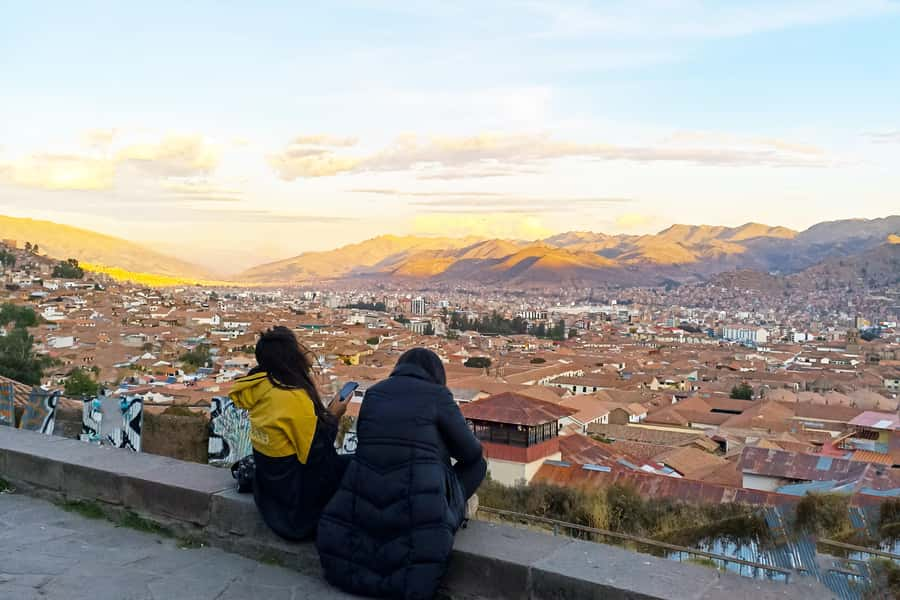
From the central area, you continue into San Blas, one of Cusco’s most appealing neighborhoods. Its streets are picturesque and the route includes views across the city, with one evening group enjoying a sunset viewpoint.
San Blas also changes the physical feel of the walk. Expect narrow streets and some uneven or uphill walking. The tour is not suitable for wheelchair users or people with mobility impairments, and the route’s old streets are a major reason why. People over 95 and babies under one year are also listed as unsuitable for this activity.
The views are a real benefit, especially if your first impression of Cusco has been limited to the main square. You get a broader sense of the city’s position among the surrounding hills. The exact view and timing can depend on the starting time, so do not assume every departure will include sunset.
I would book this walk early in your Cusco stay if you handle the physical pace comfortably. It gives you useful orientation before you return to San Blas for food, shopping, or a slower wander. The guide may also offer practical tips for the rest of your time in town.
The luthier visit adds a human touch
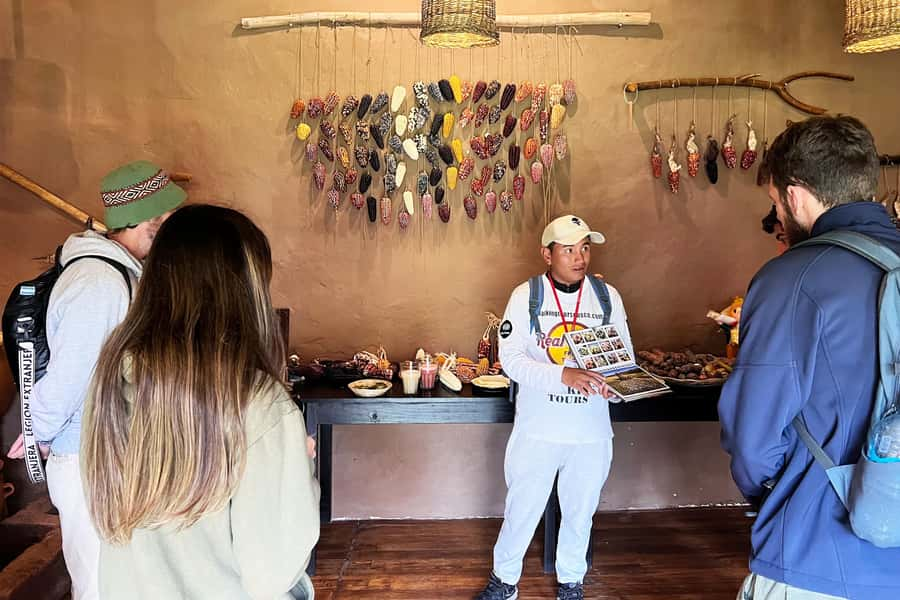
A stop at a luthier’s workshop is one of the more distinctive parts of the route. A luthier makes stringed instruments, and this visit takes you away from the standard circuit of churches and plazas.
The workshop connects local craft with Andean music. You are not simply looking at old stone buildings. You also see a working skill and learn how instruments support the region’s musical traditions.
The visit is included, but the available information does not promise a long demonstration or a chance to buy an instrument. Think of it as a short cultural stop within a walking route. If the craft visit is a major priority, ask the guide how much time is planned for the workshop on your departure.
Andean music may be the tour’s most changeable stop
The experience includes an Andean music show. This is a welcome break from historical commentary because you hear a living cultural tradition rather than only learning about the past.
There is one practical warning: the music venue can be closed. One participant chose this tour mainly for the show and found the intended vendor unavailable, though the guide suggested a local dance show afterward. That replacement worked well, but it was not the same arrangement.
You should treat the music stop as an important feature, not a guaranteed full performance in a fixed venue. The provider may adjust the route or recommend another local show. If music is your top reason for booking, confirm the current plan before paying.
The tour also offers views during this part of the route. That combination, music and a high point in San Blas, helps keep the walk from feeling like a string of lectures.
7 Borreguitos Street is made for a short photo stop
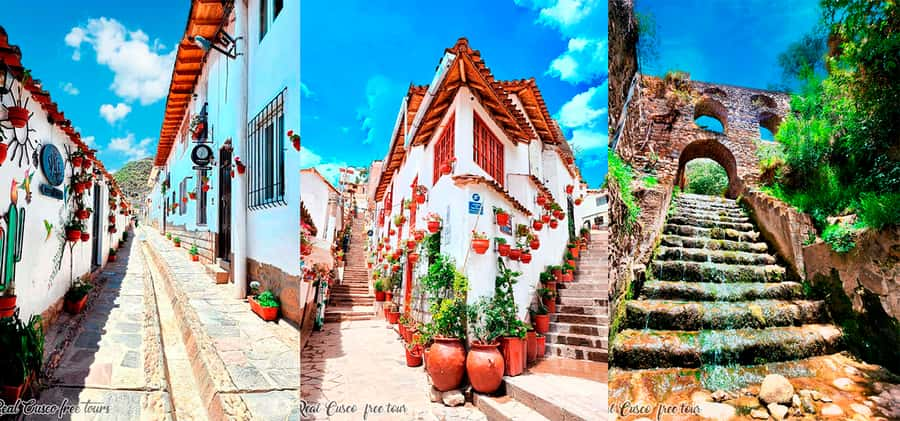
The tour calls 7 Borreguitos Street the most picturesque street in Cusco. It is included as a photo stop and gives the route a charming visual finish before the final historical visit.
A short stop here works well because the street is different from the broad Plaza de Armas. You get a tighter view of the city’s older lanes and a chance to take photographs without needing a separate neighborhood tour.
Do not expect to spend a large part of the two hours here. The walk has many stops, and this is one of several brief highlights. Still, it is exactly the kind of place that benefits from a guide who knows where to turn. You can return later if you want more time for photographs.
The Temple of Manco Capac closes the historical loop
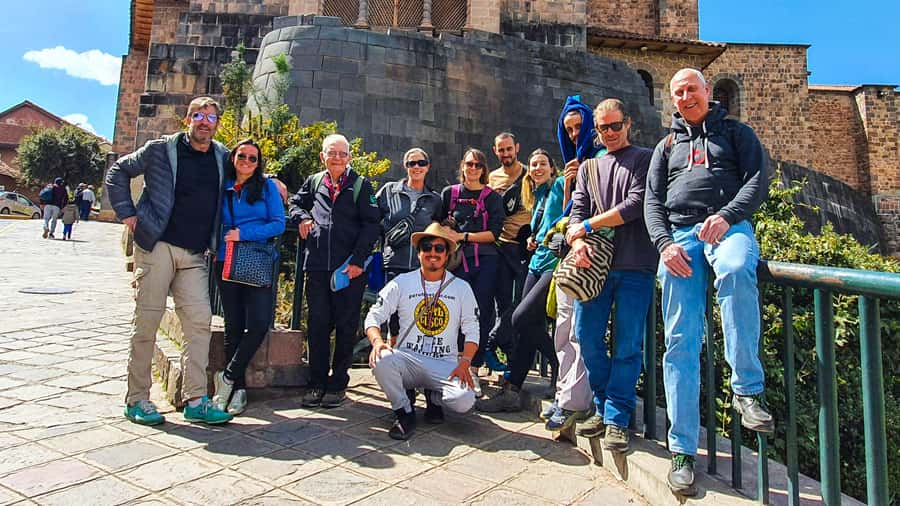
The route visits the Temple of the First Inca Ruler, Manco Capac. This stop gives the walk a clear link to the earliest part of Cusco’s Inca story.
By this stage, you have heard about the Spanish churches, the Sun Temple, Inca construction, Andean symbols, local music, and San Blas. The temple helps gather those threads around the figure of Manco Capac, identified here as the first Inca ruler.
The attraction is the context as much as the stop itself. A guide can explain why the place matters, while you see how the city’s origin stories remain part of its streets and monuments. Again, this is an overview tour, so expect an introduction rather than a long specialist visit.
Pisco sour or chicha morada gives the walk an easy finish
The tour ends with your choice of a pisco sour or chicha morada. Pisco sour is Peru’s national drink and contains alcohol. Chicha morada is a non-alcoholic Peruvian drink, so you have a clear alternative if you do not drink.
The drink is included, which improves the value of a $10 booking. It also gives the group a natural moment to pause after walking through the center and San Blas. One group ended with a toast in a cute restaurant, but the exact venue may vary.
You should tell the guide which drink you want and clarify whether the serving is a full drink or a sample. The supplied details use both tasting language and a final drink, so expectations may differ by departure.
Is $10 good value for two hours?
At $10 per person, the tour is inexpensive for a bilingual guide, a two-hour route, a luthier visit, music, and a drink. The small-group cap makes the price more appealing, especially if your group is not combined with many other participants.
The price structure needs a careful look. Some people found that guides also accepted participants who joined a free walking tour from the Plaza de Armas, with the expected tip paid at the end. One participant felt the paid booking was misleading because a tip was still expected.
I would ask three questions before joining:
- Is the $10 payment a booking fee, a fixed tour price, or a prepaid tip?
- Is an additional tip expected?
- Is the luthier and music stop operating on the date you choose?
The answer may affect how you judge the value. The tour can still be useful and reasonably priced, but you should know the payment arrangement in advance. Free cancellation up to 24 hours before the activity and reserve now, pay later options make the booking less rigid.
Who should book this Cusco walk?
I would choose this tour if you want a fast first look at Cusco, prefer a small group, and like having a guide explain what you are seeing. It suits people who want history, neighborhood streets, a view, music, craft, and a local drink in one compact outing.
It is also a good fit if you have just arrived and want help getting oriented. Guides such as Erick, Nilo, and Niki have been praised for clear explanations, good communication, humor, and useful advice for the rest of a Cusco stay.
I would hesitate if you need a wheelchair-accessible route, have limited mobility, or want a long, detailed visit inside Qoricancha or the Cathedral. Museum entry is optional and not included, and the route can change if the music venue is closed.
Should you book it?
Book this walking tour if you value a broad introduction over a deep visit to one site. For $10, the route covers an unusually wide mix of Cusco sights and adds a drink, a craft workshop, music, and San Blas views.
Before booking, confirm the tip policy and the music arrangement. If those details are clear, this is a sensible first-day tour and a good way to see how Inca, colonial, and modern Cusco fit together. If you want guaranteed live music or full museum access, choose a more specialized experience instead.
FAQ
How long does the Cusco walking tour last?
The tour lasts two hours. Starting times vary, so check availability for the date you want.
Where does the tour meet?
Meet beside the Inca Fountain in Cusco’s Plaza de Armas. The guide carries a white umbrella.
What languages are available?
The tour is offered in English and Spanish. A French guided tour requires at least four customers to proceed.
What drinks are included?
You can choose a pisco sour or a non-alcoholic chicha morada.
Is museum admission included?
No. Entry to museums is optional and is not included in the tour price.
Does the tour include an Andean music show?
The experience includes an Andean music show, but the venue may be closed and the route may need to change. Confirm the current music arrangement before booking if this is important to you.
Is the tour suitable for wheelchair users?
No. The activity is listed as unsuitable for wheelchair users and people with mobility impairments.
Can I cancel the booking?
Yes. You can cancel up to 24 hours in advance for a full refund. A reserve now and pay later option is also available.
Just poured in the world
- Valle de Guadalupe winery and brewery tours★ 5.0 · 123 reviews
- Private Wine Tour at Valle de Guadalupe (A wine tasting included).★ 5.0 · 99 reviews
- Off Road Tour Experience plus Winery visit in Baja★ 5.0 · 174 reviews
- ATV Off-Road Adventure through Valle de Guadalupe + Winery Visit★ 4.5 · 201 reviews
- Shared Gin, Vodka & Rum Making Experience at Nelson’s Distillery★ 5.0 · 64 reviews
- Private Wine Tour by Ansell Tours★ 5.0 · 174 reviews
- Edinburgh: Holyrood Distillery ‘Journey to Whisky’ Tour & Tasting★ 5.0 · 126 reviews
- Discover Malt Whisky Day Tour Including Admissions from Edinburgh★ 4.5 · 285 reviews
Drinks Tours, compared.
Douro Valley w/ Boat Tour, Wine Tasting & Lunch
Read our review →
Chichen Itza, Cenote & Valladolid Tour with Tequila and Lunch
Read our review →
Complete Douro Valley Wine Tour with Lunch, Wine Tastings and River Cruise
Read our review →
Zakopane: Cable Car, Chocholow Baths, Cheese & Vodka
Read our review →
Zakopane: Cable Car, Chocholow Baths, Cheese & Vodka
Read our review →
Small-Group Wine Tasting Experience in the Tuscan Countryside
Read our review →Browse the lists this tour appears in