
REVIEW · WINE TASTING TOURS
Trier: Guided City Walk with Wine Tasting
Trier’s Roman monuments make a fine backdrop for a wine tasting, but the clever part of this tour is the connection between the two. You move from the Porta Nigra to the Forum Baths while each pour relates to a building, square, or chapter in Trier’s past. I like the way this turns a standard city walk into something you can taste and remember. I also like the five regional wines, water, breadsticks, and useful restaurant voucher folded into the $43 price.
The main thing to consider is pace. Two hours covers many major sights, but most are photo and explanation stops rather than full interior visits. You will need to return later if you want a longer look inside Trier Cathedral, the churches, or the Roman ruins. The tasting also takes place outdoors, rain or shine, so dress for the forecast.
Key points at a glance
- Five wines tied to Trier landmarks: Each tasting has a connection to a place or story in the city center.
- A personal guide often named Simon: He grew up in Trier and brings local stories, wine knowledge, and a good sense of humor.
- A compact route through major sights: The walk runs from Porta Nigra to the Forum Baths, passing Roman, Christian, medieval, and palace landmarks.
- Winter changes the mood: From mid-November through January, you may taste four local mulled wines instead of regular wine if at least six people register.
- Good practical value: The tour includes water, breadsticks, and a voucher for a glass of wine with a main course at Weinwirtschaft Friedrich-Wilhelm.
- Easy underfoot: The route is completely barrier-free and does not require climbing steps.
Why wine works so well in Trier
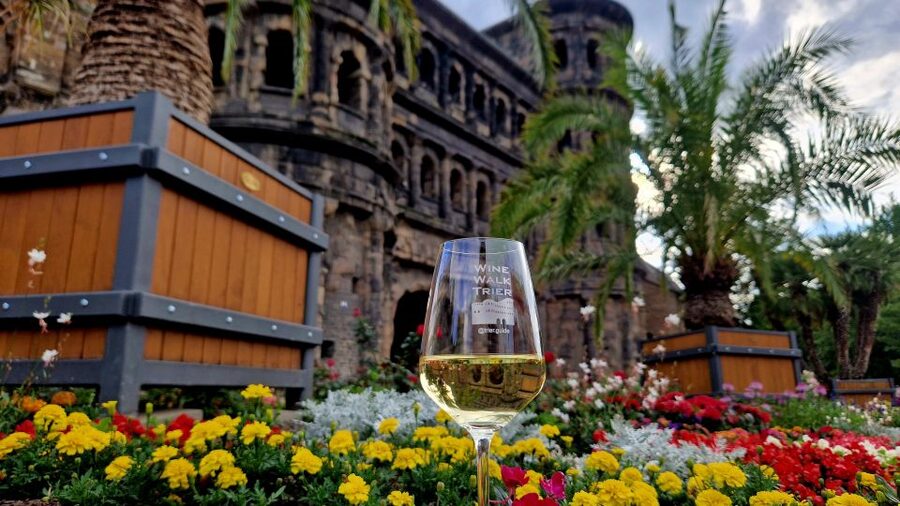
Trier is often introduced through its Roman remains, and rightly so. The city has an unusually strong group of ancient monuments in a walkable center. Yet the Moselle wine country gives the city a second identity. This tour lets you see both at once.
The wines are not random drinks carried along for atmosphere. The guide explains how each one relates to the region and to the stop where it is poured. That may mean a story about a nearby building, the age of the city, or the local wine trade. You are not taking a formal vineyard tour, but you get a useful introduction to the area’s wine culture without leaving the city center.
The tasting is also social. Five small pours, breadsticks, and a shared walking route give the group natural pauses to talk. On warm days, chilled Rieslings are especially welcome. In colder months, the mulled wine version makes more sense, particularly near Trier’s Christmas season.
Keep your expectations clear: this is a city tour with wine, not a technical wine course. You will learn about regional wines and their connections to Trier, but the largest portion of the experience is still the city itself.
More Wine Tasting Tours in Germany:
- From Porto: Douro Valley w/ Boat Tour, Wine Tasting & Lunch
★ 4.7 · 19,061 reviews - Complete Douro Valley Wine Tour with Lunch, Wine Tastings and River Cruise
★ 5.0 · 12,920 reviews - Florence: Chianti Wineries Tour with Wine Tasting
★ 4.5 · 10,071 reviews
Starting at Porta Nigra
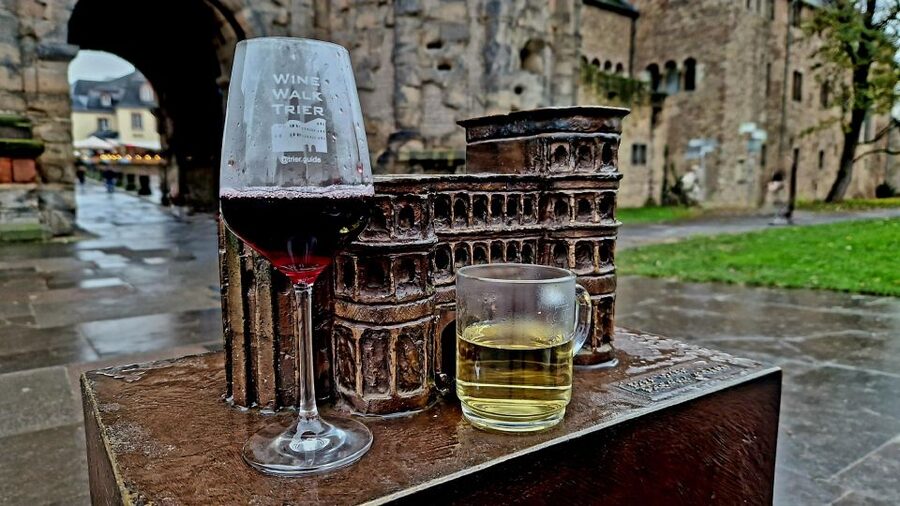
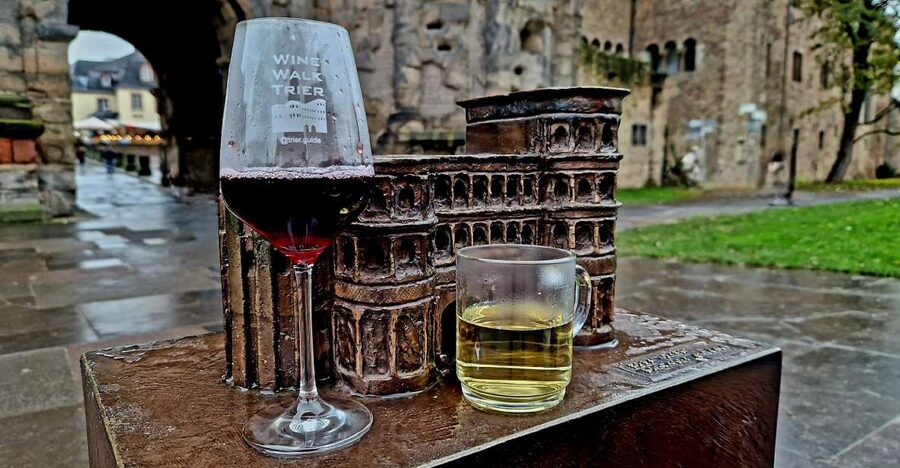
Meet on the left side of the Tourist Information, in front of the city model and near the flags. The activity is not provided by the Tourist Information, so look for your own guide rather than assuming the staff inside are running the walk.
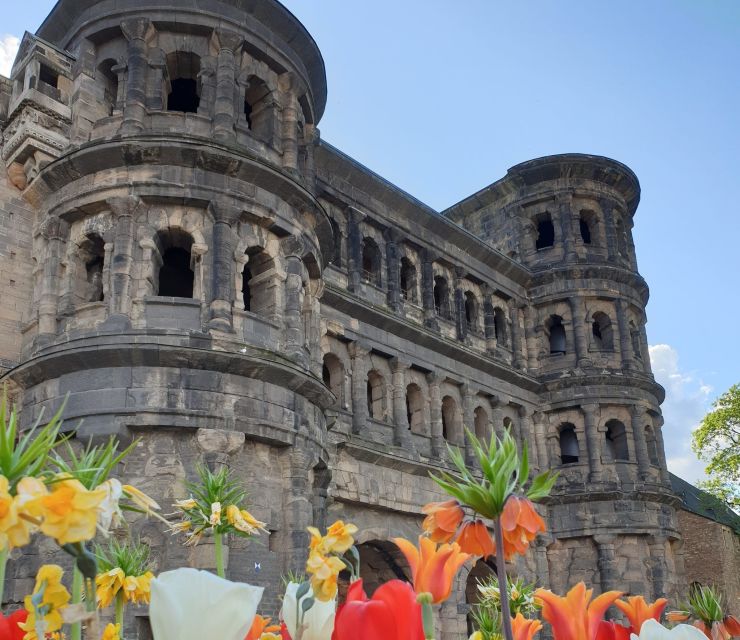
The first landmark is Porta Nigra, the massive Roman gate that once formed part of Trier’s defenses. It is an excellent meeting point because it is easy to find and immediately places you in the city’s Roman story. The name means Black Gate, a reference to the darkened stone seen today.
The guide uses the gate as more than a quick photo backdrop. You begin with the scale and purpose of Roman Trier, then move into the modern streets around it. If Simon leads your walk, you can expect a personal connection to the city. He grew up in Trier, and his style, based on the many dates he has led, includes history, humor, and plenty of answers to questions.
The route is short enough for most people to manage comfortably. Since the tour is barrier-free and has no steps to climb, it suits visitors who want a historic overview without a demanding walk.
Market Cross and Trier’s main square
From Porta Nigra, the group heads toward the Market Cross on the Main Market. This square gives you a change of scene: instead of the blunt military shape of the Roman gate, you see the civic center of old Trier.
The Market Cross is a useful place to hear how public life developed around the central square. You can take photos, listen to the explanation, and enjoy another wine connection. The tasting does not require you to sit down for a long presentation, so the walk keeps moving.
This is one reason I like the format. You are not parked in one tasting room while someone talks at length about labels and grape varieties. The city supplies the changing backdrop, and the wine gives each stop a small moment of focus.
Busy foot traffic can make it harder to hear, especially in the main square. Stay close to the guide and ask him to repeat anything you miss. One practical advantage of a small or moderate group is that questions are easier to handle, although the exact group size is not specified.
Cathedral and Liebfrauenkirche
Trier Cathedral and the neighboring Liebfrauenkirche bring the tour into the city’s Christian and medieval chapters. They also show why Trier rewards a guide. A quick walk through the center can leave you seeing only grand façades. The explanations help connect those façades to the city’s long religious role.
The cathedral is one of the key stops, but it is listed as a guided photo and sightseeing point rather than a dedicated interior visit. The same applies to Liebfrauenkirche. You should plan on hearing the story from outside or during a brief stop, then return later if you want quiet time indoors.
Liebfrauenkirche also receives a wine tasting. That pairing gives the stop extra character. The guide explains not only what you are drinking but why the wine fits the place or the surrounding region. The effect is simple but useful: you remember the site through a story, a view, and a flavor.
The route does not try to give you every detail of Trier’s religious buildings. Instead, it gives you enough structure to decide which ones deserve a longer visit after the tour.
More Guided Tastings in Germany:
- Hamburg: St. Pauli Highlights Guided Tour with Beer for 18+
★ 4.7 · 2,353 reviews - Munich’s Beer Halls and Breweries: 3-Hour Guided Tour
★ 4.6 · 928 reviews - Bamberg: Guided Beer History Tour with Optional Tasting
★ 4.6 · 772 reviews - Bruges: Guided Tour & Boat Ride with Optional Beer Tasting
★ 4.4 · 3,894 reviews
Aula Palatina and the Electoral Palace
The Aula Palatina, also called the Basilica of Constantine, brings the Roman story back into view. Its large, plain exterior differs sharply from the ornate Electoral Palace beside it. Seeing both together makes the city’s changing rulers and uses easier to understand.
The Electoral Palace is one of the most visually striking stops on the walk. It receives a wine tasting, so this is another point where the tour links architecture, power, and the Moselle region. You get time for photos and an explanation, then continue toward the Roman bath remains.
This pair of sights is particularly good for visitors with limited time in Trier. You see how Roman authority, later religious power, and princely rule left their marks within a relatively small area. The tour gives you a useful map of the center, which helps if you return on your own.
Do not expect entry tickets to the palace or other monuments to be part of the $43 fee. The experience is built around outdoor guiding and tasting. If you want to explore interiors, budget separate time and admission where required.
Kaiserthermen and the Forum Baths
The Kaiserthermen, or Imperial Baths, are the final major Roman ruin on the route. They help explain the scale of Trier as an important Roman city. From the outside, you can appreciate the surviving masonry and the size of the complex. The guide provides the historical frame, while the walk keeps the visit moving.
The tour finishes at the Forum Baths, another Roman bath complex on Viehmarkt Square. This is a fitting ending because the group returns to ancient Trier after passing through its market, churches, and palace. The final wine tasting takes place here, adding a relaxed close to the route.
The ending is practical, too. You are not brought back to Porta Nigra. If you have dinner plans, want to explore the square, or need to make your way toward the station, check the route before booking. The walk begins near the Tourist Information and ends at the Forum Baths.
The Forum Baths are a sightseeing stop rather than a long archaeological visit. You will get the guide’s explanation and a final look, but plan a separate visit if you want more time with the ruins.
What you actually drink
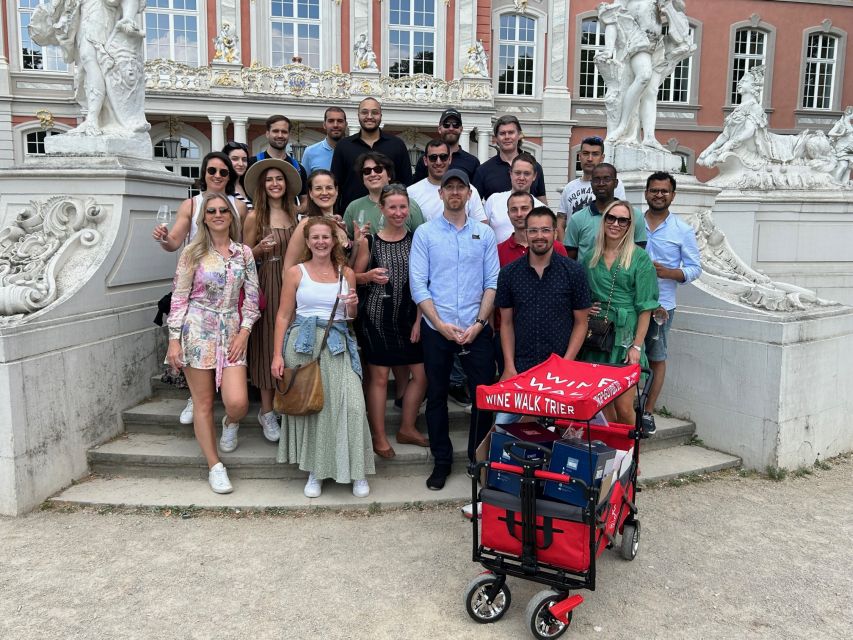
In the warmer season, the standard tasting includes five different regional wines. The wines are connected to buildings or places in Trier, and the guide explains their links to the Moselle wine-growing area.
The tasting is not designed around heavy food. Water and breadsticks are included, which help cleanse the palate and take the edge off drinking while walking. You should still eat a proper meal before or after the tour if you need substantial food.
From the middle of November through the end of January, the experience can switch to four different mulled wines from local wineries. This winter version applies when at least six people register. If fewer than six people sign up, the tour may use five different wines as it does in summer.
If you do not drink alcohol, four different grape juices can be arranged by email. That detail is worth handling before the tour rather than assuming a nonalcoholic tasting will be available on the day.
Bring your own expectations about serving vessels. A glass can be purchased after the tour for €6, and a wine glass holder costs €3. Those extras are not needed to take part, but they matter if you want a souvenir or a more polished tasting setup.
The guide makes the difference
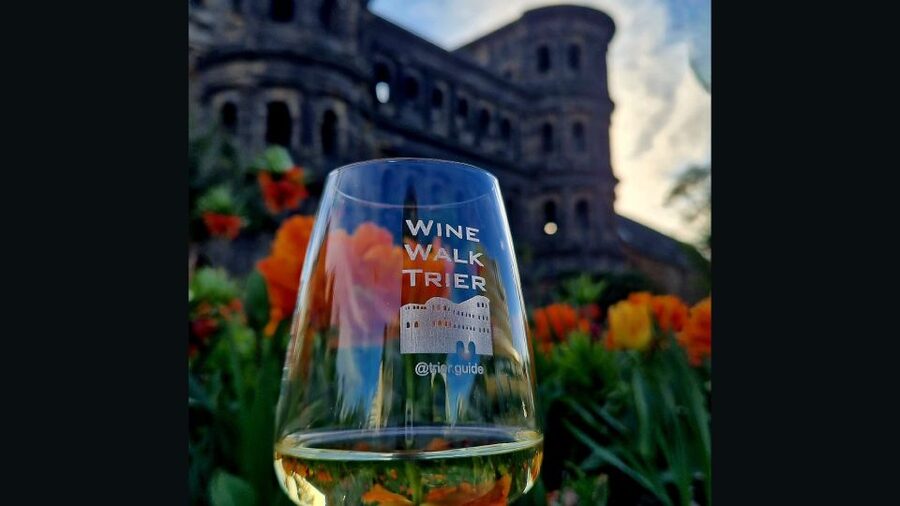
The guide is central here because the value comes from the links between places and wines. Simon receives especially strong praise for his mix of local knowledge, humor, patience, and wine sense. He is described as being from Trier and as someone who can handle detailed questions about both the city and its bottles.
That personal approach is useful in a city with several layers of history. Simon has been praised for pointing out details that are easy to miss, sharing places not found in basic guidebooks, and allowing time for photos or brief looks inside when possible. Those details can turn a simple route into a more memorable introduction.
No guide can remove every difficulty. In a busy square or on a noisy street, it may be hard to hear every word. Stay near the guide, especially at crowded stops, and speak up if traffic or footfall covers part of the explanation.
The listed languages are German and English. If you need a particular language, select it when booking or confirm it beforehand.
Is $43 a fair price?
For two hours, five wines, a guide, water, breadsticks, and a restaurant voucher, $43 is a reasonable package. You are paying for more than a basic walk, but you are also not paying for a full museum tour or a vineyard excursion.
The voucher is for one glass of wine with a main course at Weinwirtschaft Friedrich-Wilhelm, next to the Basilica. That gives the tour a useful afterlife. You can continue the wine theme with a meal rather than ending the experience at the final ruin.
The value is strongest if you want a quick first look at Trier and enjoy wine as part of the sightseeing. It is less compelling if you already know the city well, dislike group walks, or want long interior visits at each monument.
There are no hotel transfers, and admission to attractions is not listed as included. That is normal for a central walking tour, but it means you should not compare the price with a guided package that includes transport or monument tickets.
Timing, weather, and comfort
The activity lasts two hours and runs in all weather. Since the tasting and explanations happen along the streets, rain can affect comfort even though the tour continues. Wear shoes suitable for city walking and bring rain protection when the forecast looks uncertain.
The route is completely barrier-free and does not require climbing steps. That makes it a practical choice for visitors who want access to Trier’s main sights without a strenuous route.
Because the tour combines alcohol and walking, pace yourself. The guide provides water, and the breadsticks help, but the drinks are still part of a moving sightseeing experience rather than a long meal.
You can cancel up to 24 hours before the start for a full refund, and the reserve-now, pay-later option keeps the booking flexible. Those policies are useful if your Trier visit depends on a train connection or changing weather.
Who should book this Trier wine walk?
I would choose this tour for a first visit, a short day trip, or a stop in Trier when you want both Roman monuments and a taste of the Moselle region. It is also a good fit if you prefer history in manageable portions rather than a long lecture inside one museum.
Wine lovers will appreciate the regional focus, particularly the way the guide connects bottles to specific sites. People who are new to German wine can use the tasting as a gentle introduction without committing to a full vineyard outing.
Families and non-drinkers can still consider it, since grape juice is available by prior email arrangement. The alcohol-free option needs planning, and children may not find every historical stop equally engaging.
I would look elsewhere if you want a formal tasting with extensive notes, a visit to working vineyards, or guaranteed interior access to every major monument. This tour is best understood as a lively city introduction with five carefully placed drinks.
Should you book it?
Book it if you want Trier’s Roman gates, churches, palace, and baths explained in one easy route, with local wine giving the walk a little extra flavor. The combination is especially appealing when Simon is guiding, since his personal connection to Trier adds warmth to the historical material.
The strongest reason to choose it is the thoughtful pairing of place and drink. The main caution is that two hours moves quickly, and outdoor sightseeing in poor weather takes some preparation. For $43, it offers a useful first orientation, several regional pours, and a restaurant voucher, making it a solid choice for a short visit to Trier.
FAQ
How long does the Trier wine tasting walk last?
The tour lasts two hours. It begins near Porta Nigra and ends at the Forum Baths on Viehmarkt Square.
How many wines are included?
The standard warm-season experience includes five different regional wines. From mid-November through the end of January, it can include four different local mulled wines when at least six people register. If fewer than six people register, five regular wines may be served instead.
Can I take part without drinking alcohol?
Yes. Four different grape juices can be arranged, but you need to book this option by email.
Where does the tour meet?
Meet on the left side of the Tourist Information, in front of the city model near the flags. The tour is not provided by the Tourist Information.
Is the route accessible?
Yes. The tour is completely barrier-free, wheelchair accessible, and does not require climbing steps.
What happens if it rains?
The tour runs rain or shine. Bring suitable clothing and footwear because the wine tastings and sightseeing take place along the city streets.
Just poured in Germany
- Cologne: Old Town Beer History Tour★ 4.7 · 659 reviews
- Cologne: Kölsch Beer and Brew House 2-Hour Tour★ 4.6 · 651 reviews
- Berlin: BRLO BRWHOUSE Tour and Craft Beer Tasting★ 4.4 · 654 reviews
- Bamberg: Guided Beer History Tour with Optional Tasting★ 4.6 · 772 reviews
- Hamburg: Harbor Cruise with Wine and Cheese★ 4.7 · 795 reviews
- Berlin City Bike Tour with Beer Garden Stop★ 5.0 · 917 reviews
- Munich’s Beer Halls and Breweries: 3-Hour Guided Tour★ 4.6 · 928 reviews
- Munich: Beer and Food Tour with Dinner & Oktoberfest Museum★ 4.7 · 1,086 reviews
Wine Tasting Tours, compared.
Douro Valley w/ Boat Tour, Wine Tasting & Lunch
Read our review →
Complete Douro Valley Wine Tour with Lunch, Wine Tastings and River Cruise
Read our review →
Small-Group Wine Tasting Experience in the Tuscan Countryside
Read our review →
Montserrat & Cogwheel Train, Gourmet Wine Tasting & Tapas/Lunch
Read our review →
Tuscany & Montepulciano Day Trip with Lunch & Wine Tasting
Read our review →Browse the lists this tour appears in