
REVIEW · WINE TASTING TOURS
Apulia: Guided Wine Tasting with Local Appetizers
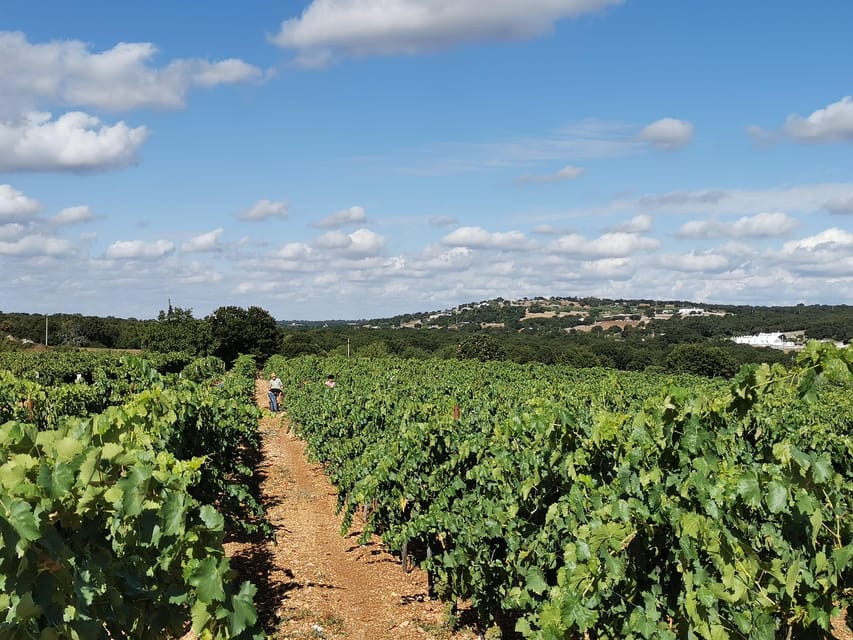
The best part of this Apulian outing is the setting: you taste wine among the rows of vines in the Itria Valley, not in a polished tasting room far removed from the farm. Guide Vincenzo brings the experience to life with clear explanations about grape varieties, harvesting, and the family’s move toward organic farming.
I like the four different indigenous grapes and styles, from crisp Verdeca to a dry Moscato, rosé Nero di Troia, and a fuller red Nero di Troia. I also like the homemade appetizer pairings, which turn four small pours into a proper taste of Apulian farm life. The main consideration is simple: this is a two-hour introduction, not a technical wine course, and the exact wines may change if availability requires it.
Key points
- Four wines from local grapes: Taste Verdeca, Moscato, and Nero di Troia in white, rosé, and red styles.
- A vineyard walk comes first: You get a look at the vines and farm setting before settling into the tasting.
- One appetizer with each wine: Four typical Apulian bites help show how local food and wine work together.
- Vincenzo adds useful farm context: Expect explanations about grape growing, harvesting, and organic farming.
- Family-run atmosphere: The experience feels personal and informal rather than commercial.
- Good value at $37: The price covers the walk, four glasses, four food pairings, and a live guide over two hours.
Starting among the Itria Valley vines
The experience begins on a farm connected with Puglia dei Trulli and Vigna il Castagno. The Itria Valley is a fitting place for a tasting built around local grapes. You are surrounded by working agriculture, so the wine has a clear connection to the soil, the vines, and the food served beside it.
The vineyard walk is not just a way to fill time before the glasses arrive. It gives you a basic picture of where the grapes begin their journey. You can look at the rows, hear about the growing cycle, and better understand why grape variety matters before you taste the finished wine.
Do not expect a long hike. The included walk is part of a two-hour experience, so it functions as a short introduction to the farm rather than a full countryside trek. That makes it easy to fit into a day of sightseeing around the Itria Valley, especially if you want a relaxed activity rather than another major attraction.
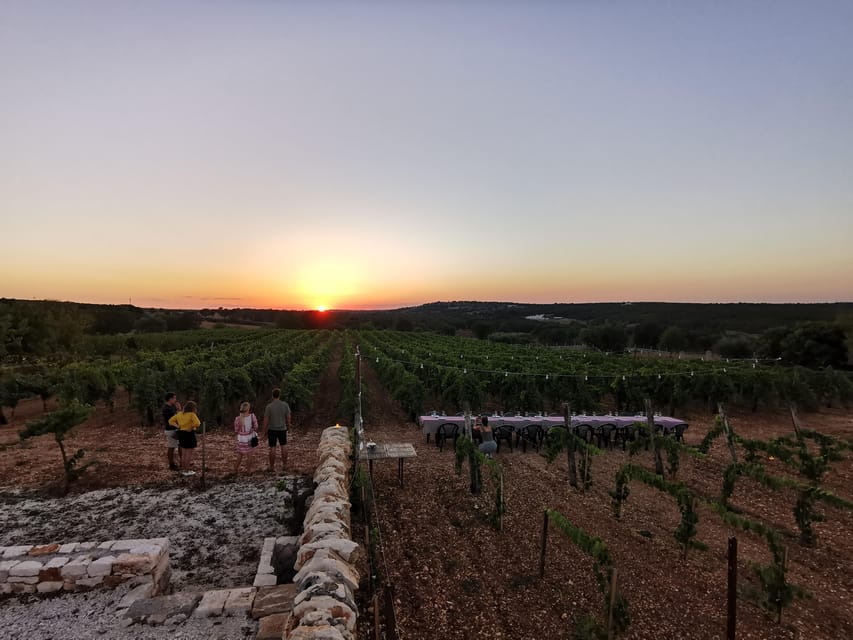
The setting has received especially strong praise for its beauty and calm. Sunset timing can make the visit feel particularly pleasant, though starting times vary and need to be checked when you book. If you prefer cooler air and softer light, an evening slot may be the best choice when available.
More Wine Tasting Tours in Italy
- Florence: Chianti Wineries Tour with Wine Tasting
★ 4.5 · 10,071 reviews - Small-Group Wine Tasting Experience in the Tuscan Countryside
★ 5.0 · 7,392 reviews - Rome: Tuscany & Montepulciano Day Trip with Lunch & Wine Tasting
★ 4.5 · 5,232 reviews
Four glasses, three grape varieties
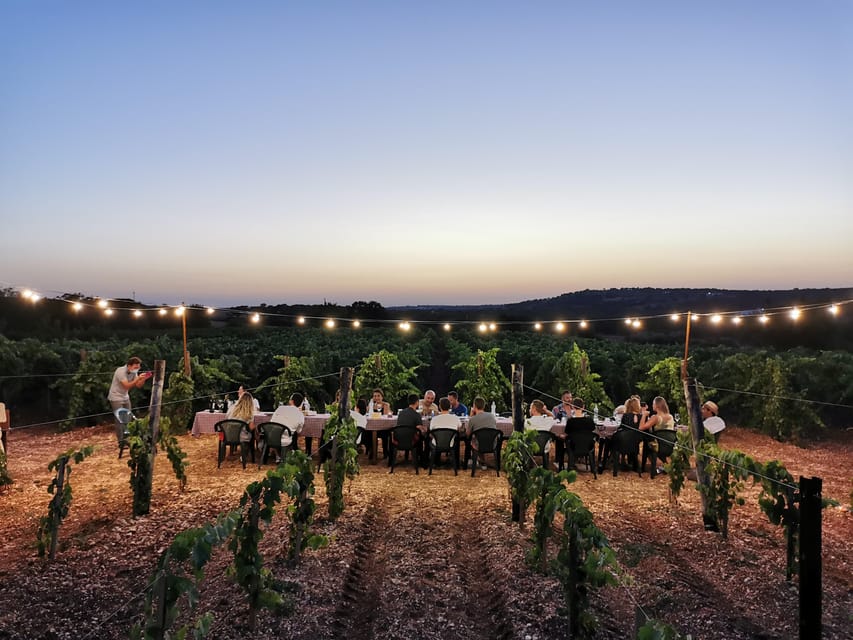
The tasting centers on four Vigna il Castagno wines. They give you a useful progression through several Apulian styles, with the local grape varieties doing most of the talking.
Pietra Viva, Verdeca white wine
Pietra Viva is a still white made from 100 percent Verdeca grapes. It carries the IGP Valle d’Itria designation and has an alcohol level of 12 percent.
Verdeca is one of the indigenous white grapes associated with the area, so this is a chance to taste something more regional than a familiar international variety. I would pay attention to how the wine feels beside its appetizer, rather than judging it in isolation. The food pairing is there to show how a local white works at the table, which is central to Apulian dining.
1929 Moscato, a dry white
The 1929 Moscato is made from 100 percent Moscato and is listed as an IGP Puglia wine. It is described as a dry white with a natural color, made from Moscato di Trani grapes, at 12.5 percent alcohol.
This is an especially useful stop in the tasting because many people expect Moscato to be sweet. Here, the dry style gives you a chance to reset that assumption. Taste it slowly with its paired appetizer and notice how the grape’s character comes through without turning the glass into a dessert wine.
Same town, a different bottle:
- SMALL-GROUP Wine Safaris: Tuscan Wine Tasting Tours from Florence
★ 5.0 · 5,088 reviews - Winner 2025 Florence Sunset Food & Wine Tour by Eating Europe
★ 5.0 · 5,015 reviews - From Florence: Siena, San Gimignano, Pisa & Lunch at Winery
★ 4.8 · 4,538 reviews - San Gimignano, Siena, Monteriggioni, Chianti Day Trip with Lunch & Wine Tasting
★ 4.5 · 4,432 reviews
1° Luglio, Nero di Troia rosé
The 1° Luglio is a still rosé made from 100 percent Nero di Troia grapes. It is an IGP Puglia wine with an alcohol level of 12.5 percent.
The rosé gives the tasting a lighter middle course between the whites and the red. It also lets you compare how one local grape can appear in more than one style. That comparison is one of the stronger reasons to enjoy the full four-glass sequence instead of selecting only one wine.
Terra Viva, Nero di Troia red
Terra Viva is a still red wine made from 100 percent Nero di Troia grapes. It is an IGP Puglia wine with an alcohol level of 13 percent.
Because the rosé and red use the same grape, you can consider the effect of color, structure, and winemaking on the final glass. You do not need advanced wine knowledge to follow this. The guide’s explanations are intended for casual drinkers as well as people who already know their way around a tasting.
The listed wines may vary based on availability. That is worth keeping in mind if you are booking mainly for one specific bottle. The broader promise is four regional wines from indigenous grapes, not a guarantee that every glass will always be identical.
Homemade pairings that make the tasting useful
Each wine comes with a typical Apulian appetizer. This is more than a snack plate added to the booking. Small food pairings help you understand the practical role of wine in southern Italian life, where the drink belongs with a meal, a family table, or a simple farm-made bite.
The pairings are homemade and locally inspired, though the precise dishes are not specified in the activity details. You should therefore arrive expecting four regional appetizers rather than a fixed menu. That flexibility is normal for a farm-based experience, where ingredients can change with availability.
I like this format because it keeps the tasting from becoming too formal. You are not asked to focus only on aromas or technical terms. You can taste, eat, compare, and ask questions as the guide explains the wines.
The food also makes the experience more satisfying than four isolated samples. At $37 per person, the inclusion of four appetizers gives the price practical weight. You are paying for a small food-and-wine experience, not just a flight of pours.
What Vincenzo adds to the visit
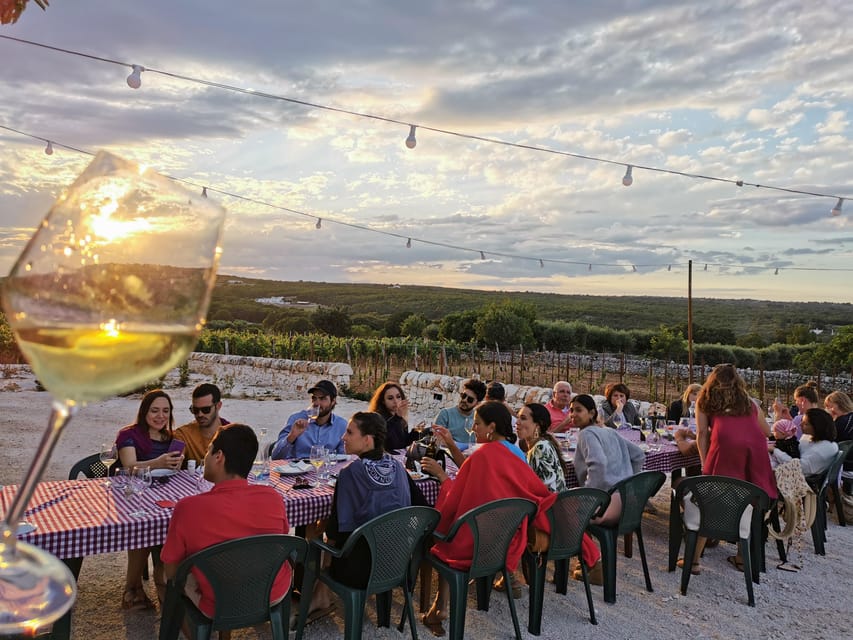
The guide is an important part of this activity. Vincenzo is specifically praised for being welcoming and for helping make the visit possible for one participant with pickup and drop-off arrangements. Those transport arrangements are not listed as a standard inclusion, so you should not assume they come with every booking, but his personal attention is a good sign of the family-run style.
His explanations cover how different grapes produce different wines and how the grapes are harvested. He also discusses the farm’s path toward organic farming. Those details give the tasting a stronger sense of place, especially if you are curious about agriculture rather than interested only in drinking.
The tour is offered in English and Italian. That matters because wine descriptions can become confusing when translation is rushed or overly technical. Here, the aim is approachable instruction, with enough information for beginners and enough local detail to keep experienced wine drinkers interested.
You should still set your expectations correctly. This is not presented as a formal certification class, cellar tour, or advanced lesson in Italian wine law. It is a friendly guided tasting with agricultural context. For most people, that is a strength. You get useful information without turning a holiday outing into homework.
A family farm rather than a staged show
The atmosphere is one of the most praised parts of the experience. The vineyard is described as beautiful, the guide as friendly, and the operation as a genuine family business. That combination matters in Apulia, where the pleasure often comes from meeting the people behind the food and wine.
The farm also sells its own olive oil, wine, and spices. You can browse these products after the tasting and decide if you want to take something home. This is a pleasant extra, but it should not be treated as part of the $37 package. The included items are the vineyard walk, four wines, and four appetizers.
The small-scale setting may appeal to you if you prefer local producers to large commercial wineries. It may be less suitable if you want dramatic architecture, a large cellar, extensive facilities, or a long formal tour of production rooms. The supplied details focus on the vineyard and tasting, not on a tour of bottling equipment or barrel storage.
That distinction helps you choose well. Book this for the people, place, grape varieties, and food. Do not book it expecting a grand wine estate or a full-day winery visit.
How the two hours are likely to work
The listed duration is two hours. The natural flow is a walk among the vines, an explanation of the farm and growing process, and the four-wine tasting with a matching appetizer for each glass.
The exact order and timing may shift. A guide may spend more time explaining the harvest, or your group may linger over a wine and its food pairing. That relaxed pace fits the setting. You are not being rushed from one stop to another.
Because transportation is not included in the stated package, check how you will reach the farm before you commit. The activity information gives the location as Apulia and the provider as Puglia dei Trulli, Vigna il Castagno, but it does not specify a standard transfer service. Pickup and drop-off were arranged for one participant, yet you should confirm this directly rather than count on it.
A two-hour slot also makes the tasting easy to pair with another activity. You could schedule it as a late afternoon or early evening plan, depending on availability. Leave enough time for the drive and avoid booking another fixed event immediately afterward in case the farm visit runs at an unhurried pace.
Is $37 a fair price?
For $37, you receive a vineyard walk, live guidance in English or Italian, four glasses of wine, and four typical Apulian appetizers. That is good value if you want a focused taste of the region without paying for a full winery day.
The value is strongest for people who would otherwise need to arrange several separate experiences to get the same mix of food, wine, and farm context. Four styles also give you more to compare than a single welcome glass or a basic tasting flight.
The price is less compelling if you do not drink wine, want a substantial meal, or expect transportation to be included. The appetizers are described as typical and homemade, but they are not presented as a full lunch or dinner. Plan to eat beforehand or afterward if you need a larger meal.
Free cancellation up to 24 hours in advance and the option to reserve now and pay later make the booking easier to fit around an uncertain schedule. These policies are useful, but the real value still depends on your interest in local wine and the farm setting.
Who will enjoy this most?
I would recommend this experience to several kinds of visitors:
- Curious beginners: You can learn the basic differences between local grapes without needing prior wine knowledge.
- Wine enthusiasts: The four-glass lineup offers a clear comparison of Verdeca, Moscato, and Nero di Troia.
- Food-focused visitors: The appetizers show how Apulian wine fits with local eating habits.
- Couples and small groups: The vineyard setting and family-run tone suit an easygoing holiday outing.
- Visitors staying near the Itria Valley: The activity adds a local farm experience without taking a full day.
Families may enjoy the setting, but the central activity is wine tasting, so adults who drink wine are the obvious target. If you are seeking nightlife, a big group party, or a long technical winery tour, this will likely feel too quiet and compact.
Practical advice before you book
Check the starting time and your route to the farm. The booking information does not list standard transportation, and the venue is best treated as a countryside stop rather than something you can casually reach from any town center.
Wear comfortable shoes for the vineyard walk. The activity includes walking among the vines, though no special hiking gear is indicated. For a warm-weather visit, bring sun protection and water for the outdoor portion, using ordinary common sense for a farm setting.
Tell the provider about any food or drink concerns before arrival. The supplied details do not list the ingredients of the four appetizers, so you should not assume the menu will suit a particular allergy or diet without checking.
If you hope to buy wine, olive oil, or spices, leave room in your luggage. Those products are available for sale, but purchases are separate from the tasting fee.
Should you book Vigna il Castagno?
Book it if you want a friendly, well-paced introduction to Apulian wine that connects the glass to the vineyard and the kitchen. The combination of four indigenous-grape wines, homemade pairings, and clear farm stories gives you plenty for two hours, especially at $37.
I would be most inclined to choose it for a late-day visit, when the vineyard setting can add a pleasant sunset mood. Just confirm the meeting time, transport plans, and any food requirements in advance.
Skip it if you want a large winery with formal production tours, a full meal, or a guaranteed bottle-by-bottle tasting list. For everyone else, Vigna il Castagno offers a personal way to meet Apulia through its grapes, farm food, and family hospitality.
FAQ
How long does the wine tasting last?
The experience lasts two hours.
How many wines are included?
Four glasses of Vigna il Castagno wine are included.
Which grape varieties will I taste?
The listed wines use Verdeca, Moscato, and Nero di Troia grapes. Nero di Troia appears as both a rosé and a red.
Are food pairings included?
Yes. Four typical Apulian appetizers are included, with one paired with each wine.
Which languages does the guide speak?
The live guide is available in English and Italian.
Can I cancel the booking?
You can cancel up to 24 hours in advance for a full refund. A reserve-now-and-pay-later option is also available.
Just poured in Italy
- Montefioralle Winery – Tour and Wine Tasting in Chianti★ 4.5 · 92 reviews
- Tour and Tasting at an Organic Winery in the Heart of Chianti Classico Area★ 5.0 · 132 reviews
- Greve in Chianti Wine Tasting and Winery Tour★ 4.5 · 119 reviews
- Livorno Shore Excursion: Chianti and Tuscany Countryside Private Wine Tour★ 5.0 · 56 reviews
- Private tour of Etna and Winery Visit with Food and Wine Tasting from Taormina★ 5.0 · 221 reviews
- Mt Etna and Wine tasting tour from Catania★ 5.0 · 282 reviews
- Etna Tour and Lunch in a Winery with Wine Tasting★ 5.0 · 97 reviews
- Capri and Anacapri Guided Tour with Limoncello Tasting from Capri★ 4.0 · 104 reviews
Wine Tasting Tours, compared.
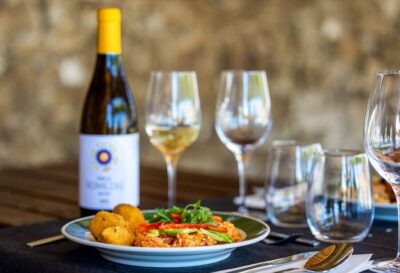
Douro Valley w/ Boat Tour, Wine Tasting & Lunch
Read our review →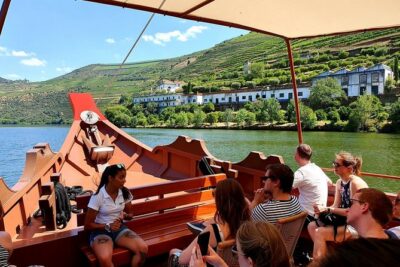
Complete Douro Valley Wine Tour with Lunch, Wine Tastings and River Cruise
Read our review →
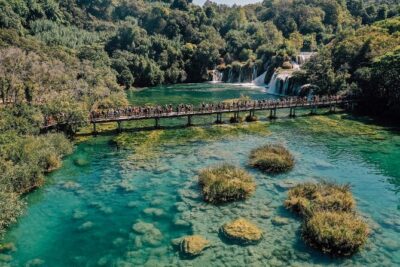
Small-Group Wine Tasting Experience in the Tuscan Countryside
Read our review →
Montserrat & Cogwheel Train, Gourmet Wine Tasting & Tapas/Lunch
Read our review →
Tuscany & Montepulciano Day Trip with Lunch & Wine Tasting
Read our review →Browse the lists this tour appears in