
REVIEW · DRINKS TOURS
Barcelona: Seafood Paella ★Maestro★ & Tapas & Sangria
Barcelona’s best cooking lessons do more than hand you a recipe. This two-hour class connects paella with family and community, then puts you to work preparing seafood rice, pan con tomate, tapas, and sangria in a small gastronomic space in Sarrià. The market visit adds a useful local touch: you learn how to choose good ingredients before you cook them.
I like the hands-on format, where you help make the shared meal rather than watch a chef perform. I also like the cultural detail, from the story of paella to practical advice on getting the prized crispy bottom. The main consideration is that this is a communal class, so you will not prepare an individual paella, and the seafood focus may not suit every diet.
Key points to know before booking
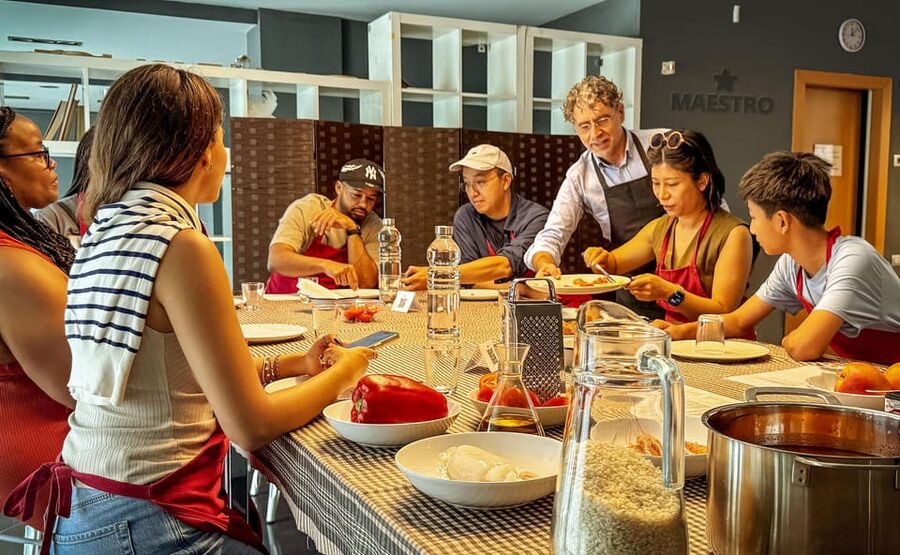
- A market visit is included: You can explore Sarrià’s market and learn how to choose fresh products before cooking.
- Three Spanish favorites share the table: The class covers seafood paella, pan con tomate with local meats and cheese, and fruit-filled sangria.
- You cook as a team: Expect shared preparation and one communal meal rather than separate individual dishes.
- The teaching is personal: Instructors including Eladi, Oriol, Francesca, and Jordy have led classes with stories, cooking tips, and clear step-by-step guidance.
- Sarrià changes the setting: You meet in one of Barcelona’s quieter, more refined neighborhoods, away from the busiest central streets.
- It costs $71 per person: Food, ingredients, utensils, tapas, paella, sangria, and recipes are included, but coffee and dessert are not.
Why this paella class feels more local in Sarrià
The setting matters. You meet in Barcelona’s Sarrià neighborhood, a district known for attractive streets, local shops, gourmet food businesses, and a calmer feel than the city center. The meeting point is an intimate gastronomic space, described as clean, bright, and welcoming.
That makes this a pleasant change from a class held in a crowded tourist quarter. You can arrive early and walk around Sarrià before the lesson. Some people have enjoyed its small shops and restaurants, and the neighborhood also gives you access to views toward Collserola Park.
The experience includes a visit to the exclusive Sarrià Market. This is not just a sightseeing stop. You learn to look for fresh, tasty ingredients, which gives the cooking lesson a practical purpose. If you have never selected seafood or vegetables for paella, this part helps connect the finished dish with the quality of what goes into the pan.
The exact order may vary, but expect the market and cooking space to form one connected experience. Allow enough time to find the meeting point. One useful warning is that the location can be hard to spot, so check the address and arrive a little early.
More Drinks Tours in Barcelona:
- Montserrat & Cogwheel Train, Gourmet Wine Tasting & Tapas/Lunch
★ 5.0 · 6,290 reviews - Barcelona: Montserrat, Cogwheel, Black Madonna & Winery Tour
★ 4.8 · 5,633 reviews - Montserrat with Black Madonna & Medieval Winery with Tapas/Lunch
★ 5.0 · 5,209 reviews
Starting with ingredients and Spanish food traditions
The class is designed around three familiar Spanish dishes, but it also explains how they fit into daily food culture.
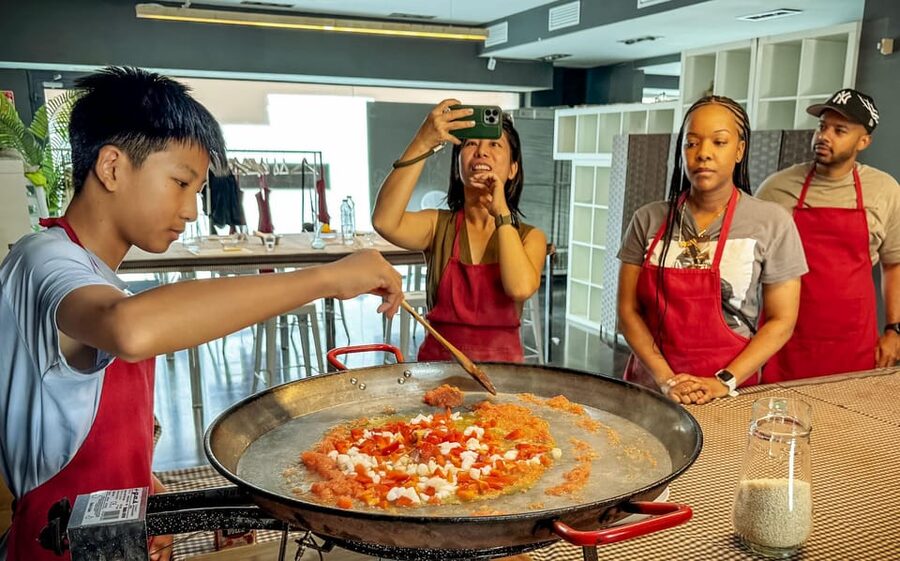
Paella is the main event. You work with seafood, rice, and fresh vegetables under the direction of a professional chef. The teaching is step by step, so you are not expected to arrive with cooking skills. The chef explains what is happening as the dish comes together, including the techniques needed for the final texture.
One detail worth listening for is the socarrat, the lightly crisp layer of rice that forms at the bottom of the pan. Several instructors have shared tips for getting this important finish right. It is a small detail, but it is the difference between simply making rice with seafood and understanding why paella has its own cooking method.
The class also covers pan con tomate, a simple Catalan staple made with bread and tomato. It is served with ham, sausages, and cheese, giving you a broad taste of local food without turning the lesson into an overloaded tasting menu.
Sangria rounds things out. You prepare it with fresh fruit, learning how the ingredients work together in a refreshing wine punch. This is an easy recipe to recreate at home, and it gives the class a social rhythm while the paella cooks.
Cooking paella together, not in separate stations
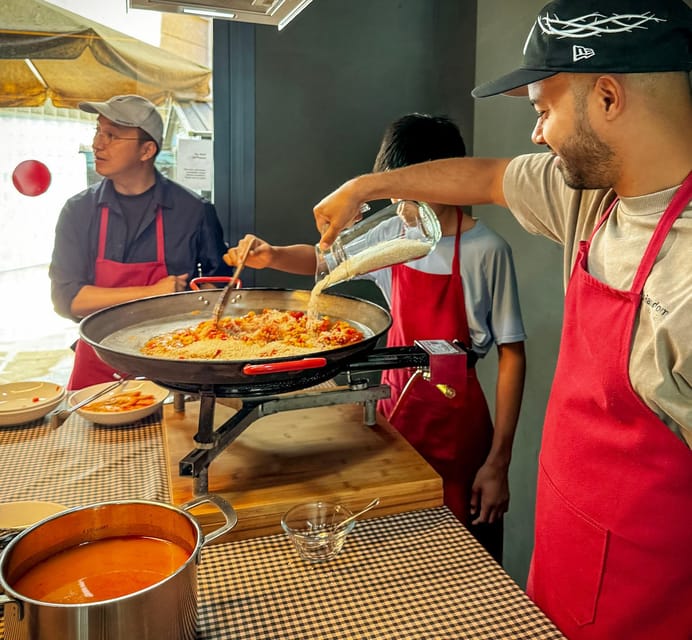
The communal format is central to the experience. Traditionally, paella is shared by family and friends, so the class follows that idea rather than giving each person a small individual pan.
You might chop, stir, season, or help arrange ingredients while the chef keeps the process on track. This means you get plenty of participation, but you also need to be comfortable sharing tasks with people you have just met. It is a good setup for couples, families, solo visitors, and small groups who like talking over food.
I appreciate this approach because the finished dish has a social story. You are not simply taking home a list of instructions. You have helped create one meal with the whole table, then sit down to eat it together.
The tradeoff is control. If you want to make a personal paella with your preferred amount of seafood, rice, or seasoning, this may feel less flexible than a private lesson. The class is built around cooperation and a shared result.
The instructors make the difference
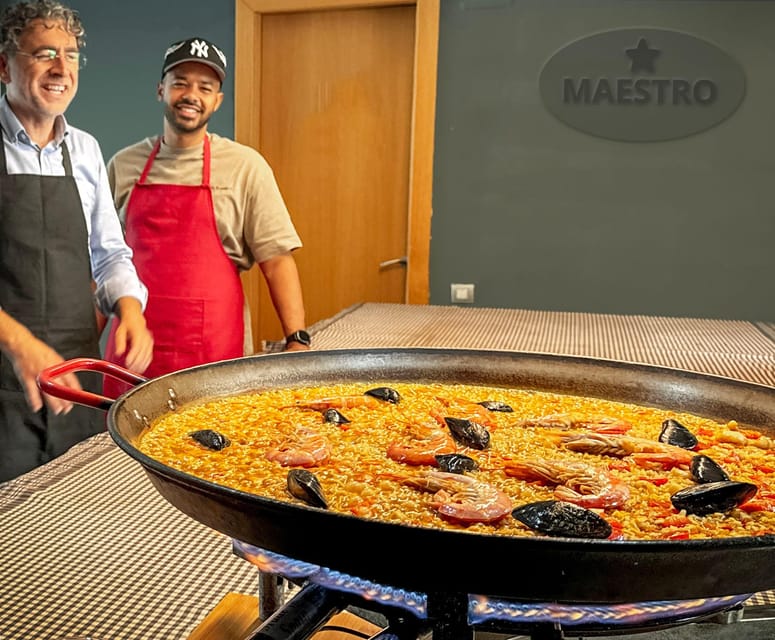
The experience has been led by several chefs and hosts, including Eladi, Oriol, Francesca, Jordy, and Martin. Their styles may differ, but the strongest pattern is clear: the class depends heavily on the individual instructor.
Eladi has been praised for explaining the meaning behind paella and for making the class interactive. He also shares the cultural side of the dish, not just the cooking steps. Oriol has guided participants through tapas, sangria, and paella while adding background about Spanish food.
Francesca brings a warm, personable approach, and Jordy has been described as hands-on, with useful facts about Spanish culture and paella ingredients. Martin has focused on making everyone feel welcome and checking that the group understands each stage.
You should expect more than a recipe recital. The best part of the lesson is the conversation around the food: why paella brings people together, how ingredients are used in Catalan cooking, and which small choices affect the final dish.
Instruction is offered in English or Spanish. If you have a strong interest in technique, ask questions as you cook. The class is designed to be interactive, and the format gives you a good chance to learn directly from the chef.
Same town, a different bottle:
- Barcelona Paella Cooking Class with Market Visit, Tapas & Sangria
★ 5.0 · 2,531 reviews - From Barcelona: Montserrat Half-Day Wine and Tapas Trip
★ 4.8 · 1,918 reviews - Barcelona Gothic Quarter Tapas & Taverns Food & Wine Tour
★ 5.0 · 1,470 reviews - Barcelona Food Tour: Tapas, Paella, Sangria & 8+ Local Tastings
★ 5.0 · 1,275 reviews
What the two-hour schedule feels like
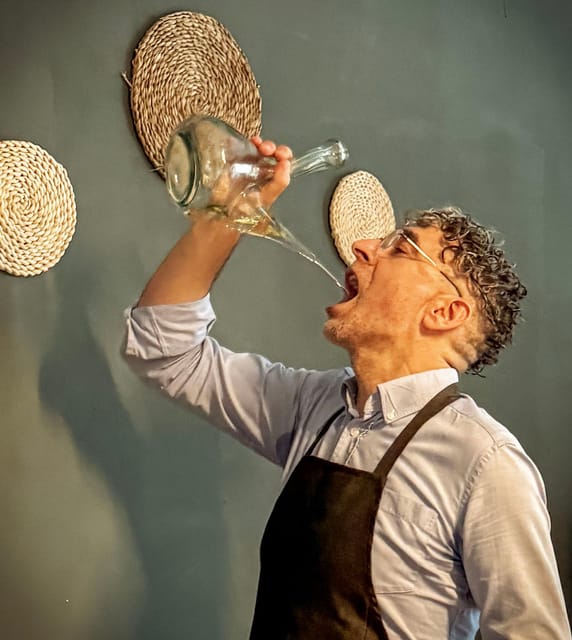
Two hours is enough time for a focused cooking session, but it is not a full-day food tour. The pace should feel active, with little room for long pauses.
A typical flow includes:
- Meeting at the gastronomic space in Sarrià
- Visiting or exploring the Sarrià Market
- Learning how to choose fresh ingredients
- Preparing tapas and pan con tomate
- Mixing fresh-fruit sangria
- Cooking the seafood paella as a group
- Sitting down to share the finished meal
- Receiving recipes to use at home
The food is included, as are ingredients and cooking utensils. You do not need to shop for supplies or bring equipment. The included recipes are useful if you want the class to carry on after Barcelona.
Coffee and dessert are not included, so think of this as a savory meal and cooking workshop rather than a complete restaurant-style dinner. If you want something sweet afterward, plan to find it elsewhere in Sarrià.
How good is the $71 value?
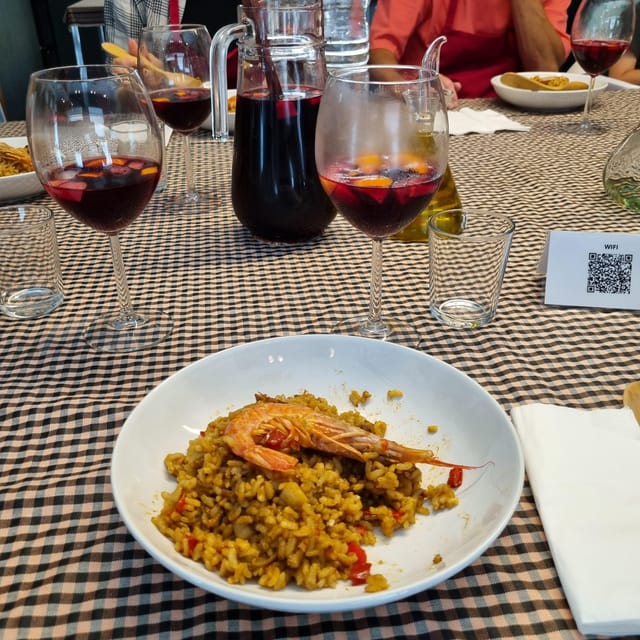
At $71 per person, this is not the cheapest way to eat paella in Barcelona. But comparing it with a restaurant meal misses the point. You are paying for instruction, a market visit, ingredients, kitchen use, tapas, seafood paella, sangria, and recipes.
The value is strongest if you want to learn a skill or understand the dish better. You leave with a method you can try at home, including guidance on the rice and crispy bottom that many casual recipes get wrong. The market element also gives the price more substance than a standard meal with a cooking demonstration.
The price is less compelling if you only want to eat paella quickly. A restaurant will be more convenient, and you will not need to spend two hours preparing food. This class earns its cost through participation, social time, and instruction.
The communal meal also helps make the price easier to justify for families and friends. You are combining a meal with an activity, and children are welcome. Two children, ages eight and eleven, have taken part successfully, helping prepare ingredients and cook alongside the chef.
Who will enjoy this class most?
This is a strong choice for several kinds of visitors:
Food-minded couples get a relaxed activity that ends with a shared meal. It works well as an evening plan, especially if you prefer conversation and cooking over a formal restaurant setting.
Families with children can take part in the preparation. The class is not only a demonstration, and children are welcome, but parents should be comfortable with a kitchen setting and shared group tasks.
Solo visitors may find the communal table especially useful. You cook with other people, then eat together, so the class naturally creates conversation without requiring you to organize your own group.
Home cooks will value the recipe and technique. If you have tried paella before and want to understand the process better, pay close attention to the chef’s advice about ingredient quality, rice, and the crispy base.
This is less suitable for anyone seeking a private, highly customized lesson. It is also not a safe choice for someone with a serious seafood allergy unless the provider confirms in advance that the dishes can be adapted. Dietary needs can be accommodated when requested ahead of time, but seafood is part of the planned menu.
The meal: seafood paella, tapas, and sangria
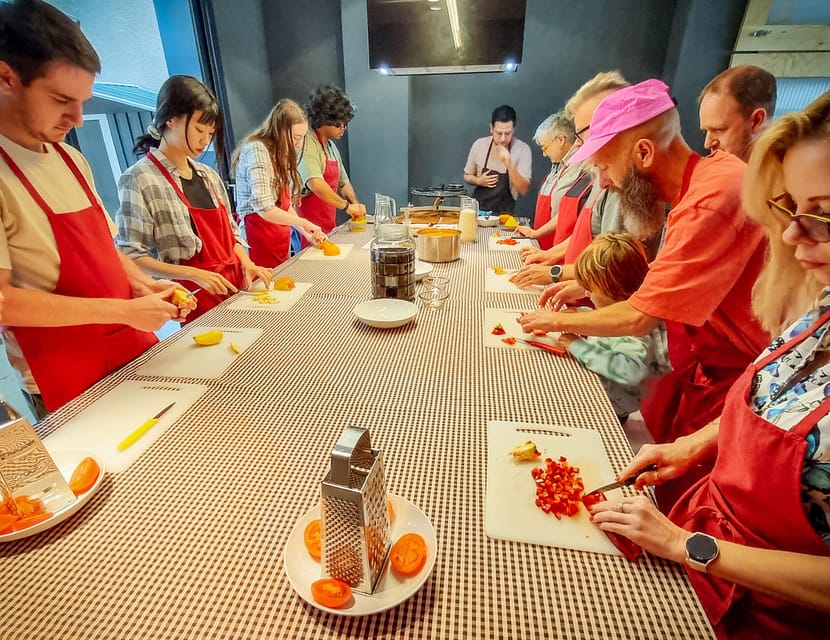
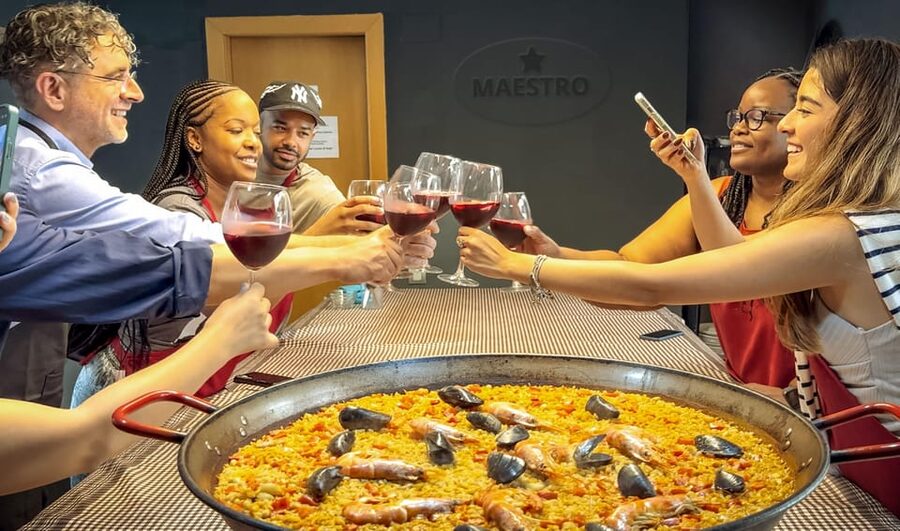
The seafood paella is the center of attention, with Mediterranean seafood, rice, and fresh vegetables. Because everyone contributes, you see the dish develop from basic ingredients into the final communal pan.
The tapas course includes pan con tomate with ham, sausages, and cheese. This gives you a taste of Catalan and Spanish eating habits in a simple format. The food is not presented as a long series of small plates. Instead, it supports the cooking lesson and gives you something to eat while the paella is prepared.
The sangria workshop adds a lighter, social element. You use fresh fruit and learn the recipe from scratch. It is a useful choice for a class because everyone can help prepare it, and the result is ready to share.
The meal should be viewed as part of the lesson rather than a luxury tasting menu. You will eat what you help prepare, and the pleasure comes from understanding the food as well as consuming it.
Practical details that affect your choice
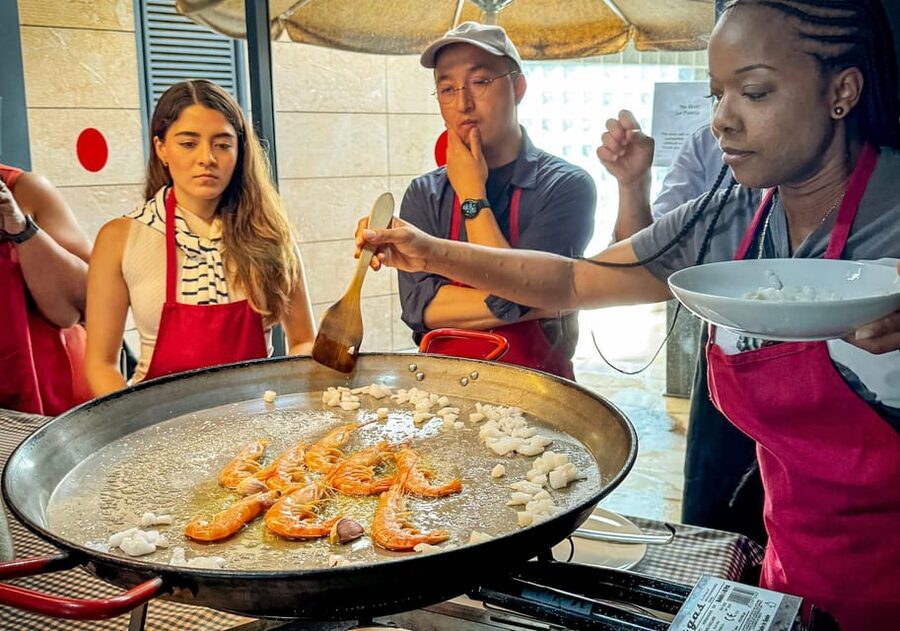
The activity lasts two hours, with starting times based on availability. English and Spanish instruction are offered, and the space is wheelchair accessible.
There is no hotel pickup or drop-off. You need to make your own way to Sarrià, so factor in the trip from your accommodation and leave extra time to locate the entrance. The neighborhood is worth arriving early for, but the meeting point is not always easy to identify.
Children are welcome. Tell the provider about food allergies or dietary needs in advance. Seafood remains part of the experience, so do not wait until arrival to raise a concern.
The cancellation policy is practical: cancel up to 24 hours before the start time for a full refund. You can also reserve now and pay later, which helps if your Barcelona schedule is still changing.
Should you book this Barcelona paella class?
Book it if you want to cook, learn, and eat socially, rather than simply order paella from a menu. The Sarrià setting, market visit, family-style cooking, and personal instruction give the experience more depth than a basic cooking demonstration.
I would especially recommend it to first-time visitors who want a food activity with cultural context, families looking for something hands-on, and solo visitors who enjoy meeting people around a table. The 4.8 rating from 144 reviews reflects a consistently strong response, with particular praise for the chefs, clear instruction, warm atmosphere, and tasty final meal.
Skip it if you want a private kitchen lesson, a fast meal, or a menu free from seafood. Also remember that the class ends with food and sangria, not coffee or dessert.
For most people who enjoy Spanish food, the $71 price is fair because you receive a meal, a market experience, cooking instruction, and recipes you can use again. Just arrive early, confirm dietary needs in advance, and come ready to share the work.
FAQ
How long does the Barcelona paella class last?
The class lasts two hours.
What dishes will I prepare?
You will help prepare seafood Mediterranean paella, pan con tomate with ham, sausages and cheese, seasonal tapas, and fresh-fruit sangria.
Is the paella cooked individually or as a group?
The class prepares the dishes communally. You will collaborate with the group rather than cook an individual paella.
Is a market visit included?
Yes. The experience includes a visit to the Sarrià Market, where you learn how to choose fresh and tasty products.
Where does the class meet?
You meet at an intimate gastronomic space in Barcelona’s Sarrià neighborhood.
Which languages are available?
The class is offered in English and Spanish.
Are children allowed to attend?
Yes. Children are welcome to participate.
Can dietary needs or allergies be accommodated?
Dietary needs can be accommodated if requested in advance. Seafood is used in the experience, so contact the provider before booking if you have a seafood allergy or other food concern.
What is included in the $71 price?
The price includes the interactive paella class, professional chef instruction, sangria workshop, seasonal tapas, all food and ingredients, cooking utensils, seafood paella, and recipes for home use.
Are coffee and dessert included?
No. Coffee and dessert are not included.
Is the activity wheelchair accessible?
Yes, the activity is listed as wheelchair accessible.
Can I cancel for a refund?
You can cancel up to 24 hours in advance for a full refund. You can also reserve now and pay later.
Just poured in Barcelona
- 2 Wineries Small Group Tour with Free Hotel PickUp from Sitges★ 5.0 · 83 reviews
- Barcelona: Wine Tasting and 5 Course Tapas Pairing Dinner★ 4.5 · 129 reviews
- Bohemian Barcelona Neighborhood Evening Tapas & Wine Tour★ 5.0 · 419 reviews
- Wine Tasting Experience in Barcelona★ 5.0 · 172 reviews
- Barcelona Gothic Quarter VIP Tapas & Wine Tour★ 5.0 · 276 reviews
- Barcelona: Guided Rooftop Wine Tasting – Enjoy 6 Spanish Wines★ 4.5 · 61 reviews
- Barcelona Sunset Cruise with Open Bar of Cava and Snacks★ 4.5 · 79 reviews
- Barcelona Tapas & Wine Experience as a Local at Hidden Wineries★ 5.0 · 71 reviews
Drinks Tours, compared.
Douro Valley w/ Boat Tour, Wine Tasting & Lunch
Read our review →
Chichen Itza, Cenote & Valladolid Tour with Tequila and Lunch
Read our review →
Complete Douro Valley Wine Tour with Lunch, Wine Tastings and River Cruise
Read our review →
Zakopane: Cable Car, Chocholow Baths, Cheese & Vodka
Read our review →

Zakopane: Cable Car, Chocholow Baths, Cheese & Vodka
Read our review →
Small-Group Wine Tasting Experience in the Tuscan Countryside
Read our review →Browse the lists this tour appears in