
REVIEW · DRINKS TOURS
Budapest Great Market Hall Chef‑Led Private Tasting Tour
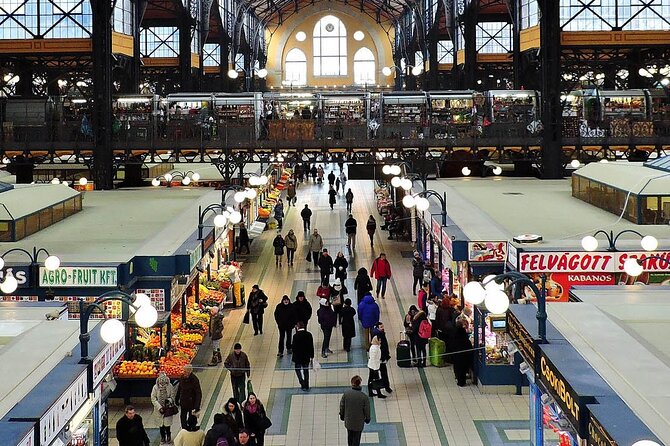
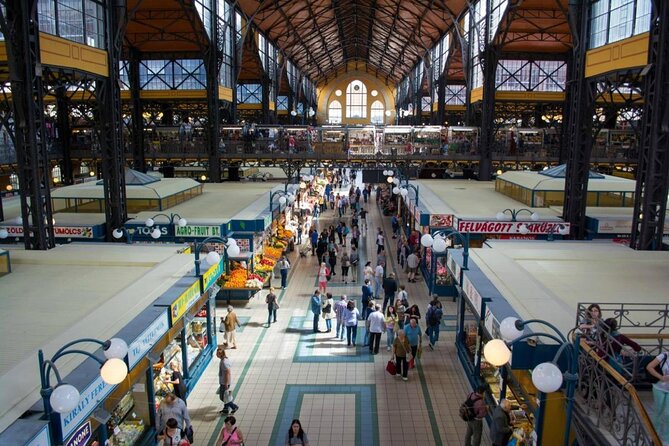
Budapest’s Central Market Hall makes a fine classroom, especially when your guide is a local former chef who can explain what sits behind each sausage, pickle, pastry, and paprika tin. Andrew leads the two-hour private walk in clear English, with food samples along the way and plenty of room for questions.
I like the personal pace and the useful shopping help. Andrew has guided people toward better paprika, away from poor-quality textiles, and toward vendors who are not pushy. I also like the mix of sweet, savory, and historical context, from pork crackling to sour cherry strudel and the story of paprika.
The main consideration is the price: $78.60 per person is fair for a private tasting with a chef-guide, but high if you mainly want a quick market stroll and a snack. The hall itself may also feel quieter and less hectic than you expect, so the guide is a big part of the value.
Key points at a glance
- A private visit with Andrew: The guide is a local former chef with excellent English and a strong grasp of Hungarian food and culture.
- Classic Hungarian tastes: Expect langos, cured sausages, pickles, pogacsa, pork crackling, fresh strudel, Turo Rudi, and Konyakmeggy.
- More than a food stop: You learn how ingredients are used and how food connects to Hungarian history and everyday shopping.
- Flexible conversation: The focus can lean toward cooking, culture, history, or a mix of all three.
- Helpful souvenir advice: The guide can help you make sense of paprika, textiles, local merchandise, and other market purchases.
- A compact morning outing: The tour begins at 9:00 am, lasts about two hours, and returns to the Central Market Hall.
Entering Budapest’s Central Market Hall at 9:00 am
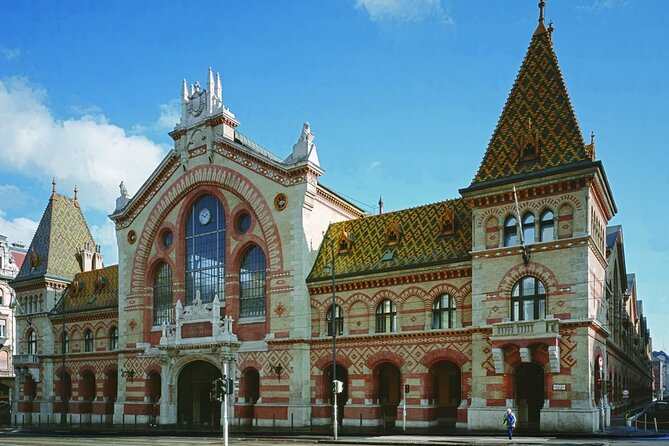
The experience starts at the Central Market Hall in Budapest’s 1093 district. You meet at the hall and finish in the same place, so the outing is easy to fit before another city activity. Transportation is not included, but the market is near public transportation.
The early start matters. A morning market visit gives you a look at ordinary shopping before the day gets away from you. This is not a grand sightseeing circuit across Budapest. It is a concentrated walk through one historic market, with time to stop, taste, ask questions, and look closely at what is being sold.
The market itself is only one stop on the itinerary, but that does not mean the visit is thin. The guide moves through different sections and chooses stalls that show how Hungarians shop and cook. You might pause over seasonal produce, cured meats, pastries, spices, pickles, and basic pantry goods.
I like this approach because it keeps the market from becoming a list of unfamiliar names. Instead of simply pointing at a string of sausages or a wall of paprika, Andrew explains what the item is, how it is used, and why it belongs in Hungarian cooking.
More Market Visits in Budapest:
- Budapest Food Tour: Market to Tavern with 14+ Tasters & Wines
★ 5.0 · 434 reviews - Easy Cooking Class Budapest – with Market Walk (local wine & pálinka included)
★ 5.0 · 62 reviews - Barcelona Paella Cooking Class with Market Visit, Tapas & Sangria
★ 5.0 · 2,531 reviews
How the private format changes the morning
This is a private activity, so only your own group takes part. That makes the experience more personal than a standard market walk. You can spend more time on food if you want cooking advice, or shift toward history and culture if that is what interests you most.
The tour is not described as a fixed speech delivered at every stop. The point is conversation. You can ask about an ingredient you have never seen, compare Hungarian food with cooking at home, or get help choosing something to take back with you.
That flexibility has real value in a food market. Some people want to understand paprika. Others want to know which sausage to buy, why pickles matter, or what a pastry filling contains. A private guide can respond to those questions without holding up a larger group.
The two-hour length is also sensible. It is long enough to sample many foods and build a picture of Hungarian eating habits, but short enough that you still have energy for the rest of the day. One account describes the outing lasting more than two hours, so you should allow a little breathing room if the conversation is flowing.
Langos, Hungary’s famous market snack
One of the first major tastes is langos, deep-fried bread dough topped with sour cream and cheese. It is hearty, salty, and filling. Think of it as a market snack that can easily become a small meal, especially when paired with the other samples.
The value here is not just the bite itself. You learn how a familiar Hungarian street food fits into local eating habits. The guide can also explain the ingredients and answer the practical questions that menus often skip.
Because langos is fried and topped with dairy, it can be heavy early in the morning. Keep that in mind before you arrive. The tasting includes several savory foods after it, so you may want to arrive hungry rather than treat this as a light coffee-and-pastry walk.
Sausages, pork crackling, and the savory side
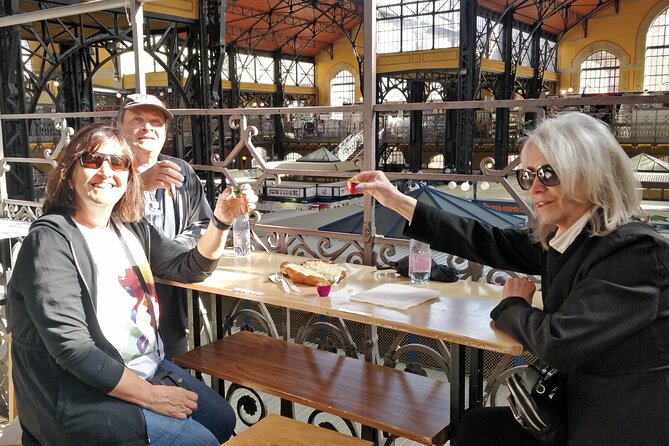
The food selection includes a variety of cured sausages, pork crackling, and three kinds of pogacsa. The pogacsa are savory scones or biscuits, with cheese, potato, and pork crackling versions.
This gives you a useful look at Hungarian snacking. The food is not limited to the most obvious national dishes. You get a sense of how preserved meat, rich pastry, potatoes, cheese, and pork fit together in everyday cooking.
Pork crackling may be the most challenging item for some people. It is rich and distinctive, but that is exactly why it belongs in the tasting. You are not being handed only easy, familiar bites. You can try something strongly tied to local food habits, then ask how it is used.
The cured meats can also be hard to judge when you are shopping on your own. Appearance alone tells you little about taste or quality. A guide who understands the food can explain what you are seeing and help you decide what is worth buying later.
More Shopping Stops in Budapest:
- Pike Place Market Tasting Tour
★ 5.0 · 1,696 reviews - Early-Bird Tasting Tour of Pike Place Market
★ 5.0 · 1,154 reviews - Paella Cooking Class, Wine Tasting & Central Market in Valencia
★ 5.0 · 1,150 reviews - Cancun Taco Tour, Local Beer and Night Market with Transportation
★ 5.0 · 816 reviews
Pickles, paprika, and the practical side of shopping
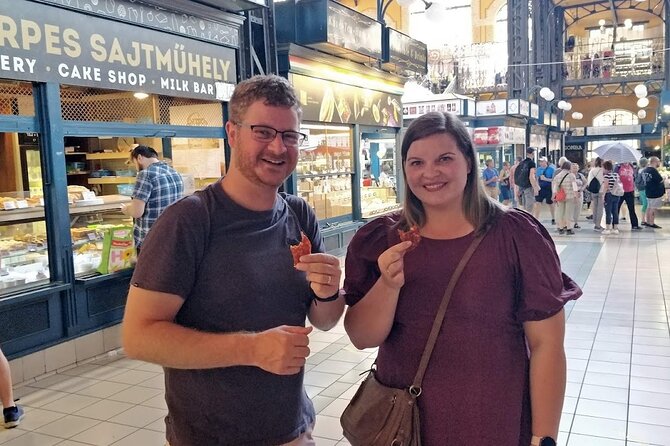
An assortment of pickles adds a sharp contrast to the rich foods. You may encounter familiar vegetables prepared in unfamiliar ways, including pickled baby watermelon, a memorable example mentioned in the tour experiences.
Pickles are useful in a food tour because they show how a meal is balanced. Sour, salty foods cut through fried dough, sausage, and pork. They are not just side dishes placed on a plate without purpose.
Paprika gets special attention, including how its story developed and how to make sense of the different products sold in the market. This can save you from buying the first bright-red packet that catches your eye.
If you want to bring paprika home, ask for help. The guidance is especially useful because there are many ways to buy it, and quality and type are not always obvious. The tour can also help with other souvenirs, including local porcelain and embroidery. One particularly practical advantage is advice on avoiding poor-quality textiles.
Do not assume every part of the market visit is about eating. Looking at merchandise and learning how to shop is part of understanding the place. The guide’s advice can turn a casual browse into a more informed purchase.
Strudel and Hungary’s sweet side
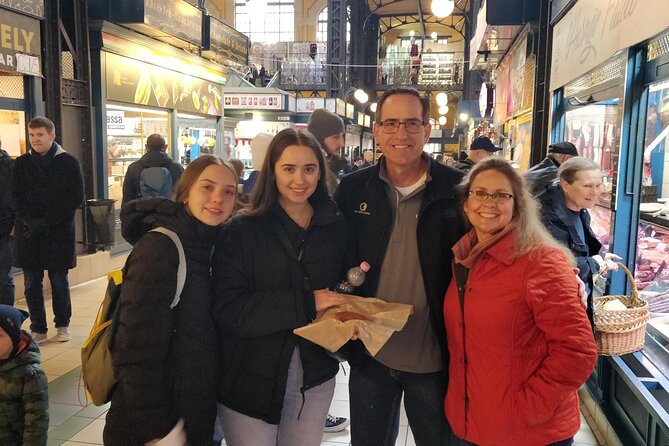
The sweet tasting includes fresh strudel made with layers of phyllo and a choice of filling based on what is available. The pastry is baked on the premises, so the filling may change rather than follow a rigid menu.
Sour cherry strudel is one example mentioned, and it offers a bright contrast to the savory food. The thin pastry layers also show a different side of Hungarian baking than the denser pogacsa.
You also taste Turo Rudi, cottage cheese with a hint of lemon covered in dark chocolate. It is an unusual combination if you have not grown up with it, and it is exactly the sort of item that is easy to miss without a local guide.
Konyakmeggy rounds out the sweets: dark chocolate filled with cognac and sour cherry. Together, these desserts show that Hungarian treats are not all heavy cream and sugar. Fruit, tartness, chocolate, and dairy all have a place.
The menu is generous for a two-hour activity. You should expect samples rather than full restaurant portions, but the combination of langos, meat, pastry, pickles, and sweets can add up quickly. The guide has even sent people home with goodie bags when they could not eat another bite, though you should not count on that as a guaranteed part of the experience.
History and culture between the tastings
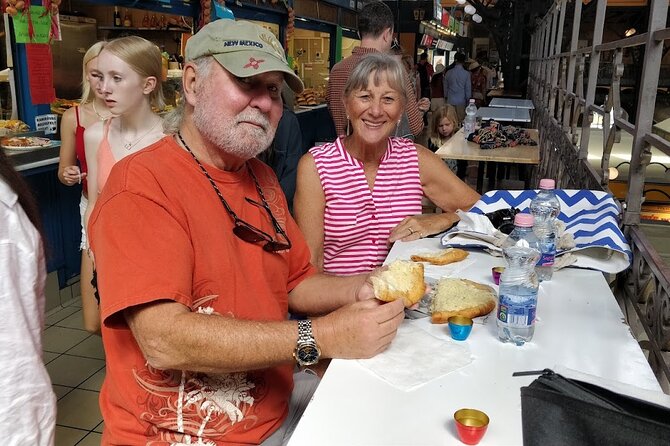
The food is the hook, but the explanation is what gives the walk lasting value. Andrew connects ingredients and dishes to Hungarian history, the development of recipes, and daily life in Budapest.
You can ask how a food is used at home, what makes an item traditional, or why a particular ingredient is sold in so many forms. The conversation can move naturally from food to the market itself, then to broader questions about Hungary and the city.
This is where the private setup helps most. A group with a strong interest in cooking can spend more time on ingredients and preparation. A group more interested in culture can ask about shopping habits, local products, and the history behind the market.
Andrew is also described as funny and warm, with the experience feeling more like a walk with a friend than a formal lecture. That does not mean the information is shallow. The strongest praise centers on the balance of food, history, and culture, along with the guide’s ability to answer questions in fluent English.
One small note: Brian is named as the guide in one account, while Andrew is the guide named throughout most of the material. If having a specific guide matters to you, confirm that at booking.
The optional palinka tasting
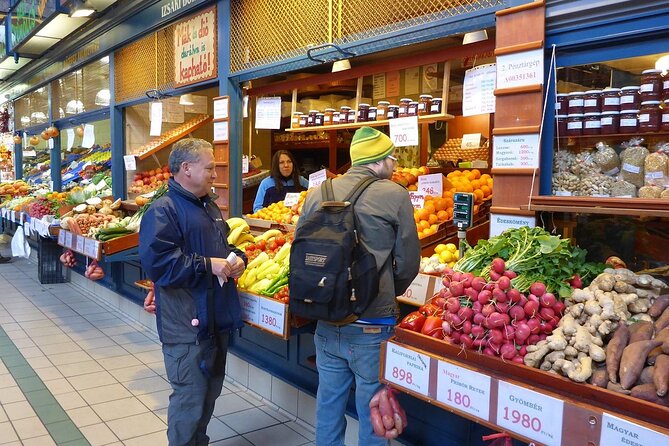
A shot of homemade palinka is included as an optional alcoholic tasting. Palinka is a traditional fruit spirit, and the sample adds a local drink to a menu otherwise focused on food.
The word optional matters. You do not have to drink it, and the tour is still worthwhile without alcohol. If you are interested, it gives you a chance to ask about Hungarian distilling and fruit spirits in a relaxed setting.
Because it is strong, it is best treated as a small cultural sample, not a casual drink. If you are traveling with children or avoiding alcohol, simply skip it. Bottled water is included, which is useful during a morning filled with salty and rich foods.
Is $78.60 a fair price?
At $78.60 per person, this is not the cheapest way to see the Great Market Hall. You can enter a market on your own for little or no cost and buy a few snacks separately.
The comparison changes once you account for the private format. Your price includes a former chef as your guide, a two-hour personalized walk, a broad set of food tastings, bottled water, and the chance to ask detailed questions. You are also paying for help with purchases, which can be useful when paprika, textiles, porcelain, and other goods are difficult to judge.
For a couple or small group that wants a guided introduction to Hungarian food, the cost is reasonable. You get more than a collection of samples. You get context, translation of unfamiliar items, and a local perspective on what belongs in the market.
The value is weaker if you mainly want a large meal or a fast checklist of famous foods. This is a tasting and orientation experience, not a sit-down feast. It also does not include transportation to the market, though the central location and nearby public transportation make that manageable.
Who will get the most from this market walk?
I would choose this for a first visit to Budapest, especially if you like food but do not know much about Hungarian cooking. It is also a good fit if you want a quieter, more personal activity instead of a large group tour.
You will get the most from it if you enjoy asking questions. The format rewards curiosity. Ask about the paprika you see, the difference between the sausages, the use of pickles, or the story behind a sweet that seems unfamiliar.
Families and mixed-interest groups may also appreciate the flexible pace. One person can focus on food, another on history, and another on shopping advice. Most people can participate, and service animals are allowed.
I would think twice if you dislike pork, fried food, strong spirits, or dairy. Several of the listed tastes are rich, and the tour is built around trying traditional foods rather than selecting only mild or familiar items.
Booking and practical details
The tour begins at 9:00 am and ends back at the Central Market Hall after about two hours. Confirmation is provided at booking, and the experience is offered in English with a mobile ticket.
Book ahead if your dates are fixed. The experience is booked, on average, 85 days in advance, which suggests that popular travel periods may fill early. The private format also means there are fewer places available than on a large group walk.
Free cancellation is available up to 24 hours before the start time for a full refund. Changes or cancellations made less than 24 hours before the start time are not accepted, and the cut-off follows local Budapest time.
Should you book the Budapest Great Market Hall tasting?
Book it if you want to understand Hungarian food rather than simply photograph it. The strongest reasons are the private format, Andrew’s former-chef background, the wide range of samples, and the practical help with paprika and market shopping.
Skip it if you only want a cheap snack stop or a self-guided look around the hall. At $78.60, the price depends on your interest in conversation and explanation.
For most food-minded visitors, I think the tour earns its price. You leave with more than a full stomach. You understand why the market matters, what the ingredients are for, and how to make better choices when you return on your own.
FAQ
Where does the Budapest Great Market Hall tasting begin?
It begins at the Central Market Hall in Budapest, Hungary, postal code 1093. The activity also ends back at the market.
What time does the tour start?
The start time is 9:00 am.
How long does the experience last?
The tour lasts approximately two hours.
What foods are included?
The tastings include langos with sour cream and cheese, cured sausages, pogacsa in cheese, potato, and pork crackling varieties, pork crackling, assorted pickles, strudel, Turo Rudi, and Konyakmeggy.
Is alcohol included?
An optional shot of homemade palinka is included. Bottled water is also provided.
Is this a private tour?
Yes. Only your own group participates in the activity.
Just poured in Budapest
- Budapest Exclusive Thermal Spa LUKACS LUXURIOUS PRIVATE BEER BATH★ 4.5 · 104 reviews
- Private Wine Tasting in Budapest★ 5.0 · 107 reviews
- Budapest Food Tasting Tour with Nelli & her local guides★ 5.0 · 190 reviews
- Evening Wine, Cheese, & Charcuterie Tasting in Budapest★ 5.0 · 121 reviews
- Cocktail Cruise and City Views on the Danube in Budapest★ 4.0 · 236 reviews
- Budapest Food Tour: Market to Tavern with 14+ Tasters & Wines★ 5.0 · 434 reviews
- Food and Wine Tasting in Budapest City Center with Sommelier★ 5.0 · 57 reviews
- Budapest Sip and Sail Danube Cruise with Unlimited Prosecco★ 5.0 · 256 reviews
Drinks Tours, compared.
Douro Valley w/ Boat Tour, Wine Tasting & Lunch
Read our review →
Chichen Itza, Cenote & Valladolid Tour with Tequila and Lunch
Read our review →
Complete Douro Valley Wine Tour with Lunch, Wine Tastings and River Cruise
Read our review →
Zakopane: Cable Car, Chocholow Baths, Cheese & Vodka
Read our review →

Zakopane: Cable Car, Chocholow Baths, Cheese & Vodka
Read our review →
Small-Group Wine Tasting Experience in the Tuscan Countryside
Read our review →Browse the lists this tour appears in