
REVIEW · BUDAPEST DRINKS TOURS
Central Budapest Food Walking Tour with Drinks Included
Budapest’s food story comes into focus one bite at a time on this three-hour walk. You begin at the Orthodox Synagogue on Kazinczy Street, trace Jewish influences through District 7, pause at ruin bars and local eateries, then finish with Hungarian dessert and Tokaji wine. The meal is spread across four Hungarian food stops, not served as one formal dinner.
I like the way this tour joins food with place. A bowl of soup means more when you are standing in the old Jewish Quarter, and a local drink makes more sense after your guide explains how it fits Hungarian life. I also like the generous pacing and small maximum group of 15. Guides including Eszti, Laura, Peter, Nika, and Kitti have been praised for answering questions and offering useful restaurant tips for later.
The main drawback is simple: you will walk quite a bit, and the route may double back between nearby stops. The food portions can also be surprisingly large, so arrive hungry and wear good walking shoes. This is not suitable for vegan or gluten-free diets.
Key points to know before booking
- Four eateries, one extended meal: Expect soup, a main dish, dessert, and several drinks rather than a few tiny samples.
- District 7 is the heart of the walk: You will see the Orthodox Synagogue, Jewish Quarter streets, ruin bars, and restaurants.
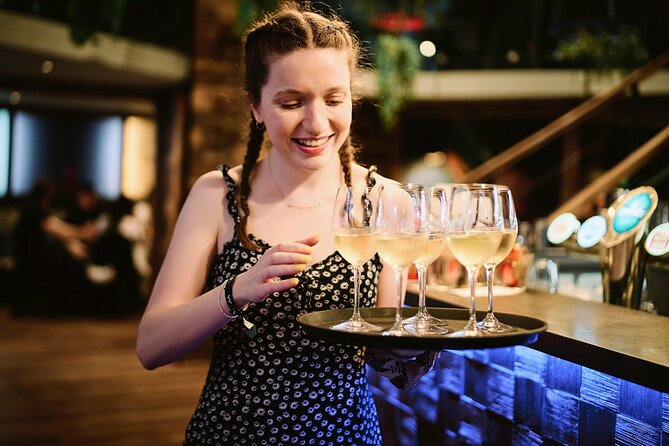
- Three alcoholic drinks are included: The usual mix is beer, wine, and a shot of pálinka, with alcohol-free alternatives available.
- The menu can change: Goulash soup is common, but the starter and dessert may vary between somlói, flódni, or Rákóczi túrós.
- The group limit is 15: That gives you a fair chance to ask questions, though the actual group may still feel fairly full.
- Dietary limits matter: Vegetarian and alcohol-free options are available, but vegan and gluten-free requests cannot be accommodated.
A food tour that explains Budapest as you walk

The best thing about this experience is its sense of connection. You are not simply moving from restaurant to restaurant. You are walking through central Budapest while your guide links Jewish traditions, Hungarian comfort food, old neighborhood life, and modern nightlife.
That matters because Budapest can look polished and easy to skim. Andrassy Avenue has grand façades and stylish restaurants, while District 7 has bars, cafés, and a younger evening crowd. A guide gives those streets a human thread, explaining how food and local customs fit into the city’s past and present.
The experience lasts about three hours. It begins in District 7 and later reaches Andrassy Avenue, with food and drinks divided among four establishments. You should think of it as a substantial progressive dinner with a walking tour attached, not as a quick snack crawl.
The group cap is 15 people. That is small enough for direct conversation, although a full group will still need to stay together on busy pavements. Guides such as Eszti and Peter have been especially good at keeping the mood relaxed while making sure questions do not get lost.
More Food Tours in Budapest:
- Budapest Food Tour: Market to Tavern with 14+ Tasters & Wines
★ 5.0 · 434 reviews - Budapest Tipsy Food Tour with Wines, Small Group & Local Guide
★ 5.0 · 234 reviews - Budapest Food Tasting Tour with Nelli & her local guides
★ 5.0 · 190 reviews
Starting at the Orthodox Synagogue on Kazinczy Street
The meeting point is the Budapest Orthodox Synagogue at Kazinczy u. 29-31. This is more than a convenient starting marker. It introduces the Jewish influence that runs through the first part of the evening and helps you understand why District 7 is such an important setting for Hungarian food.
Your guide gives a brief introduction before the tasting begins. You may hear about Jewish customs, local traditions, and the way Jewish culture helped shape dishes and eating habits in Hungary. The stop itself is listed as an outside meeting point with no admission fee, so do not expect a full synagogue tour or an extended interior visit.
This opening is useful because it prevents the food from becoming a disconnected list of dishes. You start with an idea, then see how that idea appears in the neighborhood and on the plate.
Walking through District 7 and its ruin bars
The next hour focuses on Budapest’s Jewish Quarter. This area is home to the largest synagogue in Europe and is now one of the city’s most popular places for nightlife, restaurants, and ruin bars.
The contrast is part of the appeal. You may pass stylish venues and photo-friendly streets, then hear about the area’s Jewish roots and the lives that shaped it. Your guide explains the neighborhood as you move, so you can look beyond the nightlife signs and notice details you might otherwise miss.
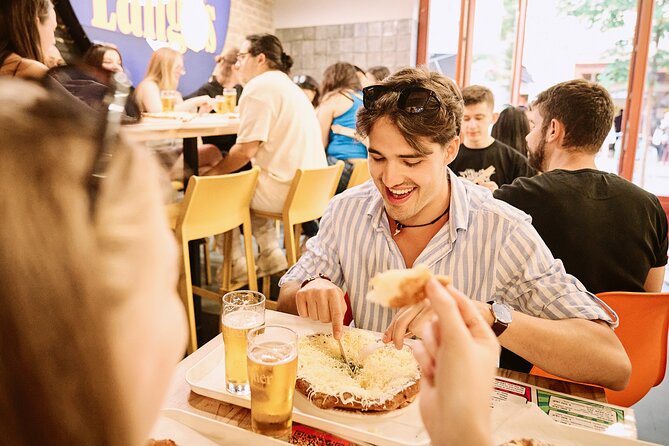
This is also where the street-food side of the tour appears. One sample menu includes lángos with sour cream and cheese, a filling Hungarian favorite that is eaten with your hands. The exact food lineup can change, but the idea remains the same: you get to try local food in a casual setting before sitting down for the larger tastings.
I like this part because it gives you a practical introduction to how Budapest eats. Not every dish arrives with cutlery, and not every good stop looks formal. The tour makes room for that everyday side of the city.
The drawback is the walking route. One person found that the group doubled back between two places across the street from each other, and another noted the amount of walking. That does not ruin the experience, but it means you should not book it if you want to sit in one restaurant for three hours.
Soup first, with the menu changing by evening
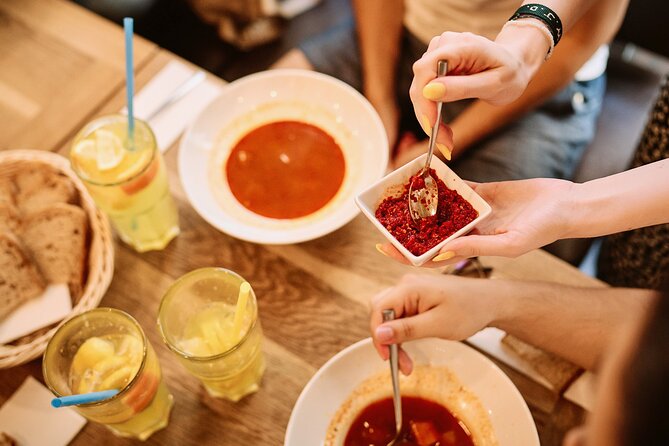
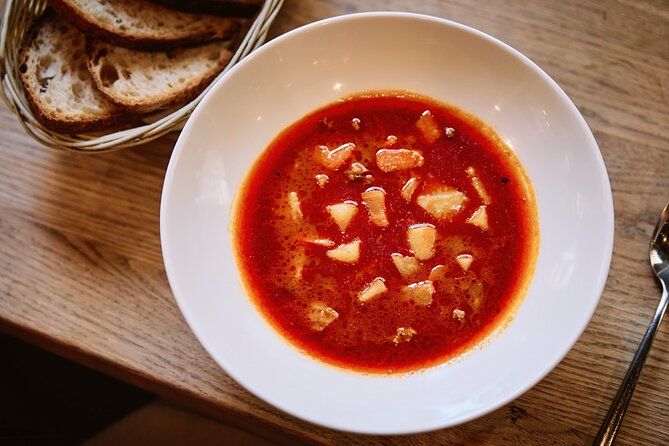
The meal often begins with soup. Goulash soup is sometimes served, though it is not guaranteed on every departure. When it appears, expect a hearty introduction to Hungarian seasoning and comfort food rather than a delicate starter.
One particularly strong soup experience was described as spectacular, but the menu is not fixed enough for me to promise that exact dish. The operator may use another traditional soup instead. This flexibility is worth keeping in mind if you are choosing the tour for one specific recipe.
The food is designed to build toward a full dinner. You are not just collecting samples. By the end, you may have eaten enough to count the tour as your main evening meal.
Same town, a different bottle:
- Countryside Half-day Gastro-Wine Tour from Budapest Meal & pickup
★ 5.0 · 1,450 reviews - Budapest: Prosecco Dinner Cruise with Live Music
★ 4.4 · 1,336 reviews - Budapest: Sightseeing River Cruise with Unlimited Cocktails
★ 4.5 · 867 reviews - Budapest: Sip and Sail River Cruise with Unlimited Prosecco
★ 4.5 · 755 reviews
Hungarian stew, chicken paprikash, and pálinka
The main course is usually a Hungarian stew or chicken paprikash. Another possible plate is pörkölt with nokedli, a stew served with Hungarian dumplings. The food is traditional and filling, with a clear focus on familiar national dishes rather than modern tasting-menu tricks.
Chicken paprikash is a good example of why a guide adds value. A dish can look simple, but the guide can explain how it is normally eaten and where it fits into Hungarian home cooking. The same goes for stew and dumplings. You get more from the meal when you know what makes it ordinary, special, or typical in local life.
A small shot of pálinka may accompany the main course. Pálinka is a strong fruit brandy, and it is not a drink to treat casually. The sample menu includes it as part of the experience, but alcohol-free alternatives are available. Only people aged 18 and over are served alcohol.
The food is one of the most praised parts of this tour, but the portions deserve a warning. Several people found the meal very filling, so do not eat a large dinner before meeting the group. A light lunch is the smarter plan if you are taking an afternoon or evening departure.
Four stops, three drinks, and a relaxed pace
The tour includes three alcoholic drinks, usually drawn from beer, wine, and shots. The exact order and selection may vary. Tokaji dessert wine is one possibility, and it pairs with the final sweet course.
This drink arrangement adds real value to the price, especially if you would otherwise order several drinks with dinner. It also gives you a broader picture of Hungarian eating culture. Beer may accompany casual food, pálinka brings a stronger local tradition, and Tokaji shows a sweeter side of the country’s wine culture.
You are not required to drink alcohol. Alcohol-free options are available, which makes the tour workable for people who do not drink. The important limitation is diet: vegetarian needs can be handled, but the experience cannot accommodate vegan or gluten-free diets.
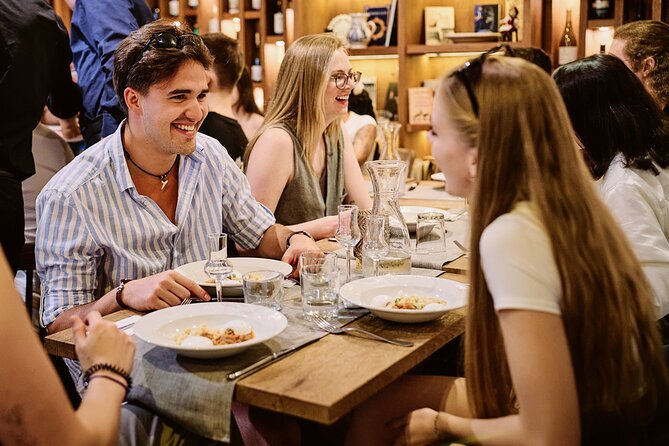
The pace appears to be social rather than rushed. You sit down for tastings, have time to eat, and can ask questions along the way. Nika, for example, has been especially attentive about allergies and patient while people finish their food. That kind of care matters during a meal-based tour, where rushing can make the whole evening feel mechanical.
Andrassy Avenue brings a different side of the city
The final part moves toward Andrassy Avenue, Budapest’s grander and more polished thoroughfare. This change of setting gives the tour a useful second act. District 7 supplies the old neighborhood atmosphere and nightlife, while Andrassy Avenue shows the city’s more formal, stylish side.
Here you stop at atmospheric restaurants for classic Hungarian dishes. The walk is not only about eating. Your guide points out the character of the avenue and helps you compare this part of Budapest with the Jewish Quarter.
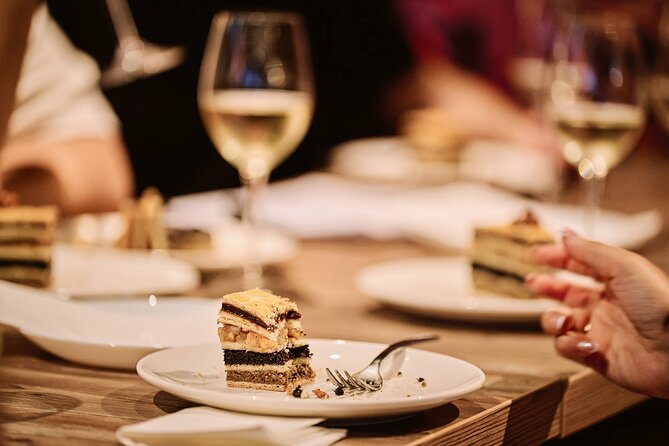
The tour closes with dessert. Possibilities include somlói, flódni, or Rákóczi túrós. Somlói is a soft, layered Hungarian dessert, while flódni reflects the Jewish culinary connection introduced at the start. Rákóczi túrós is made with curd cheese and a sweet topping. Tokaji Aszú may accompany the dessert, giving the evening a proper finish.
Again, the exact sweet course is not guaranteed. If you have your heart set on one dessert, this tour may disappoint. If you prefer variety and want a broad first taste of Hungarian cooking, the changing menu is less of a concern.
What the guides add to the experience
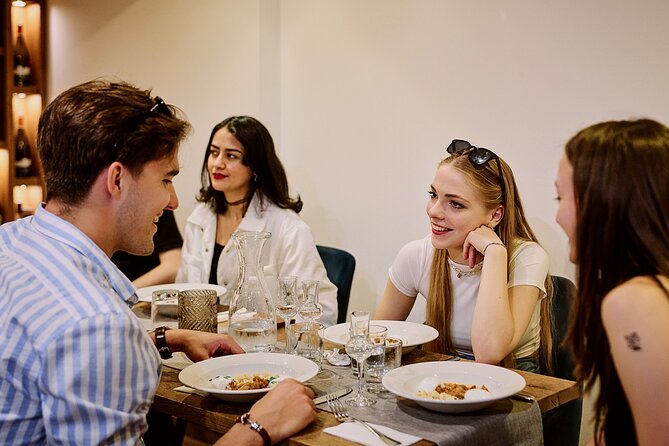
The guides are central to the value here. Eszti has been described as energetic, warm, and good at reading the group. She keeps conversation moving without forcing quiet people to perform. Peter is especially strong on food origins and local customs, and he has even followed up with a written list of dishes and places visited.
Laura brings clear explanations and practical recommendations for the rest of your stay. Kitti and Nika are also noted for their energy, patience, and care with group questions. These details matter because a food tour can be pleasant but forgettable if the guide only points at buildings and announces dishes.
Here, you should expect a guide who can help you decide where to eat next. That is one of the best reasons to take the tour early in your Budapest visit. You can use the recommendations during the rest of your stay instead of spending every meal guessing.
The guide’s quality may vary from departure to departure, as it does with any experience led by several people. Still, the repeated pattern is clear: the strongest part of the tour is the combination of personal attention, food knowledge, and useful city advice.
Is $83.45 a fair price?
At $83.45 per person, this is not the cheapest way to grab Hungarian food. But the price includes a full set of tastings at four eateries, three alcoholic drinks, a guide, neighborhood history, and a planned route. If the portions are as generous as described, you are also receiving a substantial dinner.
I consider that fair value for someone who wants both a meal and an introduction to Budapest. Ordering similar food and drinks on your own may cost less if you choose modest portions, but you would not get the explanation of District 7, the Jewish culinary links, or the guide’s recommendations.
The value is weaker if you already know Hungarian cuisine well or prefer to choose your own restaurants. It is also less attractive if you avoid alcohol, although the alcohol-free option keeps the price from becoming a total mismatch.
Group discounts may be available, and the tour is often booked about 25 days ahead. That suggests you should reserve early for a specific date, especially if you want to take it near the start of your stay.
Who should book this Budapest food walk?
I would choose this tour for a first or second day in Budapest. The meal gives you an overview of local dishes, and the guide can point you toward places to return to later. It suits curious eaters who enjoy walking, conversation, and trying food they might not order alone.
It also works well for couples, families with adult children, and small groups who want a planned evening without committing to a formal restaurant dinner. The maximum of 15 keeps it more personal than a large bus-based food outing.
I would think twice if you need a gluten-free or vegan menu. Vegetarians and people avoiding alcohol have options, but the tour cannot meet every dietary requirement. I would also skip it if walking for three hours sounds tiring or if you want a quiet, fixed dinner rather than movement and conversation.
The tour ends back at the starting point, which makes it simple to continue your evening in central Budapest. It is near public transportation, and most people can participate, but you should still wear comfortable shoes.
Should you book the Central Budapest Food Walking Tour?
Book it if you want a hearty introduction to Hungarian food tied to the streets where the city’s culture is visible. The strongest reasons are the four food stops, the useful local guidance, the Jewish Quarter setting, and the chance to try beer, wine, pálinka, and Tokaji in one evening.
Skip it if you need vegan or gluten-free food, dislike group walking, or want a precise menu. For everyone else, the $83.45 cost is reasonable for a filling meal, three drinks, and a guide who can help shape the rest of your Budapest visit. Take it early, arrive hungry, and leave room for dessert.
FAQ
How long does the Central Budapest Food Walking Tour last?
The tour lasts approximately three hours.
Where does the tour begin?
It begins at the Budapest Orthodox Synagogue, Budapest, Kazinczy u. 29-31, 1075 Hungary.
Where does the tour end?
The activity ends back at the meeting point.
How many people can join the tour?
The tour has a maximum group size of 15 people.
What food is included?
The tour includes tastings at four Hungarian eateries. Possible dishes include soup, goulash soup, Hungarian stew, chicken paprikash, pörkölt with nokedli, lángos, and desserts such as somlói, flódni, or Rákóczi túrós. The exact menu can vary.
Are drinks included?
Yes. Three alcoholic drinks are included, with options such as beer, wine, pálinka, and Tokaji dessert wine. Alcohol-free options are available.
Can the tour accommodate dietary restrictions?
Vegetarian and alcohol-free options are available. The tour cannot accommodate vegan or gluten-free diets. Only people aged 18 and over are served alcohol.
Just poured in Budapest
- Budapest Exclusive Thermal Spa LUKACS LUXURIOUS PRIVATE BEER BATH★ 4.5 · 104 reviews
- Budapest Food Tasting Tour with Nelli & her local guides★ 5.0 · 190 reviews
- Private Wine Tasting in Budapest★ 5.0 · 107 reviews
- Evening Wine, Cheese, & Charcuterie Tasting in Budapest★ 5.0 · 121 reviews
- Cocktail Cruise and City Views on the Danube in Budapest★ 4.0 · 236 reviews
- Budapest Food Tour: Market to Tavern with 14+ Tasters & Wines★ 5.0 · 434 reviews
- Food and Wine Tasting in Budapest City Center with Sommelier★ 5.0 · 57 reviews
- Budapest Sip and Sail Danube Cruise with Unlimited Prosecco★ 5.0 · 256 reviews
Budapest Drinks Tours, compared.
Countryside Half-day Gastro-Wine Tour from Budapest Meal & pickup
Read our review →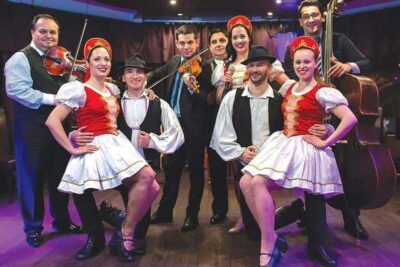

Sightseeing River Cruise with Unlimited Cocktails
Read our review →
Sip and Sail River Cruise with Unlimited Prosecco
Read our review →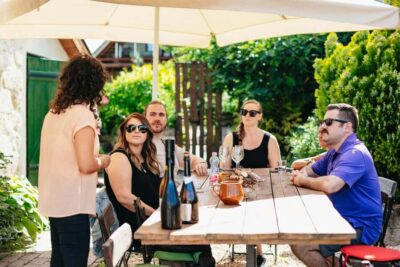
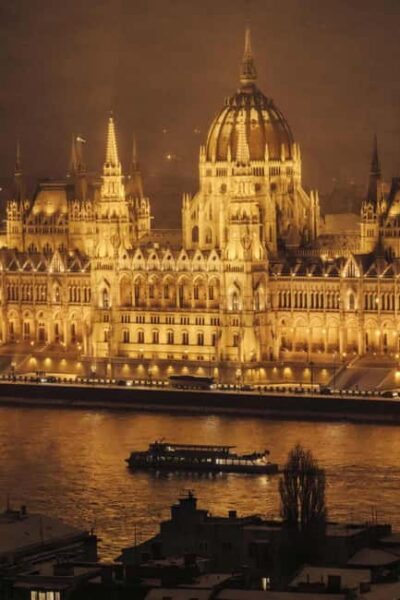
Parliament Panorama Cruise with Törley Prosecco
Read our review →
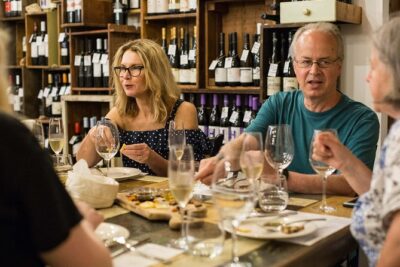
Hungarian Wine Tasting (with Cheese and Charcuterie) in Budapest
Read our review →Browse the lists this tour appears in