
REVIEW · WINE TASTING TOURS
Colmar: Highlights Walking Tour and Wine Tasting
Colmar’s prettiest streets are only half the story. The best part of this experience is the way local guide Nicolas connects the postcard views with Alsace’s French and German past, then carries the story into a working wine cellar. You see the town, hear why it looks and feels different from much of France, and finish with local white wines.
I especially like the six-person maximum, which makes it easy to ask questions, and the visit to a family winery in central Colmar rather than a generic tasting room. The main drawback is pace: two hours gives you a strong introduction, not a full tour of every museum, church, or canal street.
Key points to know before booking
- A Colmar-born guide: Nicolas adds family stories, local customs, and a personal sense of what it means to be Alsatian.
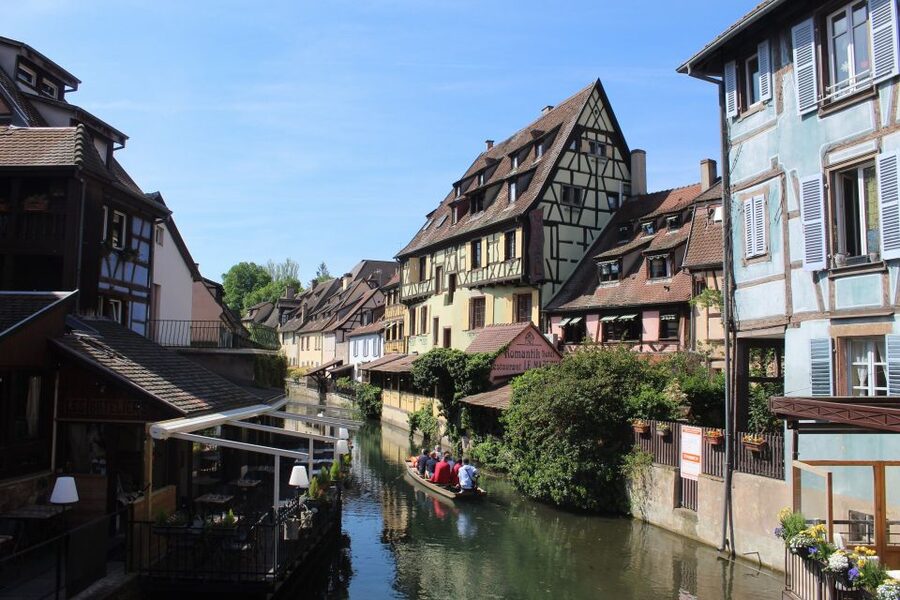
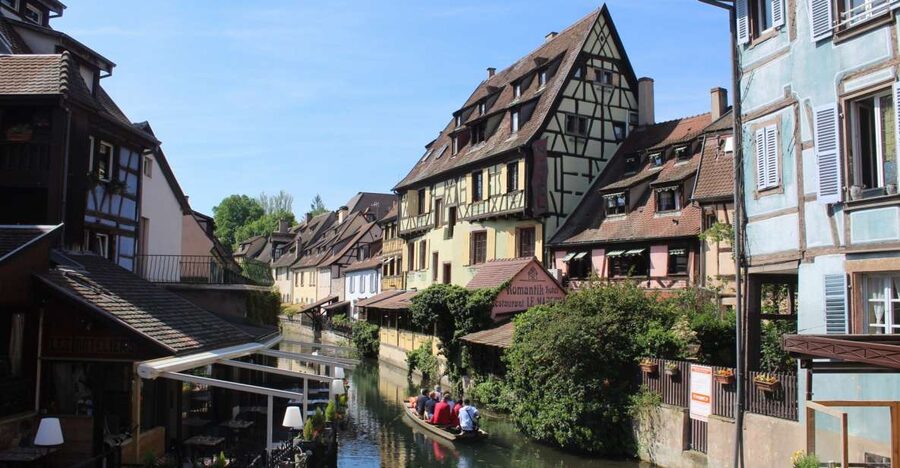
- Old Town highlights: Expect Renaissance buildings, Gothic architecture, narrow lanes, colorful half-timbered houses, and the Little Venice area.
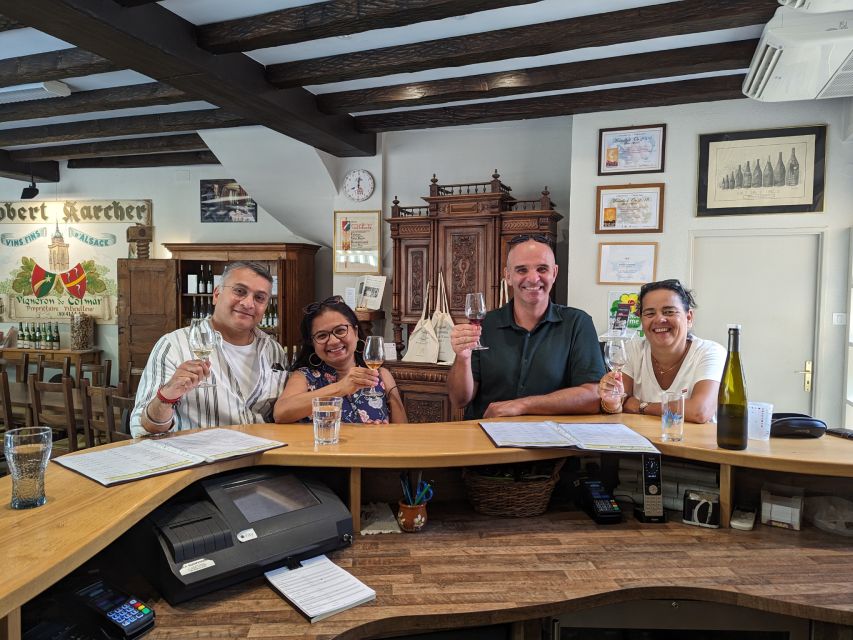
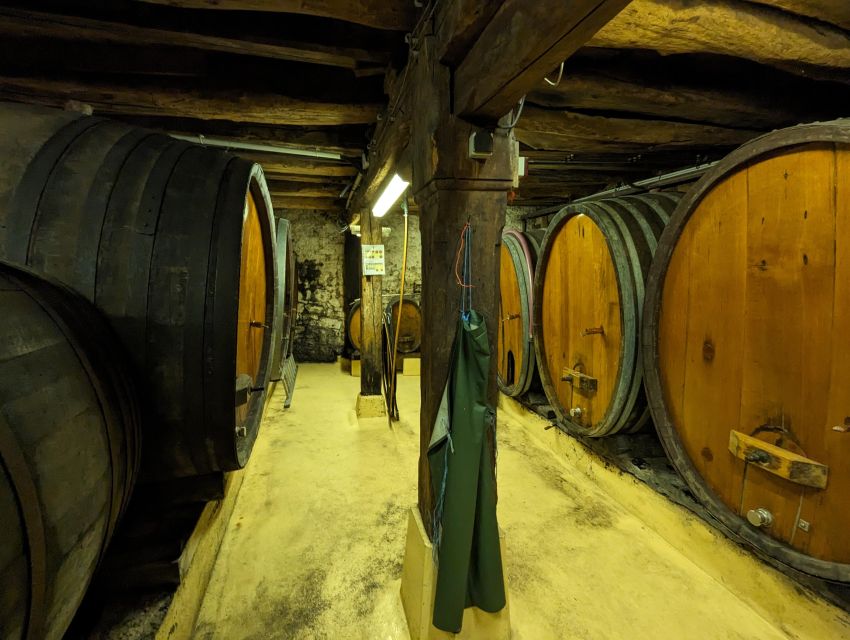
- A real cellar finish: The tasting takes place at a local winery, including the Robert Karcher & Fils cellar, which dates to 1605.
- Three Alsatian wines: The tasting introduces regional white varieties such as Riesling, Gewurztraminer, and Pinot Gris.
- Small and conversational: The group is limited to six people, and some departures may feel almost private.
- Best timing: Take it early in your Colmar stay so Nicolas’s restaurant, bar, museum, and sightseeing suggestions can shape the rest of your visit.
Why this two-hour Colmar tour works
Many walking tours give you names and dates, then send you off with a map. This one adds a useful second act. You walk through Colmar with Nicolas, a local who grew up here, and finish by tasting the wines that help define the wider Alsace region.
That combination matters. Colmar can look like a storybook town at first glance: painted shutters, timber frames, flower boxes, canals, and crooked old streets. But without context, it is easy to see only a pretty façade. The walking portion explains the town’s place between French and German culture, while the tasting shows how local food and wine fit into daily life.
I would use this as a first-day activity. The tour gives you a quick sense of direction, covers the main sights, and can help you decide where to return later. Nicolas has also provided visitors with practical suggestions for restaurants, bars, museums, shopping, and nearby places.
At $53 per person, the price is fair if you value a local guide and plan to enjoy wine. You are paying for two connected experiences, not just a short orientation walk. It is less compelling if you already know Colmar well or do not drink wine, although the history and architecture still give the tour some value.
More Wine Tasting Tours in France
- Bordeaux: Cité du Vin Entry Ticket and Wine Tasting
★ 4.6 · 3,885 reviews - Montmartre Hill French Gourmet Food and Wine Tasting Walking Tour
★ 5.0 · 2,588 reviews - From Paris: Loire Valley Castles Day Trip With Wine Tasting
★ 4.6 · 1,727 reviews
Starting at Parc du Champ de Mars
The meeting point is at the Fontaine Bruat in Parc du Champ de Mars. This is a useful starting place because you are not dropped straight into the densest part of the old center. You meet your guide in an open park, then move toward the historic streets.
The park meeting point should be easy to identify, but arrive with enough time to locate the fountain. A small group is easier to spot than a large crowd, and the six-person limit helps the meeting feel simple rather than hectic.
From there, the walk heads into Colmar’s older quarters. The exact order of sights can vary, but the focus is clear: major landmarks, architecture, local history, and corners you might miss if you simply followed the busiest route.
Reading Colmar’s half-timbered streets
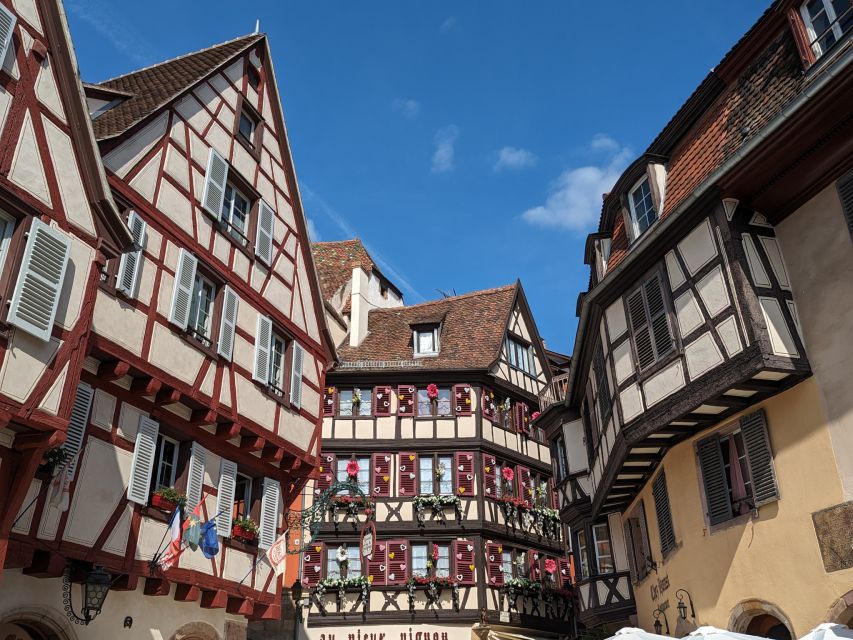
The visual reward comes quickly. Colmar is filled with traditional half-timbered houses painted in warm, cheerful colors. Their steep roofs, wooden frames, shutters, and decorative details create the fairytale mood that draws people to town.
The useful part is learning to look beyond the colors. Nicolas explains how the buildings reflect the region’s past and points out details that are easy to walk past. You hear about the blend of French and German influences, an essential part of understanding Alsace.
This is not a tour built around a long lecture. The strongest descriptions of Nicolas’s guiding style point to lively storytelling, family anecdotes, and easy conversation. He is also comfortable answering questions, which matters in a group this small.
The streets are cobbled and the historic center is pedestrian-friendly, but this remains a walking tour on old surfaces. Comfortable shoes are a sensible choice. The activity is not suitable for people with mobility impairments, and anyone who dislikes uneven streets should think carefully before booking.
Renaissance houses, Gothic sights, and Little Venice
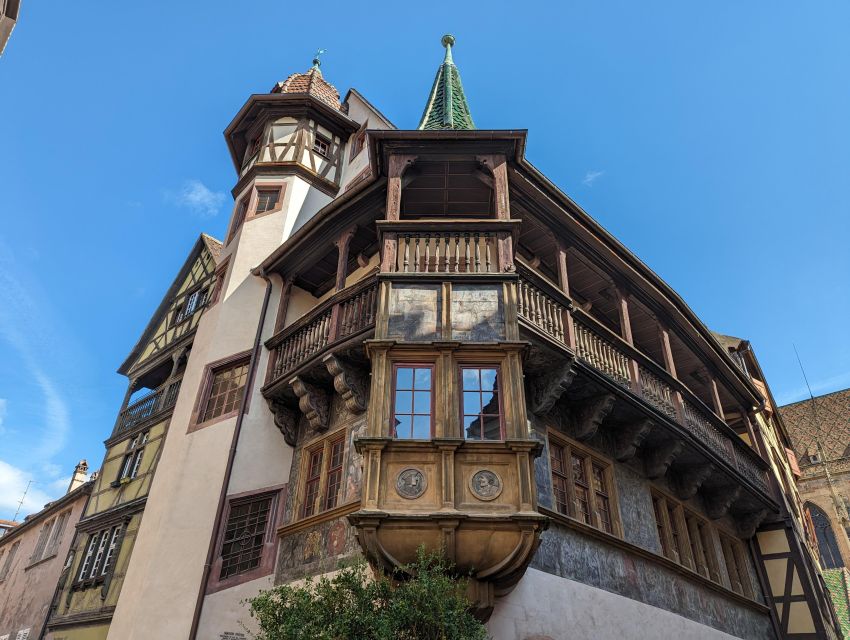
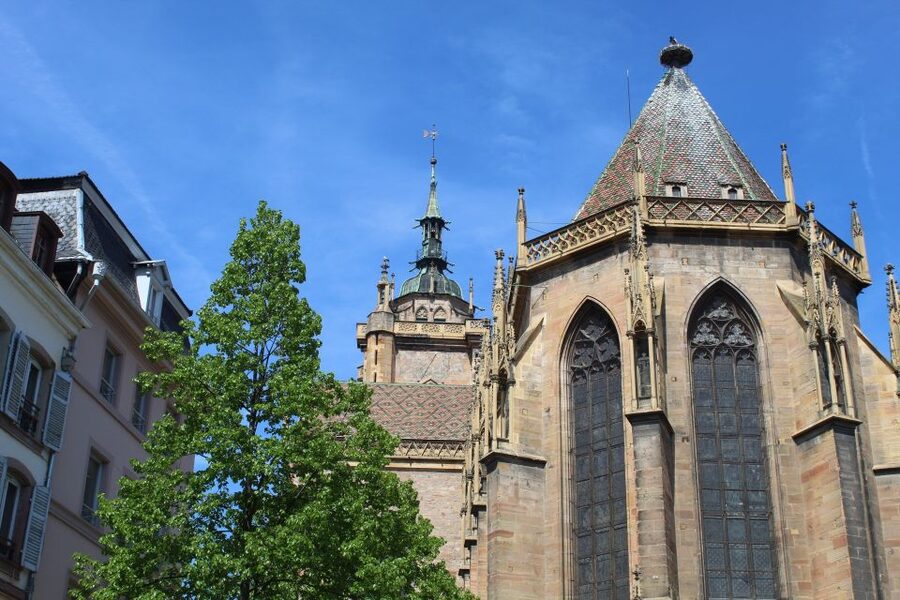
The route covers the architectural range that makes Colmar special. You see Renaissance dwellings, traditional houses, and Gothic religious architecture, with explanations of how the town developed over time.
The Gothic landmarks provide a useful contrast to the colorful domestic buildings. One moment you are looking at carved stone and church details, and the next you are in a narrow lane lined with timber and plaster. That change of scale is part of Colmar’s charm.
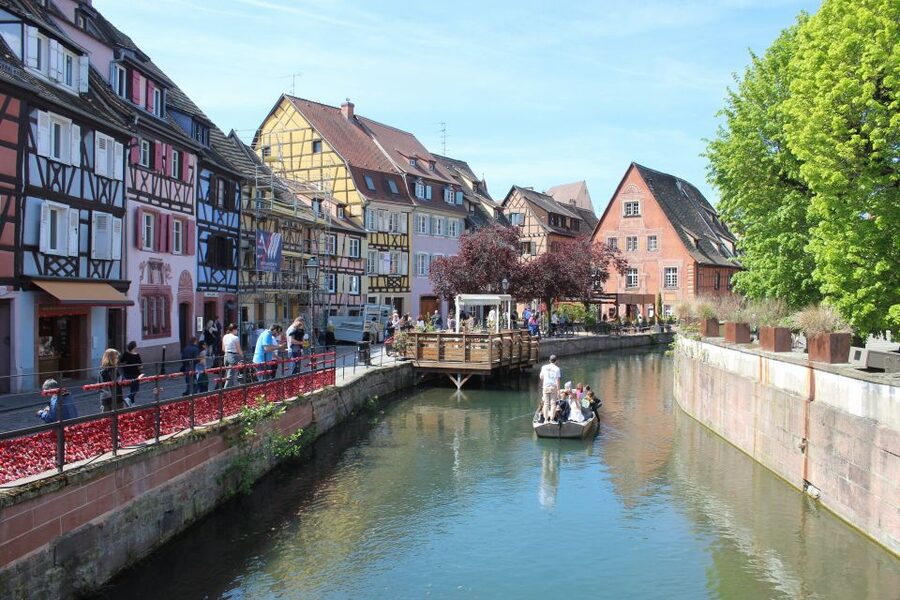
Little Venice is another major draw. The canal-side district is among the most photographed parts of town, but a guide can give the view some meaning instead of treating it as a quick photo stop. The walk also includes quieter corners and less obvious points of interest, so you are not limited to the standard postcard route.
Do not expect a full museum visit or a detailed architectural survey. Two hours is enough to see the central sights and understand the basic story. It is not enough to linger inside every church, shop, or cultural site. I see that as a reasonable tradeoff for visitors who want an overview without spending half a day on one walking tour.
Same town, a different bottle:
- Bordeaux: River Garonne Cruise with Glass of Wine and Canelé
★ 4.5 · 3,630 reviews - From Bordeaux: Afternoon Saint-Emilion Wine Tasting & snack
★ 4.8 · 1,581 reviews - From Paris: Day Trip to Champagne with 8 Tastings & Lunch
★ 4.8 · 1,501 reviews - Medoc or Saint Emilion Wine Tasting and Chateau from Bordeaux
★ 5.0 · 1,415 reviews
The Alsace story behind the scenery
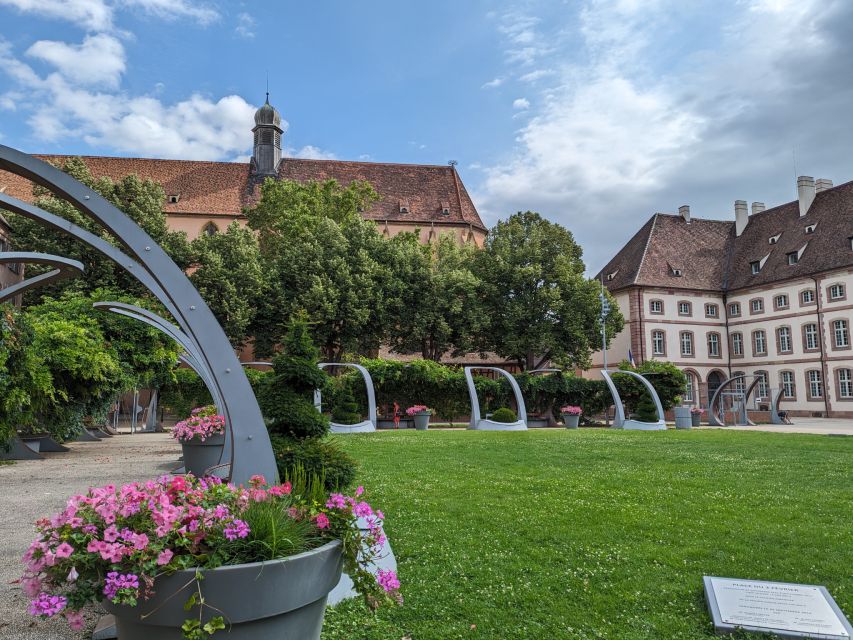
Colmar’s identity is shaped by its location and its past. The town sits in Alsace, a region with strong French and German connections, and that history appears in its language, food, architecture, and traditions.
Nicolas’s local perspective is one of the strongest reasons to choose this tour. He can explain the region in personal terms, not only through a list of historical events. His own family stories help connect the wider story to present-day Colmar.
You should still expect an accessible introduction rather than an academic history course. The goal is to help you make sense of what you are seeing. By the end of the walk, the mix of styles and regional customs should feel less random.
This is particularly useful if you are visiting Alsace for the first time. The tour gives you a framework for later trips to nearby towns and wine villages, even though the activity itself stays in Colmar.
Finishing at a working Colmar winery
The wine tasting is not an afterthought squeezed into a hotel lounge. The tour finishes at a local winery in Colmar, with the Domaine Karcher or Robert Karcher & Fils cellar named repeatedly as the venue. The cellar dates to 1605, adding a sense of place that a modern tasting counter cannot match.
At the winery, you learn about Alsace’s grape varieties and wine culture. The focus is on white wines, especially Riesling, Gewurztraminer, and Pinot Gris. These grapes give you a useful introduction to the region’s wine identity.
The tasting has been described as relaxed and informative, with three generous samples on some visits. At least one format allows you to choose three wines from a menu of roughly 24 options. Since tasting details can vary, you should check what is offered on your departure, but the format appears more personal than a fixed three-glass presentation.
You may also hear about how the wine is produced and how different years affect the finished bottle. The cellar setting gives the explanation more weight because you are seeing barrels and the place where local wine is handled.
If a wine producer is present, you can ask practical questions about flavor, grape types, and buying a bottle. Several visitors have bought wine to take home, and the winery has been able to ship bottles to the United States. Shipping arrangements are not guaranteed as part of the tour, so ask at the cellar if that matters to you.
What the small group changes
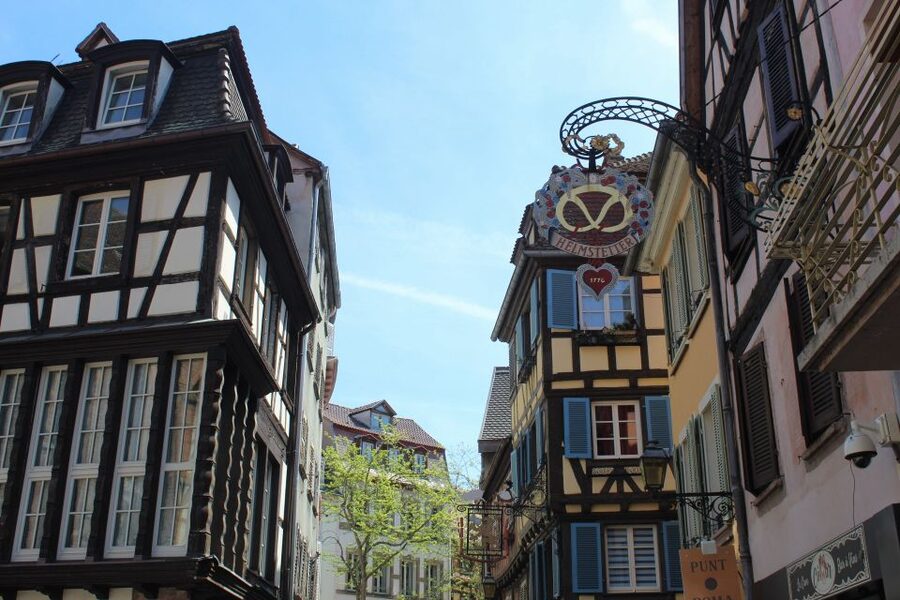
A maximum of six people is a real advantage in Colmar’s narrow center. You can hear the guide without standing in a tight crowd, move through lanes more easily, and ask questions without holding up a large group.
Some departures may have only one or two participants. That can make the experience feel almost private, though you should not book expecting a private tour every time. The listed format remains a small-group activity.
A small group also helps at the winery. Wine tasting is more enjoyable when you can discuss what is in your glass instead of waiting behind a busload of people. The guide can offer recommendations that fit your interests, including food and places to visit after the walk.
The tradeoff is that small tours can feel more personal, which is excellent for most people but not ideal if you prefer to remain anonymous. You will be part of a conversation, not simply listening from the back.
Timing, weather, and practical comfort
The activity lasts two hours, with starting times based on availability. That is a manageable length for most visitors and works well before lunch or later in the afternoon.
You should bring comfortable shoes and dress for changing weather. The tour runs rain or shine, so a light rain jacket or umbrella is sensible when the forecast looks unsettled. Colmar’s streets may be picturesque, but cobbles are less forgiving in wet weather.
The tour is offered in English and French. Nicolas has been praised for speaking clear English, and the small group gives you a better chance to ask him to explain a detail again if needed.
The tour is not suitable for pregnant women or people with mobility impairments according to the activity information. That restriction may reflect the walking route, cobblestones, and cellar access. If you have a condition that makes walking difficult, contact the provider before booking rather than assuming the route can be adjusted.
Free cancellation is available up to 24 hours before the activity, and you can reserve now and pay later. Those policies are useful when your Alsace plans may change, but the main decision should still be whether the walking and wine format suits you.
Who should book this experience
I would recommend this tour to first-time visitors who want an efficient introduction to Colmar. It is also a good fit for couples, solo visitors, and small groups who prefer conversation over a large guided crowd.
Wine lovers get the clearest benefit. The tasting offers a practical way to compare Alsace’s white grapes and ask questions at a local cellar. You do not need advanced wine knowledge, and the guide and winery staff can explain the basics.
History and architecture fans will also get plenty from the walk, especially if you want to understand the French and German influences behind the town’s appearance. Families may find the two-hour length manageable, though the cobblestones and wine cellar mean you should consider your group’s needs. One past booking included a six-month-old child, and the length worked well for that family, but this is not an activity designed specifically for children.
I would be less likely to recommend it if you want a long, slow food-and-wine experience. The wine portion comes at the end of a walking tour and is not a full vineyard visit. You also will not leave with an exhaustive study of Alsatian wine.
Is Colmar’s highlights and wine tour worth $53?
For most visitors, yes. The price includes a two-hour guided walk, a very small group, and an Alsatian wine tasting at a local cellar. The local guide is the key value: Nicolas’s connection to Colmar adds stories and advice that a self-guided stroll may not provide.
Book it near the start of your stay if you want restaurant and sightseeing suggestions you can use afterward. Book it later if your main goal is to combine a final look at Colmar with a glass of local wine.
The best reason to choose this experience is its balance. You get the famous streets and Little Venice, but also the history, regional identity, and wine culture behind the scenery. If you want a short, personal introduction to Colmar and you are comfortable walking on cobbles, this is a strong use of two hours.
FAQ
Where does the Colmar walking tour meet?
Meet your guide at the Fontaine Bruat in Parc du Champ de Mars.
How long does the experience last?
The tour lasts two hours.
What languages are available?
The tour is offered in English and French.
How large is the group?
The group is limited to six participants.
Who guides the tour?
The guide is Nicolas, a Colmar native who shares local history, cultural context, personal stories, and practical recommendations.
What wines are included?
The tasting focuses on Alsatian wines, especially white varieties such as Gewurztraminer, Riesling, and Pinot Gris.
Where does the wine tasting take place?
The tasting takes place at a local winery in Colmar. The Domaine Karcher, also referred to as Robert Karcher & Fils, is a named cellar associated with the experience and dates to 1605.
Is the tour suitable for people with mobility impairments?
No. The activity is not suitable for people with mobility impairments, and the route includes cobblestone streets.
What happens if it rains?
The tour operates rain or shine, so bring suitable weather protection and comfortable footwear.
Just poured in France
- Pinot Noir Masterclass – Wine tasting in Dijon★ 5.0 · 147 reviews
- Chardonnay Masterclass – Wine tasting in Dijon★ 5.0 · 91 reviews
- Small-Group Full-Day Tour of Côte de Nuits, Côte de Beaune Vineyards and Beaune Historical District★ 5.0 · 364 reviews
- Small group Burgundy tour of Beaune with Wine Tasting from Dijon★ 4.5 · 85 reviews
- Half Day Tour of the Cote de Nuits Vineyards from Dijon★ 5.0 · 108 reviews
- The Emblematic: visit of villages, Haut-Koenigsbourg, Wine tasting★ 5.0 · 81 reviews
- Alsace Full Day Wine Tour from Colmar★ 5.0 · 104 reviews
- Safari-Tour Villages and vineyard, 1/2 day afternoon★ 5.0 · 65 reviews
Wine Tasting Tours, compared.
Douro Valley w/ Boat Tour, Wine Tasting & Lunch
Read our review →
Complete Douro Valley Wine Tour with Lunch, Wine Tastings and River Cruise
Read our review →

Small-Group Wine Tasting Experience in the Tuscan Countryside
Read our review →
Montserrat & Cogwheel Train, Gourmet Wine Tasting & Tapas/Lunch
Read our review →
Tuscany & Montepulciano Day Trip with Lunch & Wine Tasting
Read our review →Browse the lists this tour appears in