
REVIEW · DRINKS TOURS
Krakow: Vodka Factory Museum Entry Ticket and Tasting
The Vodka Factory Museum turns a familiar Polish drink into a lesson in technology, trade, daily life, and national culture. Inside the former industrial complex at Fabryczna City, you move through seven themed halls covering everything from medieval distillation to railway shipping and communist-era vodka labels.
I like the freedom to explore at your own pace, and the tasting gives the visit a clear finish rather than leaving you with a museum full of machinery and no practical connection. The main drawback is that the displays are mainly written in Polish and English, while the audio guide does not always provide a fully smooth translation of every part of the exhibition.
Key points to know before you go
- Seven distinct halls: Follow vodka production from old recipes and medieval equipment to factory bottling and rail transport.
- Nearly 1,500 square meters: Expect a sizeable museum with historical displays, multimedia features, a cinema room, and reconstructed settings.
- A tasting at the end: The vodka sample is one of the most praised parts of the visit and gives the subject a pleasant, hands-on finish.
- Self-guided format: You receive an audio guide rather than a live museum guide, so you control the pace but may need to listen carefully.
- Good location for a flexible day: The museum sits at 13 Fabryczna Street within the Fabryczna City complex and offers unlimited time during the valid visit day.
- Reserve a time ahead: High demand can mean a wait of about 15 to 30 minutes, even though the ticket allows you to skip the ticket line.
What the Vodka Factory Museum is really about
This is not simply a collection of bottles with a tasting attached. The museum uses vodka to explain how a product can shape work, farming, transport, trade, family customs, and public life.
That broader approach makes the visit more useful than a standard drinks stop. You learn how production methods changed over the centuries, how ancient recipes were adapted, and how industrial equipment made large-scale production possible.
The museum occupies nearly 1,500 square meters in the historic Fabryczna City complex. A large share of that space is devoted to an interactive exhibition, so you should expect more than glass cases and long blocks of text.
The route moves through recreated places and working environments. You might find yourself looking at a medieval distillation apparatus one moment, then standing in a model of a noble court feast or a factory loading area the next.
For me, that change of setting is the museum’s best idea. It gives the subject a human scale. Instead of hearing only about alcohol percentages and production stages, you see where vodka fitted into Polish social and economic life.
More Museum Visits in Krakow:
- Porto: Cálem Cellar Tour, Interactive Museum & Wine Tasting
★ 4.5 · 4,113 reviews - Dublin Irish Whiskey Museum and Gallery Guided Tour with Tasting
★ 5.0 · 3,078 reviews - Munich: Beer and Food Tour with Dinner & Oktoberfest Museum
★ 4.7 · 1,086 reviews
Starting with medieval distillation and old recipes
The early section looks at the foundations of vodka production. Medieval distillation equipment helps show how basic principles of heating, cooling, and separation worked before modern factories entered the picture.
This part should appeal to anyone interested in old technology. The apparatus gives you something concrete to study, while the supporting material explains how production developed from earlier recipes and methods.
Do not expect a technical course in chemistry. The museum is designed for a broad audience, and the story stays linked to culture and daily life. Still, the early equipment adds useful context. Modern vodka can seem simple because it is sold in a neat bottle, but the process rests on centuries of trial, adaptation, and improved tools.
One display recreates a feast in a noble court. This shifts the focus from the still to the social role of spirits. Vodka was not only a manufactured product. It appeared at formal meals, celebrations, and moments when status and hospitality mattered.
That setting also keeps the tour from becoming too dry, in every sense of the word. The museum understands that a drink’s history includes the people who served it, bought it, taxed it, and used it to mark important occasions.
The distillery revolution and the move to factory production
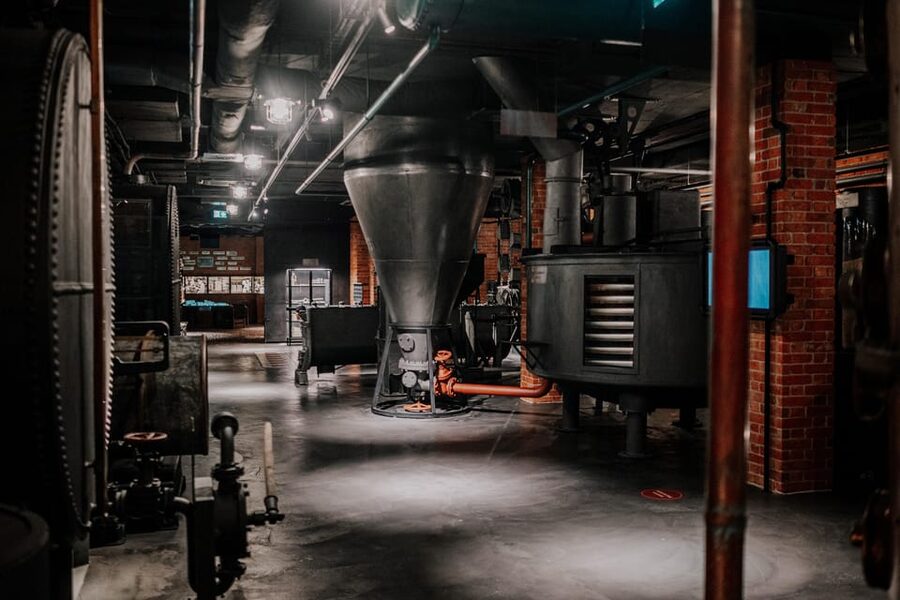
The next stage follows the change from small-scale methods to industrial production. Factory equipment shows how vodka became tied to organized labor, repeatable processes, and larger markets.
This is where the museum’s economic angle becomes clearer. Production was not just about making a better drink. It was also about using buildings, machinery, fuel, raw materials, workers, storage, and transport in a coordinated way.
You can see how an industrial distillery changed the scale of the business. Instead of a small operation serving a local area, production could feed a wider network. The museum connects this shift to the changing role of spirits in the economy.
The setting is also a good reminder that factory history can be personal. Large equipment tells you about systems, but it also hints at the people who cleaned, operated, repaired, bottled, and moved the finished product.
If you prefer museums with a quiet, highly focused display style, the multimedia features may feel a little busy. If you enjoy reconstructed scenes and visual storytelling, this section should keep you moving.
An interwar bar and the life of vodka between the wars
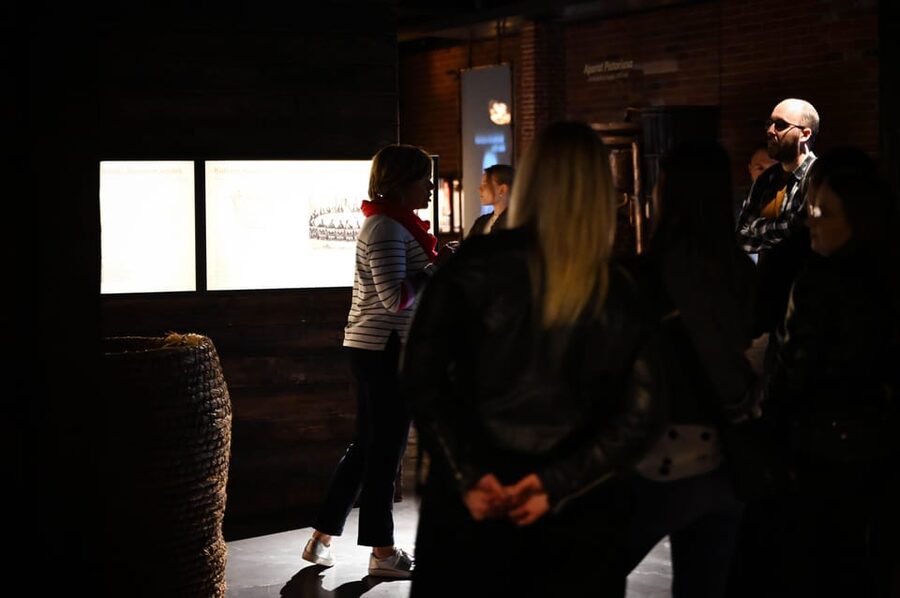
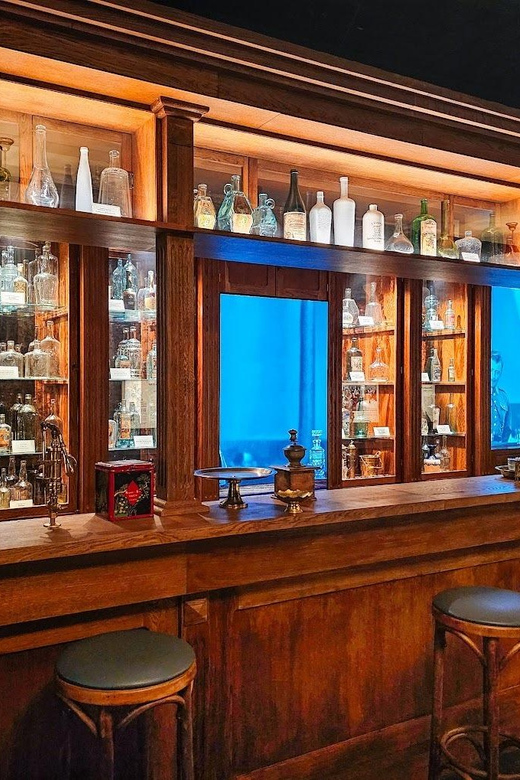
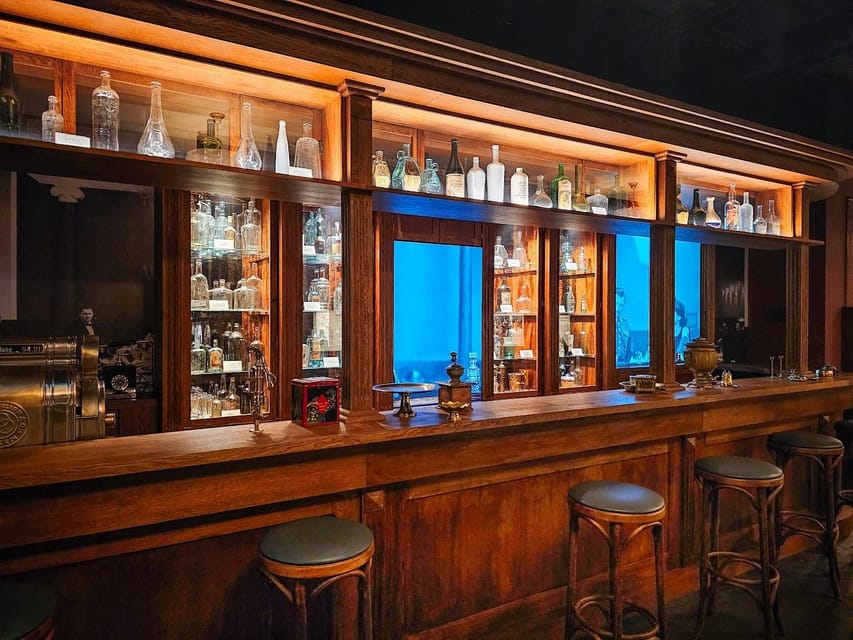
One of the more memorable settings is a bar from the interwar period. It gives the story a change of mood and helps explain how vodka fit into public life outside the distillery.
The bar is valuable because it shows the product in use rather than only in production. A factory can tell you how bottles were made. A bar suggests who ordered them, how they were presented, and what kind of social setting surrounded them.
The museum also recreates the square in front of Vodka Distillery No. 11. A railway siding forms part of this scene, tying the product to transport and distribution.
That detail may sound minor, but it is one of the sharper choices in the exhibition. A bottle has to travel before it reaches a shop, restaurant, or home. The siding helps you picture the link between factory output and the wider Polish economy.
These recreated places are especially useful if you find that production history becomes hard to follow when it is presented only through dates and machines. Here, the museum gives you buildings, streets, and public spaces to help organize the story.
More Tickets Worth Buying in Krakow:
- Bordeaux: Cité du Vin Entry Ticket and Wine Tasting
★ 4.6 · 3,885 reviews - Tennent’s Brewery Tours Ticket
★ 5.0 · 1,938 reviews - Bols Cocktail Experience Entrance ticket plus Cocktail
★ 4.5 · 1,169 reviews - Lucha Libre Tickets & Tacos & Beer & Mezcal – BEST NIGHT EVER!
★ 5.0 · 1,077 reviews
Agriculture, bottling, and the final factory stages
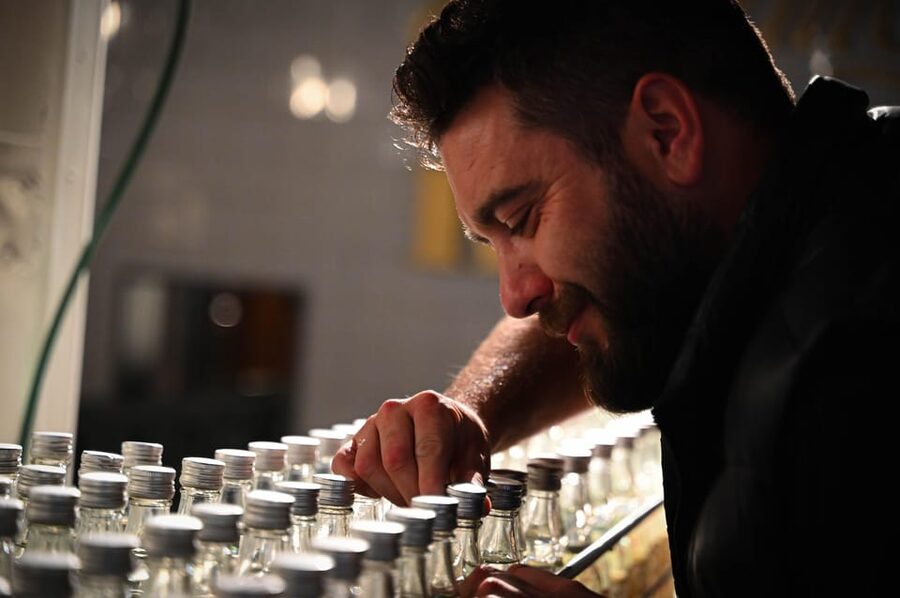
The route includes an agricultural distillery, which connects vodka to farming and raw materials. This is an important part of the production story. Spirits do not begin at the bottling line, and the agricultural setting shows that the process depends on what is grown, gathered, and prepared before distillation.
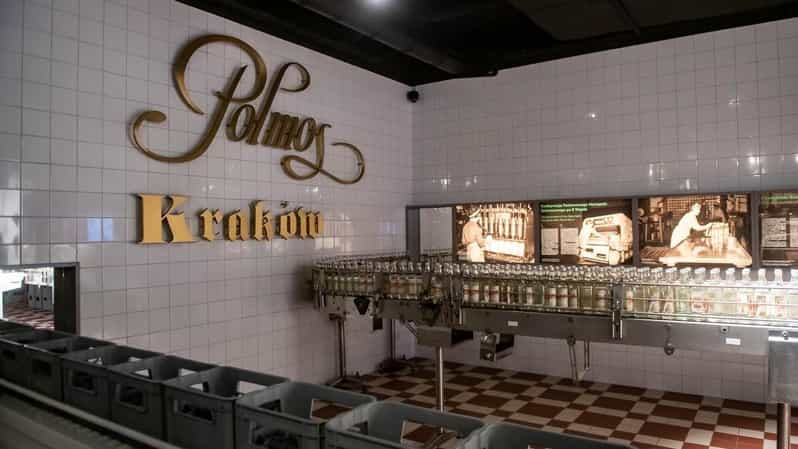
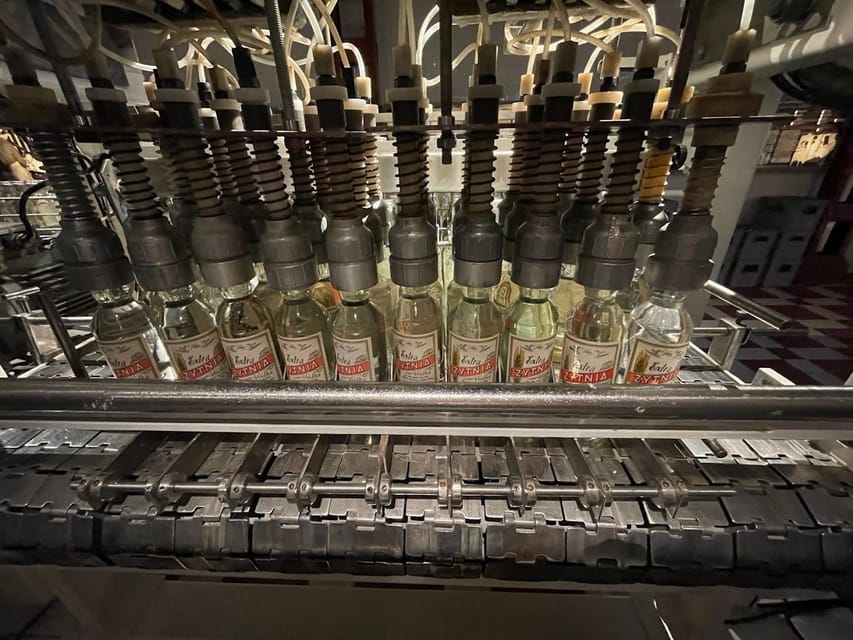
From there, the exhibition leads toward bottling and loading areas for finished products. This section focuses on the final factory stages, including the work needed to prepare vodka for shipment.
I like this part because it completes the chain. You see a product move from ingredients and recipes through machinery, packaging, and distribution. The museum does not treat the bottle as the end of the story until it has shown the many steps needed to get it ready for sale.
The reconstructed facilities also make clear why industrial vodka required more than a still. You need containers, labels, storage, workers, loading space, and a way to send the finished goods elsewhere.
The route is broad enough to suit visitors who are interested in design, manufacturing, or trade, even if alcohol itself is not their main interest.
Poland’s communist era through a wall of vodka memories
A wall devoted to vodkas from the times of the People’s Republic of Poland brings the story into a more recent period. Packaging and brand memories can reveal a great deal about what people saw, bought, and recognized in everyday life.
This is likely to be one of the most approachable areas for anyone with a personal or family connection to that period. Even if you do not know the brands, the display shows how labels and presentation change with politics, industry, and popular taste.
The section works because it is not only about drinking. It is also about design, state production, advertising, and memory. A bottle can become a small record of an era.
You should keep your expectations realistic. The written material is mainly in Polish and English. The audio guide offers English, German, French, Italian, and Ukrainian, but it may mainly help with translated narration and videos rather than replacing every written panel in your own language.
If you need full language access throughout, check the arrangement before arriving. French speakers in particular should know that an audio option is available, but the exhibition text itself is not fully translated into French.
The President’s office and the cinema room
The museum also includes a President’s office and a cozy cinema hall. These spaces add another layer to the exhibition by showing how the subject can be framed through institutions, official life, and moving images.
The cinema room offers a break from walking and reading. If you find the audio guide tiring, this quieter stop may help you reset before finishing the route.
The President’s office gives the exhibition a more formal setting. It suggests that vodka was connected not only with private gatherings and factory work, but also with administration, power, and national business.
The museum does not provide a live guide, so these rooms matter as part of the self-guided structure. They help vary the pace and give you visual anchors when the amount of information begins to build.
How the audio guide works in practice
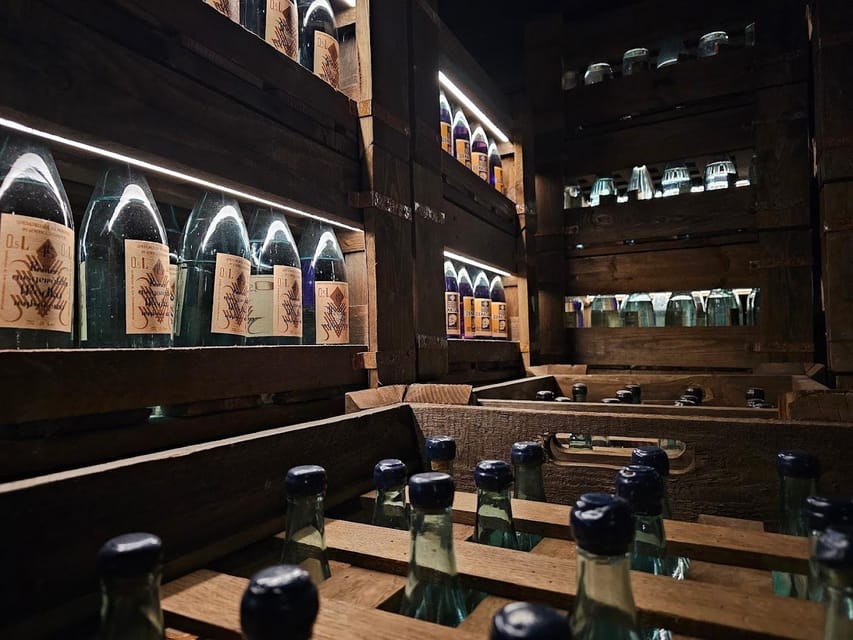
An audio guide is included, with options in English, German, French, Italian, and Ukrainian. That is useful, but you should know what it can and cannot do.
The museum’s displays still rely heavily on Polish and English text. The audio guide can help translate videos and explain parts of the route, but it does not necessarily turn every panel into a fully translated exhibition.
There is also a practical issue with sound. One recent experience found that the device did not work consistently, and another pointed out that groups of more than two people can struggle when several audio tracks play at once without perfect synchronization.
For the clearest visit, I would listen in a quieter spot and avoid trying to share one device with a large group. If your party is bigger than two, take turns or spread out slightly so each person can hear the narration.
The lack of headphones is another possible frustration. Without them, nearby audio devices and other voices can compete for your attention. This is not a reason to avoid the museum, but it is worth knowing before you arrive.
The vodka tasting at the end
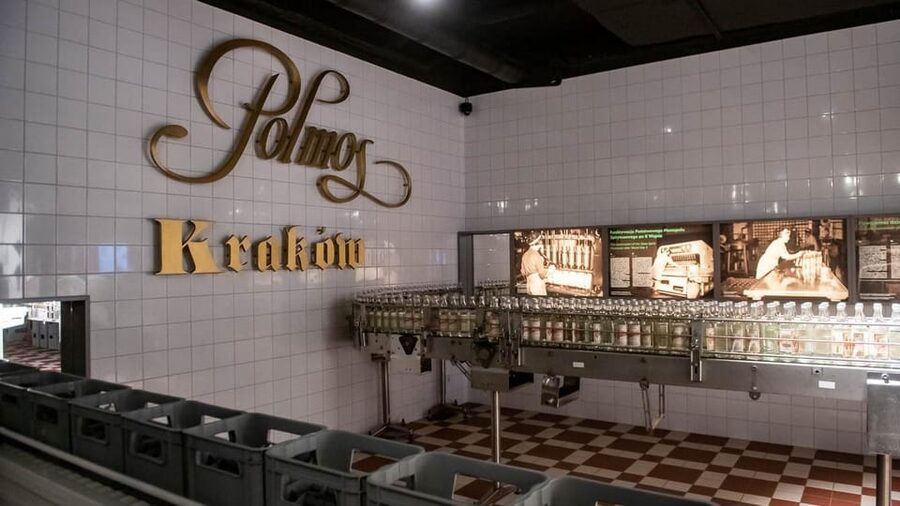
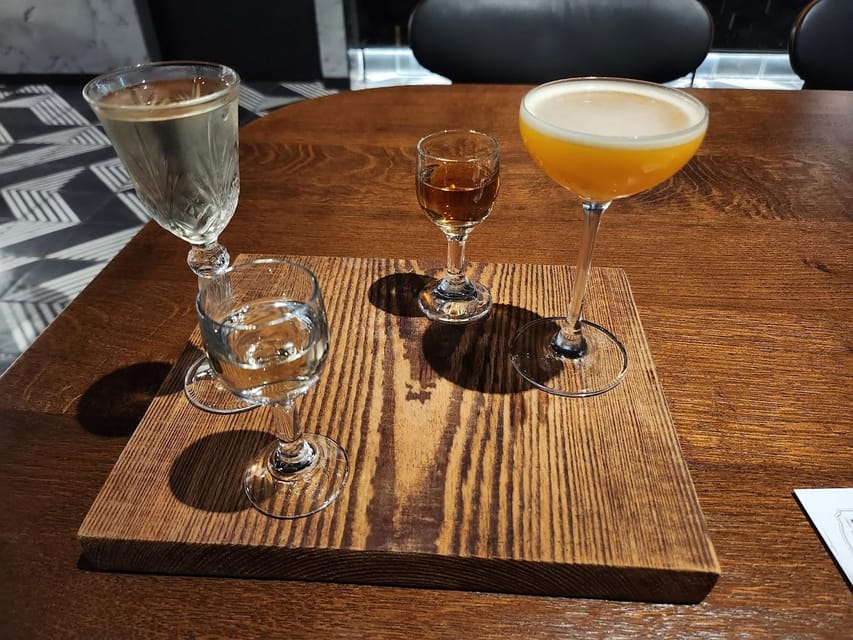
The tasting is the natural payoff. It gives you a chance to connect the production story with the finished drink, and it was the most consistently praised element in the available feedback.
The tasting is included in the $22 ticket, so you are not paying an extra fee once inside. It also gives the visit a clear ending after the machinery, packaging, history, and multimedia displays.
This is not presented as a full spirits course, and the available details do not specify the number or type of samples. Think of it as a concluding taste rather than a long professional tasting session.
I like that the tasting comes after the exhibition. You first learn how the product was made and used, then you get a chance to consider it as a finished drink. That order makes more sense than starting with alcohol and trying to focus on the history afterward.
The tasting also makes this a better choice for adults looking for a cultural stop with a social ending. If you do not drink vodka, the museum can still be worthwhile, but part of the ticket’s appeal will be less useful to you.
Is $22 a fair price?
At $22 per person, the value depends on how much time you give the museum. You get entrance, unlimited time during the valid one-day visit, the audio guide, and the tasting. For a short, self-guided stop, that price may feel high. For a substantial museum visit with seven halls and a tasting, it is more reasonable.
The museum’s size helps justify the cost. Nearly 1,500 square meters is enough for a proper exhibition rather than a single-room display, and the different settings give you several ways to approach the subject.
You are also paying for flexibility. There is no live guide keeping you on a strict schedule, so you can slow down in the sections that interest you and move faster through areas that do not.
The main value question is personal. If you enjoy industrial history, food and drink culture, old advertising, or interactive museums, $22 is a fair spend. If you want only a quick vodka sample, you can probably find simpler ways to have a drink for less.
Planning your visit at Fabryczna City
The meeting point is the Vodka Factory Museum at 13 Fabryczna Street, inside the Fabryczna City complex in Krakow. You should confirm your preferred entry time with the museum before arriving because high visitor numbers can lead to a wait of about 15 to 30 minutes.
The ticket is valid for one day, and you can stay as long as you like during that visit. Starting times depend on availability, so check before booking rather than assuming you can arrive at any hour.
The museum is wheelchair accessible. A host or greeter is available in English, but the exhibition itself is self-guided rather than led by a person walking with you.
Free cancellation is available up to 24 hours in advance, and you can reserve now and pay later. Those terms help if your Krakow plans are still shifting, though they do not remove the need to confirm a time when the museum is busy.
Who should book this experience?
I would recommend it to adults who want more than a standard city attraction but do not want to commit to a long guided tour. It also suits visitors interested in manufacturing, Polish social history, packaging, transport, and food culture.
It is a good rainy-day choice because the route is indoors and includes multimedia displays, reconstructed rooms, and a cinema hall. The tasting adds a social finish, making it useful for couples and small groups.
Families should check their own children’s interest in industrial displays and alcohol-related history. The museum is not described as a children’s attraction, and the tasting is clearly aimed at adults.
You may want to skip it if you require a live guide, full written translation in a language other than Polish or English, or a very polished audio system. The content is broad and appealing, but the self-guided format requires some patience.
Should you book the Vodka Factory Museum?
Book it if you want to understand how vodka fits into Polish culture and industry, not just taste a sample. The seven themed halls, reconstructed factory settings, railway siding, interwar bar, and communist-era bottle wall give the visit more range than the price might first suggest.
Go in knowing that the audio guide can be imperfect and that written material is mainly in Polish and English. Confirm your time before arriving, allow room for a possible 15 to 30 minute wait, and expect the tasting to be a pleasant final chapter rather than the entire point of the visit.
FAQ
Where is the Vodka Factory Museum located?
The museum is at 13 Fabryczna Street in Krakow, inside the Fabryczna City complex.
How long is the ticket valid?
The ticket is valid for one day, and you have unlimited time at the museum during that visit.
Is a vodka tasting included?
Yes. A vodka tasting is included in the entrance ticket and takes place at the end of the museum visit.
Is there a live guide?
No live guide service is included. The visit uses an audio guide, and an English-speaking host or greeter is available.
Which languages are available for the audio guide?
The audio guide is available in English, German, French, Italian, and Ukrainian.
Is the museum wheelchair accessible?
Yes. The Vodka Factory Museum is wheelchair accessible.
Just poured in Krakow
- Krakow: Zakopane Cable Car, Spirits, Tasting & Thermal Baths★ 4.7 · 359 reviews
- Krakow: Zakopane Cable Car, Vodka, Tasting & Thermal Springs★ 4.7 · 274 reviews
- Krakow: Vodka Tasting Tour: Tapas, Tipsy Tales & Hidden Gems★ 5.0 · 203 reviews
- Krakow: Vodka Tasting in Hidden Bar★ 4.9 · 138 reviews
- Krakow: Hidden Rooftop Bar Reservation with 1 Cocktail★ 4.5 · 177 reviews
- Krakow: Traditional Polish Food and Drinks Tasting Tour★ 4.8 · 77 reviews
- Krakow: 6 pm Tipsy Bar Tour With Karaoke+Twist (Thu-Fri-Sat)★ 4.7 · 60 reviews
- Krakow: 6-Course Full Polish Food Tour with Vodka Tasting★ 4.8 · 98 reviews
Drinks Tours, compared.

Douro Valley w/ Boat Tour, Wine Tasting & Lunch
Read our review →
Chichen Itza, Cenote & Valladolid Tour with Tequila and Lunch
Read our review →
Complete Douro Valley Wine Tour with Lunch, Wine Tastings and River Cruise
Read our review →
Zakopane: Cable Car, Chocholow Baths, Cheese & Vodka
Read our review →

Zakopane: Cable Car, Chocholow Baths, Cheese & Vodka
Read our review →
Small-Group Wine Tasting Experience in the Tuscan Countryside
Read our review →Browse the lists this tour appears in