
REVIEW · WINERY TOURS
Ribera del Duero Wineries Guided Tour & Wine Tasting from Madrid
The most memorable part of this day is the contrast between the wineries. One may be a young boutique producer, another a polished modern facility, and the last a centuries-old cellar hidden beneath a medieval town. By the end, you have seen Ribera del Duero wine from grape to bottle, and from sleek architecture to tunnels carved deep underground.
I like the three-winery format, since each stop shows a different side of the region rather than repeating the same tasting room. I also like the generous food served with the wine, including cheese, crackers, and salami, so you are not tasting on an empty stomach.
The tradeoff is the length. This is an 11-hour day with roughly two hours each way between Madrid and Ribera del Duero. The van can feel cramped when full, and lunch is not included, so you should be ready for a long road day.
Key points before you book
- Three distinct wineries: Expect a mix of boutique, modern, large-scale, family-run, or historic producers, depending on the day.
- At least nine wines: Each winery offers a minimum of three tastings, usually with snacks.
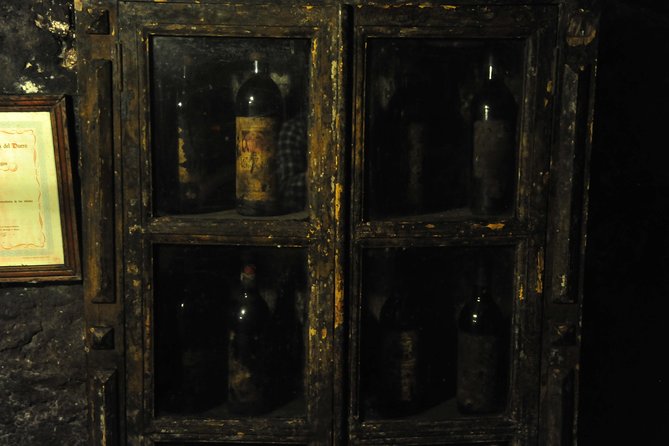
- The underground cellar is a highlight: One stop may include medieval tunnels extending about four miles beneath the town and reaching roughly 40 feet below ground.
- A full day from Madrid: Pickup is at 9:15 am, with a return around 8 pm, depending on traffic.
- Lunch is your choice: You have free time for tapas, a light meal, or a full Castilian lunch, but you pay separately.
- Small-group setting: The tour allows up to 20 people, though some departures use a much smaller van and group.
Why Ribera del Duero makes a fine Madrid day trip
Ribera del Duero is one of Spain’s best-known red-wine regions, centered on the Duero River and the Tempranillo grape. The area is known for full-bodied reds with fruit, structure, and the ability to age well. You do not need to be a wine expert to enjoy the visit, but a little curiosity helps.
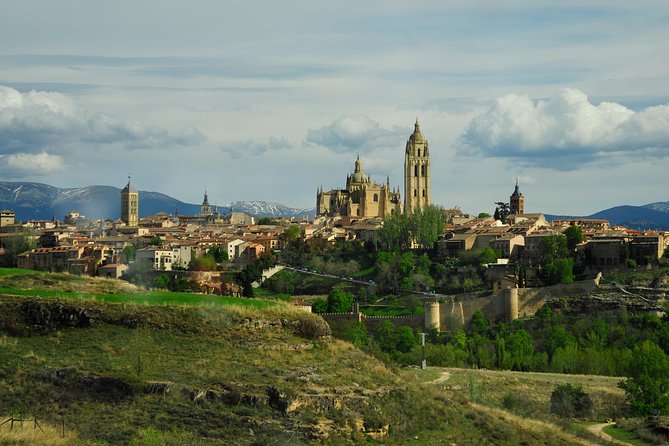
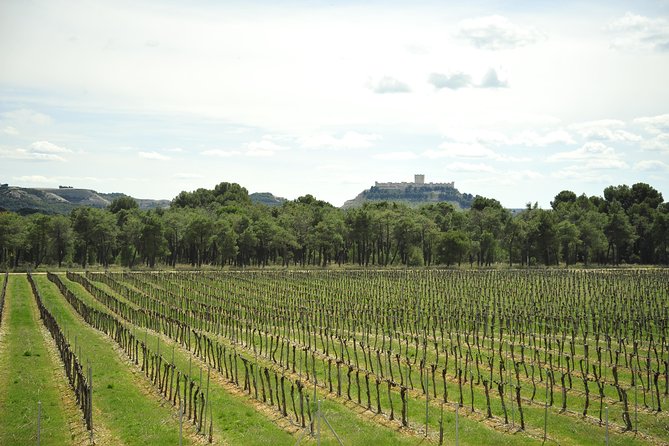
The region also gives you a different view of Spain than Madrid does. Instead of city streets and grand museums, you see open vineyards, small towns, old stone buildings, castles, and wineries built around both old methods and new technology.
The trip is especially useful if you want to visit wine country but do not want to rent a car. The wineries are spread across the region, and reaching three of them independently would require careful planning, a designated driver, and appointments. Here, transportation, winery access, tastings, and a bilingual guide are handled for you.
The route is not fixed in stone. The order of the wineries and towns can change from one departure to another. That is normal for this type of day trip, but it means you should judge the experience by its overall structure rather than expect a precise sequence.
More Wine Tasting Tours in Madrid
- Madrid Tapas & Wine Tasting Walking Tour – Small Group Local Bars
★ 5.0 · 3,644 reviews - Toledo Tour & Vineyard Walk with Wine Tasting from Madrid
★ 5.0 · 2,546 reviews - Madrid: Tapas & Wine Tasting Tour with Local Guide
★ 4.8 · 2,171 reviews
Meeting at Hotel Claridge in Madrid
The tour begins at 9:15 am at the front door of the hotel cafeteria at Hotel Claridge, next to the main hotel entrance at Plaza del Conde de Casal, 6. The nearest Metro stop is Conde de Casal on Line 6.
Arrive early. The departure is treated seriously, and the vehicle leaves on time. Give yourself an extra 10 to 20 minutes beyond what a map app predicts, especially if you are crossing Madrid during the morning. The meeting point is easy to reach by public transport, but it is not a place to find at the last second.
The instructions advise using a regular taxi rather than Uber if you are taking a car. That is practical advice for an early departure, when a small delay can mean missing the group. The tour does not include hotel pickup, and catching up later is at your own expense.
The return is to this same meeting point. That makes the day easier at the end, since you do not need to arrange a ride from an unfamiliar village after several tastings.
The ride from Madrid to the Duero River
The drive to Ribera del Duero takes about two hours, sometimes closer to an hour and 45 minutes depending on the route and traffic. A guide such as Ismael, Cosmin, Antonio, Alfonso, or Muna may explain Spanish wine, the local grape, and the area during the ride. Guides speak English and Spanish, and the experience may operate bilingually.
This is not a quick hop into the countryside. You spend a meaningful part of the day on the road, so bring something comfortable for the journey. The vehicle is air-conditioned, but one small-group departure used a Mercedes Sprinter that felt tight when several couples were aboard.
That point matters. A full van gives you a social day and may help keep the price reasonable, but you should not expect limousine-style space. On the other hand, some groups have been as small as six people, which creates a more personal pace and makes it easier to ask questions.
First winery: learning Tempranillo from grape to bottle
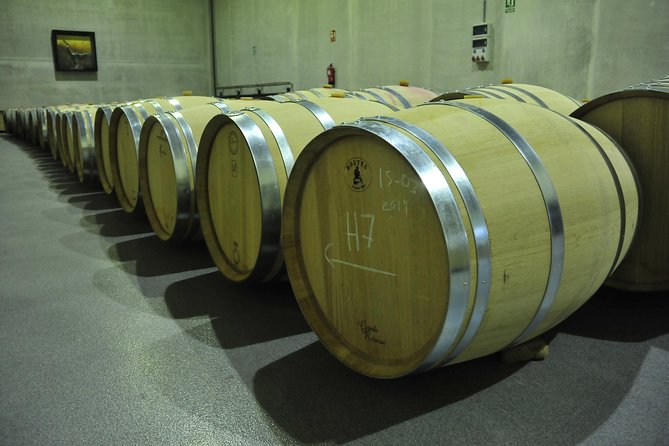
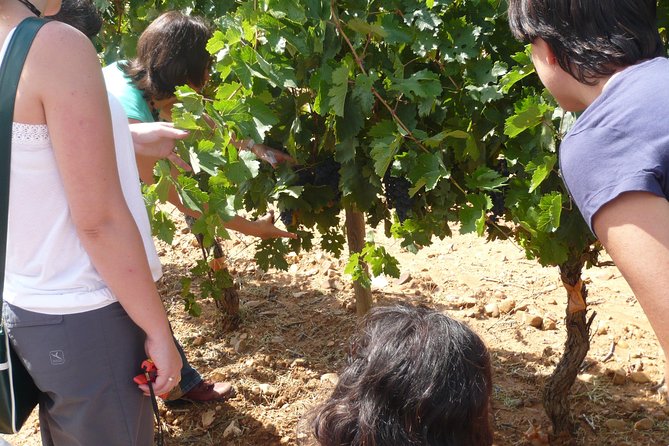
The first winery visit usually provides the basic framework for the day. You learn how Ribera del Duero wine is made, how the grape is handled, and what aging does to the final wine. A full visit lasts about 90 minutes and includes tasting.
The winery may be a well-known regional producer or a younger boutique operation. Some departures have visited a small producer founded in 2018, while others have stopped at a representative bodega with a longer local story. This variety is part of the appeal, but it also means the exact personality of the first stop can change.
Pay attention to how the wine feels in the glass rather than trying to memorize every technical term. The guide can help you notice fruit, freshness, oak, body, and age. Tastings generally include at least three wines, and the pours are substantial enough that you should pace yourself.
Food is served at the wineries. Cheese, crackers, and salami have been used to accompany the tastings, which is more than a token snack. Still, eat a proper breakfast before leaving Madrid. The food at the wineries is helpful, but it is not a full meal.
More Wine Tasting Tours in Spain
- Madrid Countryside Wineries Guided Tour with Wine Tasting
★ 5.0 · 740 reviews - Madrid Region Wineries Guided Tour with Wine Tastings
★ 4.9 · 222 reviews - Montserrat & Cogwheel Train, Gourmet Wine Tasting & Tapas/Lunch
★ 5.0 · 6,290 reviews - Paella Cooking Class, Wine Tasting & Central Market in Valencia
★ 5.0 · 1,150 reviews
Second winery: modern design and open vineyard views
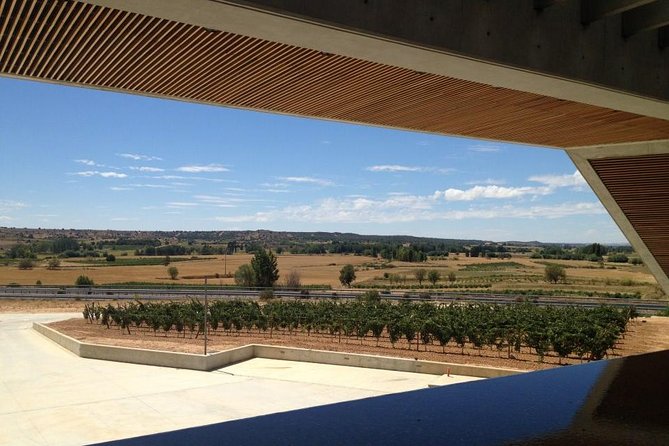
The second stop is chosen to contrast with the first. The building may open toward the vineyards, using modern architecture to connect the production spaces with the surrounding land. Here, you may see a more contemporary approach to winery design and production.
One departure included a large, state-of-the-art producer, while another itinerary described a winery built in harmony with its setting. The point is not simply to admire the building. You get to compare how scale, architecture, and production methods affect the feel of the wine experience.
This stop also helps explain why a three-winery tour is more useful than a single tasting visit. A winery connected to a larger operation can show you a different business model from a family cellar or small startup. The wines may differ in style, price, and production volume, even though they come from the same broad region.
The standard visit lasts about 90 minutes. If you enjoy wine education, this is a good time to ask how the grapes are harvested, how barrels are used, and what makes a limited production different from a larger release. The guide and winery staff can put the tasting into local context.
Lunch in Roa, with no forced menu
The lunch stop gives you roughly an hour of free time, often in or near Roa. Lunch is not included, and that is a benefit if you prefer choosing what and how much to eat. You might select tapas, a light meal, or a traditional three-course Castilian lunch.
A practical budget is about 12 to 15 euros for tapas or around 30 euros for a full three-course meal. Prices can vary, but this gives you a useful guide. You may eat with the group, and some departures have stopped at a local tavern away from the main tourist path.
An hour is enough for a straightforward meal, but it is not a leisurely restaurant afternoon. If you want a full lunch, sit down promptly and keep an eye on the meeting time. Sharing plates can work well, especially after the morning tastings.
I prefer this setup to a fixed tourist menu. You can control your budget and choose between a substantial meal and a quick bite. Just remember that wine tastings continue later, so moderation at lunch is wise.
Third winery: underground cellars beneath a medieval town
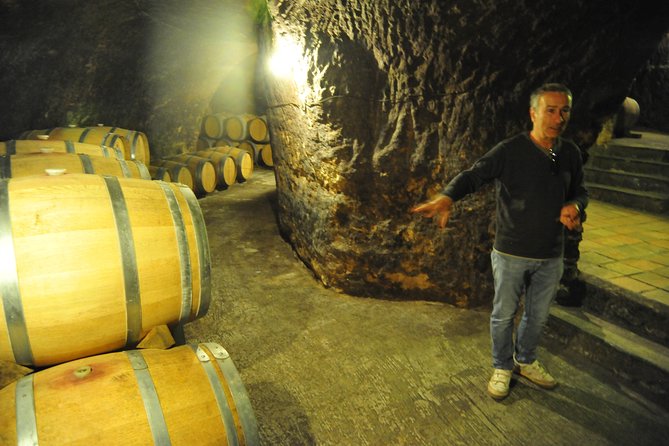
The final winery is often the most unusual. In Curiel de Duero or another nearby location, you may enter an underground cellar system connected with medieval wine production. The tunnels reach about four miles in total length and are excavated roughly 40 feet below the town.
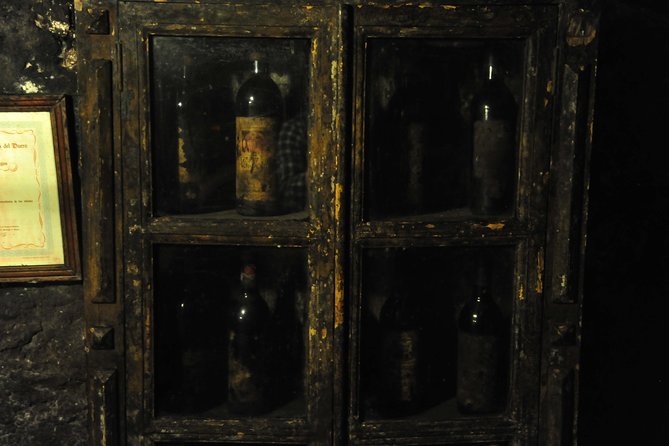
This is the stop that gives the day a sense of place. Above ground, the towns and castles tell part of the story. Below ground, the cool, dark passageways show how wine was stored long before modern climate control. Some cellars date back centuries, and one visit included tunnels associated with the 16th century.
Wear warm layers. The cellars can be cold even when the afternoon outside is mild. Shoes with a steady sole are also sensible, since underground routes may involve uneven surfaces, though the tour information does not promise any particular level of accessibility.
The visit lasts about 90 minutes and includes tasting. The old cellar is not just a photo stop. It connects the wine in your glass to the long work of families and towns that have preserved this tradition over generations.
For many people, this is the most distinctive part of the tour. If your main interest is modern wine production, the first two wineries may matter more. If you want history, atmosphere, and a setting you could not easily arrange on your own, save your energy for the final stop.
Tasting nine wines without overdoing it
The tour includes a minimum of three wines at each winery, which usually means at least nine samples across the day. The pours can be generous, sometimes close to half a glass, and each winery provides food to help balance the alcohol.
That quantity makes pacing important. You do not need to finish every pour, and you should drink water whenever it is offered or available. The long drive back is a good time to rest rather than keep tasting.
You will encounter more than one expression of Ribera del Duero. A younger wine may show direct fruit, while an aged wine can feel smoother and more layered. The tour is not built around one famous label. It is built around comparison.
Wine purchases may be available at some stops. Shipping wine home has been possible for some participants, but arrangements, costs, and destination rules are not specified, so ask the winery directly before buying a large amount.
Guides and the small-group feel
The guide can make or break a day with this much driving. Ismael has led many departures and is praised for explaining wine history, keeping the group comfortable, and managing the schedule. Cosmin has also been noted for safe driving, useful regional knowledge, and choosing a good lunch stop.
Other departures have had Antonio, Alfonso, or Muna as guide. The exact person depends on the date, but the common expectation is an English and Spanish-speaking guide who drives, translates when needed, and provides context between winery visits.
The group size can reach 20, though smaller groups are common. A small group makes it easier to talk with the guide and winery staff. A larger group may feel less personal, especially in a compact vehicle, but it can create a friendly social atmosphere.
This is a guided wine trip, not a private tour. You will follow the group schedule, share transport, and work within the winery appointment times. If you want total control over the pace, a private option would be better, though the price and arrangements would differ.
Is the $223.82 price good value?
At $223.82 per person, this is not a cheap wine tasting. The price makes more sense when you add up what it covers: round-trip transport from Madrid, a bilingual guide, three winery visits, at least nine tastings, and food at each winery.
You are also paying for access and logistics. Three separate bodegas in a rural wine region would be difficult to arrange without a car. A private driver alone could make an independent day expensive, before adding tasting fees.
Lunch is extra, so budget another 12 to 30 euros depending on how you eat. You may also want money for wine purchases. The tour is strongest value for someone who wants a full day of organized access and does not want to drive after tasting.
It is less compelling if you only want one relaxed winery visit or dislike long road trips. A shorter Madrid-area tasting may suit you better in that case. The price is fair for the amount of wine, transport, and guiding included, but the day earns its value through variety rather than leisure.
Who should book this wine day?
I would choose this tour if you have a full free day in Madrid and want to see a different part of Spain. It suits wine beginners because the guide and winery staff explain the process step by step. It also suits serious wine fans because the three producers can differ sharply in size, age, and method.
History lovers will appreciate the old towns, castles, and underground cellars. Food-focused visitors will like the local snacks and the chance to choose a Castilian lunch. Couples, friends, and solo visitors who enjoy meeting people can all fit comfortably into the format.
I would hesitate if you have mobility concerns, since the information does not describe the cellar routes in detail. I would also think twice if you become uncomfortable in vans or prefer not to spend four hours on the road.
Children under 12 cannot join this tour unless a private arrangement is made. The minimum age for wine tasting is 18, and children must be accompanied by an adult. The overall tour also requires at least four participants to operate, so a cancellation is possible if that minimum is not reached.
Should you book it?
Book this Ribera del Duero day trip if you want three contrasting wineries, a proper introduction to Tempranillo, and the chance to walk through old underground cellars without arranging the route yourself. The strongest parts are the variety of bodegas, the regional food, and guides such as Ismael or Cosmin who add useful context during the long drive.
Skip it if you want a short, quiet tasting close to Madrid. This is a full road day, and the return can be tiring. But if you accept the early start, the shared vehicle, and the extra cost of lunch, you get a broad and memorable look at one of Spain’s leading wine regions.
FAQ
Where does the tour start in Madrid?
The meeting point is at the front door of the cafeteria at Hotel Claridge, next to the hotel’s main entrance, at Plaza del Conde de Casal, 6. The nearest Metro station is Conde de Casal on Line 6.
What time does the tour leave?
The tour starts at 9:15 am. You should arrive early because the vehicle departs on time.
How long does the experience last?
The full day lasts about 10 to 11 hours. Return to the original meeting point is expected around 8 pm, depending on traffic in Madrid.
How many wineries do you visit?
The tour includes three winery visits. You receive a minimum of three wine tastings at each winery, for at least nine wines overall.
Is lunch included?
No. You have free time to choose and pay for lunch yourself. Tapas may cost about 12 to 15 euros, while a full three-course meal may cost around 30 euros.
Can children join the tour?
Children under 12 cannot participate unless a private tour is arranged. The minimum age for wine tasting at the wineries is 18, and children must be accompanied by an adult.
More Winery Tours in Spain
- Barcelona: Montserrat, Cogwheel, Black Madonna & Winery Tour
★ 4.8 · 5,633 reviews - Montserrat with Black Madonna & Medieval Winery with Tapas/Lunch
★ 5.0 · 5,209 reviews - Montserrat Full Day Tour with Farmhouse Lunch and Winery Visit
★ 5.0 · 1,068 reviews - Montserrat & Winery Visit Tour with Traditional Farmhouse Lunch
★ 4.5 · 1,035 reviews
More Winery Tours in Madrid
- From Madrid: Toledo Guided Tour & Winery Visit with Tasting
★ 4.8 · 313 reviews
Just poured in Madrid
- From Madrid: Toledo Guided Tour & Winery Visit with Tasting★ 4.8 · 313 reviews
- Madrid Region Wineries Guided Tour with Wine Tastings★ 4.9 · 222 reviews
- Madrid: Guided Tapas and Wine Tour with Rooftop Views★ 4.8 · 608 reviews
- Madrid Countryside Wineries Guided Tour with Wine Tasting★ 5.0 · 740 reviews
- Paella Workshop with Bottomless Sangria in Central Madrid★ 5.0 · 763 reviews
- Madrid: Food & Wine Tour with 10 Tapas & 4 Drinks Included★ 4.9 · 984 reviews
- Madrid Ultimate Spanish Cuisine Food Tour★ 5.0 · 1,010 reviews
- Madrid: Paella and Sangria Workshop in the City Center★ 4.9 · 1,264 reviews
Winery Tours, compared.
Douro Valley with Winery Lunch, Tastings & Cruise
Read our review →
Montserrat, Cogwheel, Black Madonna & Winery Tour
Read our review →
Montserrat with Black Madonna & Medieval Winery with Tapas/Lunch
Read our review →
Siena, San Gimignano, Pisa & Lunch at Winery
Read our review →
Wine Tour: Paarl, Franschhoek & Stellenbosch incl 3 wineries
Read our review →
Douro Valley Tour: 2 Vineyard Visits, River Cruise, Winery Lunch
Read our review →
5-Hour Traverse City Wine Tour: 4 Wineries on Old Mission Peninsula
Read our review →Browse the lists this tour appears in