
REVIEW · WINERY TOURS
Jerez de la Frontera: Sherry Winery Tour with Tasting
The best part of this Jerez experience is the setting: you walk through a 19th-century bodega rather than a modern tasting room. The tour explains how grape growing, fortification, and long aging create sherry, then finishes with four wines that show how different styles can be.
I like the small-group feel and the clear, friendly guiding. I also like the generous tasting, the old label display, and the chance to see a smaller producer focused on wines such as Palo Cortado and Amontillado. The main drawback is pace. The visit lasts about 1.5 hours, and the tasting can feel short if you want to linger over every glass or have paid for food.
Key points
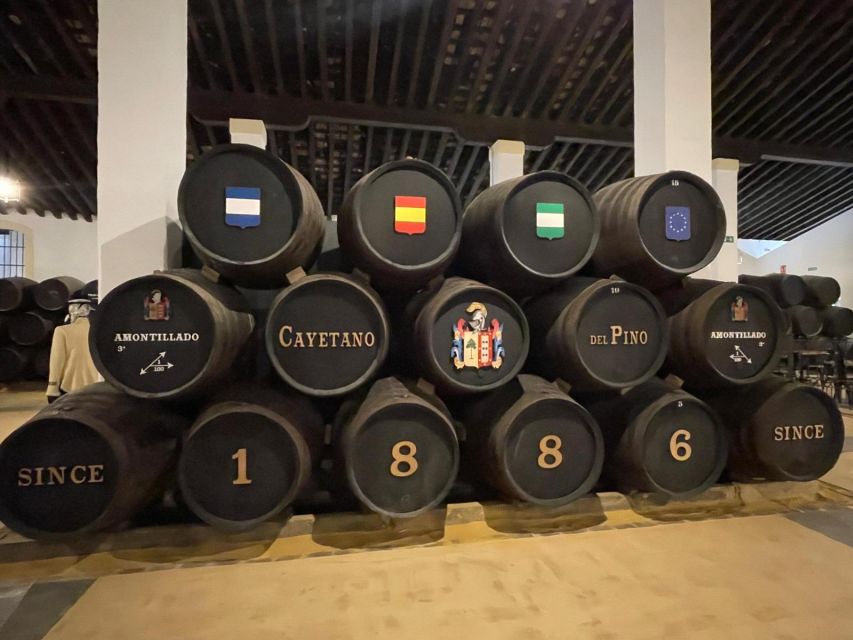
- Walk through an 1886 bodega: See the historic building and its barrels in the center of Jerez.
- Learn the sherry method: The visit covers grapes, wine aging, production figures, and the sherry aging system.
- Taste four wines: The tasting offers a useful introduction to styles that may be new to you.
- See rare label history: A display of old wine labels adds a visual link to the winery’s past.
- Expect a personal visit: Groups can be as small as five people, with guides such as Angela, Philippe, and Linda offering tours in English or Spanish.
- Pay $29 for a focused experience: The price includes the tour, guide, and tasting, but not food.
Jerez de la Frontera is the center of sherry country, and that matters here. You are not tasting an imported afterthought in a hotel bar. You are visiting a working wine house in the city where fortified wine has shaped local culture, trade, and daily life.
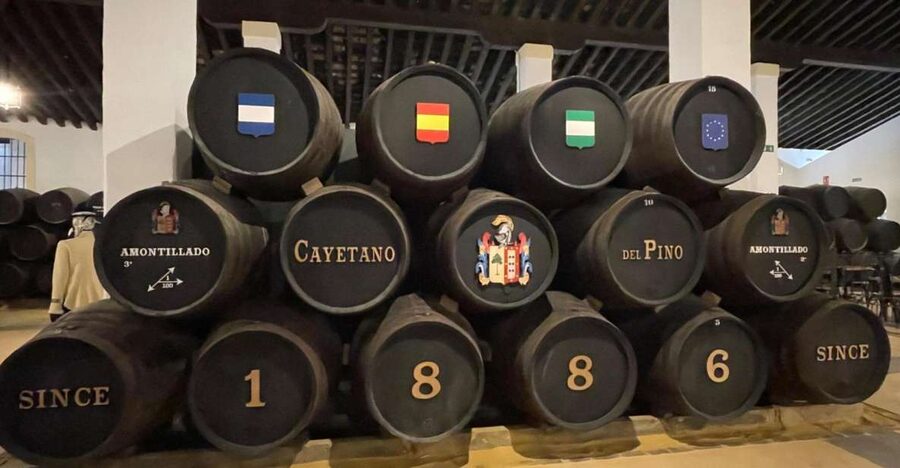
The experience takes place at Cayetano del Pino y Cia, a winery founded in the 19th century. The building dates to 1886 and has the feel of what locals call a cathedral of wine: tall, cool interior spaces, rows of barrels, and the quiet seriousness of a place built for aging wine rather than entertaining crowds.
That setting gives the tour its strongest character. Large commercial bodegas can offer more machinery, bigger displays, and a slicker presentation. This visit is smaller and more personal. You spend time learning about one producer and its wines, with the building itself doing much of the storytelling.
The meeting point is Plaza Silos, 3, in central Jerez. Once the visit ends, you are already close to the city’s monuments, so the winery works well as part of a walking day in the old center.
Your visit begins with an introduction to the building and the bodega’s production figures. This is not just a quick welcome and a glass in your hand. The guide sets out what the winery is, how it developed, and how its production fits into the wider sherry tradition.
That opening is useful because sherry can seem confusing at first. The word covers several very different wines, from pale and dry styles to darker, sweeter examples. The guide gives you a framework before you start tasting, so the four wines make more sense later.
The presentation also gives you a feel for the scale of the winery. Cayetano del Pino is a smaller bodega, and its current focus includes aging Palo Cortado and Amontillado. If you have already visited one of the huge Jerez wine houses, this more intimate setting offers a different view of the trade.
The strongest guides make this opening conversational. Angela, Philippe, and Linda are among the guides associated with recent visits, and English-speaking guests have found the explanations easy to follow. The guiding style can vary, but the experience is designed for live instruction in English or Spanish.
After the introduction, you watch a short film about Jerez, the winery, the history of wine, and the winemaking process. It provides quick context before you walk through the visitor center.
A film can sometimes feel like filler on a winery tour. Here, it helps organize the subject. Jerez has a long wine story, and the film connects the town to the bodega rather than treating the winery as an isolated attraction.
You will hear about Cayetano del Pino, the house’s development, and the steps that turn grapes into sherry. The film is brief, so it does not replace the guide. Its value is that it gives you images and a basic timeline before the more detailed exhibits.
If you already know a lot about sherry, this section may feel familiar. For most first-time visitors, it makes the rest of the tour easier to follow. You will not need to arrive with technical wine knowledge.
The guided visitor center is the educational core of the experience. Exhibits cover the winery’s chronology, sherry production, grape cultivation, and the aging system used for the wines.
The aging system is especially important. The tour explains how different ages and types of wine contribute to the final bottle, rather than presenting sherry as a single recipe. This is the point where the process becomes more than a list of facts.
You also see a section listing sherry wineries and a glossary of wine terms. That glossary is handy if you have ever looked at a sherry menu and wondered what the names meant. The visit gives you enough vocabulary to make better choices later, whether you order a glass in Jerez or buy a bottle to take home.
The tour also helps explain why four samples can taste so different. The contrast between wines is not an accident. It comes from grapes, production choices, fortification, and time in the bodega.
One limitation is that the visit is more interpretive than hands-on. The information explains how sherry is produced, but there may not be many practical demonstrations of each production step. If you want to see an active cellar operation in detail, a larger winery tour may offer more machinery or visible production work.
The barrels are one of the most atmospheric parts of the visit. You get to see where the wine ages and to understand that time is not an abstract idea here. It is built into the room, the wood, and the slow work of the bodega.
The interior can feel surprisingly cool, even in hot weather. That change is welcome during an Andalusian summer, though parts of the tour require standing. One practical point: there may be nowhere to sit during longer explanations, so wear comfortable shoes and plan for a standing visit.
The building’s quiet scale also makes a difference. Groups can be quite small, sometimes around five people, and recent group sizes have been close to ten. That means you can usually hear the guide and ask questions without shouting across a crowded hall.
The smaller format is a real advantage if you prefer a personal tour. It also means the atmosphere can be subdued. One useful suggestion is to think of this as a cellar lesson followed by a tasting, not as a theatrical show. The focus is on the wine and the explanation.
Near the end of the visitor center, you see an exhibition of historic labels. It is a modest feature, but it adds something the barrels alone cannot provide.
Wine labels show how a producer presents itself over time. They connect the winery’s past with its commercial life and give you a glimpse of changing design, names, and traditions. For visitors who enjoy old packaging, print design, or wine collecting, this section is a pleasant extra.
The display also breaks up the technical information. After hearing about grapes and aging, you get a more visual reminder that sherry has been sold, collected, and enjoyed for generations.
Do not expect a large museum. The label display is one part of a compact visitor center. Its value comes from the connection to this particular bodega, not from its size.
The tasting closes the visit with four wines and sherries. The portions are generally generous, and some tastings include nuts or crisps. Food is not part of the listed tour inclusion, so treat any nibbles as an accompaniment rather than a meal.
The four wines are the reason to pay attention during the earlier explanation. You are not simply sampling four glasses. You are comparing styles, and the differences make the production method easier to understand.
For a first visit to Jerez, this is a good number of samples. One wine can leave you with a vague impression. Four let you notice contrast, identify the styles you prefer, and ask focused questions.
The tasting is guided, but the amount of time available can vary with the group and the pace of the visit. The full experience is often around 1.5 hours, including the tasting. Some people will find that just right. If you like to study each glass, take notes, and chat at length, the final session may feel rushed.
This is also where food expectations matter. A bowl of nuts and shared crisps can be welcome, but the tour does not include a full food pairing. If you have chosen an added food option, allow enough time to enjoy it, since the tasting itself may be timed fairly tightly.
The room is functional rather than designed as a grand dining setting. That suits the educational purpose, though it may feel quiet or plain if you are hoping for music and a celebratory atmosphere. The reward is the wine itself and the guide’s explanation.
At $29 per person, the value is strong if you want a focused introduction to sherry. The price includes the winery tour, a live guide, and four tastings. You are paying for access to a historic bodega, a structured explanation, and a useful sample of the house’s wines.
It is not the right comparison to make with a full-day food and wine excursion. There is no meal, transport from another city, or broad tour of several bodegas. This is a compact central Jerez experience.
The price also works well for an itinerary with limited time. You can spend roughly an hour and a half at the winery, then continue to nearby monuments and streets. It is easy to combine with sightseeing rather than giving up an entire day.
The biggest value comes from the guide. A good explanation turns four unfamiliar wines into a lesson you can remember. Recent guides such as Angela and Philippe have been praised for clear English, professional presentation, and willingness to answer questions. That personal element is more important here than a large number of exhibits.
The starting point is Plaza Silos, 3. The bodega is in central Jerez, but the walk from the train station can take about 20 minutes and includes uphill stretches on narrow streets.
If you have luggage, or if you are visiting in the hottest part of summer, a taxi may be the sensible choice. The winery has sometimes allowed luggage storage, but you should not treat that as a guaranteed service unless confirmed before arrival.
The activity is wheelchair accessible. English and Spanish tours are available, and the booking information shows a one-day validity with starting times dependent on availability. You can cancel up to 24 hours ahead for a full refund, and a reserve-now, pay-later option is available.
Arrive with the meeting point details ready. The location is central, but the streets can be confusing, and a clear map is useful. Since the tour begins at a historic building rather than a large visitor complex, do not assume the entrance will be obvious from a distance.
I would choose this tour for a first visit to Jerez, especially if you want to understand sherry before ordering it elsewhere. The guide-led format removes much of the guesswork, and the four wines give you a practical starting point.
It also suits wine drinkers who prefer smaller producers to mass-market attractions. You see a specific bodega, learn about its focus on Palo Cortado and Amontillado, and spend time in an older building with a strong sense of place.
This may be less suitable if you want a long tasting, a full meal, or a hands-on production demonstration. The tour is informative and compact, not an all-afternoon cellar party.
Families and non-drinkers can still gain something from the building, film, exhibits, and label display, but the main payoff is the tasting. Anyone avoiding alcohol should know that the included feature is four wine samples.
Book it if you want a reasonably priced, central introduction to sherry with a historic setting and a small-group feel. The clear explanations, generous samples, and personal guides are the strongest reasons to go.
Keep your expectations in proportion. This is not a full meal, a full-day excursion, or a long cellar workshop. You may spend much of the visit standing, and the tasting can feel brief if you want to linger.
For most visitors, the balance is right. You see a real 1886 bodega, learn why Jerez produces so many styles of sherry, taste four wines, and walk out better prepared to explore the city’s wine culture. At $29, that is a useful and authentic introduction.
FAQ
More Winery Tours in Spain
- Barcelona: Montserrat, Cogwheel, Black Madonna & Winery Tour
★ 4.8 · 5,633 reviews - Montserrat with Black Madonna & Medieval Winery with Tapas/Lunch
★ 5.0 · 5,209 reviews - Montserrat Full Day Tour with Farmhouse Lunch and Winery Visit
★ 5.0 · 1,068 reviews
Where does the winery tour begin?
The tour begins at the historic winery at Plaza Silos, 3, in central Jerez de la Frontera.
How long does the experience last?
The full visit, including the tasting, takes about 1.5 hours according to the supplied experience details.
How many wines are included?
The tour includes a guided tasting of four different wines and sherries.
Same town, a different bottle:
- Montserrat & Cogwheel Train, Gourmet Wine Tasting & Tapas/Lunch
★ 5.0 · 6,290 reviews - Madrid Tapas & Wine Tasting Walking Tour – Small Group Local Bars
★ 5.0 · 3,644 reviews - Sevilla Food Tour: Tapas, Wine, History & Traditions
★ 5.0 · 3,468 reviews - Valencia Old Town Tour with Wine & Tapas in 11th Century Historic Monument
★ 5.0 · 3,234 reviews
Is food included?
No. Food is not included in the tour price. Some tastings may include simple accompaniments such as nuts or crisps.
What languages are available?
Live tours are available in English and Spanish.
Is the winery wheelchair accessible?
Yes. The activity is listed as wheelchair accessible.
What does the $29 price include?
The price includes the winery tour, a live guide, and the four-wine tasting.
Can I cancel the booking?
You can cancel up to 24 hours in advance for a full refund.
Can I reserve now and pay later?
Yes. A reserve-now, pay-later option is available.
Is the winery close to Jerez’s sights?
Yes. After leaving the bodega, you have nearby access to the city’s monuments and central sights.
Just poured in Spain
- Evening Wine Tasting Córdoba★ 5.0 · 73 reviews
- Full day at the winery, visit, tasting, aperitif and lunch★ 4.5 · 60 reviews
- Visit and Wine Tasting at the Territorio Luthier Winery★ 5.0 · 89 reviews
- Visit a winery of the 19th century and its draft★ 5.0 · 62 reviews
- La Rioja Boutique Wine Tour & Charming Lunch (From Bilbao)★ 5.0 · 62 reviews
- Semi-Private Rioja Tour of 3 Premium Wineries from Bilbao★ 5.0 · 128 reviews
- Architectural Rioja Small Group Wine Tour with Lunch from Bilbao★ 5.0 · 128 reviews
- Basque Best Bites – #1 Food & Wine tour of Bilbao★ 5.0 · 268 reviews
Winery Tours, compared.


Douro Valley with Winery Lunch, Tastings & Cruise
Read our review →
Montserrat, Cogwheel, Black Madonna & Winery Tour
Read our review →
Montserrat with Black Madonna & Medieval Winery with Tapas/Lunch
Read our review →
Siena, San Gimignano, Pisa & Lunch at Winery
Read our review →
Wine Tour: Paarl, Franschhoek & Stellenbosch incl 3 wineries
Read our review →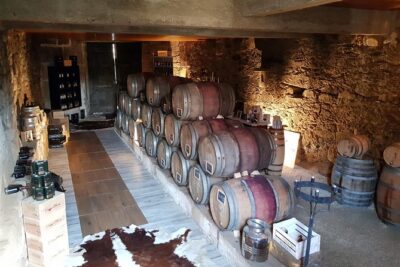
Douro Valley Tour: 2 Vineyard Visits, River Cruise, Winery Lunch
Read our review →
5-Hour Traverse City Wine Tour: 4 Wineries on Old Mission Peninsula
Read our review →Browse the lists this tour appears in