
REVIEW · DRINKS TOURS
Málaga: Spanish Cooking Workshop with Paella and Sangria
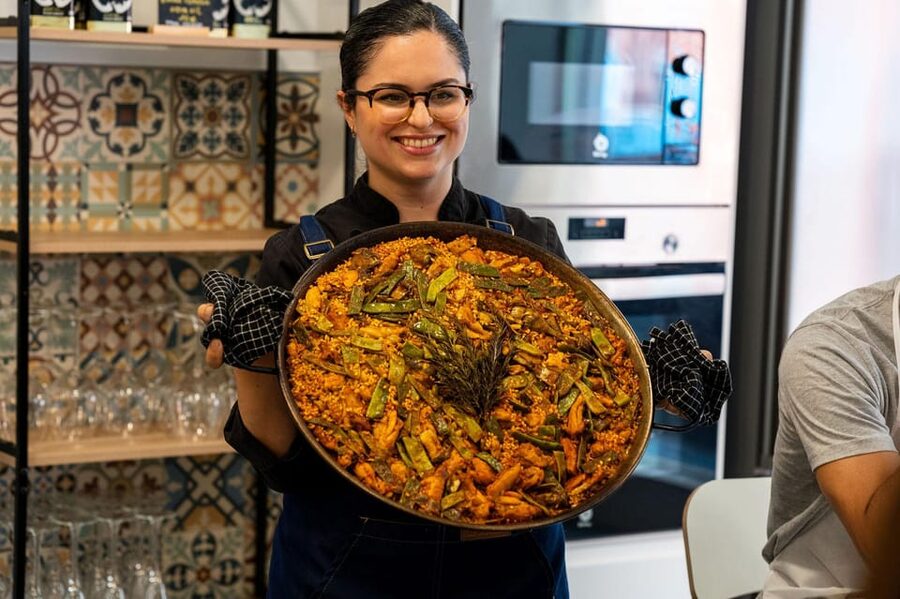
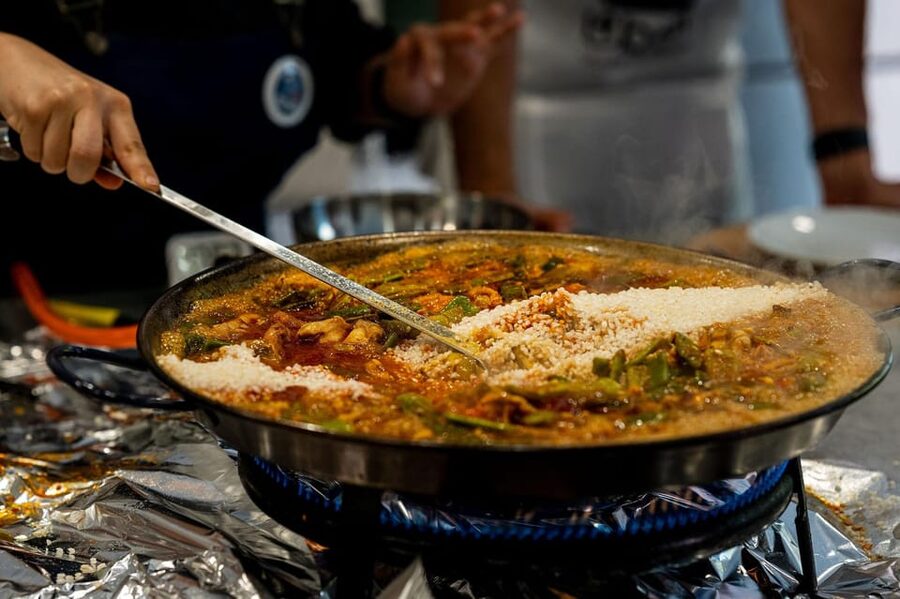
The best part of this Málaga cooking class is that you do not simply watch a chef make paella. You chop, stir, season, and take part in the whole meal, from ajoblanco almond soup to paella, remojón malagueño salad, sangria, and dessert. Chef Laura brings Le Cordon Bleu training and paella instruction from a Valencian specialist, while Chef Diego focuses on Málaga and Andalusian cooking.
I like the central location, just five minutes from Atarazanas Market, and the comfortable kitchen with high stools that have backs. I also like the useful local advice, from markets and ingredients to places to eat. The main consideration is that this is a three-hour food-and-drink class, so it may feel long if you want only a quick paella demonstration or if you prefer not to drink alcohol.
Key points at a glance
- A full Andalusian menu: Prepare ajoblanco, paella, remojón malagueño, sangria, and a surprise dessert.
- Two different culinary strengths: Laura teaches paella and Spanish cooking, while Diego brings a Málaga and Andalusian focus, especially with desserts.
- Real hands-on work: You help prepare the food rather than standing at the edge of a demonstration.
- A convenient old-town setting: The kitchen is in central Málaga, about five minutes from Atarazanas Market.
- Comfortable for older visitors: High stools with backs provide a place to sit during the cooking.
- Good practical value: For $78, you receive three hours of instruction, several dishes, food, sangria, and local recommendations.
Starting in central Málaga near Atarazanas Market
This class takes place in Málaga’s historic center, close to Atarazanas Market. That location matters. You can pair the cooking class with a market visit, a stroll through the old town, or an evening meal nearby without spending time on a long ride across the city.
Atarazanas is also a useful bit of context for the food. A market visit helps you see the produce, seafood, nuts, olive oil, and other ingredients that shape Andalusian cooking. The class itself is not a market tour, but its short walk from the market makes it easy to connect what you see at the stalls with what you later prepare in the kitchen.
The cooking space is modern and comfortable, rather than a rustic farm kitchen or a formal restaurant. That gives the class a practical feel. You are there to work with the food, ask questions, and eat the results, not to pose for a quick cooking demonstration.
The activity is wheelchair accessible. It also suits a range of ages. One especially useful detail is the seating: high stools with backs are available, so you do not need to stand for the entire session. That can make a real difference for older couples or anyone who finds a long period at a counter tiring.
More Cooking Classes in Spain:
- Barcelona Paella Cooking Class with Market Visit, Tapas & Sangria
★ 5.0 · 2,531 reviews - Spanish Cooking Class Paella Tapas and Sangria in Madrid
★ 5.0 · 1,340 reviews - Paella Cooking Class, Wine Tasting & Central Market in Valencia
★ 5.0 · 1,150 reviews
Meeting Laura and Diego
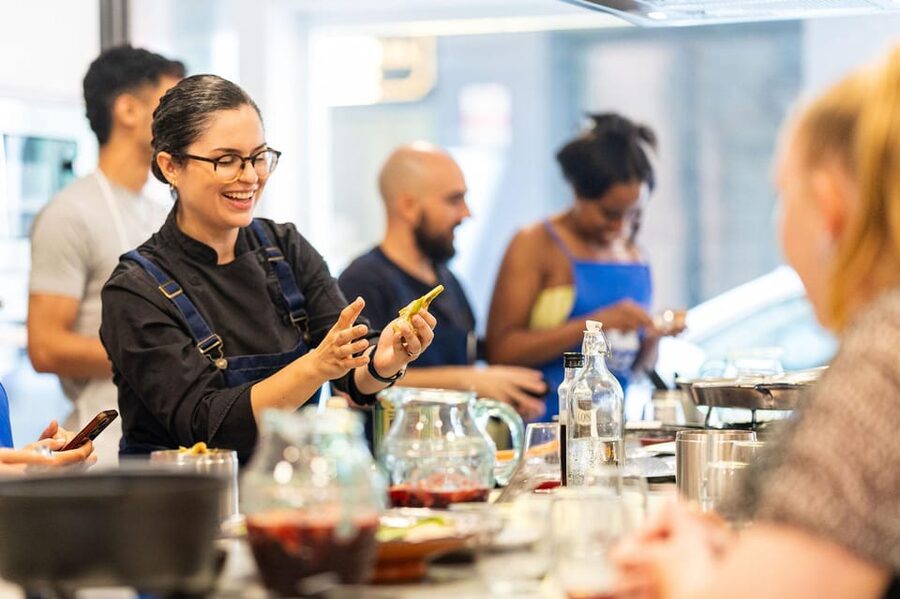
Your instructor may be Laura or Diego, and each brings a different point of view.
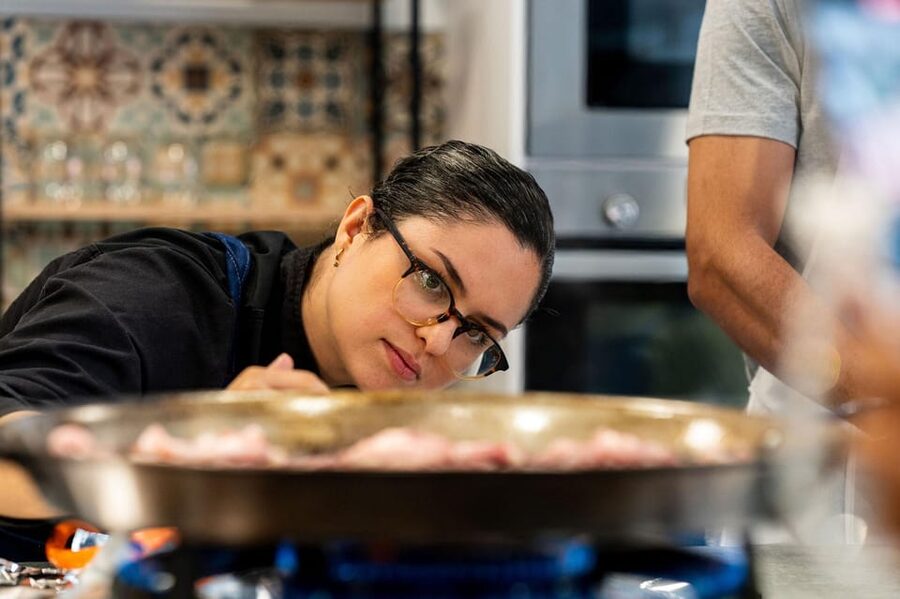
Laura studied at Le Cordon Bleu in London and has worked in Michelin-starred restaurants. Her paella training came from a Valencian chef who specializes in the dish. That background gives her a firm technical base, but her role here is not to turn the class into a professional cooking exam. She explains the food in plain terms and connects recipes with Spanish ingredients, customs, and everyday life.
Laura also shares suggestions for local markets, shops, restaurants, and places to visit in Málaga. If you are at the start of your stay, her advice can help you plan the rest of your time. It is worth asking her specific questions instead of waiting for a general list of recommendations.
Diego was born in Uruguay and raised and trained in Málaga. He began cooking at age nine and has worked in traditional Andalusian kitchens as well as more exclusive restaurants in the city. His strongest connection is with Málaga-style and Andalusian food, including desserts.
Diego’s teaching style is warm and playful. He uses stories and humor, but the class remains useful. You learn about the background of the dishes, the food culture of Andalusia, and the small choices that affect the final result. Both chefs speak English, and the activity is offered in English.
What you actually cook during the three hours
This is not only a paella class. The menu gives you a better sense of Málaga and Andalusia because it includes several dishes with different textures, temperatures, and ingredients.
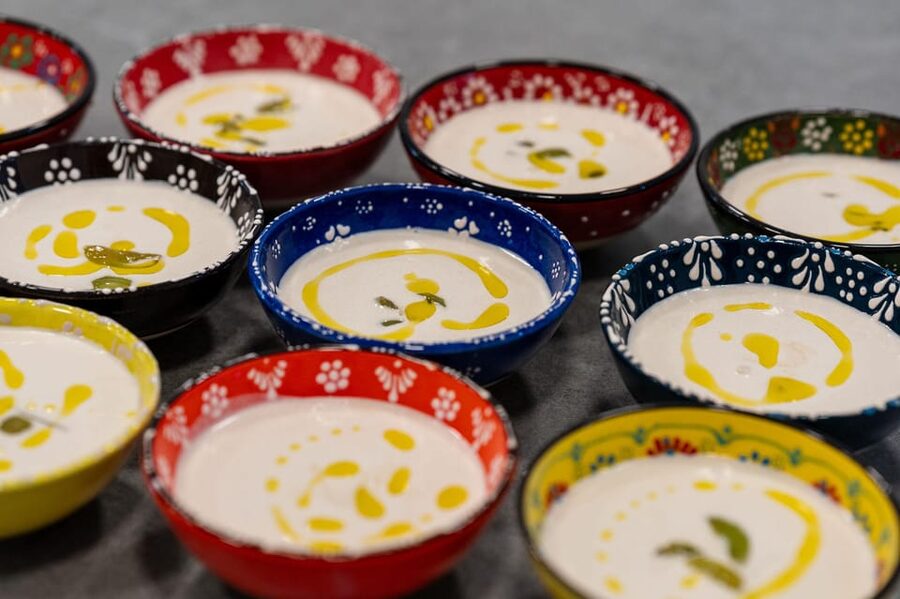
Ajoblanco, Málaga’s cool almond soup
Ajoblanco is a cold soup made with almonds and other simple ingredients. It is one of the most distinctive dishes in the class, and several participants have singled it out as a favorite.
The value here is cultural as much as culinary. Many cooking classes focus on the famous dish everyone already knows. Ajoblanco introduces you to a local specialty that you might not order unless someone explained what it was. The dish also teaches how a short ingredient list can produce a satisfying result when the balance is right.
You will learn about the ingredients and preparation rather than simply receiving a bowl at the end. If you like food with a strong sense of place, this part may be more memorable than the paella itself.
More Workshops and Classes in Spain:
- Madrid: Paella and Sangria Workshop in the City Center
★ 4.9 · 1,264 reviews - Barcelona: Cocktail Master Class by Mixologist with Tapas
★ 4.7 · 959 reviews - Paella Workshop with Bottomless Sangria in Central Madrid
★ 5.0 · 763 reviews - Valencian Paella Cooking Class, Tapas & Sangria – Evening
★ 5.0 · 303 reviews
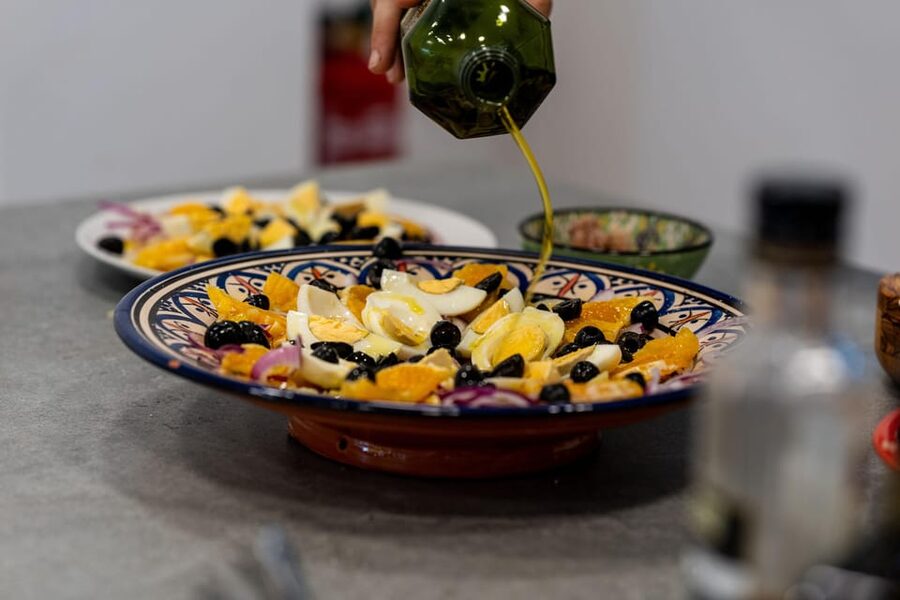
Remojón malagueño, a local salad
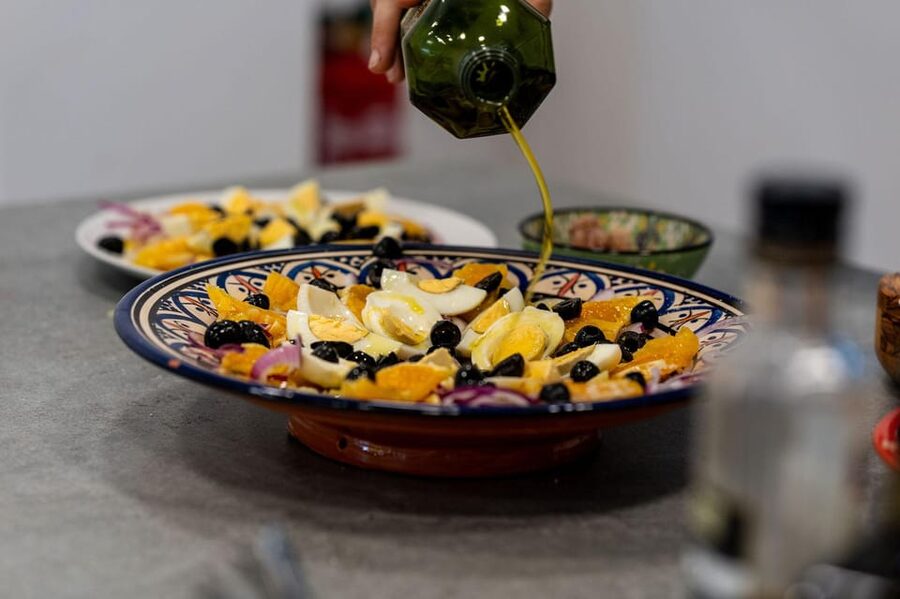
The class also includes remojón malagueño, a typical Málaga salad. It provides a fresh counterpoint to the soup and paella, and it shows how local meals are built around more than one main dish.
Preparing a salad may sound less exciting than making paella, but it gives the group another task and keeps the meal from becoming a single-dish lesson. You get to see how a regional side fits into the wider meal and how Andalusian cooking uses straightforward ingredients without making the plate feel plain.
Paella, the main lesson
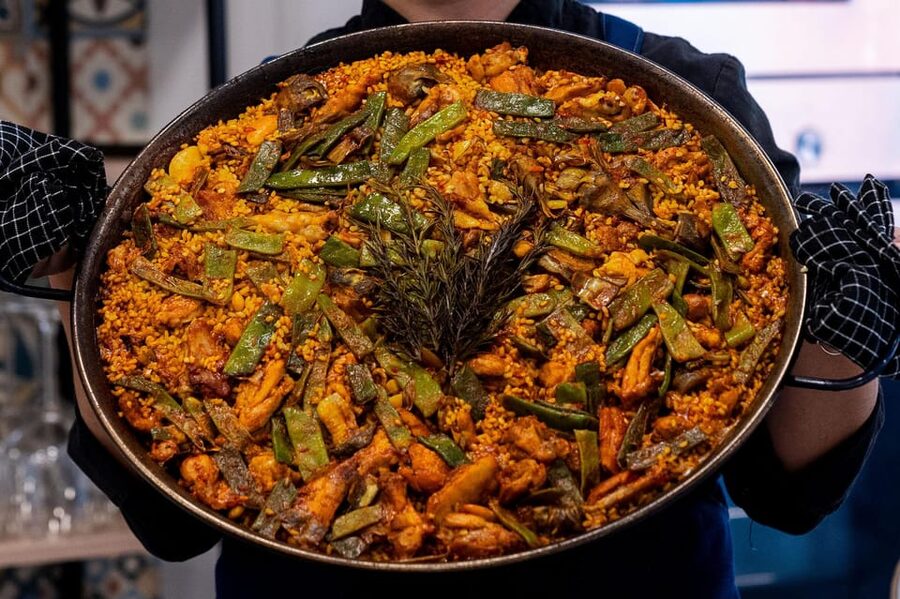
Paella is the centerpiece, and the instruction goes beyond stirring rice in a pan. Laura draws on her Valencian training, while Diego explains the dish through his own cooking background. You learn traditional techniques and practical tips aimed at helping you repeat the recipe at home.
The class is participatory, so you should expect to take part in preparing ingredients and cooking. The most useful lesson is often not a single secret ingredient. It is learning how to pay attention to the rice, the cooking process, and the balance of flavors.
Several people have left with enough confidence to try paella again at home. That is a good measure of the class’s practical value. You are not expected to become a professional cook in three hours, but you should come away with a clearer idea of how the dish works and why earlier attempts may have gone wrong.
You also hear about the origins of paella and its place in Spanish food culture. That context helps separate a carefully prepared Spanish dish from the tourist version often sold simply because it is familiar.
Sangria and the surprise dessert
Sangria is prepared as part of the experience, not just poured from a jug. You receive more sangria during the meal, with two servings included according to the activity information.
The drink adds a social element, but it also means you should plan this as an alcohol-centered class. Alcohol and drugs are not allowed to be brought into the activity, and the supplied information does not describe a nonalcoholic version of the sangria. If you do not drink, ask about this before booking.
The final course is a surprise dessert. Diego’s background in Andalusian desserts makes this part more than an afterthought, but the exact dessert is not specified in advance. That is a small uncertainty for anyone with strict dietary needs, so mention allergies or intolerances before the class.
Why the hands-on format matters
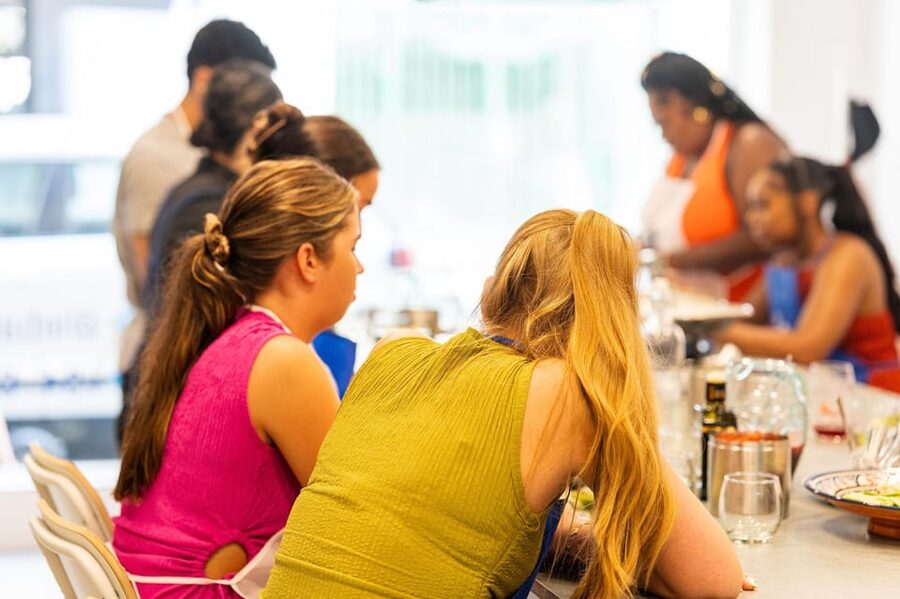
A cooking demonstration can be enjoyable, but it is easy to forget what happened once you leave. Here, you work with the ingredients and help prepare the dishes. That active format makes the class more social and gives you a better chance of remembering the techniques.
The group setup is designed for participation rather than a large lecture. Class examples have included around nine or ten people, a size that allows questions without making the session feel private or overly formal. You cook alongside people from different countries, then sit down to share the meal.
That social part is important. The class is not only about food. It is also a shared table, conversation, and a relaxed way to meet people during a stay in Málaga. Families, couples, solo visitors, and small groups can all fit the format. A family with older children may particularly appreciate the clear tasks and the chance to eat what they helped make.
The pace is described as relaxed, but the class still covers several dishes. You should not expect a rushed cooking contest. At the same time, the three-hour schedule means this is a substantial activity, not a short stop between sightseeing appointments.
Local advice that adds value
One of the strongest extras is the advice from the chefs. Laura and Diego can point you toward local food shops, markets, restaurants, and bars. They also answer questions about where to eat and what to visit in Málaga and the wider Andalusian area.
This kind of advice is most useful when you ask for something specific. Ask where to find a good paella, which local foods are worth buying, or where to shop for ingredients. You can also ask about places beyond Málaga, especially if your trip includes Valencia or other parts of Andalusia.
Recipe information is another practical benefit. Recipes are sent afterward in some class arrangements, giving you a way to recreate the meal at home. That turns the class into more than a pleasant holiday lunch or dinner. You can use the experience as a starting point for a Spanish meal once you return home.
Dietary needs and practical comfort
Food allergies and intolerances can be accommodated with advance notice. Vegetarian and vegan options are also available if you arrange them ahead of time. Do not wait until you arrive, since the menu involves several prepared dishes and a surprise dessert.
The supplied information does not specify every possible substitution, so give the provider clear details when booking. Say whether the issue is an allergy, intolerance, preference, or medical restriction.
The comfortable kitchen and backed stools make the class more accessible for people who do not want to stand for hours. The activity is wheelchair accessible as well. Still, cooking classes involve counters, utensils, food preparation, and movement around a kitchen, so it is sensible to confirm any specific mobility requirements before you go.
The class is conducted in English. If you need another language, this activity may not be the right fit.
Is $78 a fair price?
At $78 per person, this is not the cheapest way to eat paella in Málaga. It is also not simply a restaurant meal. The price covers three hours of instruction, hands-on preparation, several dishes, dessert, sangria, and the chance to ask two experienced chefs about Spanish food.
The value improves if you want to learn a skill you can use again. A meal disappears quickly, but a good method for making paella, a recipe for ajoblanco, and a better sense of Andalusian ingredients can stay with you for years.
The price also includes an activity suited to a rainy afternoon or evening. One group used the class as a welcome break from poor weather, and that is a useful way to think about it. You get shelter, food, conversation, and a cultural lesson in one booking.
For someone who only wants to eat paella, $78 may feel high. For someone who wants an active food experience with a full meal and local guidance, it is reasonable. The small-group format and personal instruction help justify the cost, especially if you ask questions and take part instead of treating it as a show.
Who should book this cooking class?
I would recommend it to couples who want a shared activity, families seeking something more active than sightseeing, and solo visitors who enjoy meeting people over food. It is also a good choice for anyone who has tried paella at home and wants a clearer method.
It suits food-focused visitors who want more than the most famous Spanish dish. Ajoblanco and remojón malagueño give you a taste of Málaga itself, while the chefs’ stories connect the menu to Andalusian life.
Older visitors should note the backed stools and wheelchair accessibility. Those details make the class more comfortable, though you should still share your needs in advance.
I would hesitate only if you dislike group activities, avoid alcohol, need a precise dessert menu, or want a very short demonstration. This is a social, participatory class with a three-hour commitment.
Booking and timing tips
The minimum booking requirement is four participants. That makes it a better fit for a couple or solo visitor if the scheduled class already has enough people, but you should confirm availability before planning around it.
Free cancellation is available up to 24 hours before the activity for a full refund. You can also reserve now and pay later, which helps if your Málaga schedule is still changing.
Since the kitchen is near Atarazanas Market, allow time to find the central location without rushing. A market visit before the class is a smart pairing, but do not arrive overloaded with food. You will be preparing and eating a substantial menu.
Should you book it?
Book this class if you want to cook rather than watch, eat a full Spanish meal, and leave with recipes and local food advice. Laura and Diego offer different strengths, from paella technique to Málaga desserts and Andalusian cooking, and the menu reaches beyond the usual tourist plate.
Skip it if you want a quiet meal, a brief demonstration, or a nonalcoholic activity. For most food-minded visitors, though, $78 buys a useful and sociable three hours in central Málaga, with enough practical instruction to keep the experience going in your own kitchen.
FAQ
How long does the Málaga cooking class last?
The class lasts three hours. It includes hands-on cooking, eating the prepared dishes, and time with the chefs.
What dishes are included?
You prepare ajoblanco, paella, and remojón malagueño, a typical Málaga salad. A surprise dessert is also included.
Is sangria included?
Yes. Sangria is prepared during the class, and additional sangria or two servings are included during the meal according to your choice.
Who teaches the class?
The chefs are Laura and Diego. Laura studied at Le Cordon Bleu in London and trained with a Valencian paella specialist. Diego was raised and trained in Málaga and specializes in Málaga-style and Andalusian cuisine, including desserts.
Are vegetarian, vegan, or allergy-friendly options available?
Vegetarian and vegan options are available with advance notice. Food allergies and intolerances can also be accommodated, but you need to provide that information ahead of time.
Is the class accessible and offered in English?
Yes. The class is offered in English and is wheelchair accessible. High stools with backs are available for those who prefer not to stand for the whole session.
Just poured in Spain
- Madrid Region Wineries Guided Tour with Wine Tastings★ 4.9 · 222 reviews
- From Madrid: Toledo Guided Tour & Winery Visit with Tasting★ 4.8 · 313 reviews
- Ribera del Duero Wineries Guided Tour & Wine Tasting from Madrid★ 5.0 · 328 reviews
- Barcelona E-Bike Small Group Tour with Tapas & Wine Tasting★ 5.0 · 638 reviews
- Barcelona Wine Tasting: Catalan and Spanish Wines★ 4.8 · 625 reviews
- Montserrat,Vineyard, Wine Tasting Small Group Tour & Hotel Pickup★ 5.0 · 513 reviews
- Valencian Paella Cooking Class, Tapas & Sangria – Evening★ 5.0 · 303 reviews
- Tenerife: Full-Day Gastronomy and Wine Tour★ 4.4 · 196 reviews
Drinks Tours, compared.
Douro Valley w/ Boat Tour, Wine Tasting & Lunch
Read our review →
Chichen Itza, Cenote & Valladolid Tour with Tequila and Lunch
Read our review →
Complete Douro Valley Wine Tour with Lunch, Wine Tastings and River Cruise
Read our review →
Zakopane: Cable Car, Chocholow Baths, Cheese & Vodka
Read our review →
Zakopane: Cable Car, Chocholow Baths, Cheese & Vodka
Read our review →
Small-Group Wine Tasting Experience in the Tuscan Countryside
Read our review →Browse the lists this tour appears in