
REVIEW · DRINKS TOURS
Madrid: Paella and Sangria Workshop in the City Center
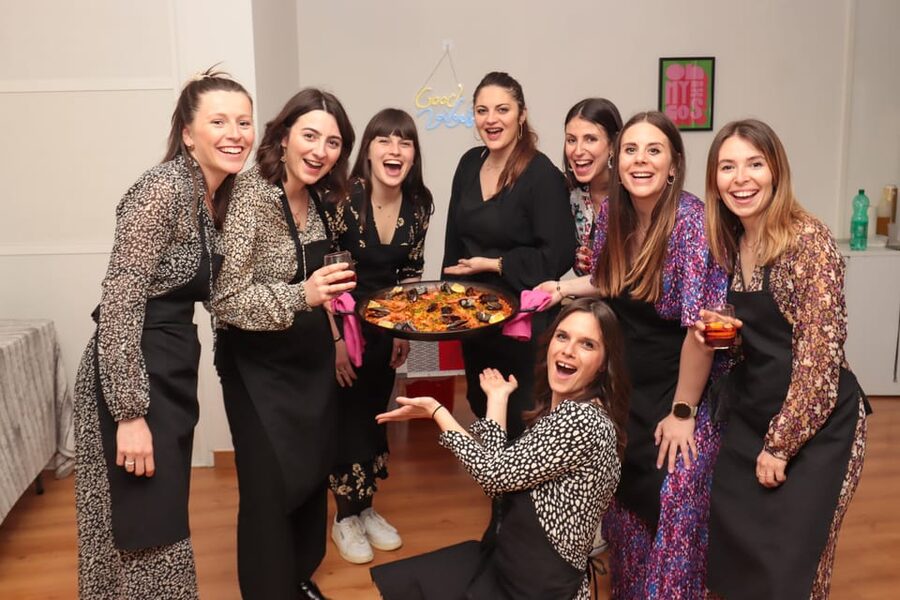
The best part of this Madrid workshop is that dinner is not simply served to you. You chop, stir, mix, and learn why each ingredient matters before sitting down to eat the paella you helped make. The sangria comes first, so the class gets friendly quickly.
I like the hands-on format and the way solo visitors are folded into the group. I also like the practical takeaway: you leave with recipes, not just a full stomach. The main consideration is that this is a lively beginner class, not a quiet, technical cooking lesson, and the standard paella contains both chicken and seafood.
Key points at a glance
- Meet at Calle de la Montera 24: Find the host outside the Bon Vivant tattoo studio, then walk together to the cooking space.
- Make a traditional-style paella: The standard dish includes chicken and seafood, with vegetarian and allergy options available if arranged ahead.
- Prepare sangria from scratch: You learn how to balance the drink, rather than simply receiving a glass at the table.
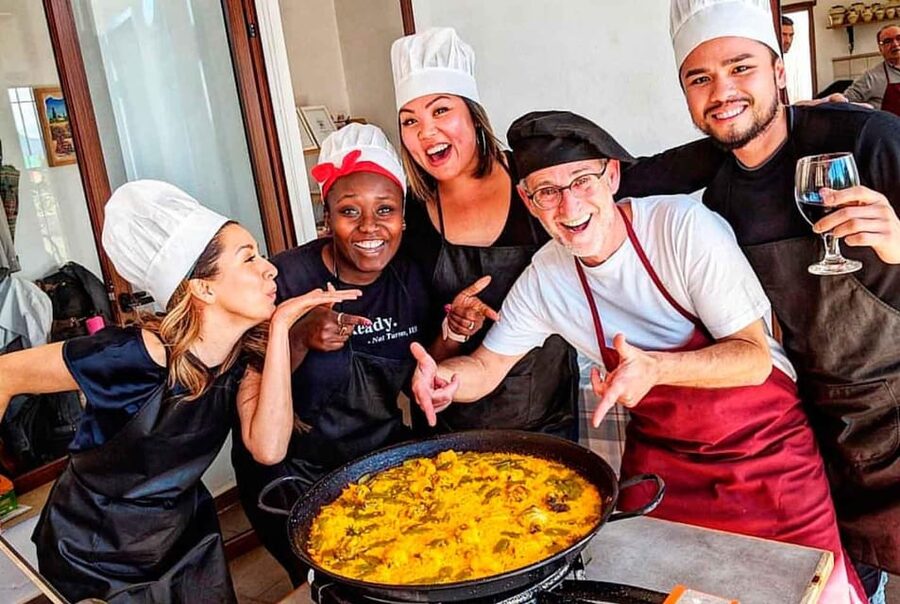
- Expect a social three-hour class: Jobs are shared among the group, making it easy to talk with people from different countries.
- No kitchen experience needed: The chef guides you through chopping, stirring, and cooking step by step.
- Dinner and recipes are included: You eat the paella and sangria you prepare, then take the recipes home.
A cooking class right in the middle of Madrid
At $69 per person, this is more than a restaurant meal but less than many high-end food activities. The price covers the instructor, ingredients, equipment, paella workshop, sangria workshop, dinner, drinks, and recipes. That makes the value fairly easy to judge: you are paying for a meal plus three hours of instruction and company.
The central location helps. You do not need to spend part of your evening reaching a distant cooking school. The meeting point is at Calle de la Montera 24, a short, practical address in the city center. Look for the host outside the Bon Vivant tattoo shop. This detail matters because the cooking room is upstairs and the host takes the group there together.
I would arrive a little early and use the tattoo shop as your visual marker. Do not go upstairs on your own expecting to find the class immediately. The stated meeting arrangement is to wait outside, then follow the host to the cooking space.
The room itself is described as cozy and set up for group cooking. Exact class size is not provided, but the format clearly depends on shared participation. You will not spend three hours watching a chef work alone. Different people chop vegetables, handle meat or seafood, pour ingredients, and stir the pan as the dish comes together.
More Workshops and Classes in Madrid:
- Spanish Cooking Class Paella Tapas and Sangria in Madrid
★ 5.0 · 1,340 reviews - Paella Workshop with Bottomless Sangria in Central Madrid
★ 5.0 · 763 reviews - Rome: Pasta Making Class with Wine, Limoncello, and Dessert
★ 4.9 · 3,177 reviews
First pour: building a balanced sangria
The class begins with sangria. This is a smart choice for the mood of the evening. A cooking lesson can feel stiff during the first few minutes, especially if you arrive alone. Mixing a drink gives everyone an easy first task and a reason to start talking.
You learn how to create a balanced and refreshing sangria rather than simply combining whatever fruit and wine happen to be nearby. The guides explain the process and share tips for getting the flavor right. Dani is specifically noted for teaching a sangria recipe, while other sessions have been led by hosts such as Crystal, Miguel, and Anabel.
The drink is part of the meal, and unlimited sangria is advertised for the experience. Soft drinks are also included as an option. Since the activity lasts three hours, pace yourself. Unlimited does not mean you need to treat the workshop as a drinking contest. You will enjoy the cooking more if you stay clear-headed enough to follow the instructions and taste the food.
The sangria lesson also gives the experience a useful home-cooking angle. Paella requires a special pan and a little space, but sangria is easy to repeat in an ordinary kitchen. The recipe can become a simple way to bring a piece of your Madrid trip to a dinner with friends.
Paella begins with the ingredients
After the sangria, the chef introduces paella and its basic ingredients. You hear about the dish’s place in Spanish food culture and learn how each ingredient affects the final taste and texture. This section gives the class more substance than a basic recipe demonstration.
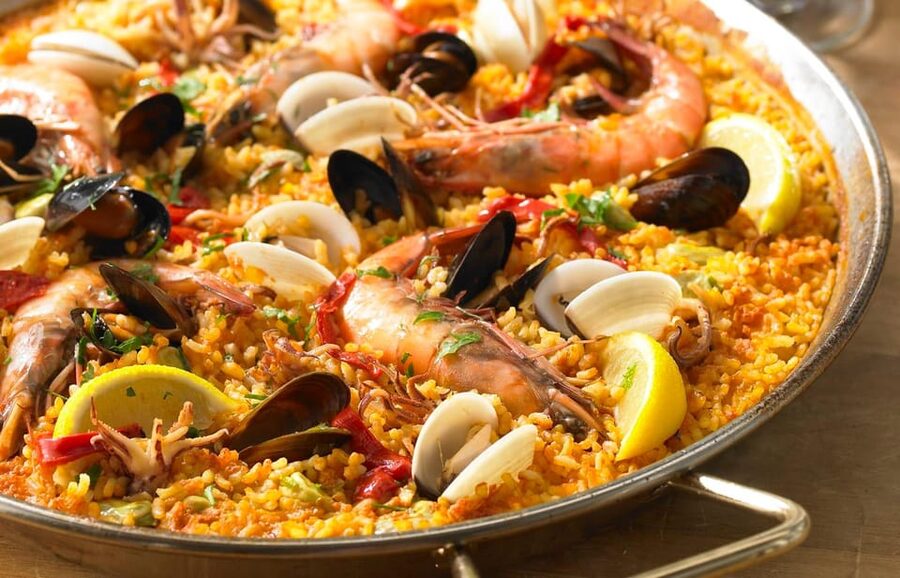
The standard paella includes chicken and seafood. That combination is important to note before booking. If you are vegetarian, have a food allergy, or avoid either ingredient, send a message in advance. Vegetarian and allergy options are available, but they need to be arranged ahead of time.
The chefs explain the cooking process step by step, using a traditional paella pan. You may help with tasks such as chopping vegetables, preparing meat, handling seafood, pouring liquid, and stirring at the right points. The work is divided among the group so the pan keeps moving and everyone gets a role.
This is a beginner class, and that is a strength if you want a relaxed evening. You do not need to know the difference between every Spanish rice variety or own a paella pan at home. The chef gives you the information needed to take part without making you feel unprepared.
It is also worth keeping expectations sensible. The class is designed to help you cook a good paella and enjoy the process, not train you as a professional chef. One session was described as very much a beginner lesson, but still a full and satisfying experience. If you already make paella often, you may want more technical detail than this class provides.
The pan, the teamwork, and the final meal
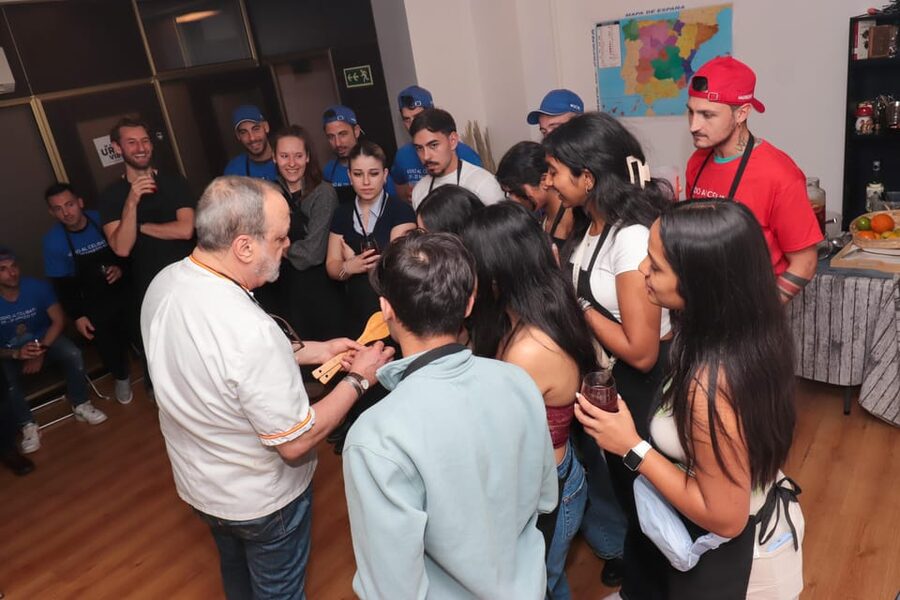
The social side is central to the workshop. You work beside people who may have arrived as couples, friends, families, or solo visitors. The hosts keep assigning small jobs, which prevents one person from doing all the cooking while everyone else watches.
That structure is especially useful for solo visitors. Several sessions included people who arrived alone and were brought into the group through the shared work. You are not required to make conversation with everyone, but the format gives you natural openings. Chop something, pass an ingredient, compare the sangria, and the evening takes care of itself.
The hosts named in different sessions include Ivan, Crystal, Miguel, Dani, Javier, Anabel, Lila, Guillermo, and Javo. Staffing can vary, but the recurring pattern is clear: the guide handles the social flow while the chef explains the food. Ivan is often paired with a host and is described as energetic, funny, and good at getting each person involved. Miguel is also noted for his warmth and practical tips.
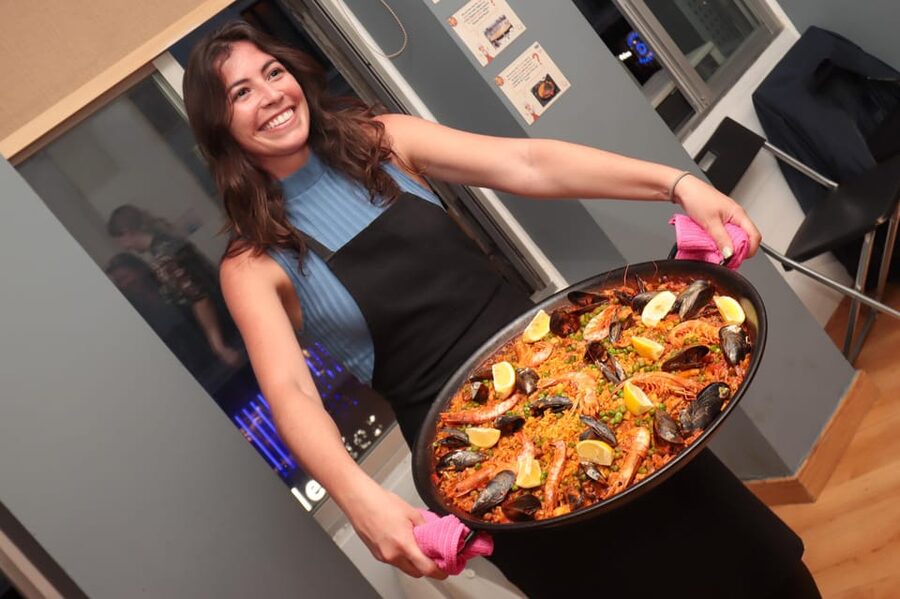
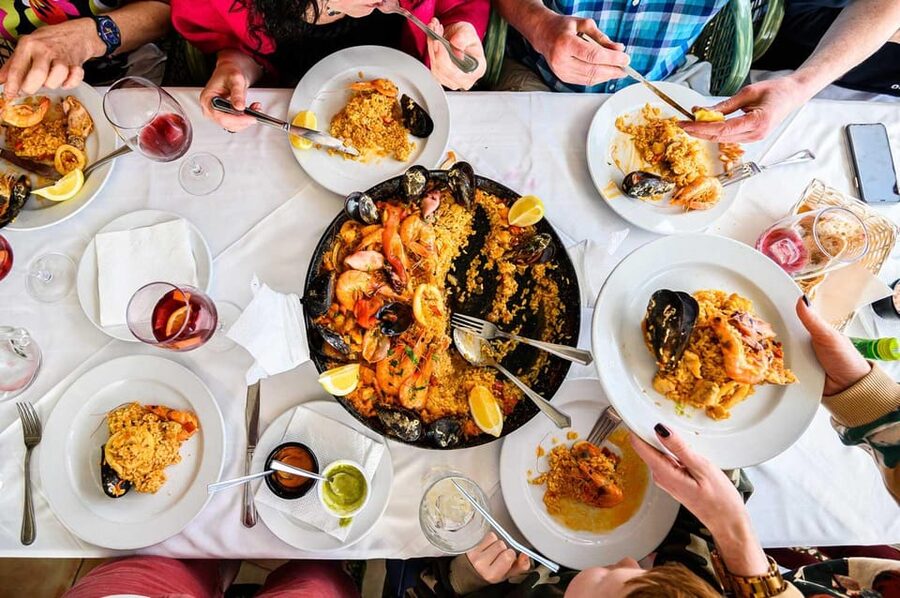
As the paella cooks, the class becomes less like a lesson and more like a shared dinner being built in real time. You watch the ingredients change, smell the stock and rice cooking, and wait for the final texture. The payoff is not only the food. It is the feeling that everyone at the table helped make it.
Some sessions include small personal touches, such as birthday celebrations. That will depend on the group and the hosts, so do not book expecting a private celebration. Still, it shows the kind of friendly atmosphere this activity aims to create.
More Drinks Tours in Madrid:
- Madrid Tapas & Wine Tasting Walking Tour – Small Group Local Bars
★ 5.0 · 3,644 reviews - Toledo Tour & Vineyard Walk with Wine Tasting from Madrid
★ 5.0 · 2,546 reviews - Madrid: Tapas & Wine Tasting Tour with Local Guide
★ 4.8 · 2,171 reviews - Madrid Tapas & Wine Tour with Rooftop Views and Local Guide
★ 5.0 · 2,047 reviews
Is the paella actually worth the price?
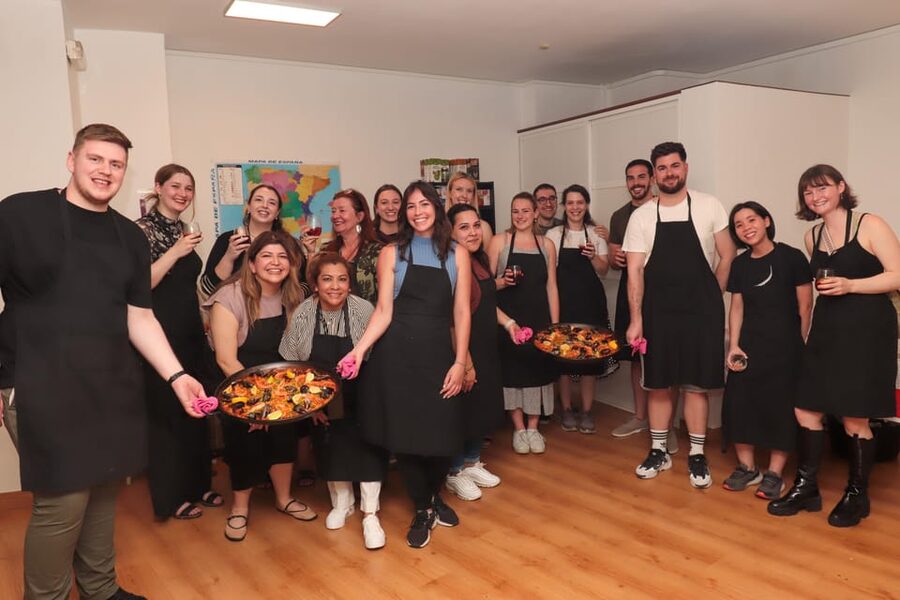
The paella is the key test, and the feedback is unusually consistent about the meal being delicious. It has even been described as one of the best paellas eaten during a Madrid visit. You should still remember that flavor depends partly on the group’s work, the chef leading that session, and the ingredients used that day.
The food is served after the cooking, so you are eating a proper lunch or dinner rather than a few tasting portions. The included meal makes the $69 price more attractive, especially in central Madrid, where a restaurant dinner and several drinks can take a large share of that amount on their own.
The experience also gives you something a restaurant cannot: an understanding of how the dish was assembled. You learn when the ingredients go in, how the pan is used, and what the chef is watching for. The goal is not to reproduce every detail perfectly at home, but to give you enough confidence to try.
One useful cultural tip may stay with you: do not put chorizo in paella if you are aiming for a traditional preparation. That point came up during a class and is exactly the sort of practical correction that can save you from making a common tourist version of the dish.
The final meal takes place in a pleasant group setting with the sangria you prepared earlier. Because everyone has shared the work, dinner feels more like a family table than a formal restaurant service. That suits people who like food with conversation and a little noise.
What makes this different from a Madrid food tour
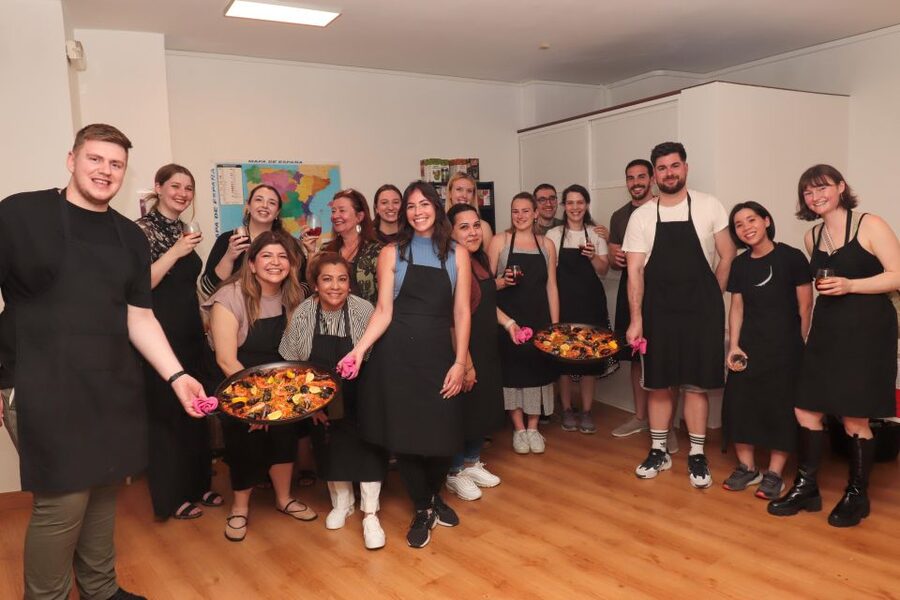
A food tour takes you from one place to another and lets you sample the city. This workshop stays in one cooking space and asks you to create the meal. Neither format is better in every case.
Choose the workshop if you want a new skill, a sit-down dinner, and a social evening. Choose a food tour if your priority is tasting several specialties across different neighborhoods. The workshop gives you fewer dishes, but more involvement with one important Spanish meal.
The central location makes it easy to pair with a day of sightseeing. You could spend the afternoon around central Madrid, then meet at Calle de la Montera 24 for the class. The activity lasts about three hours, so allow enough time afterward if you have evening plans.
English and Spanish are the available teaching languages. If you do not speak Spanish, the English option makes the cooking steps accessible. If you do speak Spanish, you may enjoy the chance to hear food terms and kitchen instructions in both languages.
Who should book this workshop?
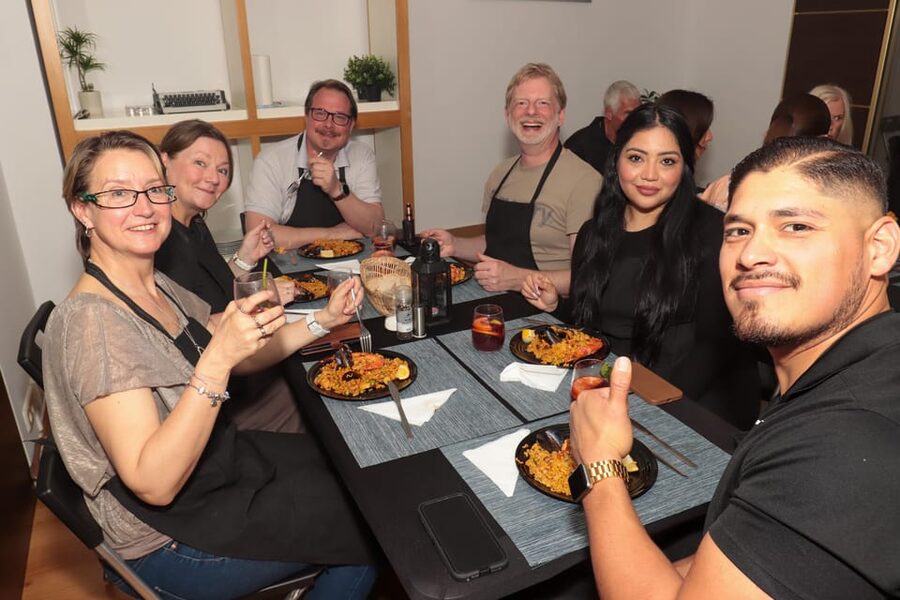
I would recommend it most strongly to:
- Solo visitors who want a low-pressure social evening
- Couples looking for an activity beyond museums and restaurants
- Friends who enjoy cooking together
- Families with older children or teenagers who can take part in group tasks
- First-time cooks who want a manageable introduction to paella
- Food lovers who want recipes they can use after returning home
It is also a good choice for a final evening in Madrid. You get a meal, drinks, a local food lesson, and a chance to meet people from several countries without arranging multiple bookings.
I would think twice if you want a quiet, private dinner or a highly advanced chef course. The shared atmosphere is part of the point. You may be asked to participate often, and the tone is friendly, funny, and active rather than formal.
You should also contact the provider before booking if you have dietary restrictions. The activity offers vegetarian and allergy options, but advance notice is required. The standard paella is chicken and seafood, so do not assume a substitute will be ready without prior communication.
Practical details before you book
The tour lasts three hours and costs $69 per person. The fee includes the instructor, all ingredients and equipment, the paella and sangria lessons, the meal, sangria or soft drinks, and the recipes.
The meeting point is Calle de la Montera 24, outside the Bon Vivant tattoo studio. Your host waits there and leads the group to the cooking space upstairs. This is the most important arrival detail, since the meeting point is not simply the kitchen door.
No previous cooking experience is required. Bring an appetite and a willingness to take part. You do not need to bring cooking equipment or ingredients.
The activity allows free cancellation up to 24 hours before the start for a full refund. A reserve-now, pay-later option is also available, which helps if your Madrid schedule is still shifting.
Should you book the Madrid paella and sangria workshop?
Yes, if you want your Madrid meal to be an activity rather than a transaction. The strongest reasons are the hands-on cooking, the easy social setting, the central address, and the recipes you can use later. The class works particularly well for solo visitors and couples, but it is not limited to them.
At $69, the value is good when you count the three-hour lesson, dinner, drinks, and equipment. Just keep the limitations in mind: it is a beginner-level group class, the standard paella includes chicken and seafood, and the experience depends on participating rather than sitting back.
Book it if you want to chop, stir, drink sangria, and share a meal with new companions. Skip it only if your ideal Madrid evening is quiet, private, or strictly focused on advanced cooking technique.
FAQ
How long does the paella and sangria workshop last?
The workshop lasts three hours.
How much does the experience cost?
The listed price is $69 per person.
Where is the meeting point?
Meet at Calle de la Montera 24, outside the Bon Vivant tattoo studio. The host waits there and takes the group to the cooking space.
Do I need cooking experience?
No. Previous cooking experience is not necessary, and the chef explains the preparation step by step.
What kind of paella is prepared?
The standard paella includes chicken and seafood.
Are vegetarian options available?
Yes. Vegetarian options are available if you contact the provider in advance.
Can the workshop accommodate allergies?
Allergy options are available with advance notice. Send a message before the activity so the food can be arranged.
Is sangria included?
Yes. The experience includes sangria, and unlimited sangria is advertised. Soft drinks are also available.
Which languages do the instructors speak?
The instructors speak English and Spanish.
Are the recipes included?
Yes. You receive recipes so you can prepare the paella and sangria at home.
Just poured in Madrid
- From Madrid: Toledo Guided Tour & Winery Visit with Tasting★ 4.8 · 313 reviews
- Madrid Region Wineries Guided Tour with Wine Tastings★ 4.9 · 222 reviews
- Ribera del Duero Wineries Guided Tour & Wine Tasting from Madrid★ 5.0 · 328 reviews
- Madrid: Guided Tapas and Wine Tour with Rooftop Views★ 4.8 · 608 reviews
- Madrid Countryside Wineries Guided Tour with Wine Tasting★ 5.0 · 740 reviews
- Paella Workshop with Bottomless Sangria in Central Madrid★ 5.0 · 763 reviews
- Madrid: Food & Wine Tour with 10 Tapas & 4 Drinks Included★ 4.9 · 984 reviews
- Madrid Ultimate Spanish Cuisine Food Tour★ 5.0 · 1,010 reviews
Drinks Tours, compared.
Douro Valley w/ Boat Tour, Wine Tasting & Lunch
Read our review →
Chichen Itza, Cenote & Valladolid Tour with Tequila and Lunch
Read our review →
Complete Douro Valley Wine Tour with Lunch, Wine Tastings and River Cruise
Read our review →
Zakopane: Cable Car, Chocholow Baths, Cheese & Vodka
Read our review →

Zakopane: Cable Car, Chocholow Baths, Cheese & Vodka
Read our review →
Small-Group Wine Tasting Experience in the Tuscan Countryside
Read our review →Browse the lists this tour appears in