
REVIEW · LIMONCELLO & LIQUEUR TASTINGS
Rome: Pasta Making Class with Wine, Limoncello, and Dessert
Fresh pasta is the heart of this three-hour Rome cooking class. You make ravioli, tortelli, and fettuccine by hand, then sit down to eat what you shaped only minutes earlier. The setting is especially appealing: a cooking school inside historic Palazzo Grazioli, a short walk from the Pantheon and Piazza Venezia.
I like the hands-on format, where each person mixes, rolls, and shapes dough instead of simply watching a chef. I also like the warm social finish: organic Tuscan wine, dessert, and limoncello around a communal table. The main consideration is dietary access. This class cannot accommodate vegans, gluten sensitivity, lactose intolerance, or nut allergies, and the venue is not suitable for wheelchair users.
Key points to know before booking
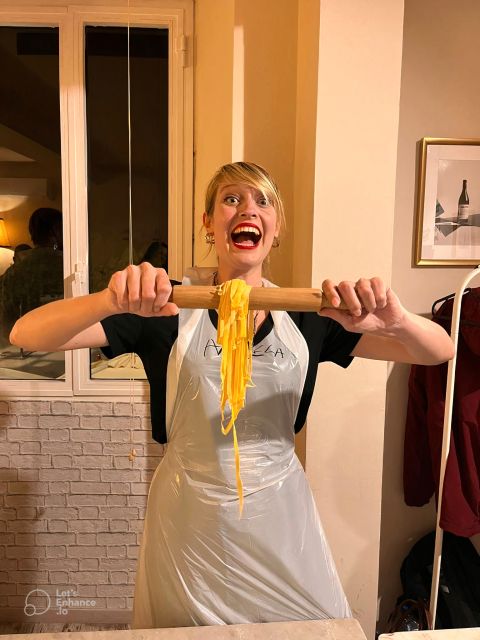
- Three pasta shapes in one class: You prepare ravioli, tortelli, and fettuccine, including filled pasta.
- Central Rome location: Via della Gatta is close to the Pantheon and Piazza Venezia, making this easy to pair with sightseeing.
- Small English-speaking group: The class is limited to 10 participants, with chefs such as Olga, Giorgio, Christian, and Fabrizio leading sessions.
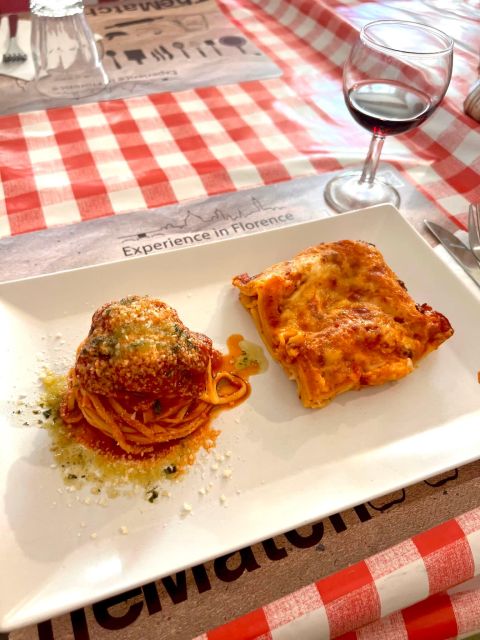
- Dinner is part of the lesson: Your pasta is cooked for the group and served with tomato sauce, butter and sage sauce, wine, dessert, and limoncello.
- Recipes go home with you: English recipe booklets help you repeat the class in your own kitchen.
- Check dietary limits carefully: Vegan, gluten-free, lactose-free, and nut-free requirements cannot be accommodated.
Making pasta inside Palazzo Grazioli
This class begins in central Rome, not in a remote cooking studio on the edge of town. The school is at Via della Gatta 14, at the rear corner of Palazzo Grazioli. The address is close to the Pantheon and Piazza Venezia, so you can fit the activity into a day of sightseeing without arranging a separate ride.
The street has a curious Roman detail. Near the entrance is the marble cat statue that gives Via della Gatta its name. It is a small thing, but it gives you something to look for as you arrive. Ring the bell marked Pastamania when you reach the cooking school.
The class is conducted in English, and the group size is capped at 10. That number matters in a practical way. Pasta dough can be fussy, especially when you are learning how thin to roll it or how much filling to place inside each shape. A chef can move around the table and correct your technique before a small mistake turns into torn dough.
The instructors vary by session. Olga is described as patient and clear, while Giorgio brings plenty of humor and makes a point of answering questions. Christian is lively and encouraging, and Fabrizio is particularly attentive to each participant. You may have one chef or a small teaching team, but the format is designed for beginners rather than trained cooks.
More Liqueur Tastings in Rome:
- Learn to Make Pasta & Tiramisu with Wine and Limoncello Included
★ 5.0 · 2,345 reviews - Fettuccine & Tiramisù: Cooking Class with Wine & Limoncello
★ 4.9 · 2,103 reviews - Sorrento Farm and Food Experience including Olive Oil, Limoncello, Wine tasting
★ 5.0 · 2,524 reviews
Kneading, rolling, and shaping three fresh pastas
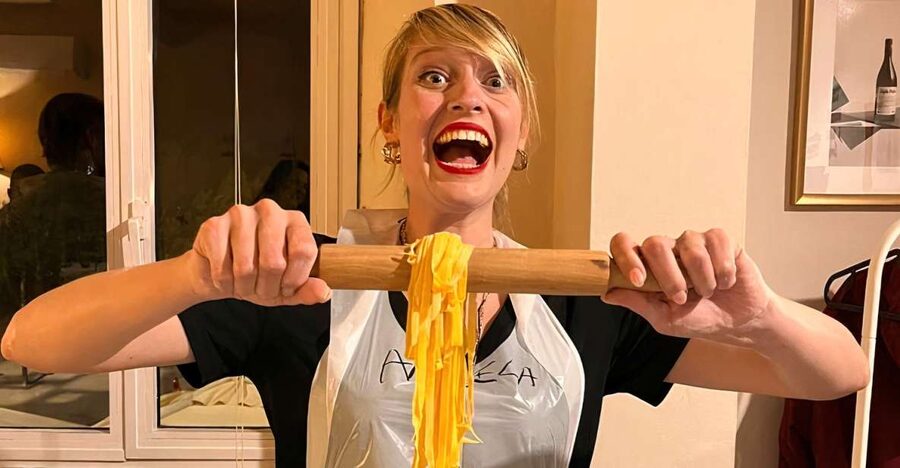
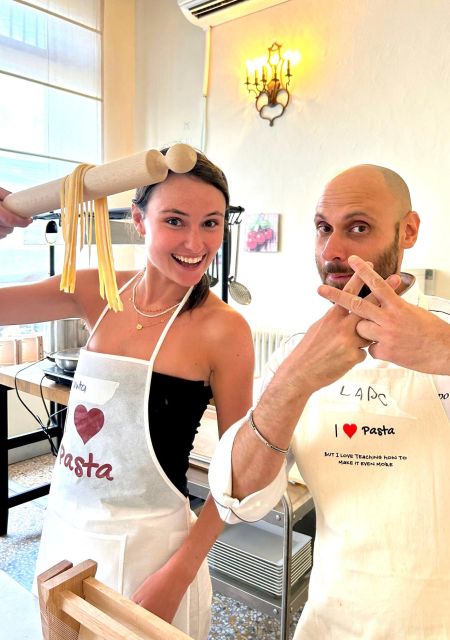
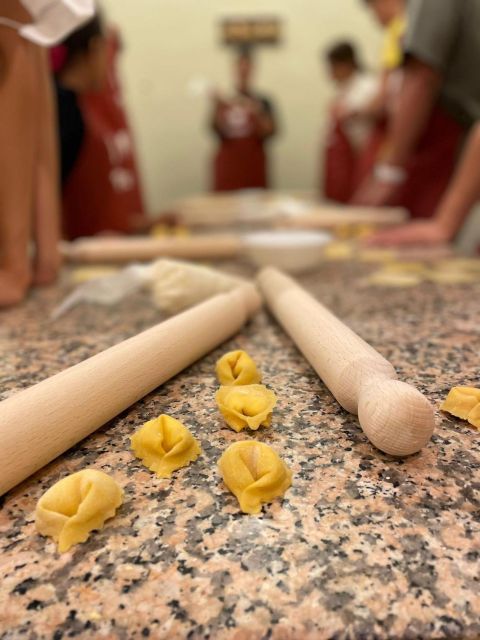
The practical work starts with the basic dough: eggs and flour. You put on an apron, take up a rolling pin, and work the mixture by hand. This is the useful part of the class because pasta making looks simple until you have to judge the dough yourself.
You learn how the dough should feel as you knead it and how to roll it evenly. The goal is not just to produce attractive pasta for dinner. It is to understand the steps well enough to repeat them at home without a chef standing beside you.
The class covers three shapes: ravioli, tortelli, and fettuccine. Ravioli and tortelli are filled pastas, so you must pay attention to spacing, sealing, and cutting. Too much filling can split the pasta. Too little water around the edges can leave it open during cooking. These small details are what make a class more useful than a simple meal at a pasta restaurant.
Fettuccine gives you a different task. After rolling the dough, you cut it into long ribbons. It is a direct lesson in thickness and consistency, and the finished noodles offer a nice contrast to the filled shapes.
The pace is active but not rushed. You have enough time to work through each form, ask questions, and get help with the next step. Complete beginners are welcome, and several class participants have arrived with little or no cooking experience. You should still wear comfortable clothes suitable for flour, dough, and kitchen work.
Watching the sauces come together
While you work, the cooking team handles the sauces. The tomato sauce is prepared in advance and simmers for hours, giving the meal a fuller flavor than a quick sauce made at the last minute.
The butter and sage sauce for the ravioli and tortelli is prepared in front of you. This is a useful contrast. You see one sauce that depends on slow preparation and another that relies on a few simple ingredients handled at the right moment.
The class does not treat sauce as an afterthought. You learn how the pasta is cooked and how the sauce suits the shape. That helps explain why Italian cooks care so much about matching a pasta form with the right dressing.
Once everyone has finished shaping the pasta, the chefs cook it together in one pot. The shared cooking reflects the home-style spirit of the class, though it also means the food is not prepared as a private tasting menu for each person. You eat the same meal as the group, made from the dough prepared around the table.
Eating your own pasta at a communal table
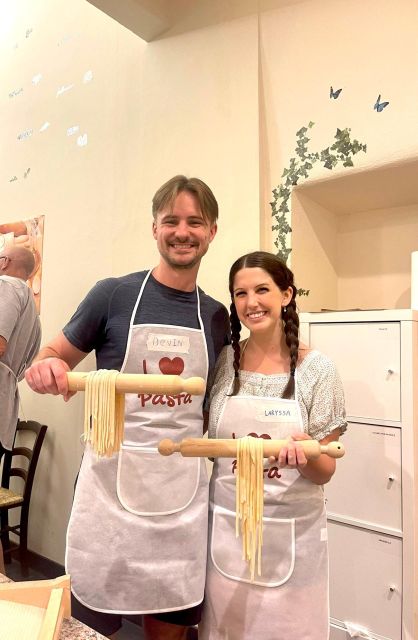
The best payoff comes when you sit down with the pasta you just made. Fresh pasta has a different texture from dried supermarket noodles, and the short gap between shaping and eating makes the meal feel connected to the lesson.
You receive the pasta with the prepared sauces, then share the table with the rest of the group. This is where the activity becomes social rather than purely instructional. People compare shapes, ask the chef follow-up questions, and talk while the meal is served.
The group setting suits couples, families, friends, solo participants, and work teams. It also works well for families with older children. The minimum age is eight, though younger children may need more help with rolling and shaping. The class has welcomed groups ranging from young adults to a three-generation family with participants from 20 to 75.
The meal is filling enough that you should arrive hungry. Along with the pasta, you may receive small appetizers, depending on the session. The food is the main event, but the shared table is nearly as important. If you want a quiet, highly formal cooking lesson, this may feel too social. If you enjoy meeting people over food, the format is a strong fit.
More Cooking Classes in Rome:
- Rome Cooking Class: Make Pasta and 3 Spritz Cocktails
★ 5.0 · 2,937 reviews - Pasta Cooking Class Near the Colosseum with 3 Spritz Cocktails
★ 5.0 · 1,686 reviews - Rome Tipsy Cooking Class: Make Pasta and Mix 3 Spritz Cocktails
★ 5.0 · 1,357 reviews - Pasta Making & Wine Tasting with Dinner in Frascati from Rome
★ 5.0 · 1,326 reviews
Tuscan wine, dessert, and limoncello
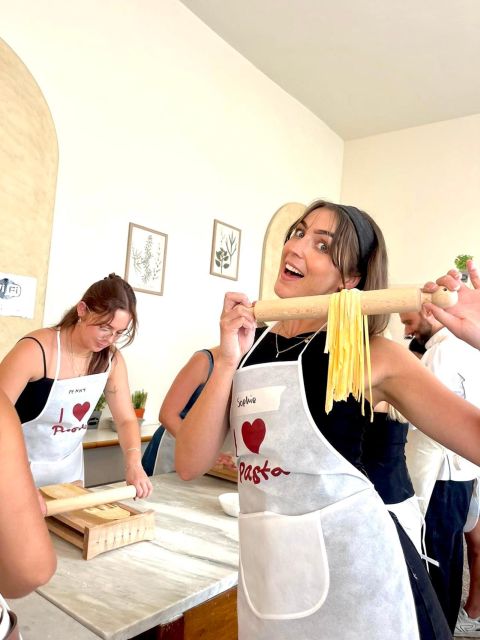
The class includes organic Tuscan wine from the school’s own farm, Dalle Nostre Mani. It gives the meal a regional connection beyond Rome and offers a straightforward pairing for the fresh pasta.
Wine is served as part of the shared meal, but only participants of legal drinking age may drink alcohol. If you do not drink, alternatives are available. The experience also includes dessert and a traditional limoncello shot at the end.
Dessert varies. Chocolate salami has been served, and other sessions include cake. It is a casual finish rather than a separate pastry workshop. The limoncello provides the familiar Italian after-dinner note, though you can skip the alcohol if needed.
The drink and dessert matter when you judge the $48 price. You are not paying only for a demonstration. The fee covers three hours of instruction, the meal you prepare, wine, dessert, limoncello, and a recipe booklet. For central Rome, that is a solid package, particularly if you value an activity that combines dinner with a skill you can take home.
The price is less appealing if you mainly want to eat a large restaurant meal. The class takes time and participation, and part of its value comes from doing the work yourself. You should book it for the experience, not simply for the cheapest dinner in Rome.
What makes the instruction work
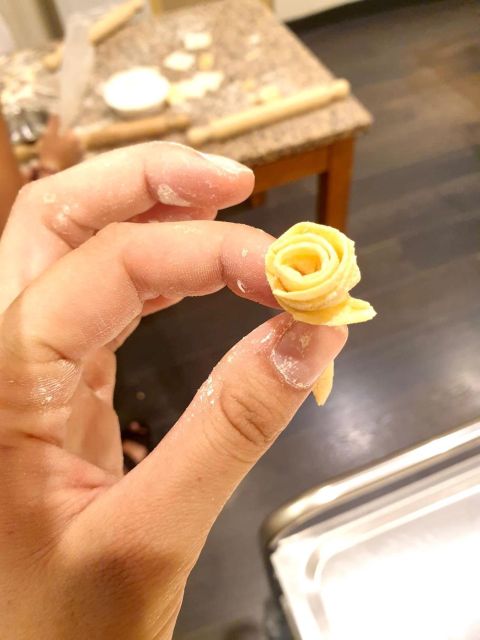
The strongest part of the class is the teaching style. The chefs are expected to explain each step, demonstrate the technique, and move around the table to help individual participants. That personal attention is especially useful when the dough feels too dry, a sheet is uneven, or a filled pasta pocket will not seal.
Olga, Giorgio, Christian, and Fabrizio are among the instructors who lead sessions. Each has a different manner. Olga is calm and precise. Giorgio uses humor and keeps the table relaxed. Christian brings a lively pace, while Fabrizio is known for spending time with each person and answering questions.
You should not expect a professional culinary qualification. This is a friendly introduction to traditional pasta making. Still, the instruction goes beyond a quick tourist demonstration because you make three forms and see them cooked and sauced.
The English recipe booklet is another practical touch. It gives you a reference for repeating the dough and shapes at home. The class cannot reproduce every condition of an Italian kitchen, but the written recipes help turn the memory into an actual meal later.
Practical limits and dietary rules
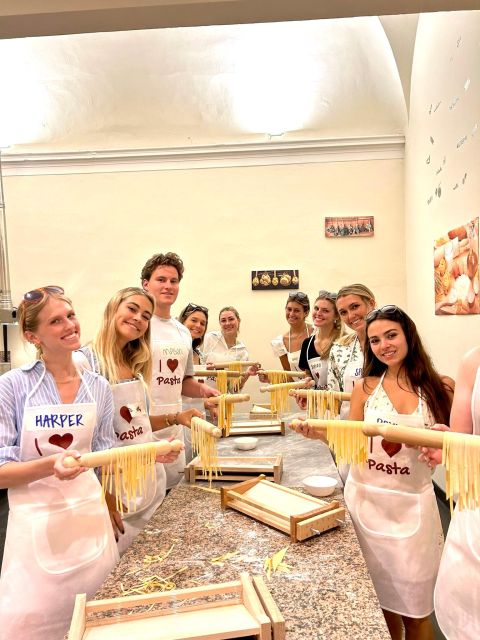
The biggest limitation is dietary. The school can support some vegetarian and other dietary needs if you provide the information when booking, but it cannot accommodate vegan diets, gluten sensitivity, lactose intolerance, or nut allergies. Do not assume a substitution will be available on arrival.
This is also not the right activity for wheelchair users or people with mobility impairments. You need to reach the cooking school and work at the kitchen table for several hours. Smoking is not allowed.
The minimum age is eight. Alcohol is included, but only legal drinking age participants are served wine. Cancellation is free up to 24 hours before the start, and you can reserve now and pay later, which is useful if your Rome plans are still shifting.
The provider requires a minimum number of participants. If that number is not reached, you may be offered another time or date, or receive a full refund. Check the start time when booking, since the schedule varies by availability.
How to fit the class into your Rome day
The location makes this easy to combine with central Rome sights. You might visit the Pantheon and Piazza Venezia earlier, then walk to Via della Gatta for the class. It is best to leave enough time to find the entrance, since the school is at the back corner of the palazzo rather than directly on a large landmark square.
A three-hour activity takes a meaningful part of your day. I would avoid placing it between two tightly scheduled timed attractions. The pasta work has several stages, and the meal afterward is meant to be enjoyed rather than rushed.
The class is particularly useful on a day when you want a break from churches, ruins, and museum interiors. It gives you a different way to experience Rome, through the ordinary kitchen skills that remain central to Italian life.
If you are planning a special evening, keep in mind that the class already includes food, wine, dessert, and limoncello. You may not need another full dinner afterward.
Should you book this Rome pasta class?
I would book this class if you want a hands-on activity with a clear result: three kinds of fresh pasta, a shared meal, and recipes to use later. The central setting, small group, English instruction, and $48 price make it a practical choice for first-time cooks and families with children eight and older.
I would skip it if you need vegan, gluten-free, lactose-free, or nut-free food, or if mobility limits make a kitchen session difficult. It is also not ideal if you prefer a private lesson or a quiet meal.
For everyone else, this offers good value because the instruction and dinner are tied together. You learn the dough, shape the pasta, watch the sauces being made, eat at the same table, and finish with a distinctly Italian drink and dessert. That is a useful souvenir from Rome, and one you can repeat at home.
FAQ
Where does the pasta-making class take place?
The class takes place at the Pastamania cooking school at Via della Gatta 14, 00186 Roma, inside Palazzo Grazioli. The entrance is at the back corner of the palazzo. Ring the bell marked Pastamania.
How long does the experience last?
The experience lasts three hours. Starting times vary, so check availability when booking.
How many people are in the group?
The class is a small-group experience limited to 10 participants.
Which pastas will I make?
You will prepare three fresh pasta types: ravioli, tortelli, and fettuccine. Ravioli and tortelli are filled pastas.
Is the class taught in English?
Yes. The instructor language is English.
What food and drinks are included?
The class includes the pasta you make, sauces, a meal, organic Tuscan wine, dessert, and a shot of limoncello. Additional food and drinks are not included.
Can children participate?
Yes. Participants must be at least eight years old.
Can the class accommodate dietary restrictions?
Some vegetarian and other dietary options are available if you give notice when booking. The class cannot accommodate vegan diets, gluten sensitivity, lactose intolerance, or nut allergies.
More Pasta Experiences in Rome
- Rome: Pasta Making with Wine Tasting and Dinner in Frascati
★ 4.9 · 979 reviews - Rome: Fresh Pasta-Making Class with Wine and Gelato
★ 4.9 · 813 reviews - Rome: Pasta Cooking Class with Spritz Cocktails
★ 4.9 · 158 reviews - Cooking Class : Fresh pasta and TIRAMISÙ with Lake Garda wines
★ 5.0 · 260 reviews
More Sweet Stops in Rome
- Award-Winning Geneva Chocolate &Old Town Tour with Boat Ride (3h)
★ 5.0 · 3,721 reviews - Melbourne: Yarra Valley Wine, Gin, Whisky and Chocolate Tour
★ 5.0 · 3,667 reviews - Hungry Mary’s Famous Beer and Chocolate Tour in Brussels
★ 5.0 · 2,258 reviews - Epic Yarra Valley Wine Tour + Lunch, Chocolate & Gin/Beer Option
★ 5.0 · 1,819 reviews
Just poured in Rome
- Trevi Fountain, Pantheon, and Campo Dei Fiori Market Food and Wine Tour★ 5.0 · 320 reviews
- Rome: Pasta Cooking Class with Spritz Cocktails★ 4.9 · 158 reviews
- Rome: Fresh Pasta-Making Class with Wine and Gelato★ 4.9 · 813 reviews
- Rome: Pasta Making with Wine Tasting and Dinner in Frascati★ 4.9 · 979 reviews
- Rome: Food Tour and Wine Tasting in a Traditional Trattoria★ 4.7 · 962 reviews
- Rome: Trastevere Guided Food and Wine Tour with 20+ Tastings★ 4.9 · 1,022 reviews
- Rome: E-Bike Night Tour with Food and Wine Tasting★ 4.9 · 1,131 reviews
- Rome by Night – Ebike Small Group Tour – Food and Wine (Option)★ 5.0 · 1,275 reviews
Limoncello & Liqueur Tastings, compared.
Sorrento Farm and Food Experience including Olive Oil, Limoncello, Wine tasting
Read our review →
Learn to Make Pasta & Tiramisu with Wine and Limoncello Included
Read our review →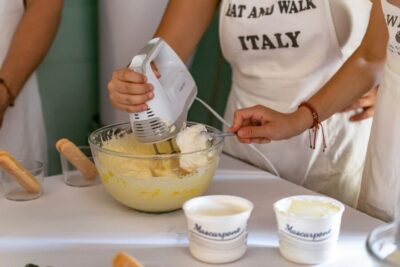
Fettuccine & Tiramisù: Cooking Class with Wine & Limoncello
Read our review →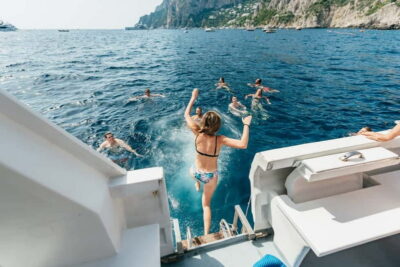
Coast and Capri Boat Trip with Limoncello Tasting
Read our review →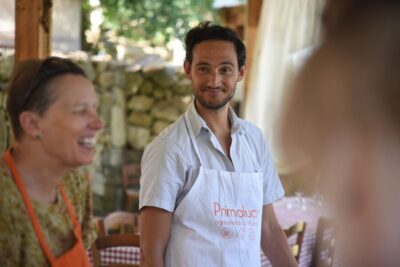
Pizza Lesson, Wine, and Limoncello at a Local Farm
Read our review →
Small Group Capri Island Boat Ride with Swimming and Limoncello
Read our review →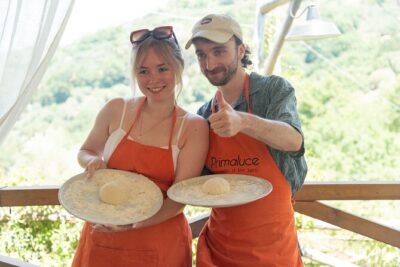
Pizza School with Wine and Limoncello Tasting in a Local Farm
Read our review →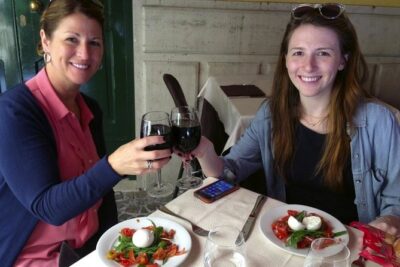
Walking Food Tour in Sorrento w/ Limoncello Factory Lemon Grove
Read our review →Browse the lists this tour appears in