
REVIEW · DRINKS TOURS
Rome: Fresh Pasta-Making Class with Wine and Gelato
Making pasta by hand is one of the best ways to turn a Rome evening into more than another restaurant meal. In this three-hour Trastevere class, you roll dough, cut fettuccine, shape ravioli, cook Roman sauces, and sit down to eat what you made.
I like the relaxed teaching style and the useful recipe cards you take home. I also like the family-friendly pace: children as young as four have taken part, and chefs such as Elisa, Stefano, Luca, Fernanda, and Asia have earned praise for keeping the class clear and fun. The main drawback is that the meeting point can be a little confusing, and the class is not suitable for wheelchair users or strollers.
Key points to know before booking
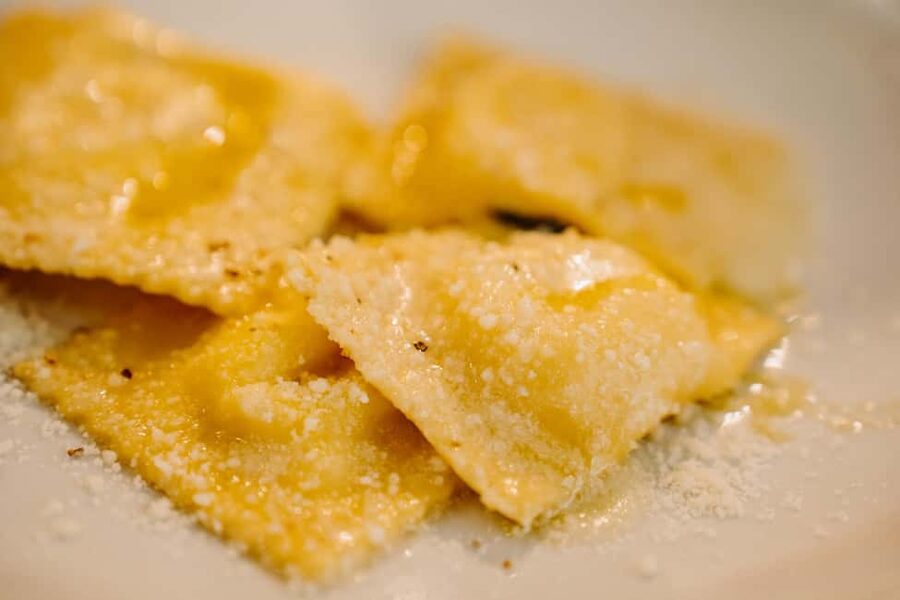
- Two pastas from scratch: Make fresh fettuccine and ravioli, including the dough, cutting, filling, and shaping.
- Roman sauces and gelato: Learn sauces using seasonal ingredients, then finish with homemade gelato.
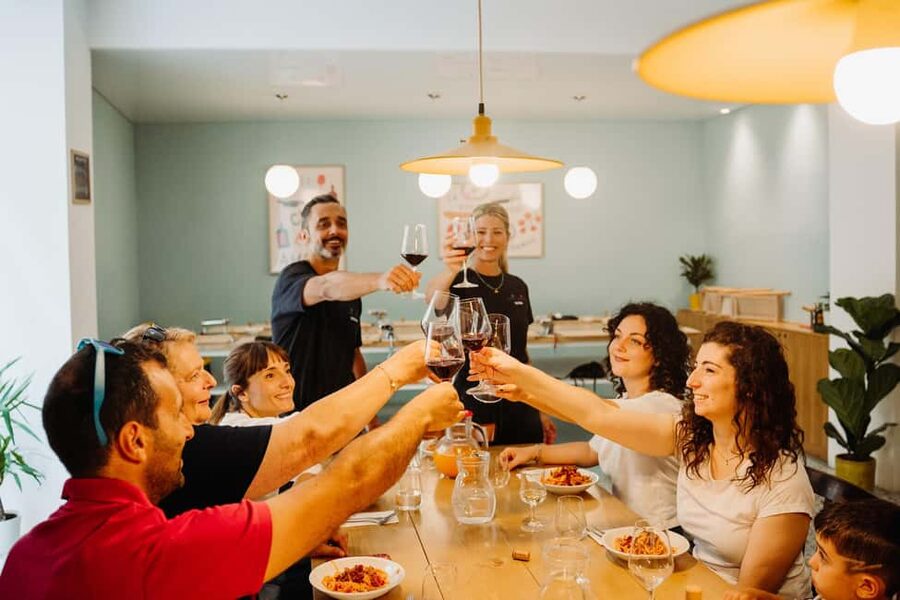
- A social evening: Prosecco, appetizers, unlimited wine, music, and a shared meal are part of the experience.
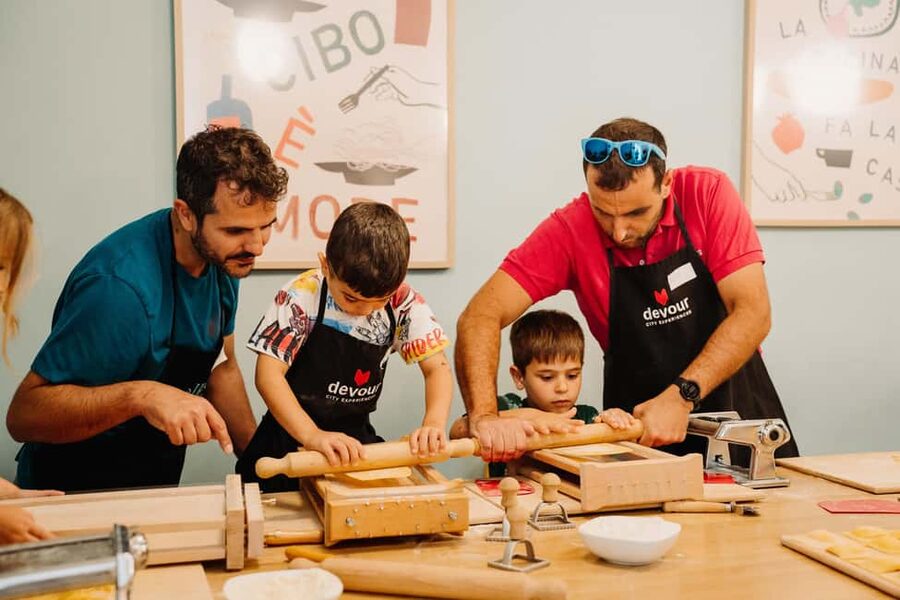
- Family-friendly instruction: The pace works well for children, with several families praising the chefs’ patience and humor.
- Trastevere setting: Meet at Piazza di San Giovanni della Malva, then walk to the cooking studio.
- Useful take-home value: Printed recipes help you repeat the dishes after you return home.
Starting in Piazza di San Giovanni della Malva
The class begins at Piazza di San Giovanni della Malva, in front of the San Giovanni della Malva church. Look for a guide carrying a red bag or a Devour Tours sign, and arrive 15 minutes early.
This is worth taking seriously. One participant had trouble because the meeting instructions did not make it clear that the group would gather in a courtyard rather than at a restaurant or obvious business. You do not want to spend the first few minutes circling the square, so give yourself time to find the church and watch for the guide.
From there, the group walks a short distance to the cooking studio. The exact route is not described in detail, but the class takes place in Trastevere, a good part of Rome for an evening meal and a wander before or after the activity.
The experience is offered as a private or shared class, depending on the option you choose. A small shared group can be a real plus here. Pasta making is hands-on, but it is also social, and the friendly conversation continues while the dough rests and the sauces cook.
More Pasta Experiences in Rome:
- Rome: Pasta Making Class with Wine, Limoncello, and Dessert
★ 4.9 · 3,177 reviews - Rome Cooking Class: Make Pasta and 3 Spritz Cocktails
★ 5.0 · 2,937 reviews - Learn to Make Pasta & Tiramisu with Wine and Limoncello Included
★ 5.0 · 2,345 reviews
Prosecco, appetizers, and the first pasta lesson
The cooking begins with a welcome glass of prosecco. Appetizers are included, giving you something to enjoy while the chef introduces the ingredients and explains the basic idea behind fresh pasta dough.
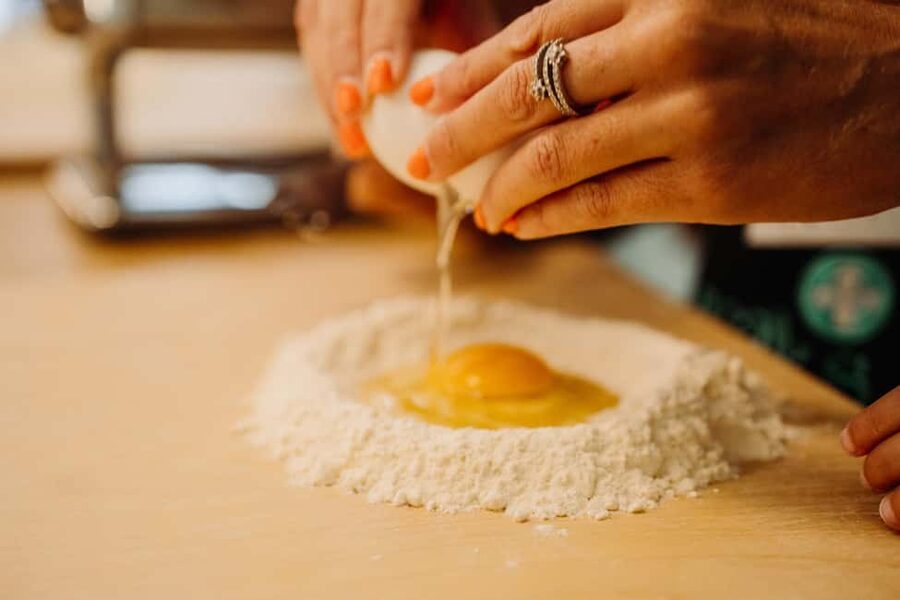
The first lesson focuses on flour, eggs, and olive oil. You learn how the ingredients come together and how the dough should feel before you roll it. This is the part that separates a useful cooking class from a simple demonstration. You are not just watching a chef work. You are handling the dough yourself and learning what to look for.
The class is taught in English. Guides including Elisa, Luca, Stefano, Fernanda, Asia, and others have led sessions, and the strongest praise consistently centers on clear instructions, good humor, and a relaxed manner. That matters for beginners. Pasta dough can feel intimidating when you see an experienced cook work quickly, but a patient instructor helps you understand the process instead of simply trying to keep up.
You will roll the dough, cut it into fettuccine, and prepare a second portion for ravioli. The work has enough variety to keep the class moving. Fettuccine gives you the satisfaction of producing long, neat ribbons, while ravioli adds the more delicate tasks of filling, folding, and sealing.
Making fettuccine and ravioli by hand
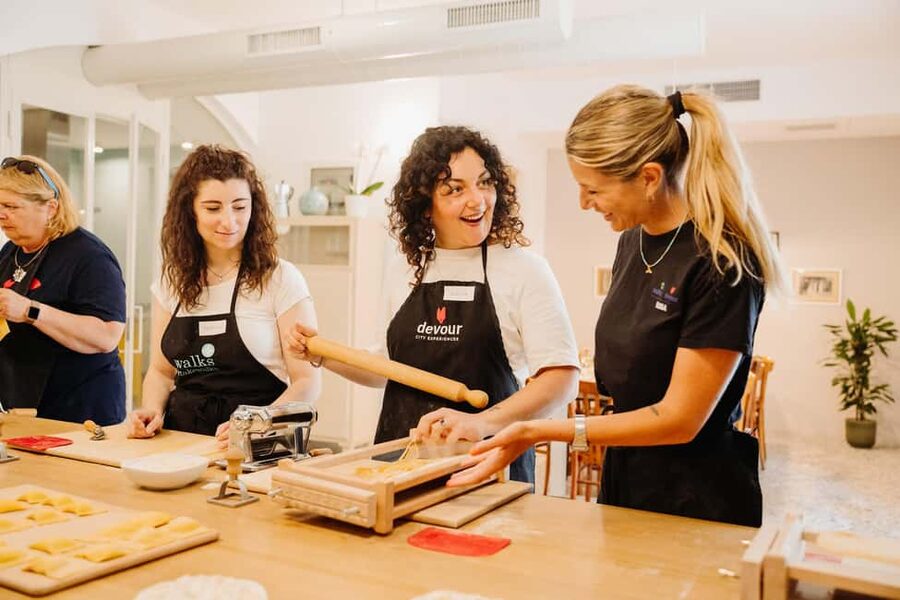
The two-pasta format is one of the strongest parts of the class. You get a broad introduction to fresh pasta without spending three hours repeating the same technique.
Fettuccine is relatively direct: roll the dough, cut it, and prepare it for cooking. Ravioli asks for more care. You prepare a filling, place it on the dough, cover it, and seal the edges. The chef shows you how to avoid trapped air and how to keep the parcels closed in the pot.
That makes the class useful even if you are already comfortable in the kitchen. You learn several connected skills: dough consistency, rolling, shaping, filling, sealing, cooking, and sauce pairing. Beginners can follow along, while experienced cooks can pick up small techniques to use at home.
The recipe cards extend the value beyond the evening. You leave with instructions for making the dishes again, which is important because fresh pasta is best learned through repetition. The recipes also give you a practical souvenir, rather than another object to fit into your luggage.
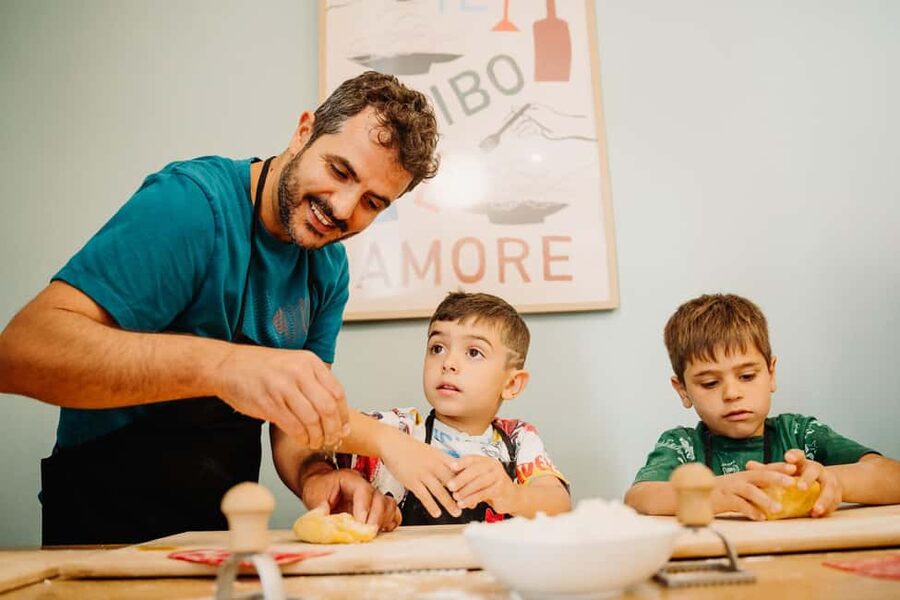
Families should find this part especially appealing. Several children between four and twelve have taken part successfully, and the chefs are used to making room for younger hands. The class is not presented as a children’s activity, but the pace and simple physical tasks make it workable for families.
Learning Roman sauces while the pasta rests
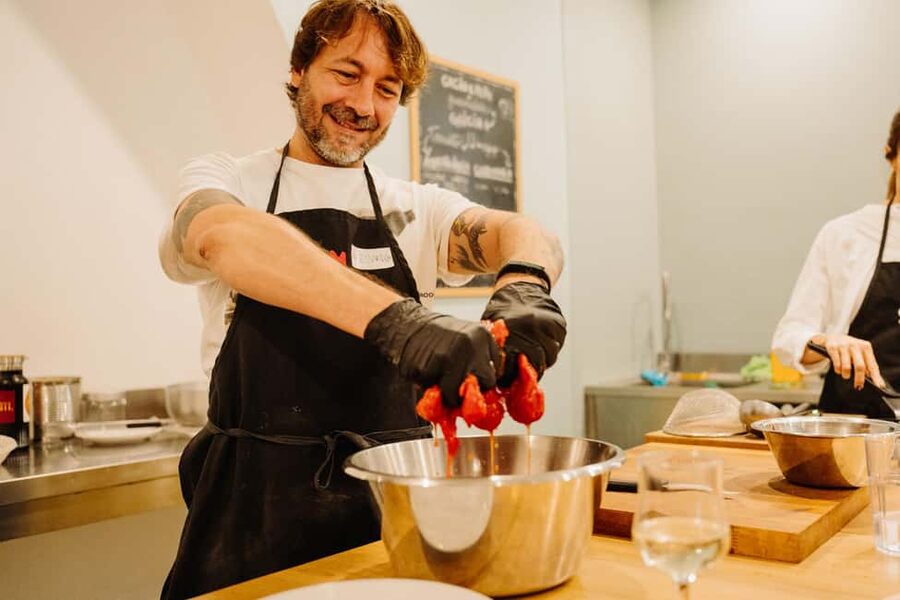
While the pasta rests, the class turns to sauces made with fresh, seasonal ingredients. The specific sauce can vary, but dishes mentioned by participants include puttanesca and amatriciana.
This pause is well used. Instead of standing around waiting for the pasta, you learn how Roman sauces are built and how they work with the shapes you have made. It also gives you a chance to ask questions about Italian cooking and local food customs.
The sauce lesson adds context to the pasta work. Fresh pasta is not meant to carry a heavy, complicated topping. The sauce should suit the shape and support the texture. A long noodle such as fettuccine and a filled pasta such as ravioli call for different handling, and the chef can explain those choices as you cook.
I would not book this expecting a formal lecture on Roman cuisine. The emphasis is practical. You learn by preparing the food, listening to kitchen tips, and chatting with the chef. That informal approach suits the setting and keeps the evening from feeling like a classroom.
More Workshops and Classes in Rome:
- Fettuccine & Tiramisù: Cooking Class with Wine & Limoncello
★ 4.9 · 2,103 reviews - Pasta Cooking Class Near the Colosseum with 3 Spritz Cocktails
★ 5.0 · 1,686 reviews - Rome Tipsy Cooking Class: Make Pasta and Mix 3 Spritz Cocktails
★ 5.0 · 1,357 reviews - Rome: Pasta Cooking Class with Spritz Cocktails
★ 4.9 · 158 reviews
Sitting down to eat what you made
Once the pasta and sauces are ready, everyone sits down to eat. The meal includes the two homemade pastas and their sauces, along with carefully selected Italian wine. Prosecco is served at the start, and unlimited wine is included during the class.
The meal is the payoff, but it is also part of the teaching. You can taste the difference between fresh pasta and dried pasta, see how the sauces cling to the shapes, and compare your finished dish with the techniques you just learned.
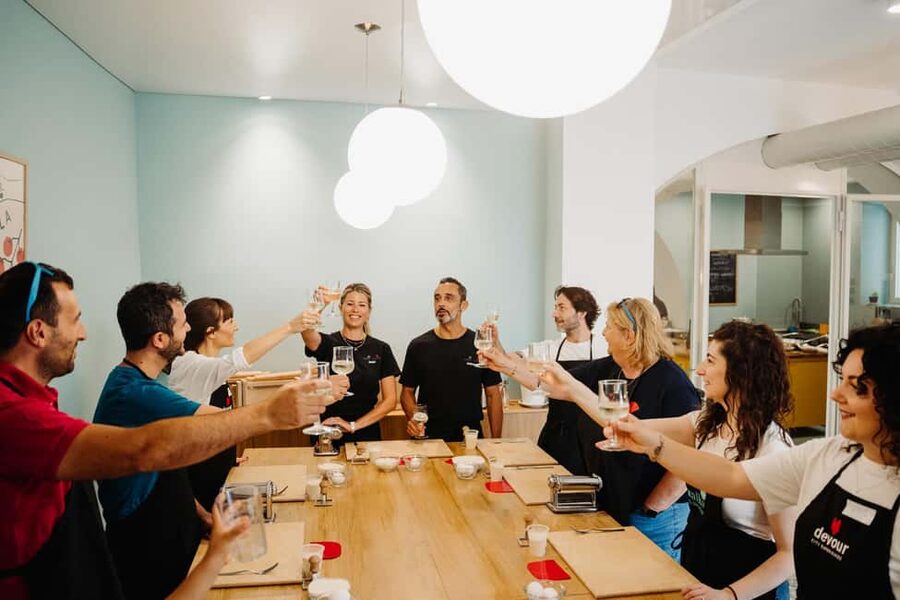
The atmosphere is intentionally social. You eat with the other people in the group, share stories, and spend time with the chefs outside the more focused parts of the lesson. If you are traveling alone, this can be a pleasant way to meet people without signing up for a bar crawl or a large sightseeing group.
Wine is a major part of the value, but keep your own pace. The evening is designed as a relaxed meal, not a wine tasting, and unlimited service does not mean you need to drink heavily to enjoy the class.
Several people describe the food as one of the best meals of their time in Rome. That is understandable: you have handled every stage of the meal, and the final plate arrives with a sense of achievement. Still, you should book this for the cooking and social setting first, not solely for a restaurant-quality dinner. Your pasta will depend partly on your own group’s speed and technique.
Gelato brings the class to a sweet finish
No Italian meal feels quite finished without something sweet, and this class ends with homemade gelato. You learn how it is prepared, then enjoy it after the pasta meal.
The gelato adds welcome contrast to the evening. After working with flour and savory sauces, the final course gives you another recipe and another technique to take home. It also keeps the class from feeling like a pasta workshop with a token dessert added at the end.
The full sequence makes good sense: aperitivo, dough, pasta shapes, sauces, shared meal, and gelato. Three hours is long enough to cover the food properly, but short enough to fit into a Rome itinerary without consuming the whole day.
What the $69 price really includes
At $69 per person, this is not the cheapest way to eat in Rome. You can find a simple plate of pasta for much less. But the price includes a three-hour activity, an English-speaking chef, all ingredients, appetizers, two pasta dishes with sauces, gelato, prosecco, and unlimited wine.
You are paying for instruction and participation as much as for dinner. The printed recipes also give the experience some lasting value. If you have been hoping to learn fresh pasta, the cost is reasonable because you are getting a meal and a practical lesson in one evening.
The value is strongest for couples, families, and small groups who would otherwise spend the evening eating separately at a restaurant. It is also a good choice if you want an activity that feels connected to Italian life rather than another sightseeing stop.
The value is weaker if you dislike group meals, do not drink wine, or already make fresh pasta confidently. In those cases, a market visit or a food tour might give you more variety. The shared format also means you should expect a social experience rather than a private chef lesson unless you select the private option.
Who will enjoy this class most
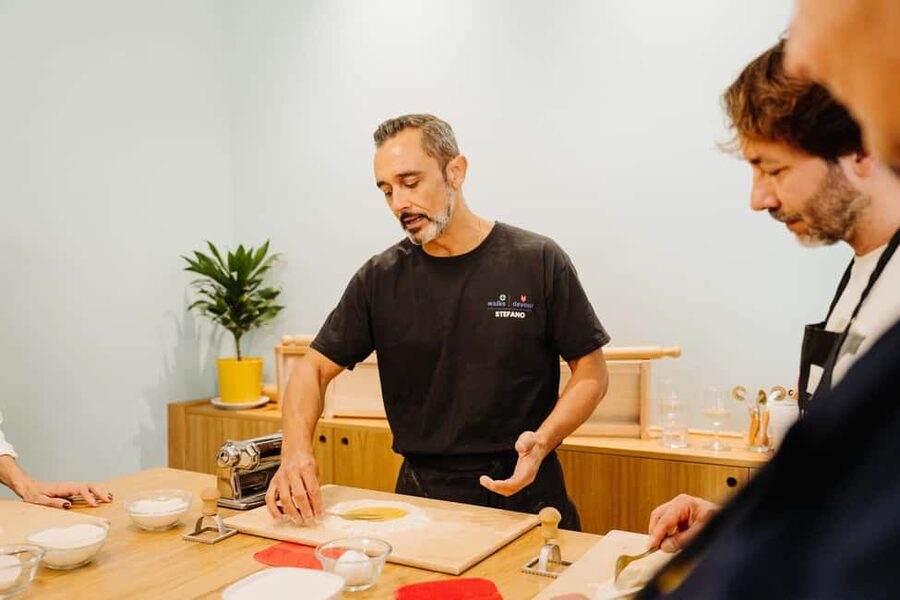
I would recommend this class to first-time pasta makers, families, couples, and solo visitors who enjoy meeting people over food. Children have done well here, especially when adults are ready to help with the rolling and shaping.
The class is also a good early activity in Rome. Several participants wished they had booked it at the start of their stay because the chefs offered useful ideas about Roman food and the neighborhood. You may come away with suggestions for what to order elsewhere in the city.
The experience is less suitable for anyone with limited mobility. The activity is not wheelchair accessible, and strollers are not suitable. Dietary needs can usually be accommodated, but celiac diets cannot be supported. If you have any dietary restriction, contact the operator before booking so the food can be arranged.
The instruction is in English, so you should be comfortable following spoken directions in English while working with food. The class is hands-on, and you will need to participate rather than simply watch.
Practical timing and cancellation advice
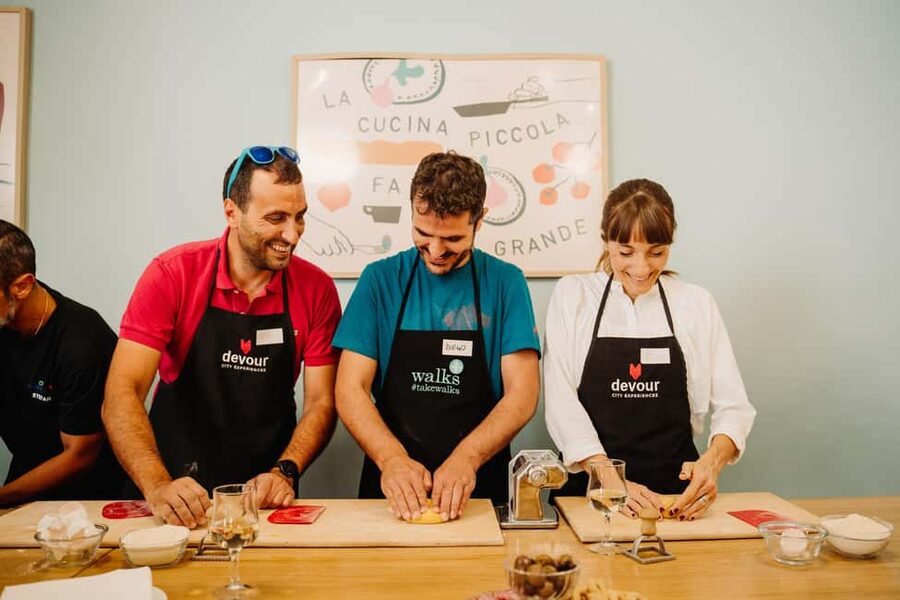
The class lasts three hours, with starting times varying by availability. Since it includes wine and a full meal, an evening booking can replace dinner, though you may prefer to schedule it earlier if you want time afterward in Trastevere.
Arrive 15 minutes before the start. Use the church at Piazza di San Giovanni della Malva as your anchor point and look for the red bag or Devour Tours sign.
Free cancellation is available up to 24 hours before the activity for a full refund. You can also reserve now and pay later, which helps if your Rome schedule is still taking shape. Take care when booking for a large family or group, since one missed reservation may not be refundable if the cancellation deadline has passed.
Should you book the Trastevere pasta class?
Book it if you want to learn by doing, enjoy a generous meal, and like the idea of sharing an evening with a chef and a small group. The combination of fettuccine, ravioli, Roman sauces, gelato, recipe cards, and wine gives you plenty to do for the price.
I would especially choose it for a family night or as one of your first Rome activities. Chefs such as Elisa, Luca, Stefano, and Fernanda have shown that the class can work for both adults and young children, and the relaxed pace leaves room for questions and laughter.
Skip it if you need full wheelchair access, require a celiac-safe menu, or want a quiet private dinner with no group interaction. For everyone else, this is a practical, sociable way to put Rome on your plate and take a few useful skills home.
FAQ
How long does the Rome pasta-making class last?
The class lasts three hours.
Where does the class meet?
Meet at Piazza di San Giovanni della Malva, 00153 Roma RM, in the square in front of the San Giovanni della Malva church.
How early should I arrive?
You should arrive 15 minutes before the scheduled start time.
What pasta will I make?
You will make two types of pasta: fresh fettuccine and ravioli.
Are sauces included in the class?
Yes. You prepare sauces for the homemade pasta, using fresh, seasonal ingredients. Roman sauces such as puttanesca and amatriciana are mentioned as examples.
Is wine included?
Yes. The experience includes prosecco and unlimited wine, along with appetizers.
Is gelato included?
Yes. Homemade gelato is included as the sweet course at the end of the class.
Is the class suitable for dietary restrictions?
The class can accommodate dietary needs except for celiac diets. Contact the operator before attending if you have dietary restrictions so the food can be arranged.
Is the class wheelchair accessible?
No. The experience is not suitable for wheelchair users, people with mobility impairments, or strollers.
Just poured in Rome
- Trevi Fountain, Pantheon, and Campo Dei Fiori Market Food and Wine Tour★ 5.0 · 320 reviews
- Rome: Pasta Cooking Class with Spritz Cocktails★ 4.9 · 158 reviews
- Rome: Pasta Making with Wine Tasting and Dinner in Frascati★ 4.9 · 979 reviews
- Rome: Food Tour and Wine Tasting in a Traditional Trattoria★ 4.7 · 962 reviews
- Rome: Trastevere Guided Food and Wine Tour with 20+ Tastings★ 4.9 · 1,022 reviews
- Rome: E-Bike Night Tour with Food and Wine Tasting★ 4.9 · 1,131 reviews
- Rome by Night – Ebike Small Group Tour – Food and Wine (Option)★ 5.0 · 1,275 reviews
- Pasta Making & Wine Tasting with Dinner in Frascati from Rome★ 5.0 · 1,326 reviews
Drinks Tours, compared.
Douro Valley w/ Boat Tour, Wine Tasting & Lunch
Read our review →
Chichen Itza, Cenote & Valladolid Tour with Tequila and Lunch
Read our review →
Complete Douro Valley Wine Tour with Lunch, Wine Tastings and River Cruise
Read our review →
Zakopane: Cable Car, Chocholow Baths, Cheese & Vodka
Read our review →

Zakopane: Cable Car, Chocholow Baths, Cheese & Vodka
Read our review →
Small-Group Wine Tasting Experience in the Tuscan Countryside
Read our review →Browse the lists this tour appears in