
REVIEW · VINEYARD TOURS
Saint-Émilion: Vineyard Walking Tour and Tasting
At Château Haute-Nauve, you get more than a quick pour and a pretty vineyard view. Florent or Marie-Anne, members of the fourth-generation family team, take you from the vines to the cellars, including a look at fermentation equipment, barrel ageing, and a six-meter-tall wine bottle that has a practical purpose.
I like the small groups of up to 10, which leave room for questions and give the visit a personal feel. I also like the tasting of four estate wines, including two Grand Cru wines, because it lets you compare styles rather than judge a château on one glass.
The main consideration is transport. The estate is about 3 kilometers from Saint-Émilion, and the owners recommend arriving by car. If you are staying in town, plan your ride before you set out.
Key points at a glance
- Meet a fourth-generation wine family: Florent or Marie-Anne leads the visit and explains the estate from a personal point of view.
- Walk through working vineyards: See different vine plots and learn how the work changes with the seasons.
- See the full production chain: The tour covers fermentation, pumping, pressing, ageing, and bottling.
- Spot unusual estate details: Look for a wind turbine and a giant wine bottle used in the château’s approach to frost protection.
- Taste four wines for $29: The final tasting includes two wines with Grand Cru appellations and leaves time for optional purchases.
- A useful two-hour format: The visit is long enough to cover the vineyard and cellar without taking over your whole day in Saint-Émilion.
Why this Saint-Émilion tour feels personal
Many wine visits in Bordeaux focus on grand architecture or polished tasting rooms. Château Haute-Nauve takes a more direct route. You meet the family behind the wine and see the working parts of a modern estate.
That family link matters. Florent is a fourth-generation winemaker, and his explanations connect the business to the land, the weather, and the decisions made each year. He speaks about the estate’s past, but also about present-day problems such as spring frost, sustainability, diversification, and the search for new wine varieties.
I especially like that balance. You are not given a romantic picture of vineyard life with all the hard parts edited out. You hear about the risks as well as the pleasures. Frost can damage a crop. Weather changes the work. A château must adapt if it wants to remain viable.
The tone is informal and friendly. Florent has been praised for using humor and for bringing groups of different ages and nationalities into the discussion. That makes this a good choice if you are interested in wine but do not want a stiff, technical lecture.
The tour is offered in French and English. The small-group limit of 10 is useful here, since wine questions often come up as you walk. You can ask about the vines, the machinery, or the wines without feeling that you are interrupting a large scripted presentation.
More Vineyard Tours in France
- Saint-Émilion: Bordeaux Vineyard Tour and Wine Tasting
★ 4.8 · 578 reviews - Bordeaux: Vineyards Wine Tasting Half-Day Trip
★ 4.2 · 470 reviews - Half-Day Wine tour across Bordeaux’s Vineyards
★ 3.5 · 429 reviews
Walking the vines near Saint-Émilion
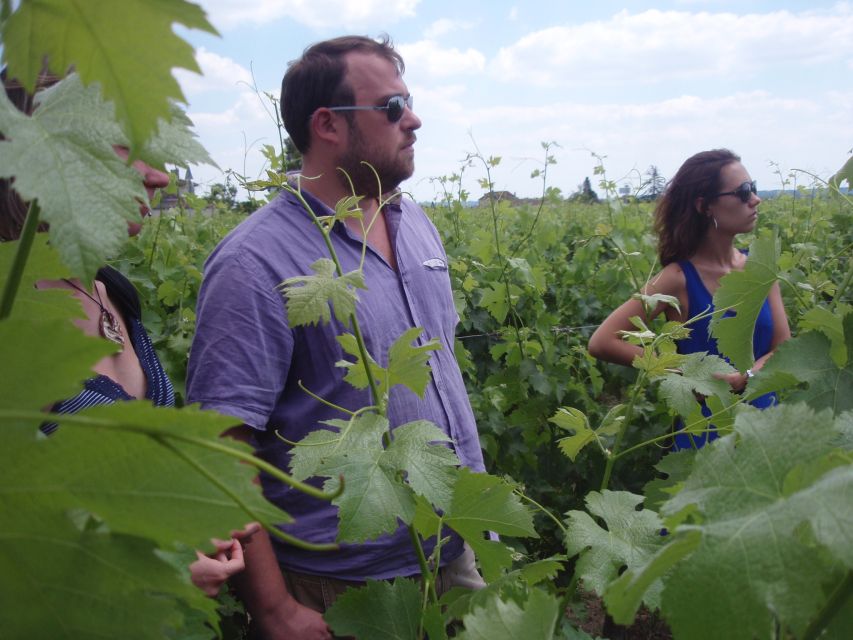
The visit begins outside, in the vineyard. You walk among several plots and learn about the grape varieties and the specific character of the Saint-Émilion appellation.
This part gives useful context to the tasting later. Instead of treating wine as something that appears in a glass, the tour shows you where the process begins. You hear how work changes during the year and how the family cares for the vines before harvest.
The walk is also the most scenic part of the visit. You are in the countryside just outside the famous village, close enough to combine the tour with time in Saint-Émilion but far enough away to feel like you have left the town behind.
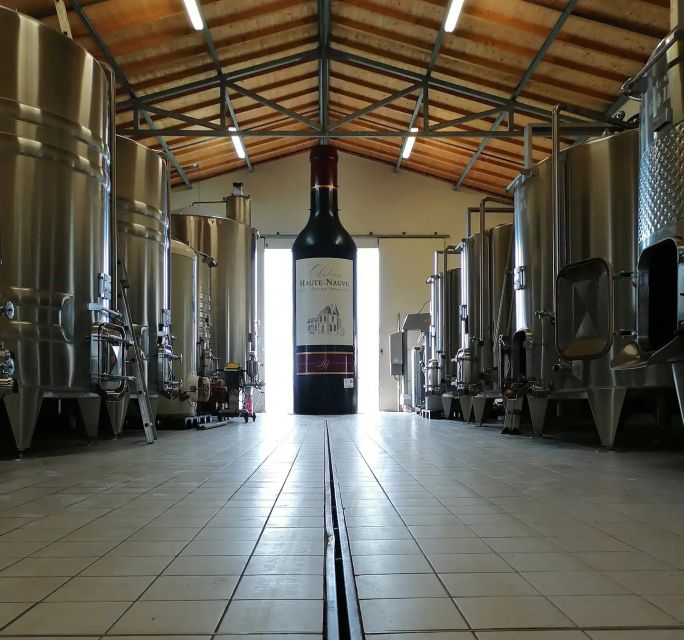
The estate includes a wind turbine and a giant bottle of wine that rises about six meters. The bottle is not just a photo prop. It is connected to the château’s approach to dealing with frost, making it one of the more memorable details of the walk.
The tour also addresses sustainability and diversification. Those subjects can sound abstract in a brochure, but here they are tied to practical decisions on a family property. You get a clearer sense of how a small producer manages land, machinery, weather, and changing wine tastes.
Bring comfortable shoes. The walk takes place outdoors, and weather-appropriate clothing is important. A sunny day may make the vineyard especially pleasant, but the same open setting can feel less comfortable in wind, rain, or strong heat.
From grapes to fermentation tanks
After the vineyard, you go inside to the vinification cellar. This is where the visit shifts from growing grapes to turning them into wine.
The tour explains fermentation, pumping, and pressing, with a look at the equipment and technology used at the estate. This is a strong part of the experience for anyone who wants to understand what happens after harvest. You are not simply shown a row of tanks. You learn how the fruit moves through the production process.
The machinery adds a useful visual element. Wine production can seem mysterious when described only in tasting language, but pumps, presses, tanks, and temperature-controlled processes make the work more concrete.
The estate also presents the relationship between older methods and newer ideas. That matters in Saint-Émilion, where tradition is important but producers still need to manage modern production demands and difficult weather.
You should not expect a full professional winemaking course in two hours. The explanations are designed for visitors, not for people studying oenology. Still, the tour covers enough ground to help you understand why two wines made from similar grapes can taste different.
The barrel cellar and the final tasting
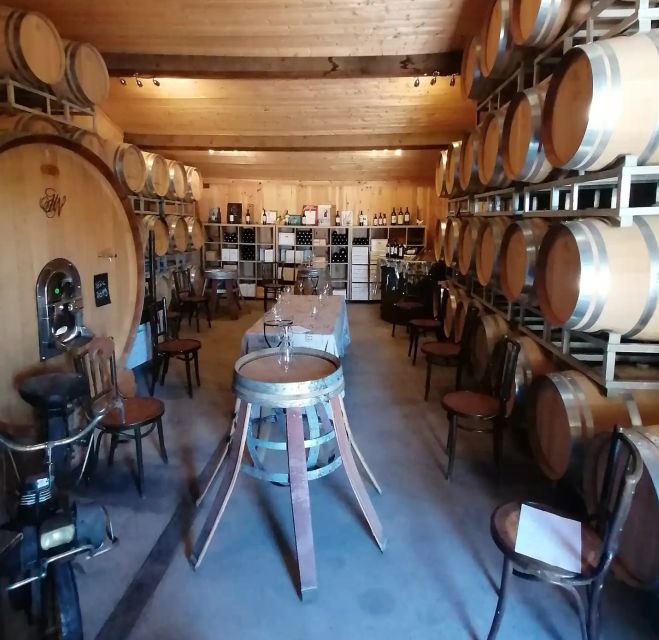
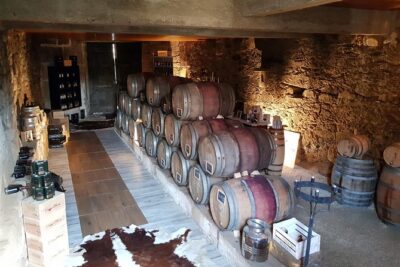
The last production stop is the barrel cellar, where you see how the wines are aged. This gives the tour a natural order: vines first, fermentation next, ageing last, tasting at the end.
The barrel cellar also helps explain why time matters. The wine you taste is the result of choices made long before it reaches the bottle, from the care of the vines to the handling of the grapes and the conditions used during ageing.
The tasting includes four wines from Château Haute-Nauve. Two carry Grand Cru appellations, giving you the chance to compare wines with different levels and expressions within the Saint-Émilion area.
The tasting is guided rather than simply poured. You are given help in noticing differences between the wines, including contrasts in body and style. One useful way to approach it is to focus on how each wine changes from the first sip to the finish, then ask Florent or Marie-Anne what caused that difference.
This is not a food-pairing experience. Food is not included, so do not arrive expecting bread, cheese, or a full snack service. The focus is firmly on the wine and the production story.
You can buy bottles at the end if you find a favorite. The buying decision is left to you, and the visit does not require an additional purchase. A few bottles can be a practical souvenir, especially if you want to remember a particular wine rather than buy a generic bottle from a shop in town.
Same town, a different bottle:
- Bordeaux: Cité du Vin Entry Ticket and Wine Tasting
★ 4.6 · 3,885 reviews - Bordeaux: River Garonne Cruise with Glass of Wine and Canelé
★ 4.5 · 3,630 reviews - Montmartre Hill French Gourmet Food and Wine Tasting Walking Tour
★ 5.0 · 2,588 reviews - From Paris: Loire Valley Castles Day Trip With Wine Tasting
★ 4.6 · 1,727 reviews
Is $29 a good value?
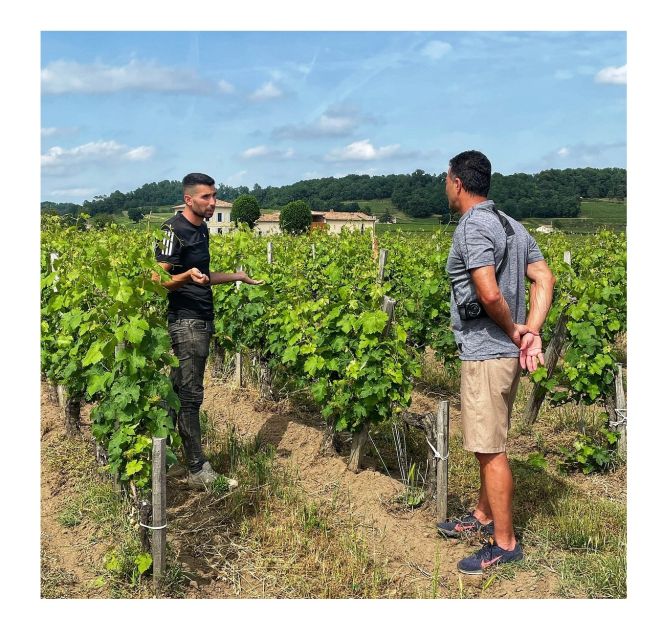
At $29 per person, this is one of the easier Saint-Émilion wine experiences to justify. The price includes a two-hour guided visit, a vineyard walk, the production areas, the barrel cellar, and four wines.
The value comes from the range of the visit. A simple tasting might cost less, but it would not give you the same view of the vineyard or the winemaking equipment. A larger château tour might offer more grand rooms or polished presentation, but not necessarily the same access to a family member who works directly with the estate.
The two Grand Cru wines also strengthen the value. You are not limited to a single basic sample, and the tasting has enough variety to make comparison worthwhile.
I would see this as a particularly good buy for first-time visitors to Bordeaux who want a clear introduction to Saint-Émilion wine. It also works for experienced wine drinkers who prefer a producer-led visit over a formal, brand-heavy presentation.
The price does not include transportation, food, or bottles purchased afterward. Those costs are easy to overlook, especially if you are planning a day around several vineyards. Since the château is 3 kilometers from Saint-Émilion, work out how you will arrive and leave before booking.
Planning the visit around Saint-Émilion
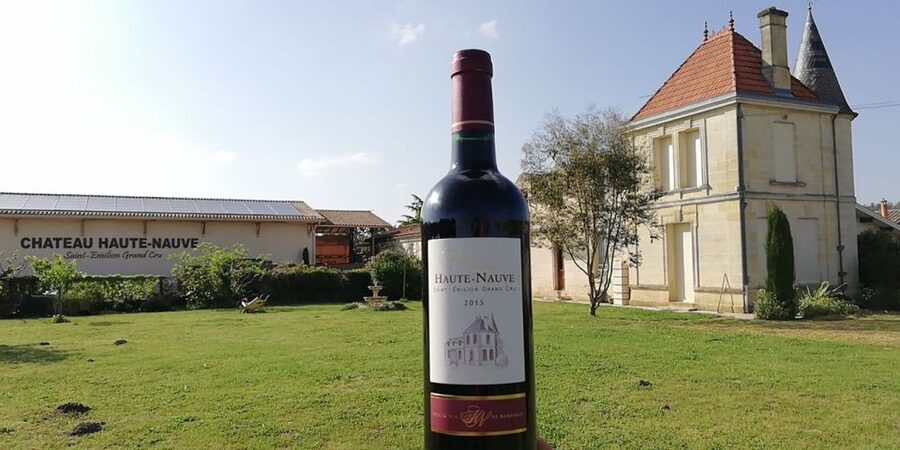
The meeting point is inside Château Haute-Nauve, near the large building with solar panels and the Château Haute-Nauve purple sign. A car park is available near the building.
The estate is close enough to Saint-Émilion for a combined day, but it is not in the village center. If you are driving, the arrangement is straightforward. If you are staying in town without a car, you need to organize transport rather than assume you can walk there easily.
The two-hour length fits well before or after visiting the village, churches, viewpoints, and shops of Saint-Émilion. It also avoids the fatigue that can come with a full-day wine circuit.
The experience is wheelchair accessible, though the tour includes an outdoor vineyard walk. If mobility is a concern, it is sensible to confirm the practical details when booking, especially because the visit moves between several parts of the estate.
Free cancellation is available up to 24 hours before the start time, and you can reserve now and pay later. Those terms help if your Bordeaux plans depend on weather, transport, or a changing schedule.
Who will enjoy Château Haute-Nauve most?
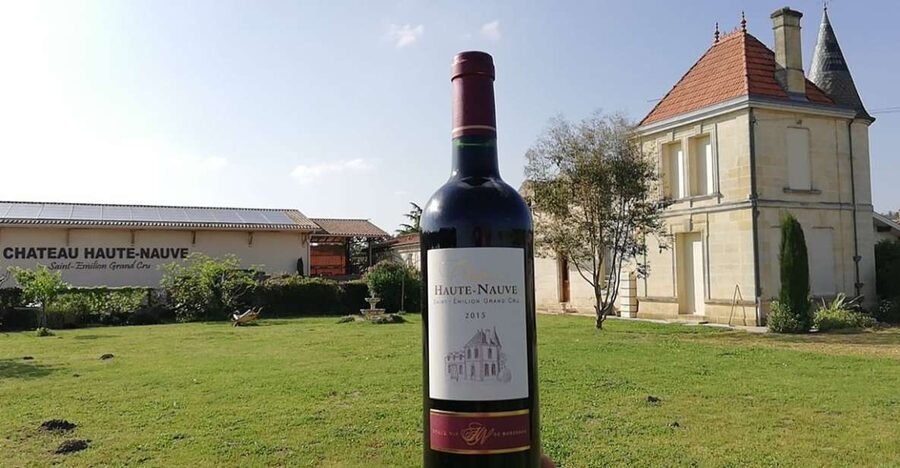
I would choose this tour if you want to understand how wine is made rather than simply taste it. The explanation begins with soil, vines, and weather, then moves through the machinery and ageing process before reaching the glass.
It is also a good fit for families and mixed-age groups. Children and teenagers will not take part in the wine tasting, but the vineyard walk, giant bottle, machinery, and family story give younger visitors something to follow. One family with children aged 9 to 17 found the format worked well for everyone.
The visit suits beginners because the information is explained in plain terms. It suits more experienced wine drinkers because you can ask detailed questions and compare four wines from the same estate.
Couples and small groups should appreciate the personal format. Some bookings may end up feeling almost private if the group is small, though you should book for the published limit of 10 rather than assume a private tour.
This may be less suitable if you want a grand château interior, a long formal meal, or a full day of tastings. It is a working family winery visit, not a luxury wine-and-food package.
What makes it different from a basic tasting
The strongest feature is the order of the experience. You see the vines before tasting the wine, then follow the grapes through fermentation and ageing. That sequence helps the final glasses make sense.
I also like the honest look at the business side of winemaking. Frost protection, sustainability, diversification, and new varieties are not side notes here. They show you that a family estate must keep adapting.
The family’s personality is another draw. Florent is often the guide, while Marie-Anne may also lead the visit. Their connection to the estate gives the history a human scale. Instead of hearing a general account of Bordeaux, you hear how one family has continued its work across four generations.
The small group helps preserve that feeling. With no more than 10 people, the tour can respond to the group’s interests. You have space to ask why one wine tastes fuller, how the barrels affect ageing, or what happens during a difficult growing season.
The only clear weakness is the location for visitors without a car. The château is near Saint-Émilion, but near does not mean central. Transport planning is part of the experience.
Should you book this tour?
Book Château Haute-Nauve if you want a friendly, practical introduction to Saint-Émilion wine, especially if you value meeting the people who actually run the estate. The combination of vineyard walk, cellar visit, family history, and four-wine tasting offers a lot for $29.
I would make it a priority for a first visit to the region, for a mixed group with different levels of wine interest, or for anyone tired of tastings that skip the vineyard itself. Plan your transport, wear comfortable shoes, and leave room in your luggage if you expect to buy bottles.
Skip it only if your main goal is luxury architecture, food pairing, or a large commercial château presentation. For an authentic two-hour look at how a family winery works, this is an easy choice.
FAQ
Where is Château Haute-Nauve?
Château Haute-Nauve is in Nouvelle-Aquitaine, about 3 kilometers from the village of Saint-Émilion.
How long does the tour last?
The tour lasts two hours.
How much does the experience cost?
The listed price is $29 per person.
Which wines are included in the tasting?
You taste four wines produced by the estate, including two wines with Grand Cru appellations.
Who leads the tour?
The tour is led by a member of the family, usually Florent or Marie-Anne. The family is in its fourth generation of winemaking.
Is the tour available in English?
Yes. The live guide can conduct the tour in English or French.
Is transportation included?
No. Transportation is not included. The estate recommends arriving by car, and parking is available near the large building with solar panels and the Château Haute-Nauve sign.
Can I cancel the booking?
Yes. You can cancel up to 24 hours in advance for a full refund. You can also reserve now and pay later.
Just poured in France
- Pinot Noir Masterclass – Wine tasting in Dijon★ 5.0 · 147 reviews
- Chardonnay Masterclass – Wine tasting in Dijon★ 5.0 · 91 reviews
- Small-Group Full-Day Tour of Côte de Nuits, Côte de Beaune Vineyards and Beaune Historical District★ 5.0 · 364 reviews
- Small group Burgundy tour of Beaune with Wine Tasting from Dijon★ 4.5 · 85 reviews
- Half Day Tour of the Cote de Nuits Vineyards from Dijon★ 5.0 · 108 reviews
- The Emblematic: visit of villages, Haut-Koenigsbourg, Wine tasting★ 5.0 · 81 reviews
- Au Cœur du Château – VSOP D’USSÉ & XO BARON OTARD★ 4.5 · 108 reviews
- Alsace Full Day Wine Tour from Colmar★ 5.0 · 104 reviews
Vineyard Tours, compared.
Douro Valley Tour: 2 Vineyard Visits, River Cruise, Winery Lunch
Read our review →
Toledo Tour & Vineyard Walk with Wine Tasting from Madrid
Read our review →
Half day Chianti Vineyard Escape from Florence with Wine Tastings
Read our review →
Douro Valley Wine Tour: 3 Vineyard Visits, Wine Tastings, Lunch
Read our review →
#1 Best 3hr Martha’s Vineyard shared Island Tour from Oak Bluffs
Read our review →
Private Self-Guided E-Bike Ride in Tuscany with Vineyard Visit
Read our review →
Browse the lists this tour appears in