
REVIEW · DRINKS TOURS
Paella & Sangria Class with Tapas and Market Visit
The best part of this Alicante food experience happens before the cooking starts. You meet guide Federico, also called Fred by some participants, at Mercado Central, learn how to choose seafood, ham, olives, and produce, then carry those ingredients to a working local restaurant kitchen. I like the market visit because it gives the meal a clear sense of place, and I like that you do real preparation instead of simply watching a chef perform.
The class also gets the important details right: you make the broth and salmorreta, mix your own sangria, and choose seafood, meat, or vegetarian paella. The main consideration is portion expectation. Alicante-style paella is about properly seasoned rice and stock, not a mountain of seafood, so anyone expecting large shrimp and heaps of fish may find the meal modest.
Key points at a glance
- Market-first format: Begin at Alicante’s Central Market, choosing ingredients while learning about local produce, seafood, olives, Iberian ham, and regional cooking.
- Hands-on cooking: Prepare the broth, salmorreta, paella ingredients, tapas, and sangria rather than sitting back for a demonstration.
- Three paella choices: Select seafood, meat, or vegetarian paella, a useful option for mixed groups.
- Real restaurant setting: The class takes place in a working local restaurant kitchen, not a staged cooking studio.
- Friendly group size: The advertised maximum is 15 in the highlights, while the additional information allows up to 16 people. Smaller groups can make the market walk and cooking easier to follow.
- Strong value for food lovers: For $59.26, you get about three and a half hours of market time, instruction, food, sangria, tapas, and a shared meal.
Starting at Alicante’s Central Market
Meet at Plaza 25 de Mayo, outside Mercado Central d’Alacant. This is a useful central location, close to public transportation, and the market makes a better starting point than a hotel lobby or generic meeting room.
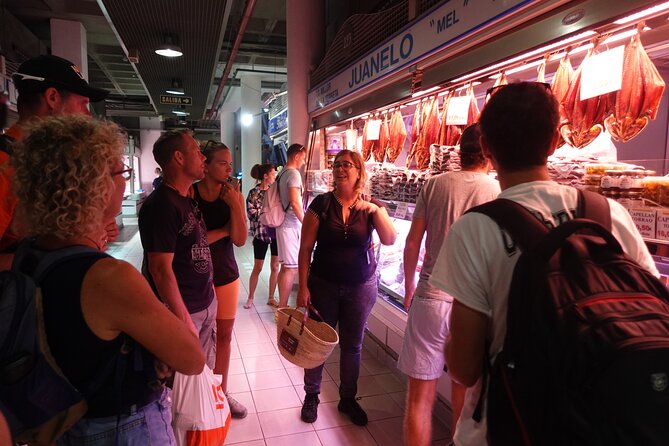
The first section is a guided walk through the market. You are not simply shown a few stalls and hurried along. The practical aim is to select the ingredients needed for the meal while learning what makes Alicante cooking different from the paella served in many places outside Spain.
Federico, or Fred, has been singled out for his clear English, easy humor, and ability to switch between English and Spanish when useful. He explains ingredients as the group shops, with attention to seafood, pork, olives, cured meats, and produce. You might learn how different shrimp vary, why local Mediterranean shrimp are smaller than ocean varieties, and how salted fish fits into a tomato salad.
I especially like this part for people who want more than a cooking souvenir. A market tells you how a city eats. You see the raw materials before they are turned into a finished dish, and you gain some useful shopping knowledge for the rest of your time in Alicante.
The market portion also gives the class a natural pace. You start with food culture, then move into preparation, rather than being dropped into a kitchen with no context. Allow about an hour for this opening section, based on the experience details provided.
More Market Visits in Spain:
- Barcelona Paella Cooking Class with Market Visit, Tapas & Sangria
★ 5.0 · 2,531 reviews - Paella Cooking Class, Wine Tasting & Central Market in Valencia
★ 5.0 · 1,150 reviews - Alicante: Paella & Sangria Class with Tapas and Market Visit
★ 4.8 · 243 reviews
From fresh ingredients to salmorreta
After shopping, the group walks roughly three blocks to the cooking location. The class takes place inside a local restaurant with a working kitchen. That detail matters. You are not cooking in a polished tourist set designed only for demonstrations. You are working in a place connected to the city’s everyday food scene.
A professional chef and host lead the kitchen portion. Some sessions have included chef Maria alongside Fred. The exact staff may vary, but the format remains participatory. Everyone gets a task, and the group takes turns preparing ingredients and working with the paella.
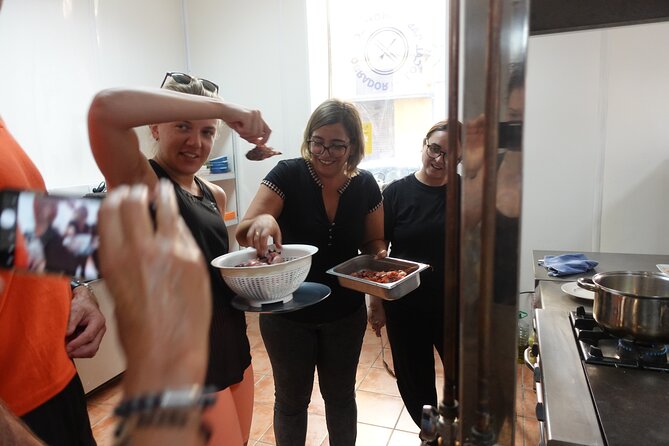
You learn the basic building blocks rather than only receiving a final recipe. The process includes preparing a broth, making salmorreta, and balancing the flavors before the rice goes in. Salmorreta is a key Alicante-style sofrito base, and learning this step helps explain why the finished rice tastes like more than rice cooked with seafood or meat.
The instruction is designed for beginners. You do not need advanced kitchen skills, and the teaching style is patient and step-by-step. Still, this is a group class, so the amount of time you personally spend at the stove will depend on the number of people and how tasks are divided.
The smaller the group, the easier it is to follow the guide around the market and get a turn with the cooking. Groups of five to eight sound especially comfortable for this format. At the full capacity of 15 or 16, you should expect a livelier, less personal class, though the organizers aim to involve everyone.
Choosing seafood, meat, or vegetarian paella
You can choose among seafood, meat, or vegetarian paella. That flexibility makes the class practical for couples and families who do not all want the same dish. It also means you should pay attention when making your selection, since the final meal is built around the choice made by the group.
The seafood version may include shrimp and squid or cuttlefish from Alicante Bay. One local ingredient described in the class is sepionet, a small squid prized for its quality and price. Do not judge the seafood by size alone. Mediterranean shrimp can be smaller than ocean shrimp, but the local style places the main flavor in the stock and rice.
This point is worth stressing because it shapes the whole experience. Alicante paella is not meant to be a pile of large shellfish with a little rice underneath. The stock, sofrito, seasoning, and rice carry the dish. The seafood adds flavor and texture, but the goal is a balanced pan, not a seafood tower.
That approach may disappoint you if you measure value by the number of shrimp on your plate. It will suit you better if you want to understand how the dish is made in Alicante. The class offers an honest lesson in regional cooking rather than adapting paella to international expectations.
The meat and vegetarian options give the group more room to accommodate different diets. Specific ingredients for those versions are not fixed in the available details, so you should confirm any serious allergy or dietary concern before booking.
Tapas and sangria while the paella cooks
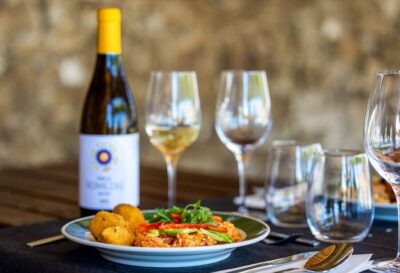
Paella needs time, and the class uses that waiting period well. While the rice cooks, you prepare and share traditional tapas. The food served alongside the main dish has included Iberian ham, cured sausage from the nearby mountains, olives, crisps, and a tomato salad with salted fish.
This is one reason the price feels fair. You are not paying only for a cooking lesson and one plate of rice. You get a small progression of local foods, with explanations about what you are eating. The ham and sausage give you a taste of Spain’s cured-food culture, while the tomato and salted fish salad shows a simpler Mediterranean combination.
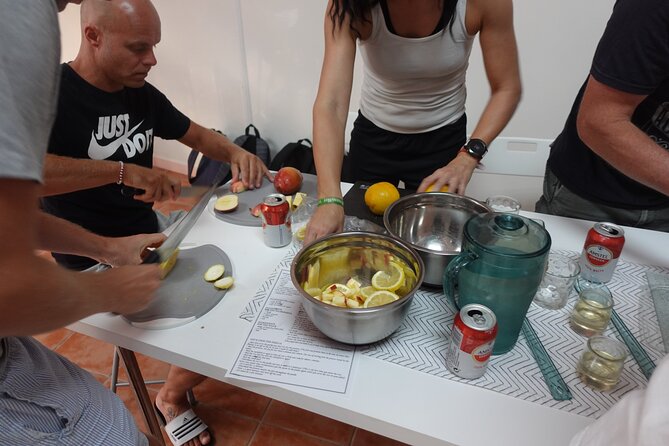
You also make fresh sangria. The class uses wine with orange juice, soda, fruit, syrup, and liquor. That may sound less refined to someone expecting a glass of straight wine, but it is the point of sangria. If you prefer wine without mixers, this part may not suit your taste. If you want to learn the familiar Spanish party drink, you get to help prepare it and drink it with the meal.
Alcohol is available only to people aged 18 or older. The activity is offered in English, which makes the explanations accessible to English-speaking visitors, though the guide may also speak Spanish during the market visit.
More Shopping Stops in Spain:
- San Sebastian: Market, Pintxos and Wine Tasting Tour
★ 5.0 · 111 reviews - Pike Place Market Tasting Tour
★ 5.0 · 1,696 reviews - Early-Bird Tasting Tour of Pike Place Market
★ 5.0 · 1,154 reviews - Cancun Taco Tour, Local Beer and Night Market with Transportation
★ 5.0 · 816 reviews
Sitting down to eat what you prepared
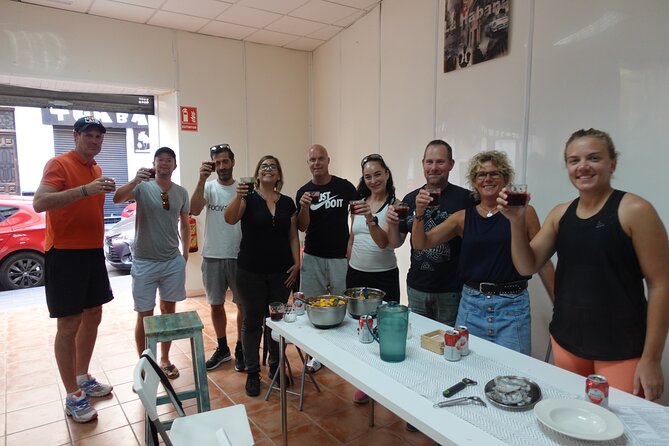
The final stage is shared dining at the restaurant. You eat the paella, tapas, and sangria in the same friendly setting where you prepared them. That shared table is important because the class is as social as it is culinary.
People arrive as couples, families, or solo participants and work in the same kitchen. The hands-on tasks give you an easy reason to talk. By the end, you have made decisions together, handled the ingredients, and waited for the rice at the same pan.
The finished meal has received especially strong praise for its flavor, freshness, and sense of achievement. That does not mean every palate will agree. One participant found the seafood portions too small and the sangria too diluted. The fair way to read that concern is to understand the cooking style before you book: the class teaches traditional Alicante proportions, where the rice and stock matter most.
The food selection can also depend on what is available at the market that day. One session substituted sepionet when regular cuttlefish was unavailable. That kind of change is normal in a market-based class and can mean a better ingredient, but it also means the menu is not completely fixed.
What $59.26 buys you
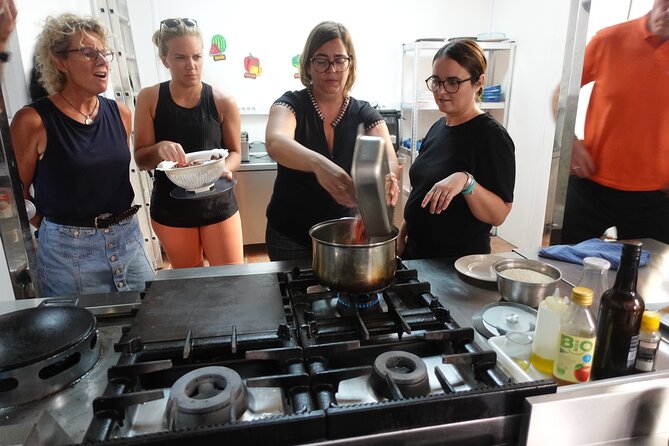
At $59.26 per person, the experience offers about three hours and 30 minutes of activity. The price covers the market visit, guidance, cooking instruction, tapas, sangria, and the meal you prepare. Two people, a guide and a chef, may assist the group, which adds value compared with a simple demonstration.
The price is strongest for people who would otherwise pay separately for a market tour and a restaurant meal. You get both, plus the cooking lesson. The social setting also matters. A private class would cost more, while a large food tour might give you information without giving you control over the cooking.
The value is weaker if your main goal is a large seafood feast. In that case, a restaurant meal may suit you better. Here, you are paying for the process, local food knowledge, participation, and the meal at the end.
The class is often booked around 19 days ahead, so last-minute availability may not be reliable. Free cancellation is available if you cancel at least 24 hours before the start time. If the minimum number of people is not reached and the activity is canceled, you are offered another date or experience, or a full refund.
Who will enjoy this Alicante food class?
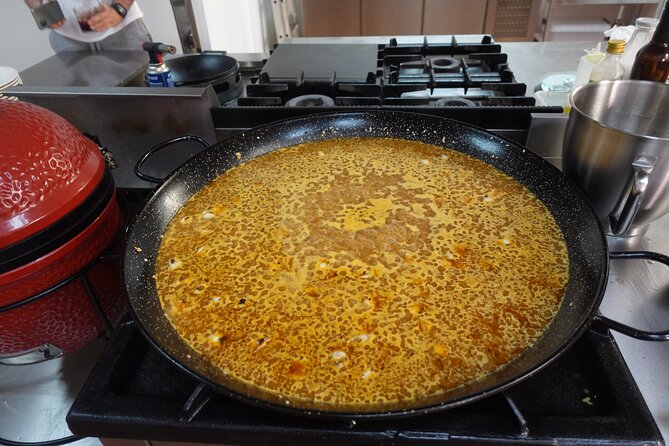
I would recommend it most strongly to:
- First-time visitors to Alicante who want a direct introduction to local food.
- Couples and friends looking for an activity that combines eating, learning, and conversation.
- Solo visitors who want a social afternoon without joining a standard sightseeing group.
- Beginner cooks who prefer clear guidance and shared tasks.
- Food-focused families with adult participants, provided everyone meets the alcohol requirements if they plan to drink sangria.
- People curious about regional paella, especially those who want to understand the role of stock, rice, and sofrito.
It is less suited to you if you want a private lesson, a quiet fine-dining meal, or a guaranteed menu with large seafood portions. It is also not the right pick if you dislike group participation or want to avoid alcohol entirely, since sangria is part of the experience, even though the minimum drinking age is 18.
Small details that make the experience work
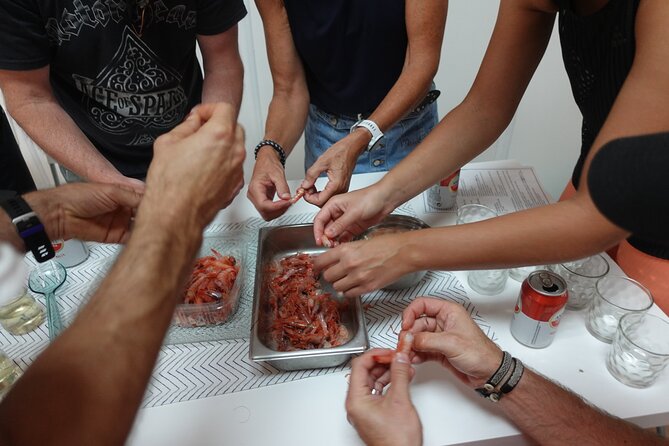
The meeting point at Plaza 25 de Mayo is practical, but arrive with enough time to find the market entrance and the guide. You will spend part of the experience walking through the market and then moving to the restaurant, so comfortable shoes make sense.
The mobile ticket keeps the arrival simple. The activity ends back at the original meeting point, which helps if you have plans afterward in central Alicante.
Ask about your paella preference when booking or before the class begins. The three choices are a real advantage, but the cooking works best when the guide knows what each person wants from the start.
Also keep an open mind about portions and ingredients. Small local shrimp, sepionet, salted fish, and a rice-centered paella may differ from the version you know at home. That difference is not a flaw. It is the main lesson of the class, though you should know it before spending the money.
Should you book the Alicante paella class?
Yes, if you want a hands-on introduction to Alicante’s food culture rather than a passive meal. The Central Market visit, market-sourced ingredients, working kitchen, flexible paella choices, and shared table give the experience a useful sense of place.
I would book it well ahead, especially if you want a particular date or a smaller group. Choose it for the market, the cooking, and the chance to understand how Alicante paella is built. Skip it if your priority is an oversized seafood plate or a private culinary lesson.
For most food-focused visitors, $59.26 is a sensible price for three and a half hours of activity, instruction, tapas, sangria, and a meal you helped create.
FAQ
Where does the paella and sangria class begin?
The class begins at Plaza 25 de Mayo, outside Mercado Central d’Alacant in Alicante.
How long does the experience last?
The activity lasts approximately three hours and 30 minutes.
What types of paella can I choose from?
You can choose seafood, meat, or vegetarian paella.
Is the class offered in English?
Yes. The experience is offered in English.
How many people can join the class?
The highlights list a maximum of 15 participants, while the additional information allows up to 16 travelers.
Can I cancel for a full refund?
Yes. You can cancel at least 24 hours before the start time for a full refund. Changes or cancellations made less than 24 hours before the start time are not accepted for a refund.
More Workshops and Classes in Spain
- Spanish Cooking Class Paella Tapas and Sangria in Madrid
★ 5.0 · 1,340 reviews - Madrid: Paella and Sangria Workshop in the City Center
★ 4.9 · 1,264 reviews - Barcelona: Cocktail Master Class by Mixologist with Tapas
★ 4.7 · 959 reviews - Paella Workshop with Bottomless Sangria in Central Madrid
★ 5.0 · 763 reviews
Just poured in Spain
- Evening Wine Tasting Córdoba★ 5.0 · 73 reviews
- Full day at the winery, visit, tasting, aperitif and lunch★ 4.5 · 60 reviews
- Visit and Wine Tasting at the Territorio Luthier Winery★ 5.0 · 89 reviews
- Visit a winery of the 19th century and its draft★ 5.0 · 62 reviews
- La Rioja Boutique Wine Tour & Charming Lunch (From Bilbao)★ 5.0 · 62 reviews
- Semi-Private Rioja Tour of 3 Premium Wineries from Bilbao★ 5.0 · 128 reviews
- Architectural Rioja Small Group Wine Tour with Lunch from Bilbao★ 5.0 · 128 reviews
- Basque Best Bites – #1 Food & Wine tour of Bilbao★ 5.0 · 268 reviews
Drinks Tours, compared.
Douro Valley w/ Boat Tour, Wine Tasting & Lunch
Read our review →
Chichen Itza, Cenote & Valladolid Tour with Tequila and Lunch
Read our review →
Complete Douro Valley Wine Tour with Lunch, Wine Tastings and River Cruise
Read our review →
Zakopane: Cable Car, Chocholow Baths, Cheese & Vodka
Read our review →

Zakopane: Cable Car, Chocholow Baths, Cheese & Vodka
Read our review →
Small-Group Wine Tasting Experience in the Tuscan Countryside
Read our review →Browse the lists this tour appears in