
REVIEW · WINERY TOURS
Visit a winery of the 19th century and its draft
The best part of La Bodega del Tesoro is the surprise below ground. From an unassuming village property, you descend into old cellar rooms and barrel storage areas tied to a winery tradition dating to 1881. The cool stone spaces and small-production wines make this feel far more personal than a large commercial tasting.
I like the small group limit of 10, which gives Jose room to answer questions. I also like the mix of wine, local stories, and food, including two wine tastings and snacks. The main consideration is location: the experience is listed under Burgos, but the meeting point is in Cuzcurrita de Río Tirón, La Rioja, so check your route carefully before booking.
Key points
- A restored village winery: La Bodega del Tesoro reopened after 30 years closed, revealing cellar spaces dating from the 19th century and earlier.
- Jose leads the visit: He explains Rioja wine, terroir, changing drinking habits, and the business side of production.
- Traditional carbonic maceration: You learn about the method once used in this winery, not just the names of the wines in your glass.
- A cool barrel room and hillside caves: The tour moves below ground into old spaces cut into or extending toward the hillside.
- Wine with food: Two wines and snacks are included, while one account describes a tasting of three wines with hot and cold dishes.
- A compact, focused visit: The experience lasts about 90 minutes and ends where it began.
A village doorway with a cellar beneath it
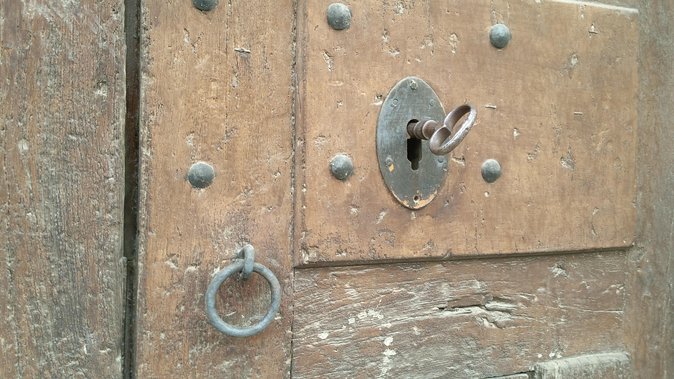
Cuzcurrita de Río Tirón is the kind of place where a winery can hide in plain sight. The buildings at La Bodega del Tesoro do not suggest a grand wine estate, and that is part of the charm. You arrive at a small village property, then the visit shifts from ordinary street level to old stone rooms below.
The winery was opened in 1881 and then remained closed for 30 years. Its restoration brought the property back into use without stripping away its age. You get the sense of a working piece of local history rather than a polished attraction built only for photographs.
That distinction matters. Large wineries can explain Rioja with grand rooms, modern equipment, and long production lines. Here, you are dealing with a much smaller place, where the cellar, the old methods, and the owner’s own explanation carry most of the experience.
The listed meeting point is C. Cuevas, 45, 26214 Cuzcurrita de Río Tirón, La Rioja. The experience is sometimes presented under Burgos, so I would use the exact street address when planning your day. Parking is described as being only a few steps away on a small cinder lot, though you should not expect a large formal car park.
More Winery Tours in Spain
- Barcelona: Montserrat, Cogwheel, Black Madonna & Winery Tour
★ 4.8 · 5,633 reviews - Montserrat with Black Madonna & Medieval Winery with Tapas/Lunch
★ 5.0 · 5,209 reviews - Montserrat Full Day Tour with Farmhouse Lunch and Winery Visit
★ 5.0 · 1,068 reviews
What the 90-minute visit includes
The visit lasts about an hour and a half. That is enough time to see the restored winery, hear the story of its production methods, and sit down for a tasting without turning the outing into an all-day commitment.
The pace appears to move between explanation and tasting. You do not simply walk through empty rooms while someone recites dates. The cellar gives the tour its shape, and the wines give you a practical way to understand what you have just heard.
The planned package includes two wines and snacks. One account describes three wines, along with hot and cold food served on the patio, so the exact tasting may vary with the day or the available bottles. I would treat two wines as the firm inclusion and regard anything beyond that as a possible bonus rather than an expectation.
Short narrated films are also part of the visit. These add context before or during the walk through the winery. They are useful if you want a clear explanation of the property and local wine production, though anyone hoping for a full working harvest experience should note that this is a short cellar visit, not a day on a vineyard.
Going below ground into the old barrel room
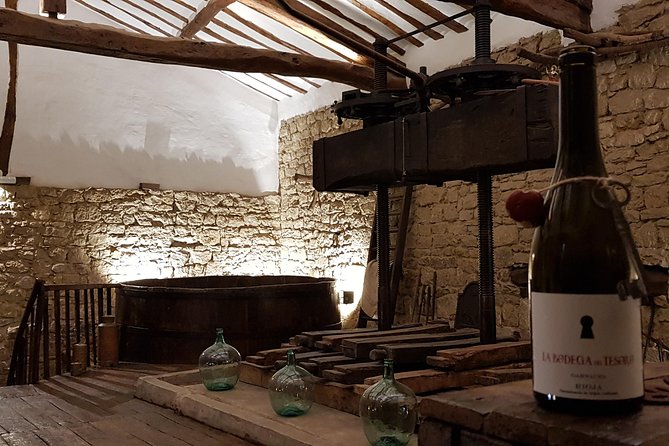
The most memorable physical part of the experience is the descent into the cellar. The old winery and barrel room are described as dating from the 18th century, even though the winery’s opening dates to 1881. That contrast gives the property several layers of age.
Below ground, the temperature changes. You feel the cool air and see why cellars were practical places for storing wine long before modern climate control. The rooms are well maintained and tastefully restored, but they remain tied to their original purpose.
The barrel room is not just a backdrop for tasting photos. It helps explain how wine was kept, handled, and stored in an earlier period. If you enjoy old buildings, traditional craft, and the connection between food and place, this will likely be the strongest part of the visit.
The caves reach into the hillside opposite the property. That detail gives the outing a stronger sense of place than a standard tasting room. You are not looking at a replica cellar. You are seeing the physical spaces that supported local wine production.
Because the tour goes downstairs and through old cellar areas, wear sensible shoes. The information provided does not specify the number of stairs or the exact flooring, so anyone with mobility concerns should ask the provider before booking. Most people can participate, and service animals are allowed.
Carbonic maceration and the older Rioja style
La Bodega del Tesoro traditionally made wine through carbonic maceration. The visit gives you a chance to hear how that method fits into the region’s wine story rather than treating it as a technical term to memorize.
Carbonic maceration uses whole grape clusters in a controlled environment, allowing fermentation to begin inside the grapes before the usual crushing process takes over. The method is strongly linked with traditional village wine production in parts of Rioja and can produce wines with a fresh, fruit-forward character.
You will get more from the tasting if you ask how the method affects flavor, texture, and aging. Jose is described as discussing not only wine itself but also local competition, terroir, changing habits, and the business of making wine. That wider conversation is valuable because it connects the glass to real choices made by producers.
The word terroir can sound vague when it is used without examples. Here, it can lead to a more useful discussion about soil, climate, altitude, local grapes, and the way a small producer works within Rioja. The experience is especially worthwhile if you want to understand why nearby wineries can produce different styles even within the same broad region.
Same town, a different bottle:
- Montserrat & Cogwheel Train, Gourmet Wine Tasting & Tapas/Lunch
★ 5.0 · 6,290 reviews - Madrid Tapas & Wine Tasting Walking Tour – Small Group Local Bars
★ 5.0 · 3,644 reviews - Sevilla Food Tour: Tapas, Wine, History & Traditions
★ 5.0 · 3,468 reviews - Valencia Old Town Tour with Wine & Tapas in 11th Century Historic Monument
★ 5.0 · 3,234 reviews
Jose’s role makes the visit personal
Jose leads the experience and appears to be central to its character. He is described as welcoming, gracious, and able to explain the regional wine business in detail. That combination matters in a small winery, where the guide’s personality shapes the entire visit.
You can expect more than a fixed speech. A small group gives you room to ask about production, local competition, or the bottles being poured. The maximum group size is 10, and a booking for four people was handled as a personalized visit.
That does not mean every session will feel identical. A small owner-led property may have a more informal rhythm than a major winery, and the exact conversation can depend on the group’s questions. For me, that is a strength if you enjoy talking with someone who knows the local trade from the inside.
It is also worth keeping expectations sensible. Jose’s expertise appears to be strongest in wine, the regional industry, and the restored property. If you want a broad sightseeing tour of Cuzcurrita, this is not that. The focus stays on the winery and its cellar.
Tasting wine with simple local food
The tasting takes place after or alongside the cellar visit, with snacks included. The setting may include a patio and a bar area, depending on how the visit is arranged. The food is not presented as a separate cooking class or full meal, but it adds welcome substance to the wine.
Small snacks can make a real difference during a tasting. They clear the palate, give you something to compare with the wine, and help turn a technical explanation into a social experience. One account describes homemade hot and cold dishes, which suggests the food may be more generous than the basic inclusion suggests.
Still, I would not book this as lunch. The official inclusion is two wines and some snacks, and there is no promise of a full meal. If you have dietary restrictions, ask in advance. No specific menu or allergy information is provided.
The tasting is also a chance to compare small-production bottles. One account describes a sample drawn from a barrel, followed by other wines in the vinoteca. Limited quantities were mentioned, which means a particular bottle may not always be available. That is normal for a small producer, but it is another reason not to arrive expecting a fixed commercial lineup.
What the price means at $65.17
At $65.17 per person, this is not the cheapest way to drink Rioja. You are paying for more than the liquid in the glass, though. The price covers about 90 minutes with a small group, a guided visit through a restored winery and caves, an explanation of traditional production, two wines, and snacks.
The value is strongest for someone who cares about access and context. You are not simply seated in a modern tasting room with a list of bottles. You are entering an old property, seeing the spaces where wine was traditionally made, and hearing about the pressures facing small producers.
The value is weaker if you only want several generous pours or a large meal. A major winery may offer a broader tasting at a similar or lower price, depending on the venue. This experience earns its fee through its intimate scale and historic cellar, not through quantity.
The maximum of 10 people helps protect that value. In a group of four, Jose was able to give a detailed explanation and respond to questions. A full group could feel less personal, but it should still be far smaller than a coach tour.
The experience is booked about 15 days in advance on average. That does not guarantee it will sell out, but it is a useful planning clue. If the winery is an important part of your route, reserve ahead rather than treating it as a last-minute stop.
Who should book this winery visit
I would recommend La Bodega del Tesoro to people who want a quieter, more local wine experience. It suits couples, small groups, and wine-curious visitors who enjoy old buildings and conversation as much as tasting.
It is also a good choice if you are already traveling through Cuzcurrita de Río Tirón or the wider Rioja area. The 90-minute length fits neatly into a day with other stops, though you should allow extra time for driving and finding the meeting point.
You will likely enjoy it most if you are interested in:
- Traditional wine methods rather than only famous labels
- Small producers and owner-led businesses
- Old cellars, barrel rooms, and hillside caves
- Learning how regional wine is made and sold
- A tasting paired with modest local food
- A calm, personal setting rather than a large tour group
You may want to choose another activity if you need a full meal, a large range of wines, vineyard walking, or extensive transport from Burgos. None of those features is promised here.
The location deserves special attention. The experience information gives Burgos as the broad location but places the meeting point in Cuzcurrita de Río Tirón, La Rioja. That is not a detail to ignore. Confirm the route, timing, and exact meeting address before you commit to a day plan.
Practical details before you reserve
The activity is offered in English and uses a mobile ticket. Confirmation is normally sent at booking, though bookings made within one hour of departure are confirmed as soon as possible and remain subject to availability.
The group has a maximum of 10 people. Most people can participate, and service animals are allowed. No separate transport is listed, so plan to reach the meeting point yourself.
The activity begins and ends at C. Cuevas, 45, Cuzcurrita de Río Tirón. The listed cancellation policy is strict: the booking is non-refundable and cannot be changed for any reason. If the minimum number of participants is not met and the provider cancels, you will be offered another date or experience, or a full refund.
That policy makes date checking important. Confirm your transport, arrival time, and the distinction between Burgos and La Rioja before paying.
Should you book La Bodega del Tesoro?
Book it if you want a personal cellar visit with real local character, especially if you value the story behind a wine as much as its flavor. The restored rooms, hillside caves, carbonic maceration, and Jose’s detailed explanation give this short outing more substance than a basic tasting.
Skip it if your priority is a full meal, vineyard scenery, or a broad selection of wines. The official plan is compact: about 90 minutes, two wines, and snacks.
For the right visitor, the price is fair because the experience is small, specific, and tied to an actual village winery. Check the address carefully, plan for the strict cancellation terms, and arrive ready to ask questions. That is how you get the most from this unusual stop in Rioja.
FAQ
Where does the winery experience take place?
It takes place at La Bodega del Tesoro, C. Cuevas, 45, 26214 Cuzcurrita de Río Tirón, La Rioja, Spain.
How long does the activity last?
The visit lasts approximately 1 hour and 30 minutes.
How many wines are included?
The stated inclusion is a tasting of two wines. One described visit included three wines, so the exact number may vary, but two wines are the confirmed amount.
Are snacks included?
Yes. Snacks are included with the tasting.
Is the experience offered in English?
Yes. The activity is offered in English.
How large is the group?
The maximum group size is 10 people.
Can I cancel for a refund?
No. The experience is non-refundable and cannot be changed for any reason. If the provider cancels because the minimum number of participants is not reached, you will be offered another date or experience, or a full refund.
Just poured in Spain
- Evening Wine Tasting Córdoba★ 5.0 · 73 reviews
- Full day at the winery, visit, tasting, aperitif and lunch★ 4.5 · 60 reviews
- Visit and Wine Tasting at the Territorio Luthier Winery★ 5.0 · 89 reviews
- La Rioja Boutique Wine Tour & Charming Lunch (From Bilbao)★ 5.0 · 62 reviews
- Semi-Private Rioja Tour of 3 Premium Wineries from Bilbao★ 5.0 · 128 reviews
- Basque Best Bites – #1 Food & Wine tour of Bilbao★ 5.0 · 268 reviews
- Rioja Wine Tour: 2 Wineries From Bilbao★ 5.0 · 111 reviews
- Architectural Rioja Small Group Wine Tour with Lunch from Bilbao★ 5.0 · 128 reviews
Winery Tours, compared.

Douro Valley with Winery Lunch, Tastings & Cruise
Read our review →
Montserrat, Cogwheel, Black Madonna & Winery Tour
Read our review →
Montserrat with Black Madonna & Medieval Winery with Tapas/Lunch
Read our review →
Siena, San Gimignano, Pisa & Lunch at Winery
Read our review →
Wine Tour: Paarl, Franschhoek & Stellenbosch incl 3 wineries
Read our review →
Douro Valley Tour: 2 Vineyard Visits, River Cruise, Winery Lunch
Read our review →
5-Hour Traverse City Wine Tour: 4 Wineries on Old Mission Peninsula
Read our review →Browse the lists this tour appears in