
REVIEW · WINERY TOURS
Complete winery experience: visit, tasting and traditional food
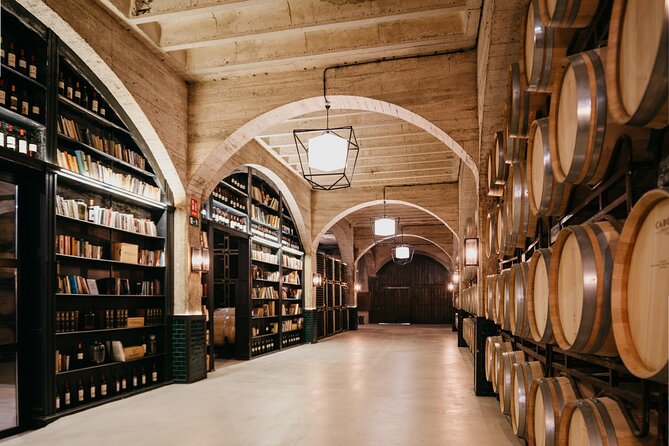
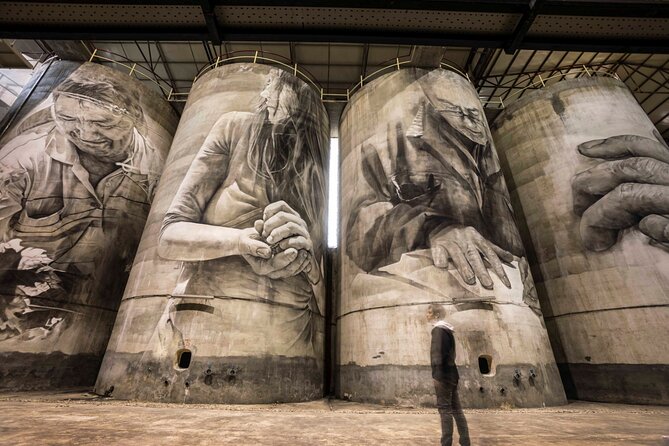
Solar de Samaniego is not a standard winery visit. Its old industrial spaces have been turned into a wine and literature project, with a hidden library, reading room, and huge painted concrete tanks by Australian muralist Guido van Helten. The art gives the tour a strong sense of place before you even sit down to eat.
I like two things in particular: the wines are poured during the visit, so the tasting follows the story of the cellar, and the set Riojan meal gives you a proper taste of local cooking rather than a few snacks. Guide Marta is also praised for making the explanations clear and easy to follow. The main drawback is that the visit gives more attention to the building and art than to hands-on winemaking, and the dining room can feel cold.
Key points
- Art inside the old concrete tanks: Guido van Helten’s monumental murals turn working winery architecture into one of the visit’s main sights.
- Three wines along the route: You taste as the tour progresses instead of waiting for one tasting at the end.
- Marta’s friendly guiding: Her explanations cover the winery, its wines, and the literary theme in a relaxed way.
- A full traditional meal: Starters, Riojan-style potatoes, lamb chops with vine shoots, dessert, coffee, and Crianza are included.
- A compact three-hour plan: The 1:00 pm start combines sightseeing, tasting, and lunch without taking a full day.
- A few practical cautions: Some people found the meal area chilly, and the tour may not satisfy anyone seeking a technical grape-to-bottle lesson.
Solar de Samaniego, where wine meets literature and mural art
Solar de Samaniego dates to 1968, but the story reaches further back through the winery’s connection with Félix María de Samaniego. The writer owned Finca La Escobosa in the 18th century, and literature has remained part of the winery’s identity since its first wines were produced.
That connection is not just a paragraph on a wall. The Beber Entre Líneas project uses literature as a theme for the entire visit. Interior designer Lázaro Rosa-Violán reshaped parts of the winery into wine-literary spaces, while Guido van Helten painted the old concrete tanks with large-scale figurative work.
I like this approach because it gives you something to look at between the technical parts of a cellar tour. You are not simply walking past tanks and barrels while listening to a standard explanation. The building itself becomes part of the story.
At the same time, you should know what sort of visit this is. If you want to follow every step from the tractor arriving with grapes through fermentation and into the tanks, this experience may feel light on process. Several comments point to the absence of a close, in-the-moment look at grape reception and production. The tour is more interpretive and cultural than a detailed winemaking class.
More Winery Tours in Spain
- Barcelona: Montserrat, Cogwheel, Black Madonna & Winery Tour
★ 4.8 · 5,633 reviews - Montserrat with Black Madonna & Medieval Winery with Tapas/Lunch
★ 5.0 · 5,209 reviews - Montserrat Full Day Tour with Farmhouse Lunch and Winery Visit
★ 5.0 · 1,068 reviews
The three-hour route begins with the winery’s working spaces
The meeting point is Bodegas Solar de Samaniego on Elciego Errepidea in Laguardia, in Spain’s Basque Country. The activity starts at 1:00 pm and finishes back at the winery after roughly three hours.
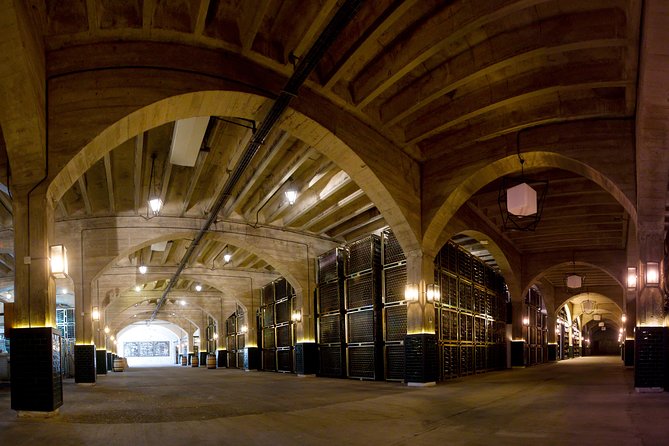
The exterior may look plain, even slightly unpromising. That makes the interior reveal more effective. Once inside, the winery becomes warmer in character, with artistic details and redesigned rooms replacing the feel of a purely functional industrial site.
The first part introduces the winery and its way of making wine. You learn about Solar de Samaniego, its connection with Samaniego, and the role of its vineyards. The guide also explains how the winery functions, though the depth of the production discussion can vary according to what you hope to learn.
Marta is the guide most often singled out in the supplied information. Her style is friendly, clear, and relaxed. That matters in a winery because technical language can quickly become a wall between you and the subject. Here, the explanations are designed to keep the visit moving and approachable.
The group size is capped at 25 people. That is not a private tour, but it is small enough for a guide-led experience to feel organized rather than anonymous. If you want plenty of personal attention, arrive ready to listen and ask questions when the group pauses.
The wine tasting is spread through the visit
You taste three glasses of wine during the tour. I consider this one of the strongest design choices in the experience. Instead of walking through the building first and trying three unrelated wines at the end, the tasting is part of the route.
This pacing lets you connect each glass with the place you have just seen. A wine can make more sense when you are thinking about the winery’s aging spaces, its design, or the local setting rather than simply comparing three glasses on a table.
The supplied details specify three wines but do not identify each label or style in advance. The meal is paired with the winery’s Crianza, while the other pours are tasted during the visit. If you want a highly technical tasting that focuses on grape varieties, vintages, serving temperatures, and detailed production notes, ask for those details during the tour.
The tasting also makes this a better fit for someone who wants wine as part of a wider cultural outing. You get enough to make the visit feel substantial, but the experience is not presented as an advanced tasting seminar.
Lázaro Rosa-Violán’s rooms give the cellar a different character
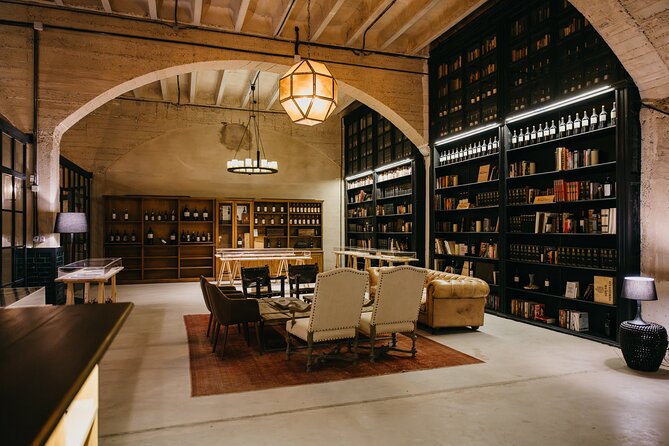
The spaces designed by Lázaro Rosa-Violán are central to the experience. His work helps turn a conventional winery route into a sequence of rooms with a literary and visual theme.
The tasting and reading room is one of the key stops. Its purpose links wine with books and conversation, which fits the Samaniego connection. A library hidden among bottle racks adds another small surprise. It is the kind of detail that rewards looking around instead of hurrying from one explanation to the next.
The winery’s presentation is polished, but it does not erase the industrial setting. That balance is useful. You still get a sense of the cellar as a place connected to wine production, while the design gives it an atmosphere beyond machinery and storage.
I would choose this tour over a plain cellar walk if you enjoy architecture, interior design, or cultural details. If your priority is seeing every piece of equipment in operation, the balance may be less satisfying.
Same town, a different bottle:
- Montserrat & Cogwheel Train, Gourmet Wine Tasting & Tapas/Lunch
★ 5.0 · 6,290 reviews - Madrid Tapas & Wine Tasting Walking Tour – Small Group Local Bars
★ 5.0 · 3,644 reviews - Sevilla Food Tour: Tapas, Wine, History & Traditions
★ 5.0 · 3,468 reviews - Valencia Old Town Tour with Wine & Tapas in 11th Century Historic Monument
★ 5.0 · 3,234 reviews
Guido van Helten’s concrete tanks are the visual centerpiece
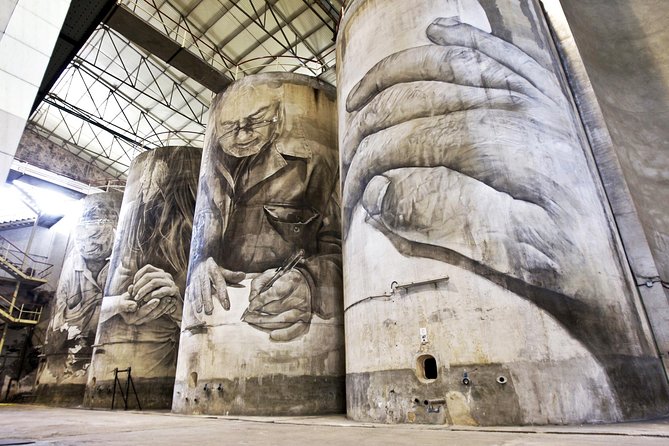
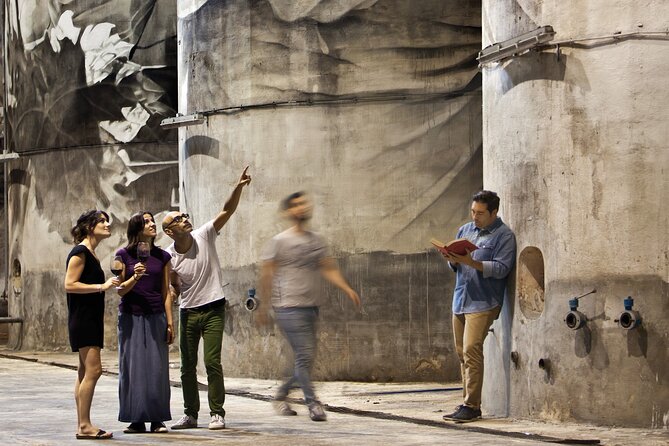
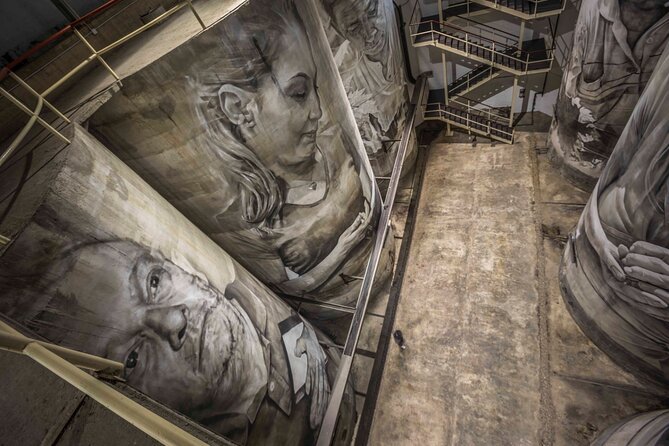
The old warehouses contain the most memorable feature: concrete tanks transformed by Guido van Helten’s monumental murals. His work covers the tanks with large painted figures, making an otherwise utilitarian part of the winery the focus of the visit.
The scale is important. These are not small decorative panels that you glance at on the way to the tasting room. The paintings change how the room feels and give you a reason to stop, look closely, and take photographs.
This is also where the winery’s past and present meet. The concrete tanks remain tied to the building’s industrial purpose, but the murals invite you to read the space in a more personal way. Wine production, literature, and art are not treated as separate attractions.
The mural room is likely to please anyone who wants something visually distinct from the usual barrel cellar. It is also the part most likely to disappoint a visitor hoping for a strictly traditional bodega tour. The art is not a side note. It is one of the main reasons this visit feels different.
The traditional menu turns the tour into a full midday plan
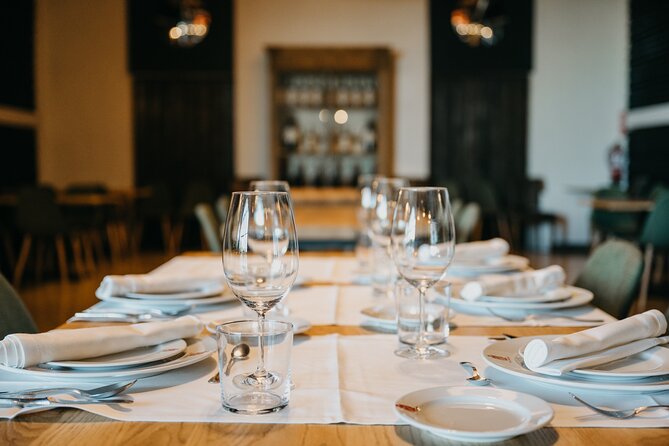
After the tasting and winery visit, you sit in the dining rooms with views toward the winery’s vineyard. The meal is a closed traditional menu, so you are not choosing from a long restaurant menu. That keeps the experience simple and allows the kitchen to serve a set regional meal.
The menu includes:
- Starters
- Riojan-style potatoes
- Lamb chops with vine shoots
- Dessert
- Coffee
The food is paired with the winery’s Crianza. For $75.59 per person, this matters. You are paying for a guided winery visit, three wine tastes, and a substantial meal, not just admission and a small pour. The value is strongest if you want all of those pieces in one booking.
Riojan-style potatoes are a hearty local dish, and lamb chops cooked with vine shoots keep the meal tied to the wine-growing setting. This is not a light tasting lunch. Plan for a proper meal, especially if you are combining it with a full morning of sightseeing.
The dining room’s vineyard view adds a calm finish to the visit. Still, bring a layer. The dining area has been described as cold by more than one person. That is a small issue, but it can affect your enjoyment when lunch lasts long enough for you to notice the room temperature.
The menu is fixed, and the provided details do not list substitutions or dietary alternatives. If you have food restrictions, confirm them before booking rather than assuming the set menu can be changed.
Why the $75.59 price can make sense
At first glance, $75.59 may seem high for a three-hour winery visit. The price becomes easier to judge once you count what is included: a guided tour, three glasses of wine, a full traditional menu, coffee, a vineyard-facing dining setting, and access to the art-focused spaces.
You also save the trouble of arranging a separate lunch after the tasting. In a wine region, that convenience has real value. The 1:00 pm start is particularly practical because the visit and meal form one continuous plan rather than scattering across the day.
The value depends on your interests. I would call it a good buy for someone who wants a relaxed cultural outing with food and wine. I would be less quick to recommend it to a serious wine student who wants a detailed examination of vineyard work, fermentation, barrel management, or grape intake.
The experience is also easier to justify if you are already visiting Laguardia or the surrounding Rioja Alavesa area. You get a distinct winery visit without committing an entire day. The three-hour length leaves room for other plans, though the meal means you should not schedule something immediately afterward.
Timing, group size, and what to wear
The stated start time is 1:00 pm, and the activity lasts about three hours. The tour ends where it begins, at Bodegas Solar de Samaniego.
A mobile ticket is accepted, and confirmation is provided when you book. Free cancellation is available if you cancel at least 24 hours before the start time. Changes or cancellations inside that window are not accepted for a refund, and the activity requires a minimum number of people to operate.
Most people can participate, and the group can include up to 25 participants. That makes it a manageable group experience, though you should not expect the intimacy of a private appointment.
Wear comfortable shoes for walking through the winery. A light jacket is sensible because cellar and dining areas can feel cool. This is not a hike, but you will be moving through several rooms before settling in for the meal.
Who will enjoy this winery experience most
I would recommend Solar de Samaniego to you if you like wine but also want architecture, books, art, and local food in the same outing. Couples, small groups, and first-time winery visitors should find the format easy to follow.
It also suits anyone who has visited traditional bodegas before and wants something less predictable. The murals, reading room, and bottle-rack library make the setting feel unlike a simple row of barrels.
The experience is a good choice for a first winery visit because the guide keeps the explanations approachable and the tasting is limited to three glasses. You get an introduction without needing a large amount of prior wine knowledge.
I would hesitate if your main goal is production detail. You may leave wanting more information about how grapes arrive, how fermentation progresses, and how the winery handles each stage before aging. The art and design are not decorations around a technical tour. They shape the tour itself.
Should you book Solar de Samaniego?
Book it if you want a three-hour Rioja Alavesa experience that combines wine, art, literature, and a hearty regional meal. The three pours, Marta’s friendly guiding, Guido van Helten’s painted tanks, and the traditional menu make the $75.59 cost reasonable for a complete half-day plan.
Skip it if you want a narrow, production-heavy lesson or a flexible restaurant meal. Also keep the cool dining room in mind and bring an extra layer. For most visitors seeking more than a basic tasting, this is a thoughtful and distinctive way to see a working winery.
FAQ
Where does the Solar de Samaniego winery experience begin?
It begins at Bodegas Solar de Samaniego, Elciego Errepidea, 01300 Guardia, Araba, Spain. The activity ends back at the same meeting point.
What time does the experience start?
The stated start time is 1:00 pm.
How long does the winery experience last?
The experience lasts approximately three hours.
How many wines are included?
You taste three glasses of wine during the visit. The traditional meal is paired with the winery’s Crianza.
What food is included?
The closed Traditional Menu includes starters, Riojan-style potatoes, lamb chops with vine shoots, dessert, and coffee.
Can I cancel for a full refund?
Yes. You can cancel at least 24 hours before the local start time for a full refund. Cancellations or changes made less than 24 hours before the start time are not accepted for a refund.
More Food Tours in Spain
- Barcelona Gothic Quarter Tapas & Taverns Food & Wine Tour
★ 5.0 · 1,470 reviews - Barcelona Food Tour: Tapas, Paella, Sangria & 8+ Local Tastings
★ 5.0 · 1,275 reviews - Madrid Ultimate Spanish Cuisine Food Tour
★ 5.0 · 1,010 reviews - Madrid: Food & Wine Tour with 10 Tapas & 4 Drinks Included
★ 4.9 · 984 reviews
Just poured in Spain
- Evening Wine Tasting Córdoba★ 5.0 · 73 reviews
- Full day at the winery, visit, tasting, aperitif and lunch★ 4.5 · 60 reviews
- Visit and Wine Tasting at the Territorio Luthier Winery★ 5.0 · 89 reviews
- Visit a winery of the 19th century and its draft★ 5.0 · 62 reviews
- La Rioja Boutique Wine Tour & Charming Lunch (From Bilbao)★ 5.0 · 62 reviews
- Semi-Private Rioja Tour of 3 Premium Wineries from Bilbao★ 5.0 · 128 reviews
- Architectural Rioja Small Group Wine Tour with Lunch from Bilbao★ 5.0 · 128 reviews
- Basque Best Bites – #1 Food & Wine tour of Bilbao★ 5.0 · 268 reviews
Winery Tours, compared.
Douro Valley with Winery Lunch, Tastings & Cruise
Read our review →
Montserrat, Cogwheel, Black Madonna & Winery Tour
Read our review →
Montserrat with Black Madonna & Medieval Winery with Tapas/Lunch
Read our review →
Siena, San Gimignano, Pisa & Lunch at Winery
Read our review →
Wine Tour: Paarl, Franschhoek & Stellenbosch incl 3 wineries
Read our review →
Douro Valley Tour: 2 Vineyard Visits, River Cruise, Winery Lunch
Read our review →
5-Hour Traverse City Wine Tour: 4 Wineries on Old Mission Peninsula
Read our review →Browse the lists this tour appears in