
REVIEW · CHAMPAGNE TOURS
From Epernay : Bubble Champagne Tour 6 tastings
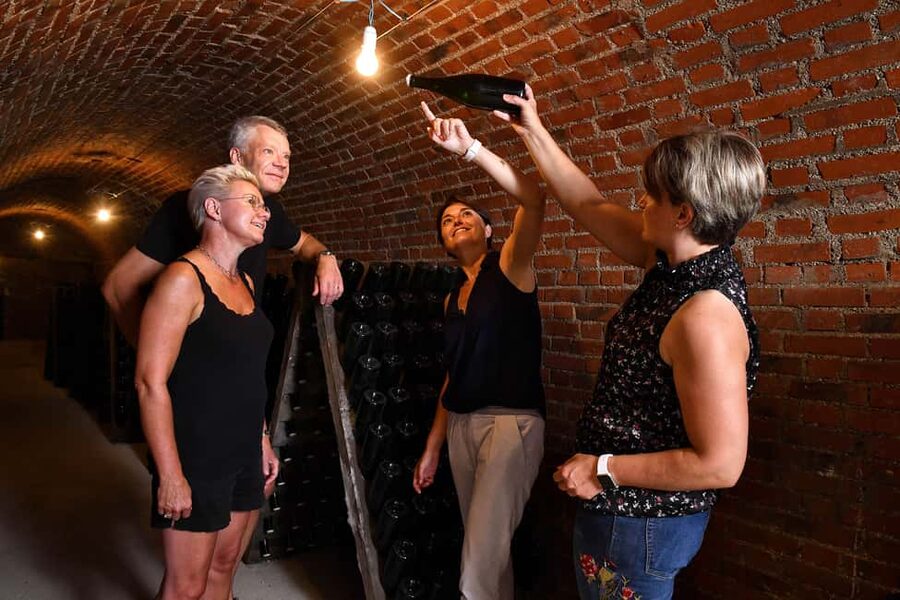
The best part of this Champagne tour from Épernay is its mix of working vineyards, small-scale production, village history, and six tastings. You are not simply driven from one grand house to another. You visit a family grower in Oger, see how Champagne is made, and pass through the villages where the wine begins.
I like the stop at Hautvillers, where you visit the church connected with Dom Pérignon and pause above the Marne Valley for photographs. I also like the range of drinks: three Grand Cru or Premier Cru Champagnes, followed by Ratafia, Fine de la Marne, and Marc de Champagne.
The main compromise is easy to understand. This is a short, three-and-a-half-hour tour, so the visit to the independent producer gets most of the detailed attention. If you want miles of underground cellars or a full tour of a famous Champagne house, this may feel limited.
Key points at a glance
- Six tastings in one outing: Three Grand Cru or Premier Cru Champagnes plus three traditional Champagne spirits and aperitifs.
- A family grower in Oger: See the press, winery, and cellar while learning how Champagne is produced on a smaller scale.
- Hautvillers and Dom Pérignon: Visit the church where Dom Pérignon is buried and stop at a fine Marne Valley viewpoint.
- The Côte des Blancs: Pass through Chardonnay country, including Chouilly, Oger, and Cramant.
- A small group of two to eight: The vehicle and format allow for conversation and easier questions.
- A guided drive through Épernay: See the mansions and production buildings along the Avenue de Champagne.
A compact route through Champagne’s best-known villages
At $194 per person, this experience is priced above a simple tasting, but it includes transport, a live English-speaking guide, several sightseeing stops, and six tastings. The value depends on what you want from Champagne. If you want a broad introduction to the region without arranging a car, this is a practical package.
The tour lasts 210 minutes and begins and ends at the Épernay tourist office, depending on the option booked. That makes it especially useful if you are staying in town or arriving by train. Hotel pickup is not included, so you need to reach the agreed meeting point yourself. There are also morning and afternoon departures, with a separate option offering a 2 p.m. start.
You travel in a premium air-conditioned vehicle with no more than eight people. That matters here. The roads through the villages and vineyards can be narrow, and a small group makes it easier to ask about the wines, the growers, and the odd-looking vineyard terms that otherwise pass by the window.
The guides are a major part of the experience. Names appearing in the guide team include Philippe, Victoria, Isabelle, Charlotte, Nina, Lucie, Marine, Juliet, and Caroline. The individual style will vary, but the strongest pattern is clear: the guides explain the region in plain English, take time for photographs, and adjust the conversation to the group. On some departures, only two people have been booked, turning a shared tour into something close to a private outing.
More Champagne Tours in France
- From Paris: Day Trip to Champagne with 8 Tastings & Lunch
★ 4.8 · 1,501 reviews - Champagne Day Trip with 6 Tastings, Reims and Winery from Paris
★ 5.0 · 902 reviews - From Reims: Champagne and Family-Run Wineries Tour
★ 4.8 · 671 reviews
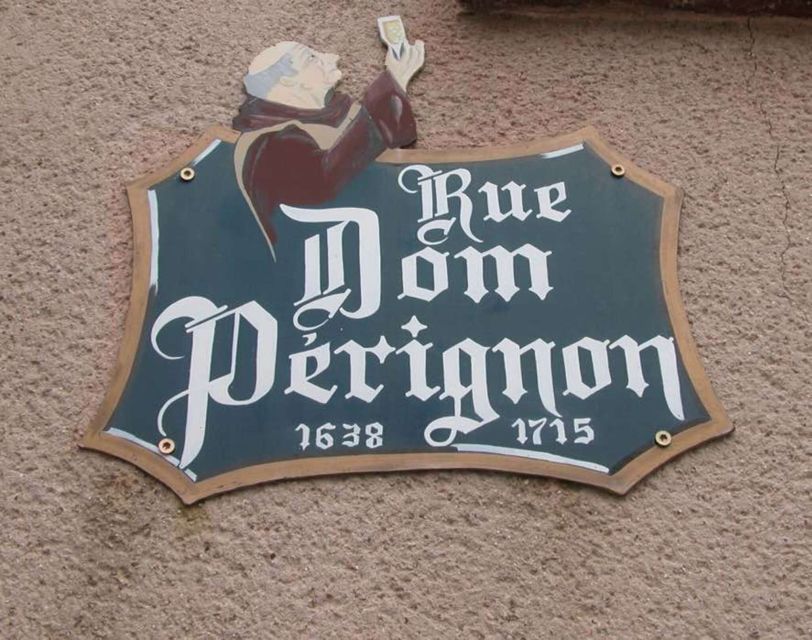
Hautvillers: Dom Pérignon and the first big view
The first major stop is Abbaye Saint-Pierre d’Hautvillers, reached after setting out from Épernay. You spend about 30 minutes here with a guided visit to the church. The important point is not just the name Dom Pérignon. Hautvillers is presented as the cradle of Champagne, and the stop gives you a human story to attach to the vineyards you will see later.
Dom Pérignon is buried in the church, and the visit provides a quiet pause before the tastings begin. It is a more grounded experience than simply posing beside a Champagne sign. You can connect the place with the early experiments that helped shape the drink’s reputation.
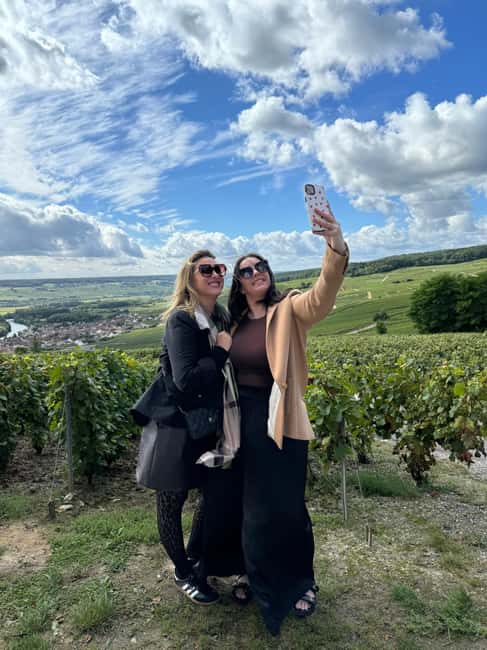
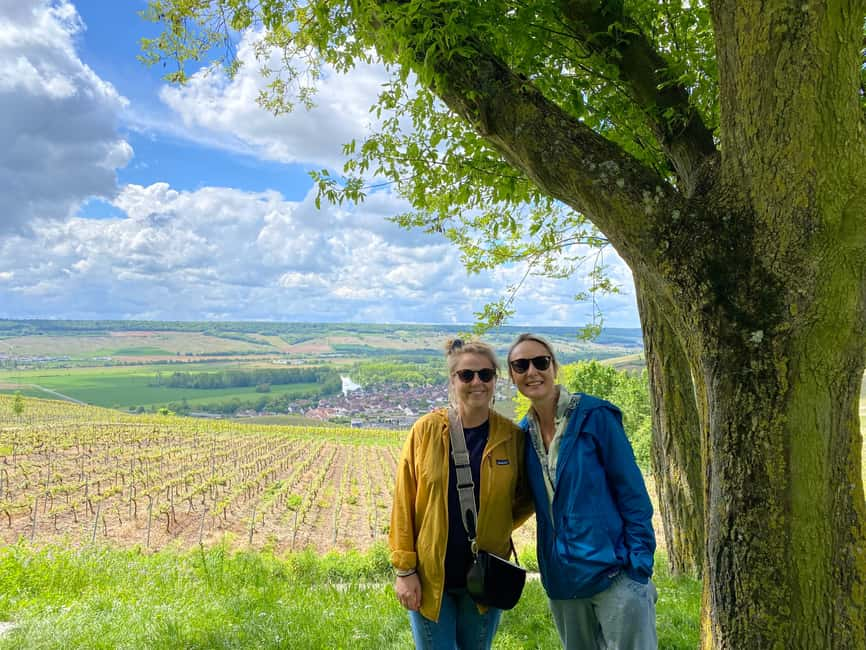
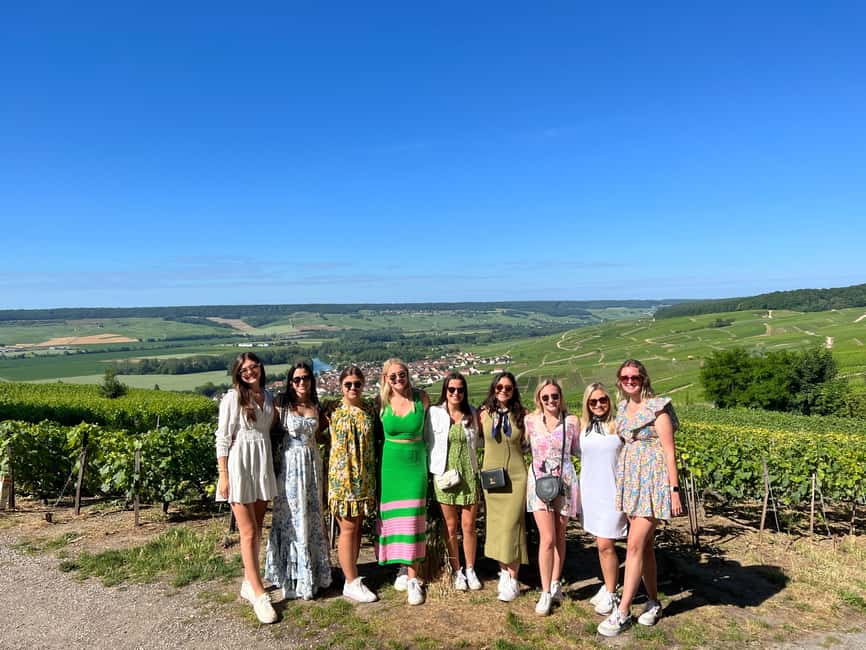
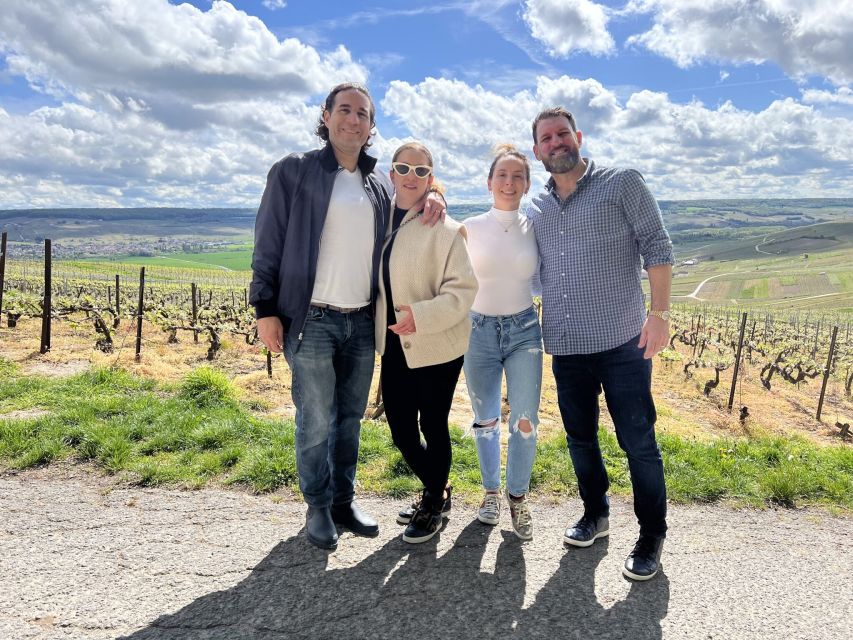
Hautvillers also provides one of the tour’s best photo stops. From the hills above the Marne Valley, you look across vineyard-covered slopes that form part of the UNESCO-listed Champagne region. The guide also discusses vineyard care and sustainable viticulture here, so the view is not treated as mere scenery.
Allow yourself time for photographs, especially if the weather is clear. The tour runs rain or shine, and fog or rain can reduce the drama of the panorama. Still, the stop remains useful in poor weather because the guide explains the local wine country rather than leaving you with only a viewpoint.
Through the Marne Valley vineyards
After Hautvillers, the drive moves through the historic hillsides of Champagne, especially the Marne Valley and the villages around Épernay. Much of this area is planted with Pinot Noir, and the changing vine districts help explain why Champagne does not taste the same from one village to the next.
This is one place where the vehicle adds real value. You see the vineyards in context instead of arriving at a single cellar by taxi. The route includes a vineyard photo stop of about 30 minutes, giving you a chance to get out and take pictures rather than view everything through glass.
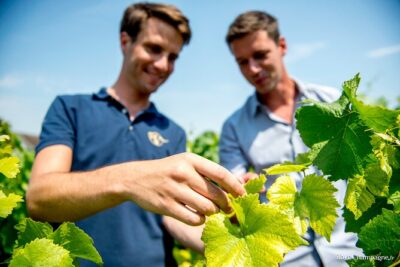
The exact look of the vines changes with the season. In summer, you might see thick green rows. At other times, the bare structure of the vines makes the tidy planting patterns easier to understand. The guide can also explain how sustainable methods affect vineyard management, though the amount of detail depends on the questions you ask and the day’s timing.
The countryside is not a side dish. It is the reason to choose this tour over a tasting room in Épernay. You see the villages that supply the grapes and begin to understand why a bottle can carry a village designation and a particular classification.
Oger and the independent grower visit
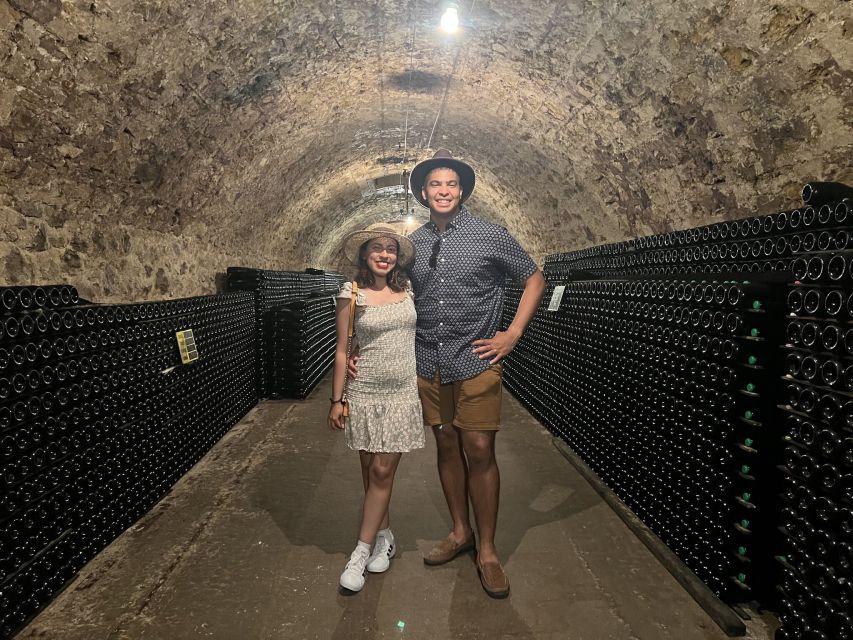
The central stop is in Oger, in the Côte des Blancs. This is where you visit a family-owned independent producer and spend about 90 minutes on the visit and tasting. You see the press, winery, and cellar, then hear how grapes become Champagne.
That small-producer setting is the tour’s strongest point. A large Champagne house can show you an impressive operation, but a family grower gives you a closer look at the practical scale of production. You can ask how the grapes are handled, how the wine moves through the cellar, and how a producer’s choices affect the final bottle.
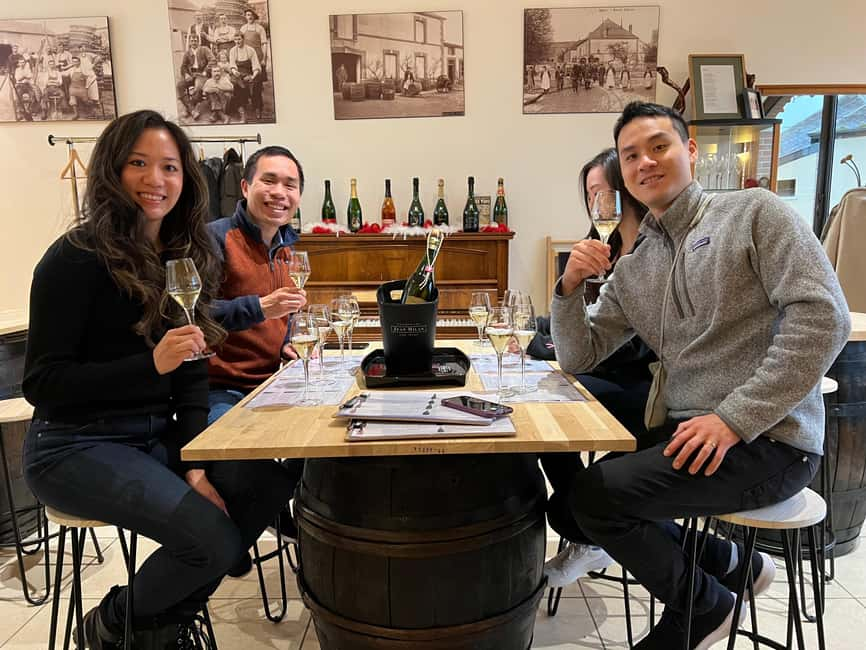
The tasting includes three Champagnes classified as Grand Cru or Premier Cru. The format is useful for comparing bottles rather than treating Champagne as one generic style. Pay attention to the differences in aroma, texture, freshness, and finish, and ask how the grower works with the local grapes.
The Côte des Blancs is especially associated with Chardonnay, and the visit helps connect that grape with the villages outside the vehicle window. The experience is not designed as a technical wine course, but it gives you enough background to make later tastings more meaningful.
You may also be able to buy bottles from the family producer. That can be a good part of the value, particularly if you prefer small-scale wines to the better-known labels found in supermarkets and international wine shops. Check your own luggage arrangements before buying heavily, since large bags are not allowed on the vehicle.
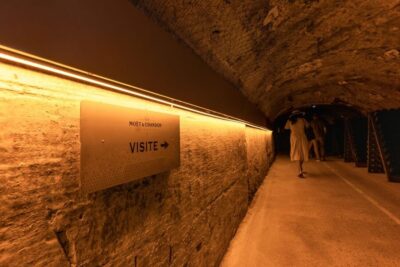
One fair limitation is that the tour does not promise a large Champagne house cellar. A direct pass by Moët & Chandon is included later, but you do not get the full underground-cellar experience of a major producer. If you want to see long tunnels and large-scale production, you will need a separate visit.
Same town, a different bottle:
- Bordeaux: Cité du Vin Entry Ticket and Wine Tasting
★ 4.6 · 3,885 reviews - Bordeaux: River Garonne Cruise with Glass of Wine and Canelé
★ 4.5 · 3,630 reviews - Montmartre Hill French Gourmet Food and Wine Tasting Walking Tour
★ 5.0 · 2,588 reviews - From Paris: Loire Valley Castles Day Trip With Wine Tasting
★ 4.6 · 1,727 reviews
Chouilly, Cramant, and Chardonnay country
The route continues through Chouilly and Oger, then reaches Cramant. Together, these villages give you a sense of the Côte des Blancs, the area best known for Chardonnay-based Champagne. The tour passes near the Château de Saran, a prestigious LVMH property, and the Moët & Chandon production site.
These drive-by sights are useful for orientation, but keep your expectations in check. You see important properties from the route rather than receiving an interior tour. That contrast is part of the experience: the famous names represent the global Champagne business, while the family grower shows you the more personal side of the trade.
At Cramant, you stop for photographs and taste Champagne-related spirits. The timing is about 30 minutes. This adds variety to a day that might otherwise become a sequence of similar sparkling wines.
The three additional tastings are Ratafia, Fine de la Marne, and Marc de Champagne, associated here with the Goyard Distillery, described as the oldest distillery in Champagne. These are not simply sweeter versions of Champagne. They show how the region uses grapes and wine in different forms, from aperitif styles to stronger after-dinner spirits.
The tasting sequence also gives you a useful break. Six sparkling wines in a short session could become tiring, while three Champagne varieties and three spirits create clearer changes in flavor and strength. Drink slowly, eat beforehand, and use the water breaks available to you.
The Avenue de Champagne in Épernay
The final sightseeing element is a commented passage along Épernay’s Avenue de Champagne. You do not stop for a full house visit, but you pass the grand mansions and production buildings linked with names such as Moët & Chandon, Perrier-Jouët, and Pol Roger.
This avenue helps explain Épernay’s role as a capital of the Champagne vineyard. The architecture is polished and formal, a sharp contrast with the modest family producer in Oger. You see how Champagne’s wealth shaped the town while hearing about the businesses that made the region internationally famous.
Because this is a pass-by rather than a guided interior tour, it works best as a final visual chapter. If your main goal is to tour the major houses, book those separately. If you want to see where they are and understand the town’s layout, the drive is enough to give you bearings.
The tour then returns to the Épernay tourist office. With no lunch included, the timing works well around a meal before or after the outing. The 210-minute length also leaves room to explore Épernay on your own.
What the $194 price really includes
The price is not just paying for six glasses. You are also paying for a driver-guide who knows the villages, a premium air-conditioned vehicle, the time saved by having transport arranged, and access to a family grower that may be difficult to reach without a car.
For a couple or small party, the value improves if you would otherwise need to hire a taxi between several villages. You avoid driving after tasting and get local commentary during the journeys. The small group format also means the guide can stop for photographs and answer specific questions.
The price is less compelling if you only want Champagne itself. Three producer tastings and a pass through the Avenue de Champagne may not be enough for someone who wants a full day of cellar visits. You should also remember that lunch, hotel pickup, and large luggage are not included.
The experience has a 4.7 rating from 108 reviews, and the highest praise focuses on the guides. Philippe is described as friendly and easy to talk with. Victoria is noted for her enthusiasm and local knowledge. Isabelle receives praise for combining history, humor, and explanations of the wine process. Charlotte is singled out for her regional background and attention to photographs.
That consistency matters more than any one guide’s name. A good Champagne tour depends on how well someone explains the difference between the villages, answers questions without rushing, and makes a small producer visit feel personal rather than staged.
Who should book this Champagne outing
I would choose this tour if you want a first look at Champagne near Épernay and prefer small producers to polished corporate presentations. It suits couples, friends, and solo travelers who value conversation and scenery as much as tasting notes.
It is also a good choice if you are staying in Épernay without a car. The route covers Hautvillers, the Marne Valley, the Côte des Blancs, and several important villages in one short outing. You get an overview that would take more planning to arrange alone.
This tour fits wine drinkers who want more than Champagne labels. The three regional spirits add a useful local touch, and the family grower provides a look at production beyond marketing displays.
I would think twice if you use a wheelchair, since the experience is not suitable for wheelchair users. You should also avoid bringing large luggage or bags. The vehicle step may feel high for some people, so ask about this before booking if mobility is a concern.
If your priority is a famous house, huge cellar, or long technical tasting, choose a longer specialist visit instead. One past booking specifically wanted to see a larger-scale producer, and that is the clearest limitation here.
Final call: a strong regional introduction with a small-producer heart
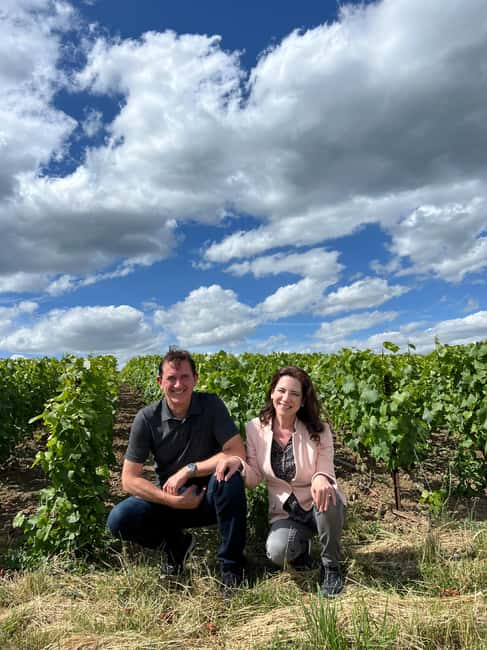
Book this tour if you want to understand how Champagne fits together: vineyards, villages, growers, famous houses, church history, and local spirits. The highlight is the family producer in Oger, supported by the views from Hautvillers and the drive through the Côte des Blancs.
Skip it if you already know the region well and want an intensive cellar tour. For most first-time visitors based in Épernay, though, the balance is right. You get six tastings, a manageable half-day schedule, and a guide who can turn a string of French village names into a clear story about the wine in your glass.
FAQ
Where does the Champagne tour start and finish?
The tour starts and ends at the Office de Tourisme d’Épernay en Champagne, although the exact meeting point can vary with the option booked.
How long does the experience last?
The tour lasts 210 minutes, or three and a half hours. Availability determines the starting time, and a separate afternoon option departs at 2 p.m.
How many people can join the tour?
The small-group tour is limited to eight people. Some departures may have only two participants.
What drinks are included in the tastings?
You taste three Grand Cru or Premier Cru Champagnes. You also taste Ratafia, Fine de la Marne, and Marc de Champagne, for six tastings in total.
Is hotel pickup included?
No. Pickup and drop-off are provided in Épernay, but hotel pickup and drop-off are not included.
Is the tour suitable for wheelchair users?
No. The experience is not suitable for wheelchair users. Large luggage and large bags are also not allowed, and the tour operates rain or shine.
Just poured in France
- Pinot Noir Masterclass – Wine tasting in Dijon★ 5.0 · 147 reviews
- Chardonnay Masterclass – Wine tasting in Dijon★ 5.0 · 91 reviews
- Small-Group Full-Day Tour of Côte de Nuits, Côte de Beaune Vineyards and Beaune Historical District★ 5.0 · 364 reviews
- Small group Burgundy tour of Beaune with Wine Tasting from Dijon★ 4.5 · 85 reviews
- Half Day Tour of the Cote de Nuits Vineyards from Dijon★ 5.0 · 108 reviews
- The Emblematic: visit of villages, Haut-Koenigsbourg, Wine tasting★ 5.0 · 81 reviews
- Au Cœur du Château – VSOP D’USSÉ & XO BARON OTARD★ 4.5 · 108 reviews
- Alsace Full Day Wine Tour from Colmar★ 5.0 · 104 reviews
Champagne Tours, compared.
Day Trip to Champagne with 8 Tastings & Lunch
Read our review →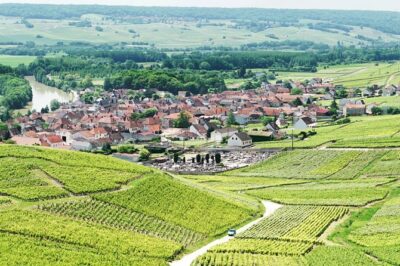
Champagne Day Trip with 6 Tastings, Reims and Winery from Paris
Read our review →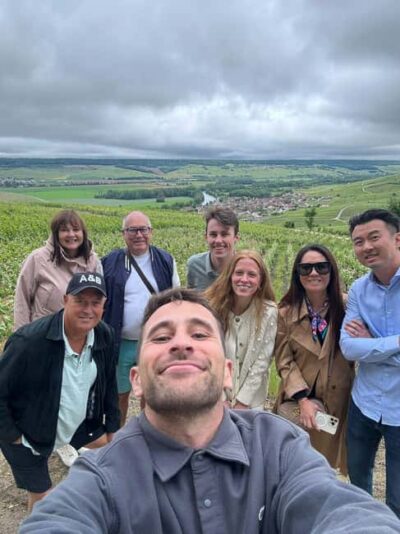
From Reims: Champagne and Family-Run Wineries Tour
Read our review →
Reims afternoon tour Champagne and family growers
Read our review →

Cappadocia Balloon Ride with Breakfast, Champagne AT GOREME OVER
Read our review →
Epernay: Guided Tour of Champagne Cellar with Tastings
Read our review →Browse the lists this tour appears in