
REVIEW · COCKTAIL CLASSES & TASTINGS
Porto: Tile Painting and Cocktails in Downtown Porto
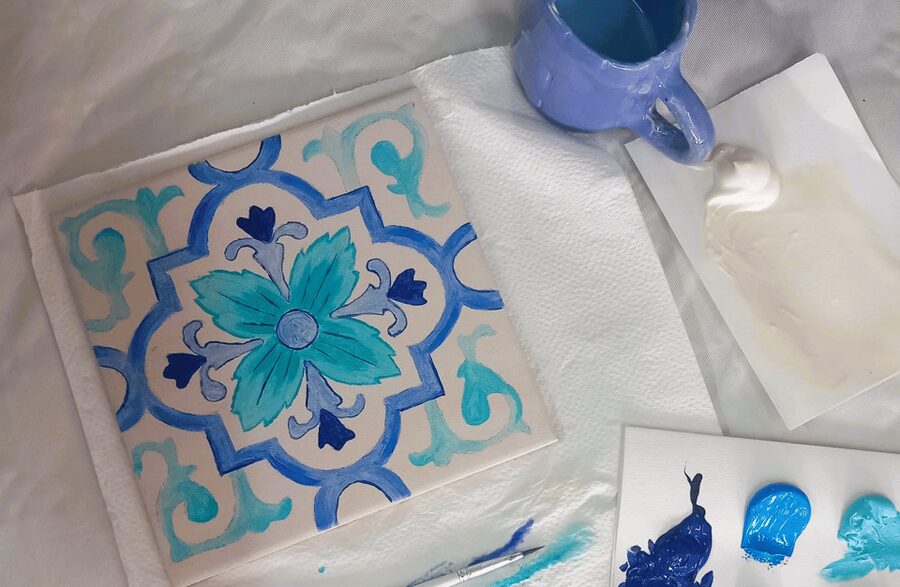
The best part of this Porto workshop is that you do not just look at the city’s famous azulejos, you make one. At Boiler Studio, beside the Cathedral, you learn how Portuguese tiles developed, choose a pattern or your own design, and paint a ceramic tile to take home. Add calm music and a cocktail, and you have a pleasant break from Porto’s steep streets.
I like two things right away: the short history lesson gives the craft real meaning, and the instructors provide patient help without turning the class into a formal art lesson. Daniella, Emmanuel, and Diogo are repeatedly praised for making beginners feel comfortable. The main consideration is time: two hours is usually enough, but a detailed tile may need extra drying time or a later pickup.
Key points at a glance
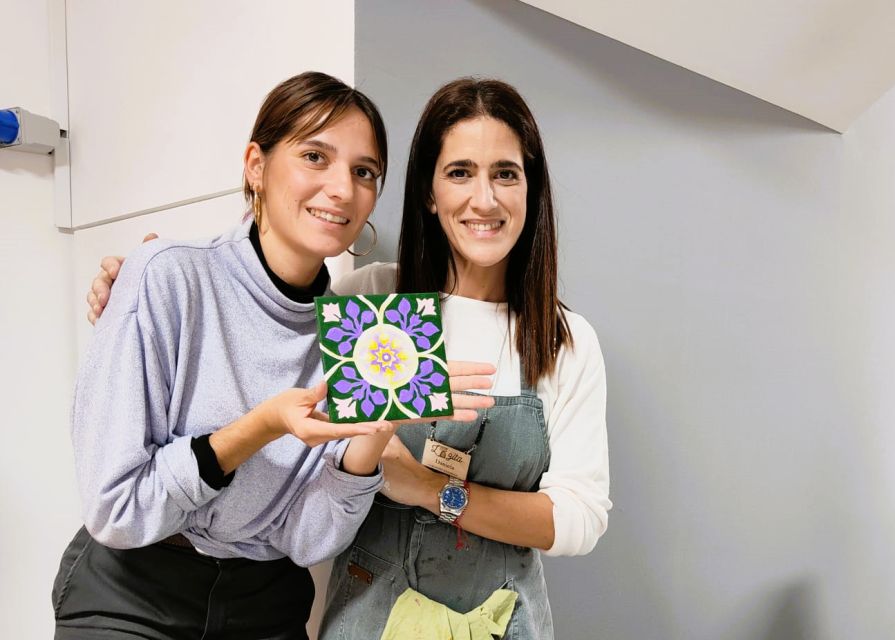
- A tile you make yourself: Paint one ceramic tile using supplied acrylic paints, brushes, stencils, or a printed personal design.
- Porto’s tile story comes first: Learn about Arab influence, changing colors, different cities, and the use of azulejos from the 13th century to today.
- A cocktail is included: The drink may be a Porto Tonic or a white port wine and tonic, giving the class a distinctly local touch.
- A calm indoor pause: This works especially well on a rainy afternoon or after a morning of sightseeing.
- Central Cathedral location: Boiler Studio is on Rua Chã 77, close to São Bento Station, the Luís I Bridge, Time Out Market, and Porto Cathedral.
- Friendly help for non-artists: You can follow a ready-made design, and staff can help print a design of your own.
Why painting a tile makes sense in Porto
Porto is famous for tiled churches, railway stations, houses, and street signs. You will see them all over the city, but a quick photo rarely explains how the tradition arrived or why it became such a strong part of Portuguese design.
This workshop begins with that background. You learn that azulejos date back to the 13th century, when Arab forces brought tile traditions into the lands that now make up Spain and Portugal. The craft became firmly rooted in Portugal during the 16th and 17th centuries.
The word azulejo comes from Arabic roots and refers to a small polished stone. Early tiles were often simple geometric pieces in restrained colors, with blue becoming especially important. The lesson also covers how tiles are used today and how styles vary between Portuguese cities and different periods.
I like this approach because the information stays tied to what you are about to do. You are not sitting through a long academic lecture. You learn enough to recognize patterns and colors when you walk back outside, then put some of those ideas into your own piece.
More Cocktail Classes in Porto:
- Rome Cooking Class: Make Pasta and 3 Spritz Cocktails
★ 5.0 · 2,937 reviews - Food & Mixology Tour:Tequila,Tacos, Mezcal and Agave Cocktails
★ 5.0 · 1,884 reviews - Pasta Cooking Class Near the Colosseum with 3 Spritz Cocktails
★ 5.0 · 1,686 reviews
Arriving at Boiler Studio on Rua Chã
The workshop takes place at Boiler Studio, Rua Chã 77, on a typical street directly in front of Porto Cathedral. This is a strong location for a short activity because you can fit it into a sightseeing day without arranging transport across town.
São Bento Train Station is nearby, as are the Luís I Bridge, Time Out Market, and the Cathedral itself. You can place the workshop between major sights, or use it as a quieter stop after walking through the city center.
The studio also functions as a shop selling handmade products by local artists. Give yourself a few minutes to look around, but remember that shopping is separate from the workshop price. It is a useful place to browse for another small souvenir after you finish your tile.
The space has been described as attractive and well laid out, with plenty of materials. Since the studio is also a retail space, it may feel more like an artist’s shop than a classroom. That is part of the charm, though anyone expecting a large formal workshop should picture a smaller creative studio instead.
The opening lesson on Portuguese azulejos
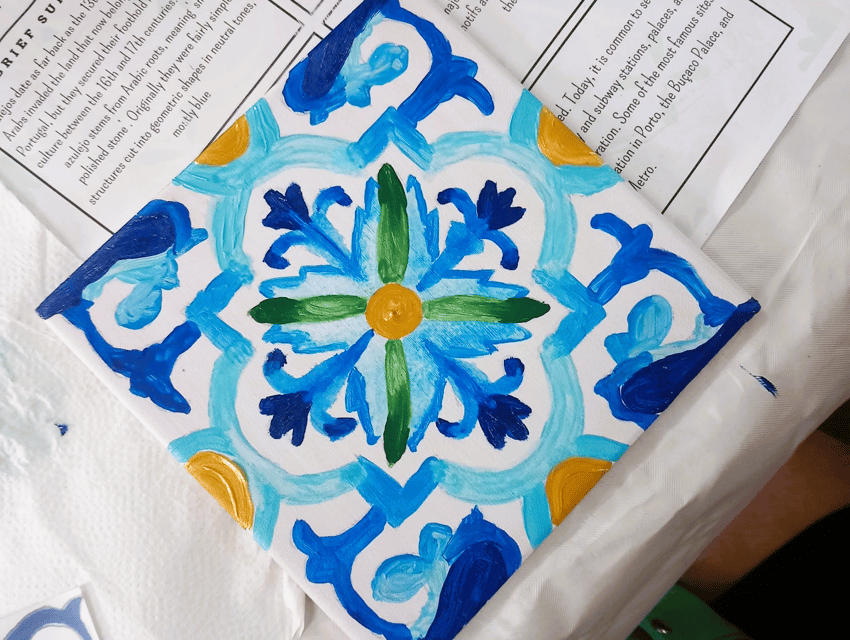
Your session starts with a workshop summary and printed material about tiles. The instructor explains their origins, outside influences, color choices, and changing uses in Portugal.
This introduction matters because it changes the way you see Porto. After hearing about the craft, a blue and white facade is no longer just a pretty background for a photograph. You begin noticing repeated shapes, borders, panels, and the way tile can protect and decorate a building at the same time.
The session also moves through different periods, cities, and seasons. The supplied information does not promise a museum-style survey, so you should expect a practical introduction rather than an exhaustive art-history course. For most visitors, that balance is right. You get useful context without giving up much of your two-hour painting session.
The instructors speak English and Portuguese. That makes this a straightforward choice for English-speaking visitors, while Portuguese speakers can take part in their own language.
Choosing a design without feeling stuck
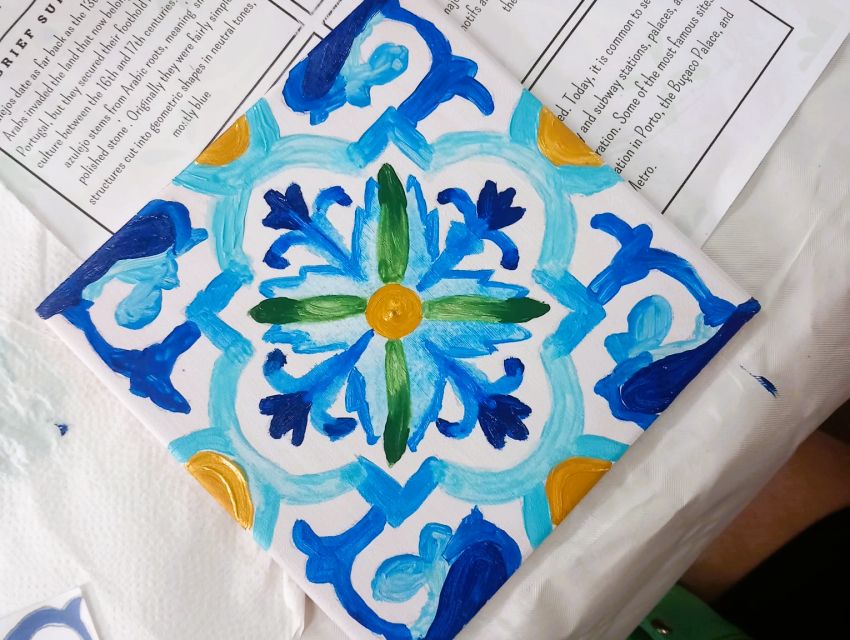
Once the introduction is over, you select the design for your tile. You can choose from prepared stencils and patterns, or ask the staff to print a design you have brought with you.
This choice is important if you are not confident with a blank surface. A stencil gives you a clear starting point, while a personal image lets you create something more connected to your trip. You do not need to arrive with an artistic plan, and the staff can guide you through the process.
Several people have appreciated being able to use a custom design. If you want this option, bring an image or idea with you and ask the studio about printing it. The supplied information does not specify file formats or printing limits, so avoid assuming that every complex image can be transferred exactly as you imagine.
I would choose a pattern that is bold and not overly detailed. You have limited time, and simple shapes tend to work well on a tile. If you are painting with family or friends, choosing different designs can make the final group of souvenirs more interesting.
More Drinks Tours in Porto:
- From Porto: Douro Valley w/ Boat Tour, Wine Tasting & Lunch
★ 4.7 · 19,061 reviews - Complete Douro Valley Wine Tour with Lunch, Wine Tastings and River Cruise
★ 5.0 · 12,920 reviews - Porto: Douro Valley with Winery Lunch, Tastings & Cruise
★ 4.7 · 7,002 reviews - Authentic Small Group Douro Wine Tour with Lunch & River Cruise
★ 5.0 · 4,775 reviews
Painting the ceramic tile
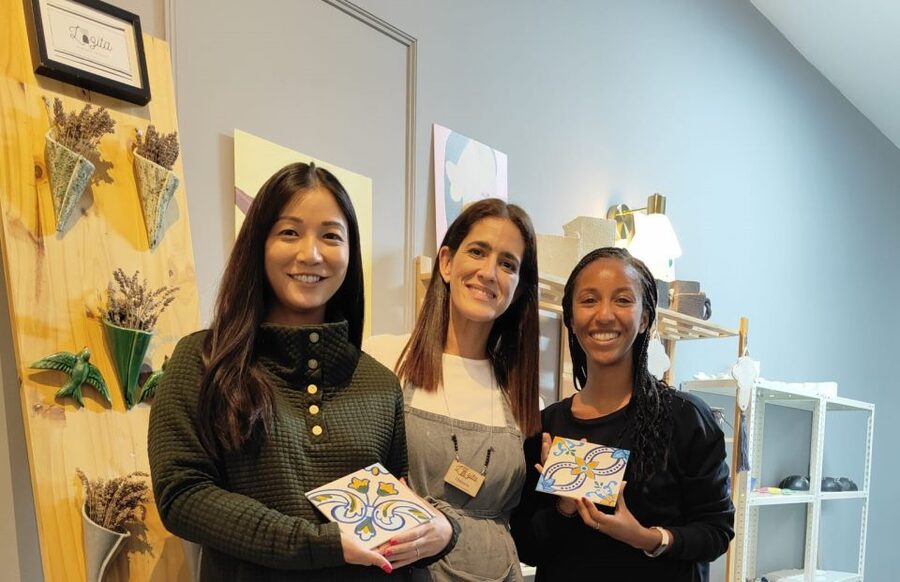
The studio supplies the ceramic tile, acrylic paints, brushes, paper packaging, and the other materials needed for the activity. You do not need to bring art supplies.
The instructors demonstrate the techniques and stay available as you work. Daniella is often singled out for patient, hands-on help, while Emmanuel and Diogo are also praised for explaining the process clearly and adapting to different skill levels.
That personal help is one of the strongest reasons to book this instead of trying to paint a tile alone at home. If your brush slips or a color needs correction, you have someone nearby who can suggest what to do. You can work at your own pace, and the guidance is encouraging rather than intimidating.
The activity suits people who already paint, but it is aimed just as much at beginners. One particularly useful feature is the range of support: confident artists can make their own choices, while first-time painters can trace a prepared design and ask for help at each stage.
You will use acrylic paints, so this is a decorative activity rather than a traditional ceramic glazing class. The supplied information does not say that you fire the tile in a kiln. Instead, the tile is prepared so you can take it with you, often after it has had time to dry.
The cocktail and the social side
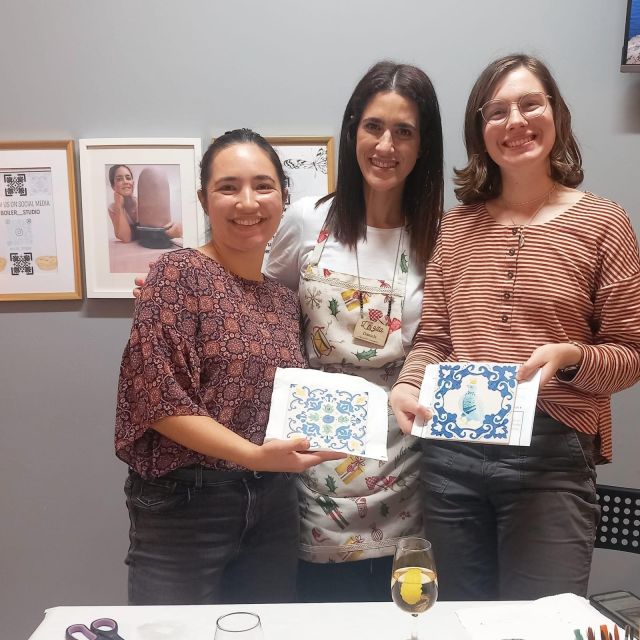
A cocktail is included in the price. Several sessions have featured a Porto Tonic or a white port wine and tonic, and these drinks add a local flavor to the painting-and-sip format.
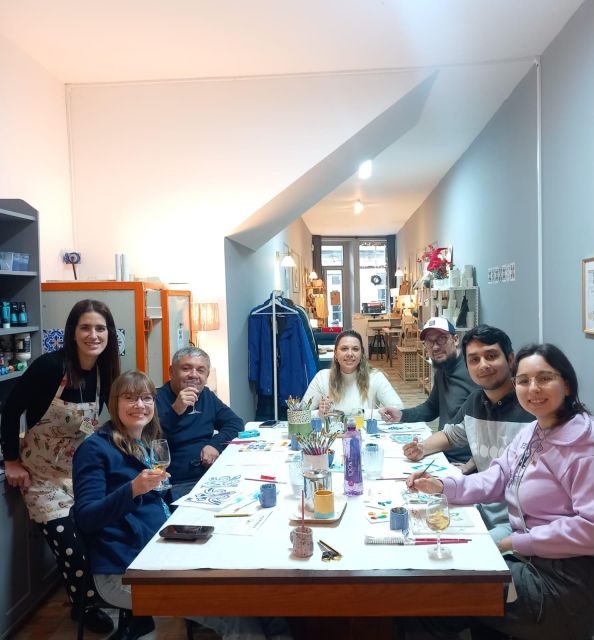
The drink is not the reason to book the workshop, but it helps set an easygoing tone. Calm music plays in the background, and you share the table with other people working on their designs. That makes the class a social activity without requiring you to join a separate city tour or organized pub outing.
You should tell the staff if you do not want an alcoholic drink, but the supplied information does not specify a nonalcoholic alternative. The activity is also not suitable for children under 10 according to the stated restrictions. One past family account describes a younger child enjoying the session, but the official age guidance should be your deciding rule when booking.
How long the tile takes, and when you get it back
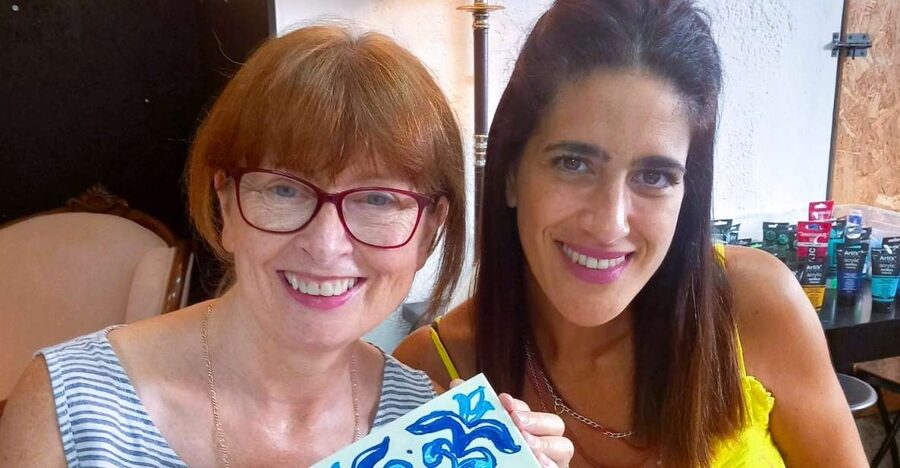
The scheduled activity lasts two hours. Most people should plan on using that full time, especially if they choose a detailed pattern or want a neat finish.
The tile is yours to take home, packed in paper for transport. Several sessions have allowed people to collect the tile later the same day once it has dried. One practical warning: an afternoon class may mean returning the next day if your tile is not ready before you leave Porto.
This is worth considering when planning your route. If you are catching a train, taking a day trip, or leaving the city soon after the workshop, ask the staff about drying and collection at the start. The information does not guarantee same-day pickup for every session.
A few people have been allowed extra time to finish. That is helpful, but you should not build your schedule around an automatic extension. The safest plan is to arrive ready to work and choose a design that fits the two-hour session.
Is $41 a fair price?
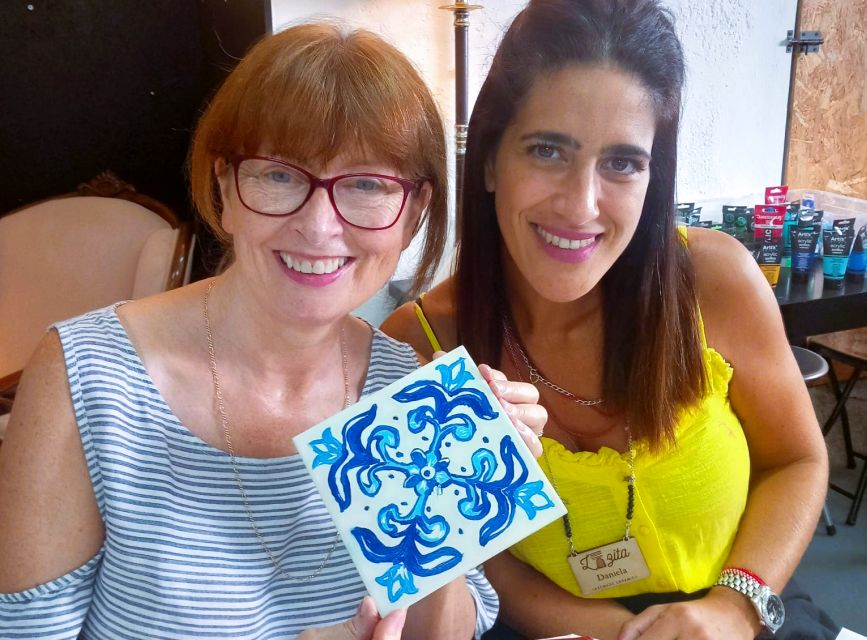
At $41 per person, the price includes the lesson, ceramic tile, paints, brushes, packaging, cocktail, and staff assistance. You are paying for more than a drink and a blank tile. The value comes from having the cultural background explained, the design materials prepared, and an instructor available when you need help.
Compared with simply buying a tile in a shop, this gives you an activity and a personal souvenir. The finished piece may not look professionally made, but that is not really the point. Its value is that you created it in Porto after learning why tiles matter here.
The price is easiest to justify if you enjoy hands-on activities, want a rainy-day plan, or are looking for a keepsake that is not a mass-produced magnet. It may feel less worthwhile if you prefer fast sightseeing or already plan to spend your trip in museums and churches.
The reserve-now, pay-later option and free cancellation up to 24 hours before the activity add useful flexibility. Still, check the current starting times and availability before building your day around the class.
Who will enjoy this most
I would recommend this for couples, friends, solo visitors, and families with children aged 10 and older who like making things. It also works for mixed groups, since one person can follow a stencil while another creates a more personal design.
You do not need formal art experience. The repeated praise for patient instruction makes this a good choice if you are nervous about painting. The class is also a pleasant fit for anyone who wants to meet other people in a relaxed setting, rather than spending every hour walking between sights.
It is less suited to visitors who want a full technical course in Portuguese ceramics. You paint a tile with acrylics, learn the cultural background, and take home a decorative piece. You do not get a long pottery session, a kiln-firing lesson, or a detailed study of every regional style.
The official age restriction also matters. Children under 10 are not considered suitable for this activity, even though individual family experiences can vary.
What to pack and how to plan your visit
You need very little. All materials are supplied, including the tile, paints, and packaging. Wear something comfortable and practical for an art activity, and keep your plans afterward flexible enough to collect the tile if the studio asks you to return.
Bring a design idea if you want something personal. A simple photograph, symbol, or pattern is more practical than a very detailed image. If you prefer not to plan, use one of the available stencils.
Allow a few minutes to find Rua Chã 77 and enter the studio. The Cathedral is the main landmark, and São Bento Station is another useful reference point. Since the address is central, you can combine the activity with a walk to the station, bridge, market, or nearby historic streets.
The studio is wheelchair accessible. Smoking, fireworks, and explosive substances are not allowed, which is hardly a surprise in a small art space but worth noting for the sake of clear rules.
Should you book the Porto tile painting workshop?
I would book it if you want a calm, creative pause with real local context. The strongest features are the central setting, friendly one-on-one help, included cocktail, and the chance to take home something you made yourself.
Choose a simpler design if you have a tight schedule, and ask early about drying and pickup. If you are traveling with children, follow the stated minimum age of 10.
At $41, this is a good-value Porto activity for people who want more than another photograph. It gives you a short lesson in Portuguese tile culture, a social afternoon, and a souvenir with a personal story attached. If that sounds better than another hour of sightseeing in the rain, Boiler Studio is an easy choice.
FAQ
Where does the tile painting workshop take place?
It takes place at Boiler Studio, Rua Chã 77, on a typical street in front of Porto Cathedral.
How long does the activity last?
The scheduled workshop lasts two hours.
What is included in the price?
The price includes the workshop material, a ceramic tile, acrylic paints, paper packaging, a cocktail, and all materials needed for the activity.
Is a cocktail included?
Yes. A cocktail is included in the price. Drinks mentioned for the activity include a Porto Tonic and a white port wine and tonic.
Can I take my painted tile home?
Yes. You paint your own tile and take it with you. It may need time to dry, so you might need to collect it later the same day or the following day.
Do I need to bring art supplies?
No. The studio supplies the ceramic tile, acrylic paints, packaging, and other materials for the activity.
Can I bring my own design?
Yes. You can choose from prepared designs or ask the staff to print a design you want to use.
Is the workshop suitable for beginners?
Yes. The instructors guide you through the painting process and provide help when needed. No artistic ability is required.
What languages are spoken?
Instruction is available in English and Portuguese.
Is the activity suitable for young children?
The activity is not suitable for children under 10. The stated age guidance is 10 and older.
Is the studio wheelchair accessible?
Yes. The activity is listed as wheelchair accessible.
Can I cancel the booking?
You can cancel up to 24 hours in advance for a full refund. A reserve-now, pay-later option is also available.
Just poured in Porto
- Porto: Tuk tuk Tours with Port Wine Tasting★ 4.5 · 65 reviews
- Porto Wine Tasting Experience with Portuguese Tapas Plate★ 4.7 · 356 reviews
- Porto: Tile Painting Workshop with Tea and Port Wine★ 4.9 · 66 reviews
- Porto: Sunset Walking Tour with Port Wine and Views★ 4.6 · 95 reviews
- Porto: Douro River Boat Tour with Wine Tasting★ 4.9 · 167 reviews
- Porto: Tuk-Tuk Tour, Douro River Cruise, and Wine Tasting★ 4.3 · 152 reviews
- Porto: Private Douro River Charming Cruise w/wine tasting★ 5.0 · 63 reviews
- Porto: Douro River Cruise & Boat Tour with Port Wine Tasting★ 5.0 · 76 reviews
Cocktail Classes & Tastings, compared.

Rome Cooking Class: Make Pasta and 3 Spritz Cocktails
Read our review →
Food & Mixology Tour:Tequila,Tacos, Mezcal and Agave Cocktails
Read our review →
Pasta Cooking Class Near the Colosseum with 3 Spritz Cocktails
Read our review →
Key West Afternoon Snorkel Sail with Unlimited Cocktails!
Read our review →
Aruba Happy Hour Sunset Sail with Savory Bites and Cocktails
Read our review →
Rome Tipsy Cooking Class: Make Pasta and Mix 3 Spritz Cocktails
Read our review →
St. Augustine’s Wine, Cocktail and Food Experience
Read our review →
Rhodes Exclusive Swim Cruise Cocktail Open bar & Gourmet Buffet
Read our review →Browse the lists this tour appears in