
REVIEW · PORT WINE CELLAR TOURS
Porto: Tile Painting Workshop with Tea and Port Wine
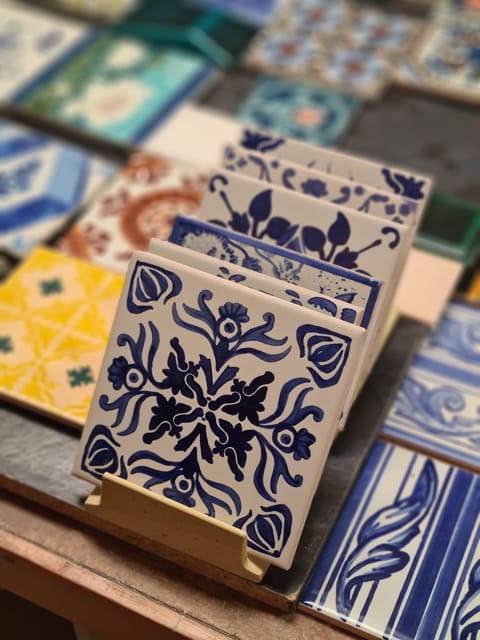
Porto’s tiles are more than pretty decoration. They cover churches, railway stations, houses, and public buildings, telling stories in blue, white, and bold patterns. This workshop lets you step behind that familiar city scene and make two tiles yourself, with help from a local artist and time to enjoy tea and biscuits along the way.
I like the fact that you take home two fired tiles, not just a wet painting in a paper bag. I also like the balance of short cultural instruction and hands-on work, with David praised for his clear explanations and friendly guidance. The main consideration is timing: you must return about 24 hours later to collect the tiles, and the early history talk may feel a little long if you mainly want to paint.
Key points
- Two handmade souvenirs: Paint two Portuguese tiles, then collect them fired and properly packaged the next day.
- Porto context included: Learn why tiles are so common on Portuguese homes, monuments, and heritage buildings.
- Helpful studio instruction: You receive materials, technique guidance, stencils, and advice while you work.
- Good for families: Children, teenagers, and adults can take part, with creative help available throughout.
- Near Campanhã transport links: The workshop is close to Campanhã train station and the TIC bus terminal.
- Plan around pickup: Your tiles are not ready at the end of the class, so allow time the following day.
Why painting tiles gives you a better look at Porto
You will likely notice tiled facades soon after arriving in Porto. They appear on churches, railway stations, old homes, and heritage buildings, sometimes as simple repeated patterns and sometimes as large scenes with figures, ships, or religious subjects.
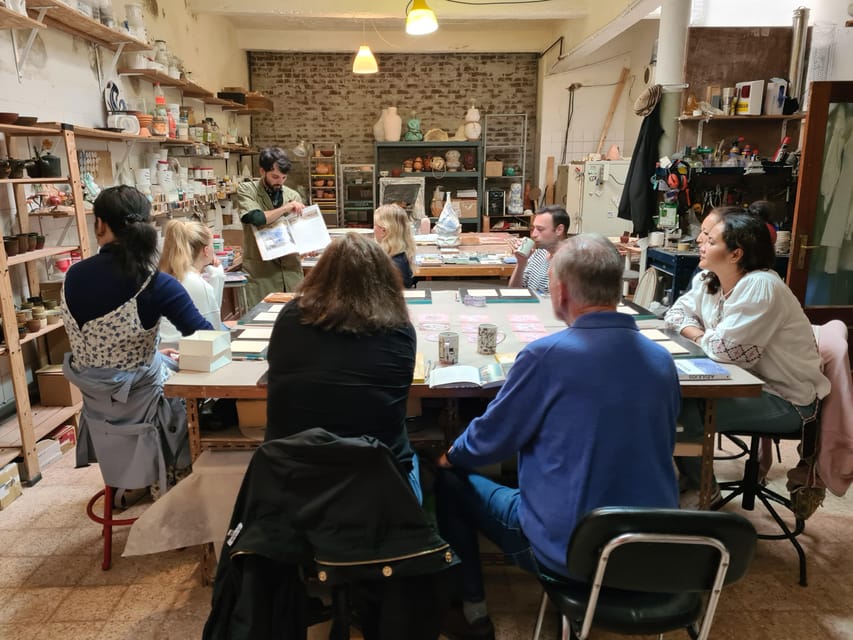
A city walk can show you the finished work, but it does not always explain how the tiles got there. This two-hour workshop fills in that missing piece. You learn about the place of tiles in Portuguese art and daily life, then use traditional motifs as a starting point for your own designs.
That combination matters. You are not simply buying a souvenir with Porto printed on it. You are learning one of the city’s most recognisable art forms and leaving with something made by your own hands. Your finished tiles will not be museum pieces, of course, but that is part of the charm. Uneven lines and personal choices make them yours.
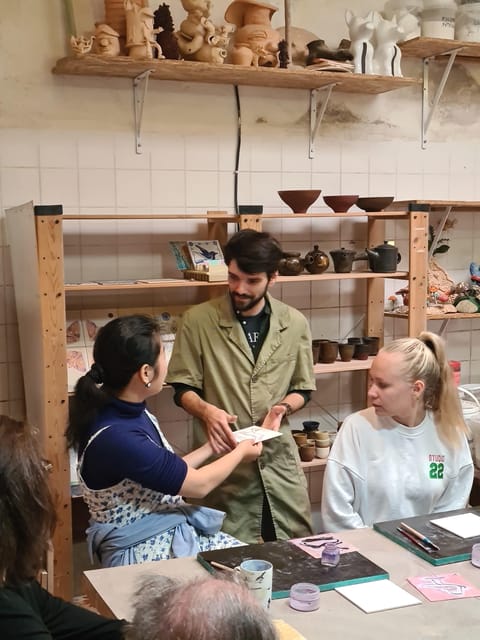
The workshop is run by Francisco Pessegueiro, and the guide David has received especially warm praise for his clear explanations, creative advice, and easy manner. An assistant is also available during the painting portion, so you do not have to work out every step alone.
More Port Wine Cellar Tours in Porto
- Port Wine Lodges Tour Including 7 Port Wine Tastings (English)
★ 5.0 · 2,041 reviews - Porto: Douro River Boat Cruise with Port Wine Tasting
★ 4.8 · 1,627 reviews - Porto: Graham’s Port Lodge Tour with Premium Wine Tastings
★ 4.8 · 1,547 reviews
Inside the workshop near Campanhã station
The studio is near Porto’s Campanhã train station and the new TIC, or Terminal Intermodal de Campanhã, bus station. A school and a taxi rank are beside the station, which should help you identify the area once you arrive.
This is a practical meeting point if you are already using public transport. It is less convenient if you are driving. One participant found the area poor for parking, so I would not build your plans around arriving by car. Public transport or a taxi is the simpler choice.
The location also shapes the feel of the activity. This is a working artist’s studio rather than a grand museum or polished tourist attraction. You may browse examples of tiles and sculptures used in Portuguese decoration and on heritage buildings before settling down to paint.
Wear comfortable clothes and shoes. Tile painting is not strenuous, but you will be seated and working with art materials for much of the class. Clothes you can relax in are better than anything formal.
The opening lesson on Portuguese tile traditions
The class begins with an introduction to Portuguese tiles. You will learn how tiles spread across the country and why they became such an important part of Portuguese architecture and decoration.
The teaching is supported by examples in the studio, inspiration books, and different types of tiles and sculptures. This gives you something solid to look at rather than asking you to remember a string of dates and names. You can see how simple motifs, borders, and repeated patterns help create the look associated with Portuguese tilework.
The opening talk is useful for anyone who wants more than a craft class. It gives you a new way to read Porto’s streets after the workshop. A blue and white facade is no longer just a photogenic background. You begin to notice pattern, scale, placement, and the way tile changes the character of a building.
There is a small tradeoff here. One family felt the history and tea portion could have been shorter, leaving more time for painting. If you already know a great deal about Portuguese ceramics, you may feel ready to start before the talk ends. If Porto’s tile tradition is new to you, the introduction gives useful context.
Tea and biscuits are included, and the activity is also presented with Port wine. The supplied details specifically confirm tea and biscuits as part of what is provided, so I would not treat this as a full food stop. Think of the refreshments as a pleasant pause before the practical work.
Learning the techniques before you paint
After the introduction, the guide explains the techniques used to produce traditional Portuguese tiles. You will learn what to expect from the materials and how to approach the surface before creating your own design.
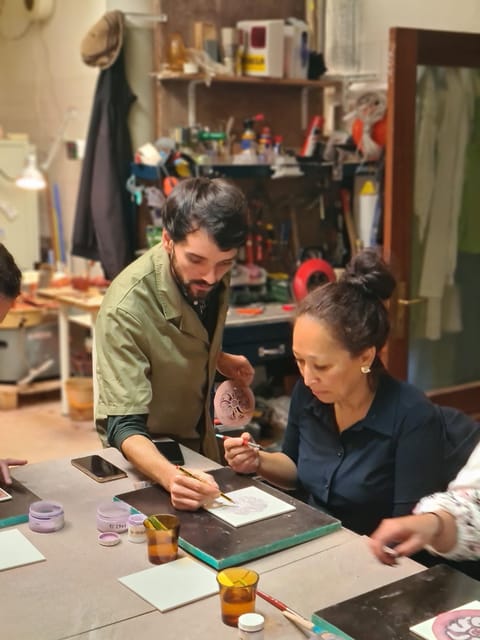
The goal is not to turn you into a professional ceramic artist in two hours. Instead, the instruction gives you enough confidence to begin. You can use traditional motifs for inspiration, work with stencils, and ask David or the assistant for suggestions as your idea takes shape.
That support is especially helpful if you are not naturally artistic. You do not need to arrive with a finished design in mind. The studio provides the necessary materials and examples, and the staff can offer feedback without taking over your work.
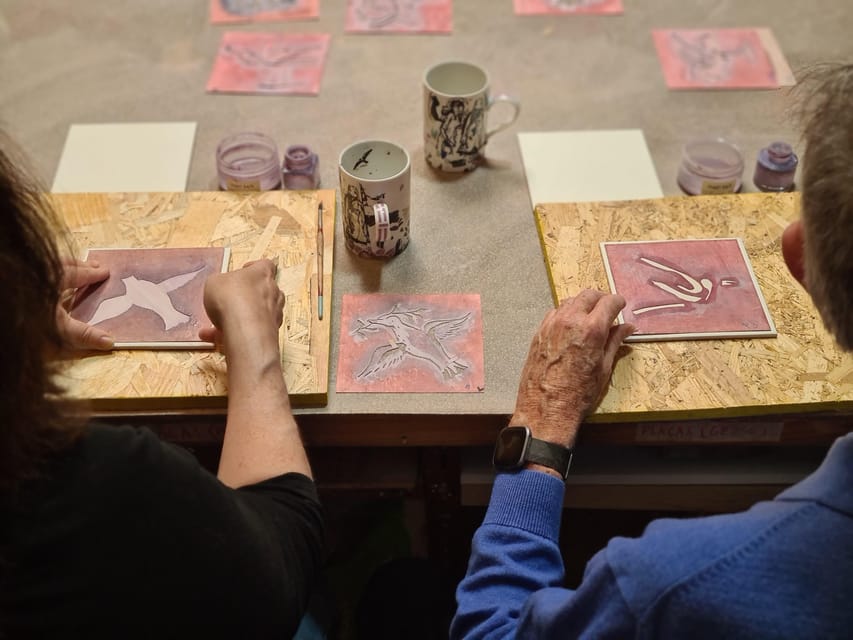
You also have room to make your own choices. The stencils are there as a starting point, not as a requirement. You can follow a familiar pattern or create something more personal. The workshop works best when you accept that your tiles do not need to look factory-perfect.
Same town, a different bottle:
- From Porto: Douro Valley w/ Boat Tour, Wine Tasting & Lunch
★ 4.7 · 19,061 reviews - Complete Douro Valley Wine Tour with Lunch, Wine Tastings and River Cruise
★ 5.0 · 12,920 reviews - Porto: Douro Valley with Winery Lunch, Tastings & Cruise
★ 4.7 · 7,002 reviews - Authentic Small Group Douro Wine Tour with Lunch & River Cruise
★ 5.0 · 4,775 reviews
Painting two tiles instead of one
The central part of the class is painting two tiles. This is one of the strongest features of the activity. Many short craft sessions provide one item, which can leave you feeling rushed or overly cautious. Two tiles give you a little more freedom.
You might make a matching pair, use one traditional motif twice, or try two different ideas. The second tile also gives you a chance to adjust your approach after learning from the first. If your first pattern is too ambitious, you can choose something simpler for the next one.
The guide and assistant remain available for questions and creative advice. You are not simply handed materials and left alone. At the same time, the studio does not paint the designs for you. The finished result reflects your decisions, which is what makes the souvenir worth carrying home.
Families can work well here. An eight-year-old, a teenager, and adults can each take part at their own level. Younger children may need more help with patterns and fine details, but the activity is designed around making rather than watching. It also suits couples, solo visitors, and friends who want an indoor break from sightseeing.
The two-hour duration includes the introduction, technique lesson, and painting. If you want maximum brush time, keep your own design simple and start thinking about motifs before you arrive. That way, you can spend more of the practical section creating rather than deciding what to do.
The kiln firing and next-day pickup
Your tiles are not finished when you put down the brush. The studio fires them in a kiln, which makes the design more durable and gives the tiles their final appearance.
Pickup takes place about 24 hours after the class. The tiles are prepared in proper packaging, making them easier to carry home in your luggage. You should plan to return the next day around 11:00 or 12:30, according to the pickup arrangement provided by the studio.
This is both a benefit and a planning issue. The firing adds real value because you receive a finished ceramic object rather than an unfinished craft project. But you need enough time in Porto to come back. The activity is not ideal for someone leaving the city immediately after the class or spending only one night in town.
Keep your pickup time in mind when planning a train, bus, or flight. The workshop is near Campanhã, which may make the return trip easier if you are already passing through the station, but transportation to and from the activity is not included.
What the $53 price includes
At $53 per person, the workshop costs more than a quick drop-in craft table, but the price covers a fair amount. You receive all painting materials, instruction, two tiles, kiln firing, packaging, and refreshments.
The two fired tiles are the main value. You are not paying only for a lesson. You are also paying for studio time, the firing process, and the work needed to prepare the tiles for safe collection. The cultural explanation adds another layer, especially if you want to understand the art you see around Porto.
The value is strongest for people who care about the making process. If you only want a cheap souvenir, a shop-bought tile will cost less and require no second visit. If you want a personal memento and an activity that teaches you something, the price is easier to justify.
A small group is available, which should make it easier to ask questions and receive help. The minimum number is two participants. If that minimum has not been reached by the day before, the activity may be cancelled, so keep an eye on confirmation if your plans are tight.
You can cancel up to 24 hours in advance for a full refund, and the reserve-now-pay-later option keeps your money free until your plans are clearer. Those policies are useful when you are arranging a multi-day city break with several moving parts.
Language, group size, and the best people for this class
The workshop is offered in English, Japanese, and French. If you want the French or Japanese option, state that when booking. Otherwise, you should expect the English session.
The class suits adults who enjoy creative work, but it is not limited to serious artists. Families, couples, and small groups of friends can all find a good fit here. You will get the most from it if you like learning a little background before trying the activity yourself.
It is also a good choice for a rainy Porto day. The workshop gives you a warm indoor setting, a hands-on task, and a useful break from churches, viewpoints, and cobbled streets. The studio atmosphere has been described as welcoming and comfortable, which matters when you are trying something unfamiliar.
I would be more cautious about booking it for a very tight schedule, a visitor who dislikes guided explanations, or anyone who cannot return the following day. The painting itself is not the only commitment. The pickup is part of the experience.
Small details that make the souvenir special
A handmade tile carries more meaning than a generic fridge magnet. You remember the pattern you chose, the advice you received, and the moment when the wet painted surface was left for firing.
The firing also creates a small element of suspense. You will not see the final result immediately, so the next-day collection has a pleasant sense of discovery. Proper packaging helps protect the tiles during the journey home, though you should still handle them with care.
The workshop also gives you a reason to look more closely at Porto after the class. You may find yourself comparing your own pattern with tiles on houses and public buildings. That extra attention is one of the quiet rewards of the activity.
Should you book this Porto tile workshop?
Book it if you want a personal souvenir, enjoy making things, and have a second day in Porto for pickup. It is particularly good for families, couples, and small groups who want an activity that combines local culture with practical creativity.
The strongest reasons to choose it are the two tiles, the kiln firing, and the patient guidance from David and the studio team. You receive more than a painting lesson, but you should allow for the history talk and accept that the class may leave slightly less brush time than you expect.
Skip it if you are driving and need easy parking, leaving Porto before the next-day pickup, or looking only for a fast activity with no explanation. For everyone else, the $53 fee is reasonable for two fired tiles, instruction, materials, and a souvenir connected directly to Porto’s tile tradition.
FAQ
How long does the tile painting workshop last?
The workshop lasts two hours. This includes an introduction to Portuguese tiles, instruction in painting techniques, and time to paint two tiles.
How many tiles do I paint?
You paint two tiles during the class. Both tiles are fired in a kiln and prepared for collection afterward.
When can I collect the finished tiles?
The tiles are ready about 24 hours after the class. Pickup is scheduled for the next day, around 11:00 or 12:30.
Are materials and kiln firing included?
Yes. The activity includes all materials needed for painting, firing of the tiles, and packaging for the finished pieces.
Which languages are available?
The workshop is available in English, Japanese, and French. You must request French or Japanese when booking.
Where is the meeting point?
The studio is near Campanhã train station and the TIC, or Terminal Intermodal de Campanhã, bus station. A school and a taxi rank are beside the station.
More Workshops and Classes in Porto
- Porto: Pastel de Nata Cooking Class with Port Wine – Sé
★ 4.8 · 888 reviews - Port Wine class with 3 or 5 Port tasting and pairings
★ 4.9 · 441 reviews - Rome: Pasta Making Class with Wine, Limoncello, and Dessert
★ 4.9 · 3,177 reviews - Rome Cooking Class: Make Pasta and 3 Spritz Cocktails
★ 5.0 · 2,937 reviews
Just poured in Porto
- Porto: Tuk tuk Tours with Port Wine Tasting★ 4.5 · 65 reviews
- Porto Wine Tasting Experience with Portuguese Tapas Plate★ 4.7 · 356 reviews
- Porto: Tile Painting and Cocktails in Downtown Porto★ 4.9 · 484 reviews
- Porto: Sunset Walking Tour with Port Wine and Views★ 4.6 · 95 reviews
- Porto: Douro River Boat Tour with Wine Tasting★ 4.9 · 167 reviews
- Porto: Tuk-Tuk Tour, Douro River Cruise, and Wine Tasting★ 4.3 · 152 reviews
- Porto: Private Douro River Charming Cruise w/wine tasting★ 5.0 · 63 reviews
- Porto: Port Cellar Visit and Wine Tasting at Fonseca★ 4.2 · 450 reviews
Port Wine Cellar Tours, compared.
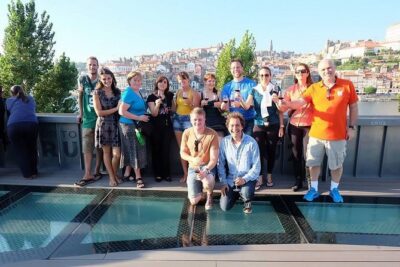
Port Wine Lodges Tour Including 7 Port Wine Tastings (English)
Read our review →
Charming Sailboat Cruise with Port Wine,Sunset Option
Read our review →
Douro River Boat Cruise with Port Wine Tasting
Read our review →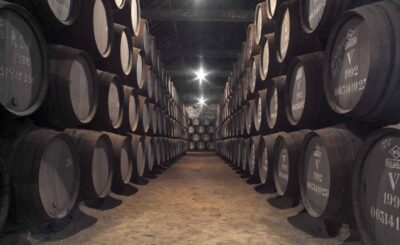
Graham’s Port Lodge Tour with Premium Wine Tastings
Read our review →
Vila Nova de Gaia: Port Wine Tasting with Cheese Pairing
Read our review →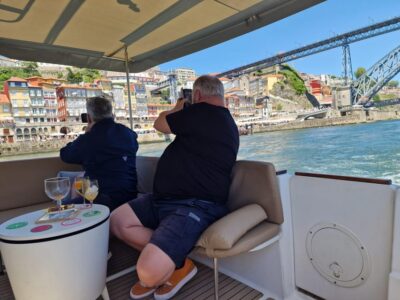
6 Bridges Cruise & Port Wine with Sunset Option
Read our review →
Pastel de Nata Cooking Class with Port Wine – Sé
Read our review →
Porto Douro River Cruise With Port Wine – Daytime or Sunset
Read our review →Browse the lists this tour appears in