REVIEW · PORT WINE CELLAR TOURS
Port Wine Lodges Tour Including 7 Port Wine Tastings (English)
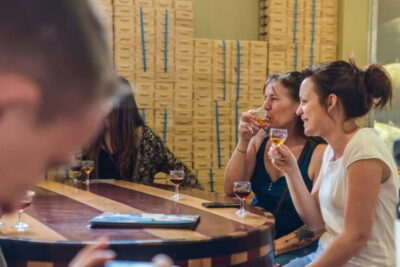
Port wine is best understood in its birthplace, and this tour takes you across the river to Vila Nova de Gaia, where the famous cellars line the waterfront. You taste seven Ports at three houses, moving from a major producer and museum to smaller or more informal tasting spaces.
I like the mix of history and hands-on learning, especially the chance to compare White, Tawny, Ruby, and other styles instead of simply sipping one glass. I also like the small-group limit of 18 and the guides, including Alex, Kevin, Cyril, and Lara, who bring plenty of humor and local stories. The main caution is that the schedule can feel presentation-heavy at one stop, and one tasting may take place in a plain boardroom rather than a traditional cellar.
Key points at a glance
- Seven tastings across three Port houses: You get a broad introduction to Port styles, ages, and production methods.
- Walk from Porto to Vila Nova de Gaia: The route begins near the D. Luis Bridge and stays on foot, with the longest walk listed as about 800 meters.
- Cellars, museums, and an interactive center: You learn about barrels, cork, the Douro Valley, and the making of Port.
- A useful first tour for Port beginners: The guide explains how White, Tawny, Ruby, and other Port families differ.
- Small group, but not a private tour: The maximum is 18 people, which usually allows conversation while keeping the price moderate.
- Ends with Porto views: The final tasting venue has a terrace overlooking the city.
Starting at the D. Luis Bridge and crossing into Gaia
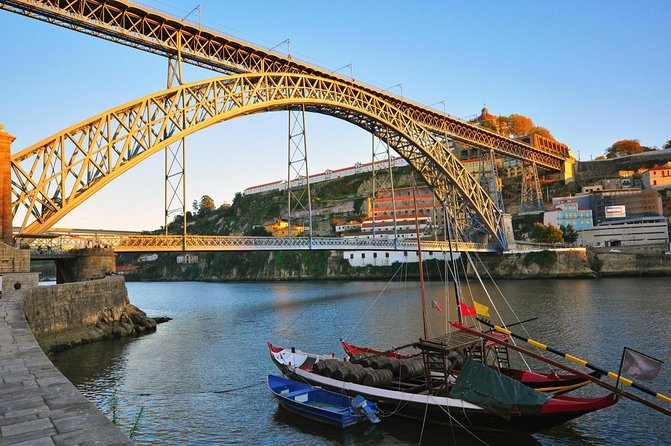
The tour starts at 3pm by the pillars of the old Pensil Bridge, on the Porto side of the D. Luis Bridge. Look for the guide in a red jacket marked Porto Walkers. The meeting point is on the lower level near the bridge, so do not simply wait on the upper roadway or at a random spot along the river.
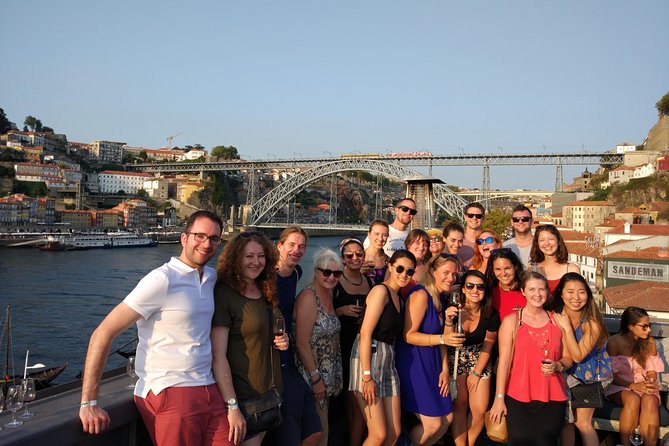
This is a good place to begin because the bridge gives you an immediate sense of the two-part city. Porto sits on one bank, while Vila Nova de Gaia holds the Port lodges on the other. The walk across and along the Gaia side helps explain why Port is so closely tied to both places.
The tour is entirely on foot. The listed walking distance is modest, with the longest stretch about 800 meters, but you will spend much of the afternoon standing in cellars, museums, and tasting rooms. Wear comfortable shoes and bring water. The tour does not include lunch, food, or snacks, and the afternoon timing means a small snack before you start is a smart move.
The total duration is listed as about three and a half hours, while the inclusions describe it as a four-hour tour. I would allow four hours so you are not rushing to another reservation. The route finishes in Gaia at Avenida de Diogo Leite 135, rather than returning you to Porto.
More Port Wine Cellar Tours in Porto
- Porto: Douro River Boat Cruise with Port Wine Tasting
★ 4.8 · 1,627 reviews - Porto: Graham’s Port Lodge Tour with Premium Wine Tastings
★ 4.8 · 1,547 reviews - Porto: 6 Bridges Cruise & Port Wine with Sunset Option
★ 5.0 · 997 reviews
Why Vila Nova de Gaia matters to Port
Your first lesson is not just about wine. It is about place. Port grapes come from the Douro Valley, but the wine has long been stored, matured, and presented in Gaia. The cool cellar conditions near the river helped make this side of the water the natural home for the Port houses.
The guide introduces the basic story as you walk. You learn how Port differs from ordinary table wine and why its production, aging, and serving styles create such a wide range of flavors. The Douro is described as the world’s oldest demarcated wine region, and the tour uses that setting to connect the bottle in your glass with the vineyards farther inland.
This walking introduction is one of the strongest parts of the experience. It gives the tastings a setting and a reason. Instead of treating each glass as an isolated sample, you begin to see Port as a product shaped by geography, storage, trade, and long aging.
Guides are a major part of the afternoon. Alex is especially good at making the group feel at ease while keeping the information moving. Kevin is frequently praised for his local stories and easy humor, while Cyril and Lara have also led engaging departures. Guide assignments can change, so book this for the route and subject rather than for one particular person.
The first lodge: museum, cellar, and Reserve Port
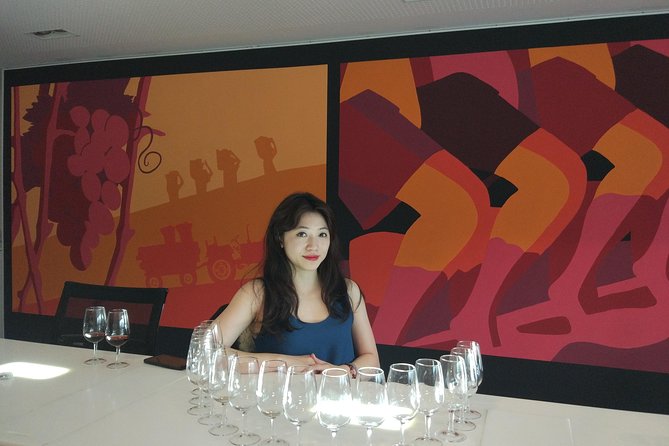
The first major stop is a well-established Port producer with a museum and cellar. Some visits have included the Calém Port house, though the exact producer may depend on the departure. This is the most traditional part of the route, with a guided look at the history of the house, the cellar setting, and the way Port is stored.
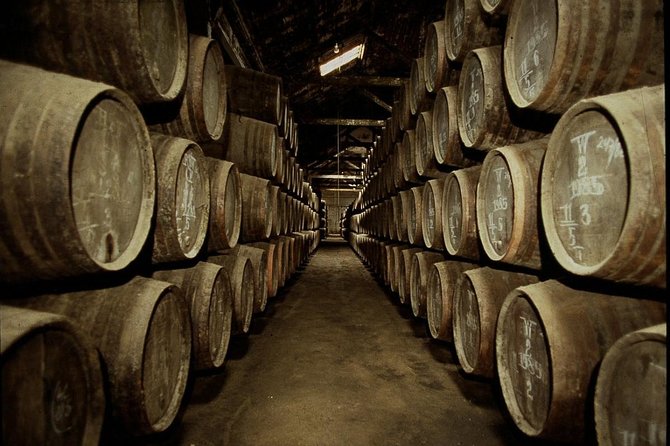
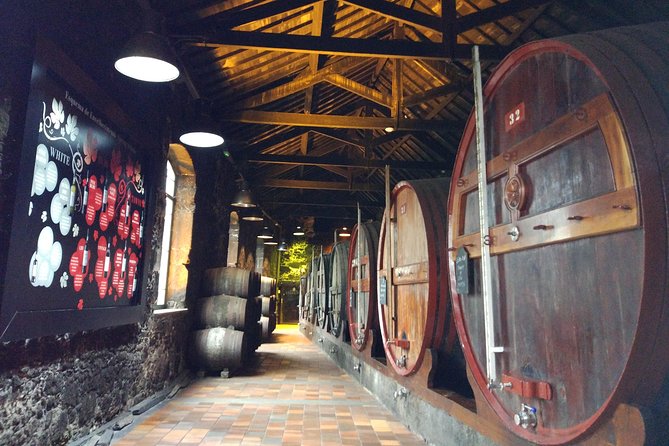
The cellar visit gives useful context before the glasses arrive. You see where barrels and bottles fit into the process, and you get a clearer idea of why aging changes Port so much. The surroundings are cool and dim, a welcome break from the sun along the riverfront.
The tasting here focuses on Reserve White and Reserve Tawny Ports. This pairing is useful because the two styles show how differently Port can develop. The guide explains the main Port families and what to notice in the glass, including the effects of grape type, aging, and storage.
You do not need prior wine knowledge. The value of this stop is the comparison. You can ask why one Port is pale and fresh while another is darker, smoother, and more marked by time. If you are new to Port, this is where the tour starts giving you a vocabulary for later tastings.
The downside is that the first house can feel more polished and commercial than intimate. If you want only tiny family cellars, this tour may not satisfy you. Its strength is range: you see a major house first, then move toward less formal spaces.
An old cellar turned into an interactive visit
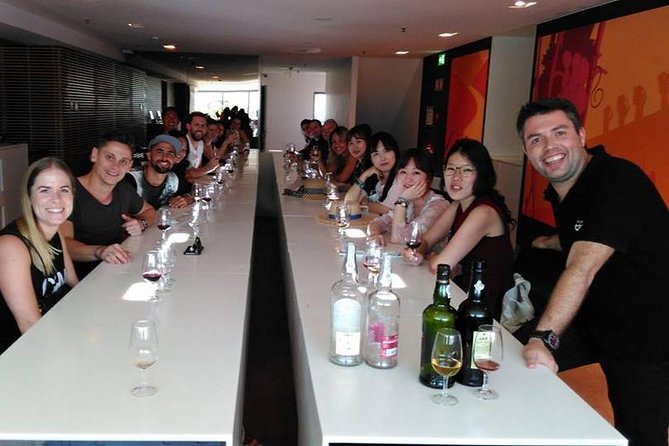
The next stop takes you into an older cellar that has been adapted as an interactive visitor center. Here, the focus shifts from brand history to the physical materials used in Port production.
You learn about the barrels and how wine is held as it ages. There is also information about cork production, an easy detail to overlook when you are thinking only about the liquid. This stop helps you understand that Port is not made through a single dramatic step. Storage vessels, closures, time, and handling all matter.
The tasting includes a young Ruby Port, which makes a useful contrast with the Reserve White and Tawny samples from the first house. Ruby Port is generally presented as a younger, fruit-led style, and trying it after aged examples gives you a simple way to compare freshness with maturity.
This is also the point where the tour’s pace may vary. One departure included a plain boardroom-style tasting area rather than the intimate cellar atmosphere suggested by the wording. That does not ruin the wine lesson, but it is worth knowing that the setting is not guaranteed to be atmospheric at every stop.
The guide’s role matters here. A lively explanation can turn barrels and cork into memorable details. A rushed presentation can feel dry, especially before all seven tastings are complete. Guides such as Alex and Kevin have been praised for using stories, jokes, and quick comparisons to keep the group involved.
More Wine Tasting Tours in Porto
- From Porto: Douro Valley w/ Boat Tour, Wine Tasting & Lunch
★ 4.7 · 19,061 reviews - Complete Douro Valley Wine Tour with Lunch, Wine Tastings and River Cruise
★ 5.0 · 12,920 reviews - Douro Valley Small-Group Tour with Wine Tasting, Lunch and Boat
★ 5.0 · 3,642 reviews - Porto: Cálem Cellar Tour, Fado Show & Wine Tasting
★ 4.4 · 3,530 reviews
The Douro interpretation center and the final workshop
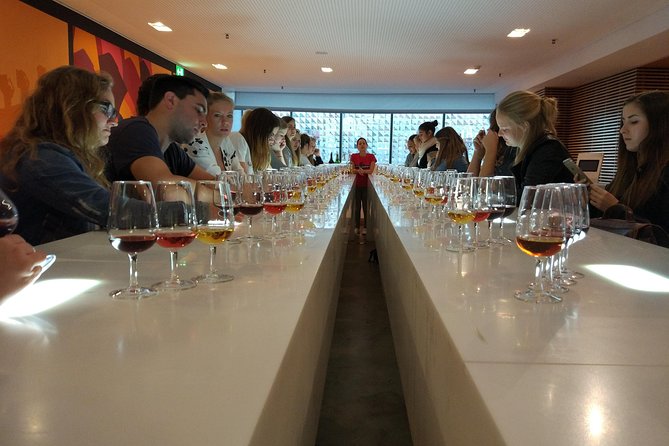
The third stop is an interactive Port interpretation center devoted to the Douro Valley. This is the most educational section of the tour and gives you a broader look at the region behind the lodges.
Rather than focusing on one producer, the center explains the valley, its wine tradition, and the making of Port. You take part in a wine-tasting workshop with several wines and learn how to pair Port with food. Since no food or snacks are included, think of this as a lesson in pairing rather than a meal.
I like the practical nature of this part. Many tastings tell you what to drink but not when to serve it. Learning how Port works with food gives you a useful takeaway for restaurants, markets, and bottles you may buy later. It also makes the seven tastings feel more purposeful.
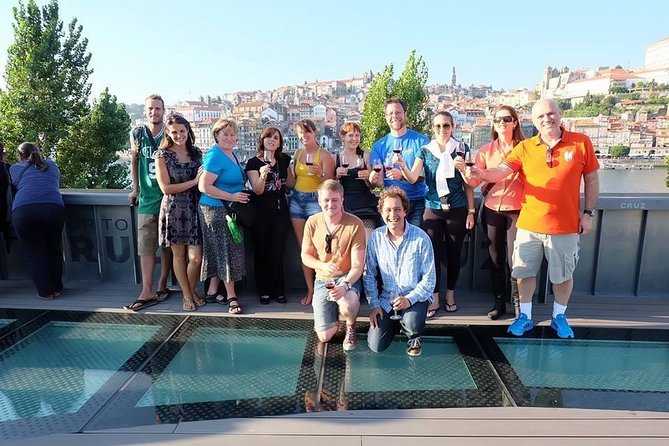
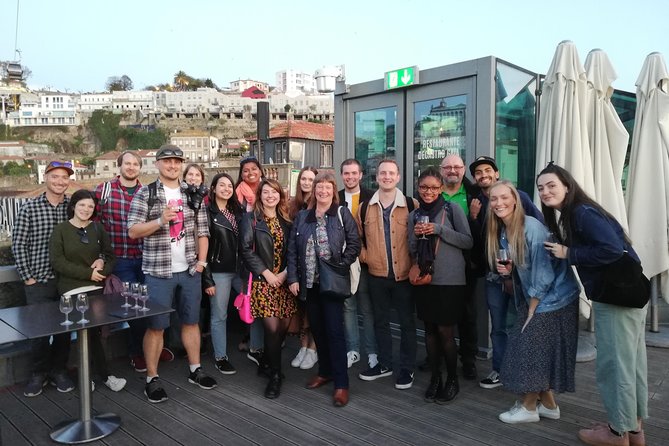
The final venue has a terrace with views over Porto. This is a pleasant way to finish, especially as the tour begins near the bridge and ends on the Gaia side with the city spread across the river. You are left in a good position to continue exploring Gaia or walk back over the bridge on your own.
Seven tastings, and what you are really getting for $62.88
At $62.88 per person, this is not the cheapest way to drink Port in Porto. You can buy individual glasses for less, and independent visits to one lodge may cost less than a half-day route through three houses.
The value comes from the structure. Your fee covers seven tastings, guide service in English, entry to the Port houses, the museums and interpretation spaces, and the walking orientation between them. You also avoid the guesswork of choosing which lodges to visit and how their tasting programs differ.
For someone who already knows Port and wants rare bottles or a long, slow tasting at one producer, I would spend the money differently. For a first visit, the comparison is more useful than a single stop. You taste across styles and houses, hear the production story several times from different angles, and finish with a better idea of what you might order or buy.
The group limit of 18 keeps the price below a private tour while still allowing some interaction. It is not a tiny two-person experience, so expect a shared pace and occasional waiting while the guide gathers everyone. The best departures seem to depend on a guide who keeps the group moving without shutting down questions.
Bring your identification if you are close to the minimum drinking age. The minimum age for drinking is 18. Children over 6 may be allowed with advance contact, but they require paid admission, and the activity is built around wine tasting rather than family entertainment.
Who will enjoy this Port walking tour?
I would recommend it most strongly if you are new to Port, want an organized introduction, or have limited time in Porto. The route gives you history, production details, seven samples, and a view over the city in one afternoon.
It also suits couples and small groups who want something social. The guides make a real difference, and the format gives you natural conversation with the rest of the group. If you enjoy learning through comparison rather than sitting in one tasting room for hours, this is a good match.
You may want another option if you dislike group tours, dislike standing for long periods, or want a highly local and unpolished cellar experience at every stop. The route includes interactive displays and formal presentations, and one stop may feel more like a classroom than a wine cave.
Do not book it as a substitute for dinner. No meal, snacks, or food pairings are included, even though the final workshop explains how to pair Port with food. Eat beforehand or plan a meal after the tour.
The tour is listed as suitable for most people and is near public transport. Hotel pickup and drop-off are not included. Service animals are allowed, but the activity remains a walking tour through several venues, so you should consider your own comfort with standing and moving between stops.
Timing, meeting details, and cancellation
The 3pm start works well if you want a relaxed morning in Porto, but it takes up most of the afternoon. I would not schedule a tightly timed dinner immediately afterward, since the stated duration varies between approximately three and a half and four hours.
Confirm the meeting point carefully. Go to the Porto side of the D. Luis Bridge, near the lower level and the pillars of the old Pensil Bridge. The guide should be wearing a red Porto Walkers jacket. The tour ends at Avenida de Diogo Leite 135 in Vila Nova de Gaia.
You receive confirmation when booking, and the activity accepts mobile tickets. Free cancellation is available up to 24 hours before the local start time. Inside that window, the payment is not refunded, and changes are not accepted. If the minimum number is not reached and the tour is canceled, you are offered another date or experience, or a full refund.
Should you book it?
I would book this tour if you want a well-paced first lesson in Port rather than a specialist tasting. Seven samples, three houses, cellar access, interactive exhibits, and the final terrace view make $62.88 a fair price for a half-day introduction.
Go in with realistic expectations. The best parts are the range of Port styles, the Gaia setting, and a warm guide who can turn technical details into stories. The weak point is that not every tasting room may feel historic or atmospheric, and one presentation can run too long if you prefer tasting to lecturing.
For a first visit to Porto, it is a practical choice. Eat beforehand, wear good shoes, confirm the lower-level bridge meeting point, and leave room in your schedule afterward. If you want to understand why Port belongs to both the Douro Valley and Vila Nova de Gaia, this route gives you a clear and enjoyable start.
FAQ
How many Port tastings are included?
Seven Port tastings are included. The samples cover several Port styles, including Reserve White, Reserve Tawny, and young Ruby Port.
How long does the tour last?
The tour is listed as approximately three and a half hours. The inclusions also describe it as a four-hour tour, so allow up to four hours.
Where does the tour begin?
It begins at the pillars of the old Pensil Bridge near the D. Luis Bridge, on Porto’s side and at the lower level. Look for a Porto Walkers guide wearing a red jacket.
Where does the tour finish?
It finishes at Avenida de Diogo Leite 135 in Vila Nova de Gaia, at a Port tasting venue on the Gaia side.
Is transportation included?
No. The tour is entirely on foot, with the longest walking stretch listed as about 800 meters. Hotel pickup and drop-off are not included.
What is the minimum drinking age?
The minimum drinking age is 18. If you want to bring a child over 6, you should contact the operator first because paid admission applies.
Can I cancel for a full refund?
Yes. You can cancel at least 24 hours before the experience start time for a full refund. Cancellations or changes made less than 24 hours before the start are not refunded or accepted.
More Wine Tasting Tours in Portugal
- Porto: Douro Valley Tour with Wine Tasting, Cruise and Lunch
★ 4.7 · 2,714 reviews - Douro Valley Tour: Wine Tasting, Cruise and Lunch from Porto
★ 4.5 · 2,645 reviews - Porto Food & Wine Tasting Tour with Lunch or Dinner Option
★ 5.0 · 2,303 reviews - Douro Valley Tour – 3 Wine tastings, Lunch & river Cruise
★ 5.0 · 2,043 reviews
Just poured in Porto
- Port Wine class with 3 or 5 Port tasting and pairings★ 4.9 · 441 reviews
- Porto: Douro Valley Wine Tour with a Sommelier & Boat Trip★ 5.0 · 463 reviews
- Private Douro Valley Food and Wine Tour From Porto★ 5.0 · 133 reviews
- Porto: 3 Douro Valley Vineyards Tour with Lunch★ 4.8 · 705 reviews
- Porto: Daytime or Sunset Douro River Cruise With Port Wine★ 4.7 · 714 reviews
- Porto: Magic Train Tour and Port Wine Cellar with Tastings★ 3.9 · 730 reviews
- Porto Douro River Cruise With Port Wine – Daytime or Sunset★ 4.5 · 759 reviews
- Douro Valley: Tour with Wine Tastings, Lunch, and Boat Ride★ 4.8 · 821 reviews
Port Wine Cellar Tours, compared.
Charming Sailboat Cruise with Port Wine,Sunset Option
Read our review →
Douro River Boat Cruise with Port Wine Tasting
Read our review →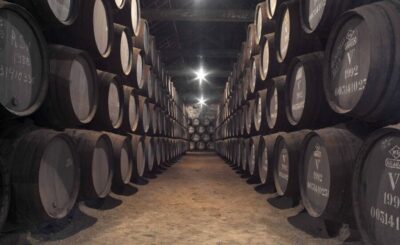
Graham’s Port Lodge Tour with Premium Wine Tastings
Read our review →
Vila Nova de Gaia: Port Wine Tasting with Cheese Pairing
Read our review →
6 Bridges Cruise & Port Wine with Sunset Option
Read our review →
Pastel de Nata Cooking Class with Port Wine – Sé
Read our review →
Porto Douro River Cruise With Port Wine – Daytime or Sunset
Read our review →