
REVIEW · LIMONCELLO & LIQUEUR TASTINGS
Florence: Pasta Class with Wine, Limoncello and Dessert
Just steps from Ponte Vecchio, this Florence cooking class turns a tourist stop into a hands-on Italian meal. You make ravioli, tortelli, and fettuccine from eggs and flour, then sit down to eat what you shaped yourself. The setting is a historic palace, and the three-hour format gives you enough time to learn without rushing through lunch or dinner.
I like the way every person makes pasta rather than simply watching a chef work. I also like the social finish: shared dishes, organic Tuscan wine, dessert, and limoncello around one large table. The main caution is dietary fit. Vegans and people with gluten, lactose, or nut allergies should not book this class, and anyone with another restriction should contact the provider before paying.
Key points to know before booking
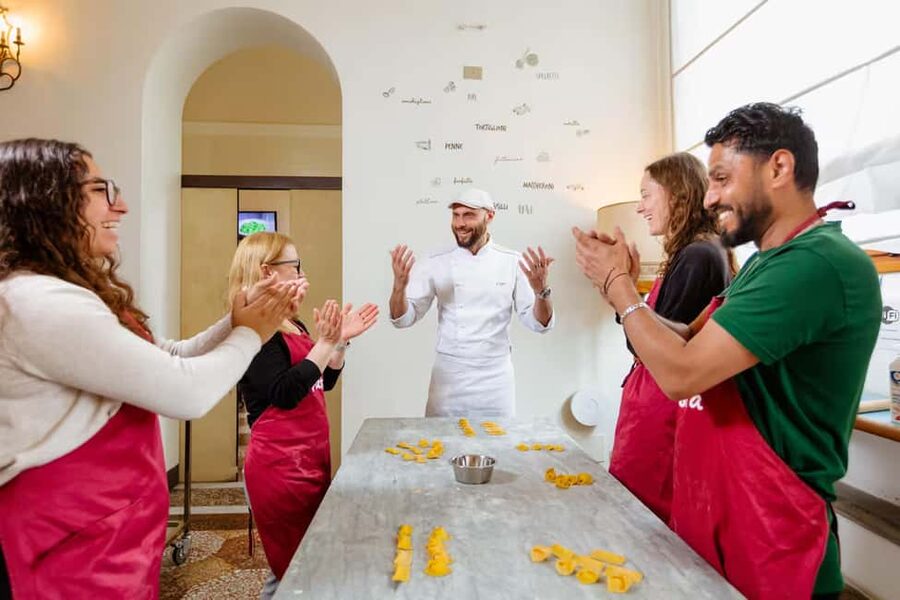
- Three pasta shapes in one class: Make ravioli, tortelli, and fettuccine by hand with eggs, flour, a rolling pin, and traditional tools.
- A central Florence setting: The school is at Lungarno Guicciardini 17r, near Ponte Vecchio.
- A social meal at the end: The class finishes with your freshly cooked pasta, Tuscan wine, dessert, and limoncello.
- Beginner-friendly teaching: Instructors such as Camilla, Giacomo, Sarno, Francesca, Caterina, and Lucrezia guide each person through the work.
- Plan for food restrictions: Vegetarian options are supported, but the activity is not suitable for vegans or people with gluten, lactose, or nut allergies.
- Allow three hours: Arrive five minutes early, wear comfortable cooking clothes, and expect a meal as well as a lesson.
Making pasta beside Ponte Vecchio
The location does half the work before the class begins. The school sits on Lungarno Guicciardini, at number 17r, just across the river from the main center and close to Ponte Vecchio. You can pair the class with a walk through Oltrarno, a look at the bridge, or an afternoon along the Arno.
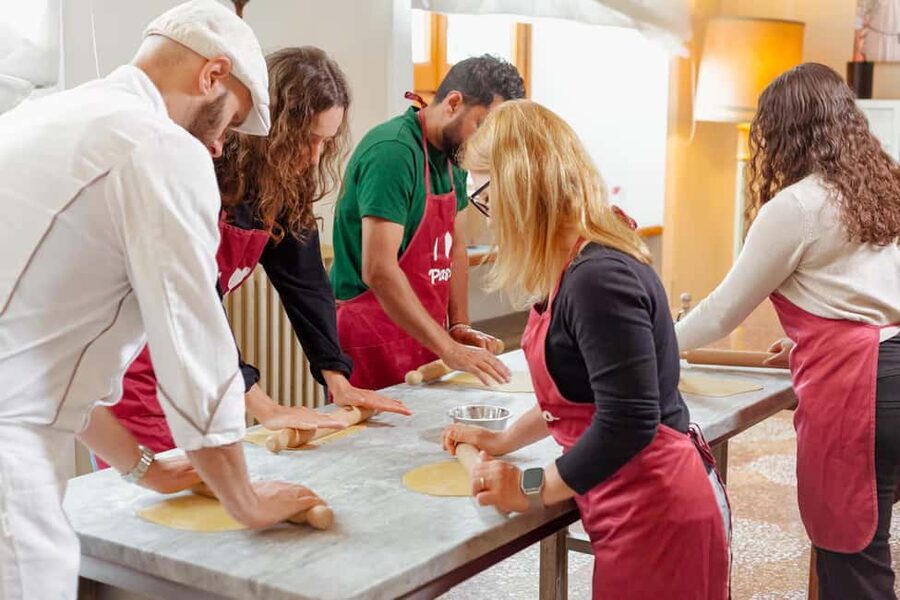
This is not a market visit or a demonstration behind glass. You put on an apron, take a rolling pin, and work directly with the dough. That matters because fresh pasta is less about memorizing a recipe than learning how the dough feels under your hands.
The class is conducted in English. Instructors change by session, but the teaching style is consistently personal. Camilla, Alessandra, Giacomo, Christine, Lucrezia, Sarno, Francesca, Caterina, Nicola, and others are named as instructors who keep people involved and help at the table.
You do not need serious kitchen experience. Several sessions have worked well for people who rarely cook, while more confident cooks can pay closer attention to shaping and technique. The instruction is designed so a complete beginner can follow along.
More Liqueur Tastings in Florence:
- Rome: Pasta Making Class with Wine, Limoncello, and Dessert
★ 4.9 · 3,177 reviews - Sorrento Farm and Food Experience including Olive Oil, Limoncello, Wine tasting
★ 5.0 · 2,524 reviews - Learn to Make Pasta & Tiramisu with Wine and Limoncello Included
★ 5.0 · 2,345 reviews
The opening: a short introduction before the flour starts flying
The experience begins with an evocative introduction to the school and its food traditions. A short film is part of the opening, giving the class a bit of atmosphere before you start cooking.
This is a pleasant way to set the scene, though it is also the clearest trade-off in the schedule. If you are eager to get your hands into the dough, you may wish the opening were shorter. One participant specifically preferred more kitchen time instead of the film or additional wine tasting.
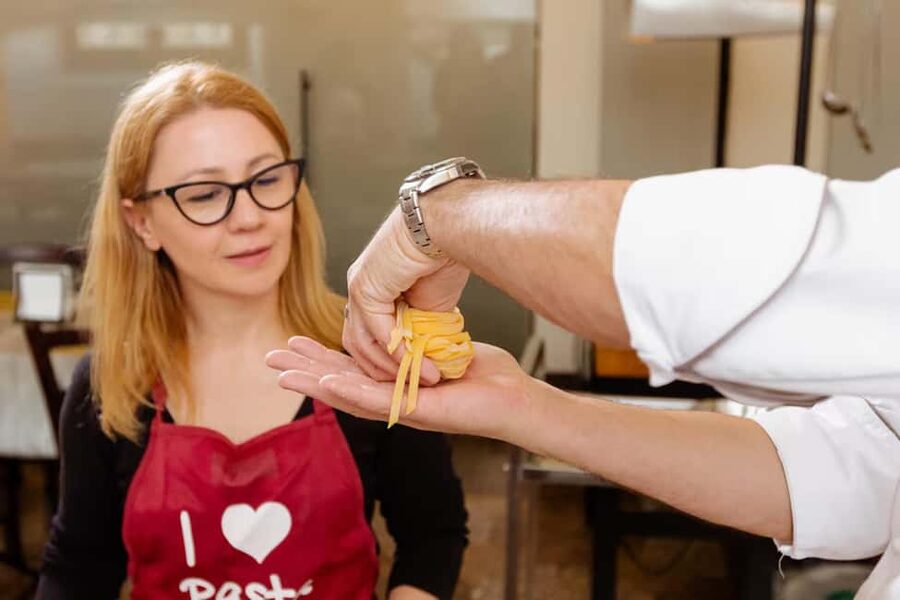
The class then moves into practical work. You prepare pasta with eggs and flour, learning the basic process of mixing, kneading, rolling, and cutting. Your instructor demonstrates each stage and moves around the group to correct technique.
That personal help is important. Pasta dough can look simple, but the texture changes quickly depending on how it is kneaded and rolled. A good teacher can show you when to keep working it, when to add flour, and how thin the sheet should be.
Ravioli and tortelli: the most hands-on part
The filled pastas are the heart of the lesson. You prepare sheets, add filling, and shape ravioli and tortelli. This gives you a chance to work on neat edges, spacing, and sealing, rather than simply cutting long strips of dough.
The instructors prepare the fillings and some ingredients in advance for practical reasons. That keeps the three-hour class moving and allows everyone to eat together. You still make the pasta itself by hand, but you should not expect to prepare every sauce or filling entirely from raw ingredients.
The sauces are handled in two different ways. The tomato sauce simmers for hours before the class, so it arrives with depth and is ready for the meal. The butter and sage sauce for the ravioli and tortelli is made by the instructor while you watch.
I like this division of work. Long-cooked tomato sauce cannot be rushed during a class, while butter and sage sauce is best made close to serving. You see how each sauce suits a different kind of pasta, and you avoid spending half the session waiting for a pot to cook.
One especially playful detail is the pasta guitar, a tool used to cut or shape pasta. It gives the lesson a bit of old-fashioned Italian kitchen character and is the sort of technique you may want to try again at home.
Fettuccine and the shared cooking pot
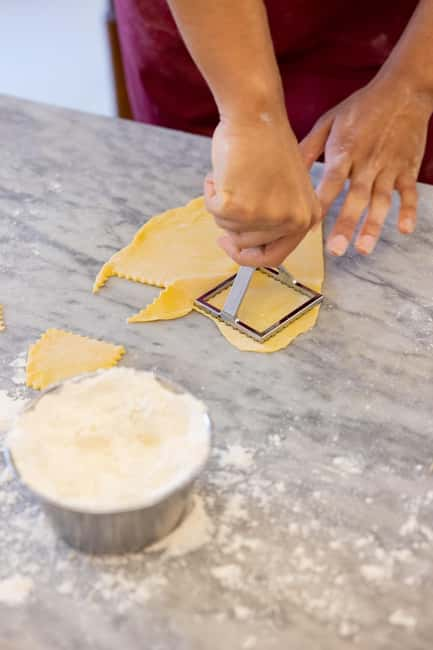
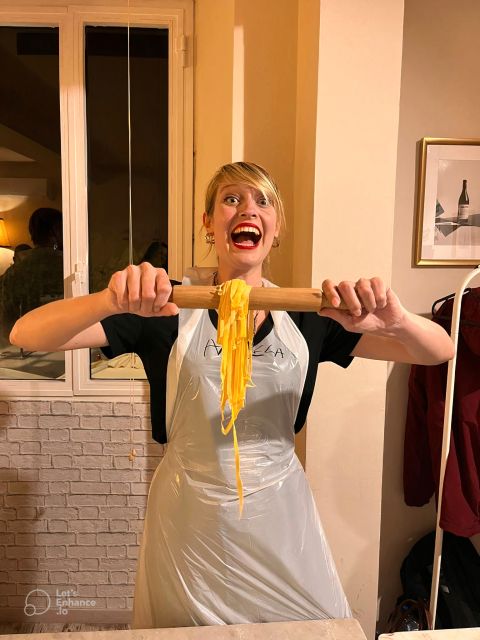
Fettuccine gives you a different task from the filled pasta. Instead of sealing pockets of filling, you work with long strands and learn how to cut and handle them without creating one large sticky mass.
Each participant prepares their own pasta, but the group cooks everything together in the same pot. This is a practical choice and part of the social idea behind the class. You make your own portion, then share the meal in the style of a family kitchen.
The cooking stage is mostly led by the instructor. You watch the pasta go into the water and see it paired with the prepared sauces. That means the class is highly hands-on during preparation, but less so during the final cooking.
If you want an advanced culinary workshop where you control every burner and timing decision, this may feel limited. If you want to learn the basics, eat well, and avoid a chaotic kitchen, the shared cooking method works nicely.
More Sweet Stops in Florence:
- Award-Winning Geneva Chocolate &Old Town Tour with Boat Ride (3h)
★ 5.0 · 3,721 reviews - Melbourne: Yarra Valley Wine, Gin, Whisky and Chocolate Tour
★ 5.0 · 3,667 reviews - Hungry Mary’s Famous Beer and Chocolate Tour in Brussels
★ 5.0 · 2,258 reviews - Epic Yarra Valley Wine Tour + Lunch, Chocolate & Gin/Beer Option
★ 5.0 · 1,819 reviews
Sitting down to eat what you made
The class ends around a large communal table. You eat the ravioli, tortelli, and fettuccine you helped prepare, with the sauces served as part of the meal.
This final table is more than a reward for finishing the dough. It gives the class its social character. Couples, families, solo participants, and small groups share food and conversation, often with people from different countries.
The meal is substantial enough to feel like lunch or dinner rather than a quick sample. The class also includes organic Dalle Nostre Mani Tuscan wine, produced naturally. Wine is served during the meal and tasting, but only people of legal drinking age may have it.
Dessert and a shot of limoncello close the experience. The dessert is prepared in advance, so this is not a second cooking lesson, but it gives the evening a proper Italian finish.
Some sessions also include a small recipe book, which is useful if you want to repeat the pasta at home. Recipes are provided for the pasta, sauces, and items served, although results in your own kitchen will depend on your ingredients and practice.
The instructors make the difference
The strongest part of this experience is the teaching. The format is fairly simple: pasta dough, shaping, cooking, and a shared meal. The instructor determines whether it feels rushed and mechanical or relaxed and welcoming.
The named teachers have different personalities. Camilla is described as engaging and funny, while Giacomo keeps conversation moving and offers suggestions for nearby sightseeing and food. Sarno is praised for his energy and passion for handmade pasta.
Lucrezia has been especially good with mixed-age family groups, including children and older relatives. Caterina has helped make the kitchen feel comfortable for first-time cooks, and Francesca has been appreciated for taking a hands-on approach with each person.
You cannot choose a particular instructor unless the provider allows it, so do not book solely because of one name. The useful point is that the teaching team has experience with families, couples, groups of friends, and people who do not cook often.
Class size can vary. One small group had ten participants, and other bookings included families of eight or larger groups. A smaller group gives you more direct help, but even the larger family sessions have been structured so children and adults can take part.
Who will enjoy this Florence cooking class
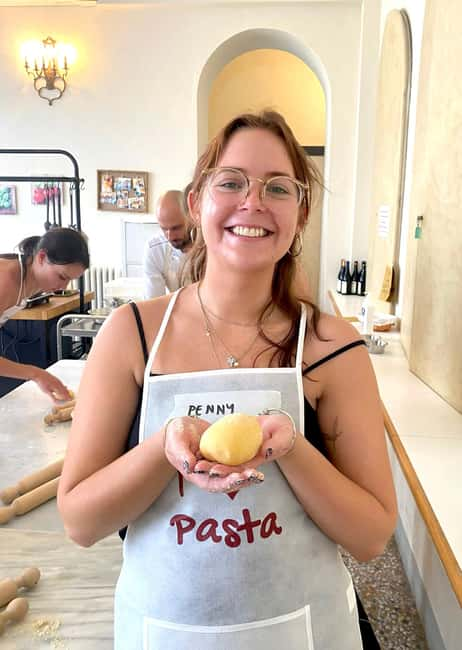
I would put this near the top of the list for families. Children can knead, roll, shape, and see the pasta cooked, while adults get a proper meal and wine. The activity has also worked well for teenagers and for family celebrations.
It suits couples looking for a relaxed evening more than another museum visit. It also works for solo participants because the communal table makes conversation easy without requiring you to arrive with a group.
Groups of friends and corporate teams can use the class as a shared activity. The work is collaborative without demanding athletic ability or advanced culinary skill. Students and first-time visitors to Florence can also get a pleasant introduction to Italian food customs.
You should skip it if you want a quiet private meal. The communal table, shared cooking pot, and changing group are central to the format.
The activity is listed as unsuitable for people with mobility impairments. It is also not suitable for vegans, people with gluten intolerance, people with lactose intolerance, or people with nut allergies. The information about dietary options is not fully consistent, so contact the provider before booking if you have any restriction at all.
Practical details that affect the value
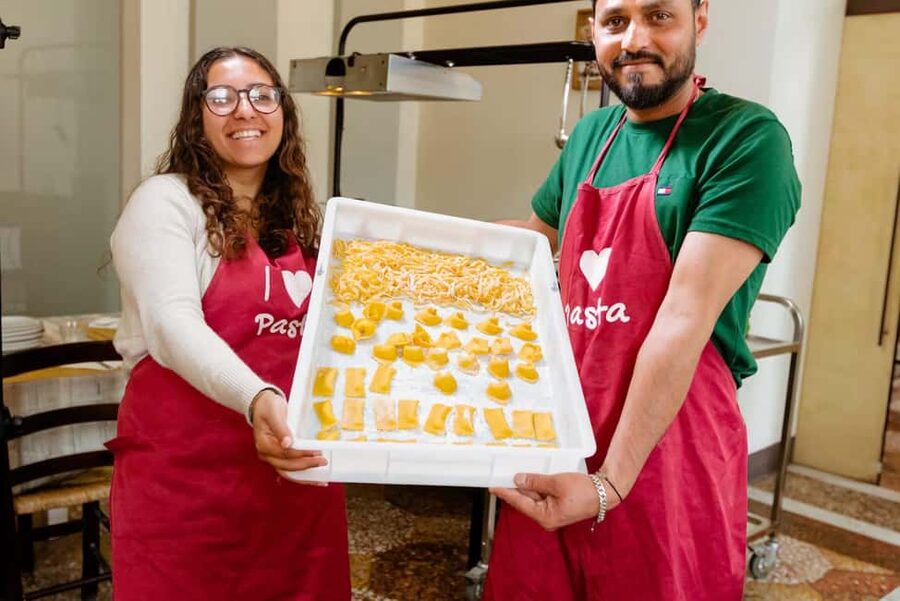
The experience lasts three hours, which is a useful length for Florence. You get a real activity, a meal, drinks, and dessert without giving up an entire day. I would schedule it when you can walk directly to dinner or return to your hotel afterward, since the food and wine make it more than a quick afternoon stop.
There is no hotel pickup or drop-off. You go directly to the school at Lungarno Guicciardini 17r, 50125 Firenze FI. Check in five minutes before the start time, and wear comfortable clothing suitable for cooking.
The booking terms are flexible. You can cancel up to 24 hours in advance for a full refund, and you can reserve now and pay later. The provider requires a minimum number of participants, so a session could be changed if that number is not met. In that case, you should be offered another time, another date, or a full refund.
No cost is provided here, so I cannot judge the exact price against other Florence classes. The value is easier to assess by what is included: professional instruction, ingredients, equipment, three pasta shapes, a full meal, organic Tuscan wine, dessert, and limoncello.
You are not paying only for a plate of pasta. You are paying for a central location, an English-language lesson, an organized kitchen, personal guidance, and a social evening. If the listed price is close to other Florence cooking classes, that full package makes it a fair choice. If you are only looking for a cheap meal, a trattoria will cost less and require no kneading.
What I would plan around the class
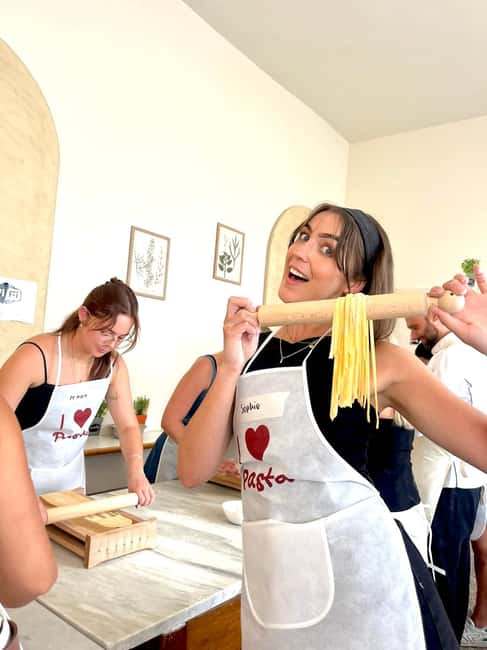
Arrive early enough to find the entrance without stress. The school is central, but Florence streets near the Arno can be busy with pedestrians and traffic.
Wear clothes you can move in and do not mind getting dusty with flour. The activity does not permit smoking, and alcohol is included, so plan your onward schedule sensibly.
If you have children in the group, keep in mind that the class is three hours long. The hands-on work helps hold attention, but children should be comfortable following instructions and sitting for the shared meal.
I would not plan a major museum reservation immediately afterward. The exact pace can depend on the group, and the final meal is meant to be enjoyed rather than rushed.
Should you book it?
Book this class if you want more than a food tasting. You will make three kinds of pasta, learn from an English-speaking instructor, eat your own work, and share wine and dessert in a central Florence setting.
I especially recommend it for families, couples, first-time cooks, and anyone who likes meeting people around a table. It is less suitable for strict dietary needs, mobility limitations, or anyone seeking an advanced chef-training session.
The best reason to choose it is the balance: enough instruction to take home useful skills, enough food to count as a meal, and enough conversation to feel connected to Florence’s everyday cooking culture. Just confirm your dietary needs in advance and arrive ready to work with your hands.
FAQ
How long does the pasta-making class last?
The class lasts three hours, including pasta preparation, cooking, the shared meal, wine, dessert, and limoncello.
Where does the experience take place?
The cooking school is at Lungarno Guicciardini 17r, 50125 Firenze FI, Italy, close to Ponte Vecchio.
What types of pasta will I make?
You will make ravioli, tortelli, and fettuccine by hand using eggs and flour.
Is the class taught in English?
Yes. The listed instructor language is English.
Is wine included?
Yes. The experience includes a tasting of organic Tuscan wines from Dalle Nostre Mani. Alcohol is served only to participants of legal drinking age.
Are dessert and limoncello included?
Yes. The class includes dessert and a shot of limoncello after the pasta meal.
Can people with dietary restrictions take part?
Vegetarian needs are supported, but the activity is not suitable for vegans or people with gluten intolerance, lactose intolerance, or nut allergies. Contact the provider about any other restriction before booking.
Do I need cooking experience?
No. The class is designed for beginners, and the instructor guides you through kneading, rolling, shaping, and cooking.
What should I bring or wear?
Arrive five minutes early and wear comfortable clothing suitable for cooking. Cooking equipment and ingredients are provided.
More Workshops and Classes in Florence
- Tuscany Day Trip: Chianti & Cooking Class Small Group
★ 4.5 · 770 reviews - Florence: Mozzarella Making Workshop with Wine Tasting
★ 4.9 · 54 reviews - Barcelona Paella Cooking Class with Market Visit, Tapas & Sangria
★ 5.0 · 2,531 reviews - Fettuccine & Tiramisù: Cooking Class with Wine & Limoncello
★ 4.9 · 2,103 reviews
More Pasta Experiences in Florence
- Florence: Countryside Tour with Wine Tasting & Pasta Class
★ 4.9 · 546 reviews - Florence: Pasta-Making Class with Dinner, Wine and… Sing!
★ 4.9 · 210 reviews - Rome Cooking Class: Make Pasta and 3 Spritz Cocktails
★ 5.0 · 2,937 reviews - Pasta Cooking Class Near the Colosseum with 3 Spritz Cocktails
★ 5.0 · 1,686 reviews
Just poured in Florence
- SMALL GROUP Tuscany Wine Tasting Safaris with Lunch / Dinner★ 4.9 · 321 reviews
- Florence/Badesse: Tuscany Group Vespa Tour with Wine Tasting★ 4.4 · 56 reviews
- From Florence: Tuscany, Siena, San Gimignano & Winery Lunch★ 4.7 · 184 reviews
- From Florence: Sunset Wine Tasting Tour in Vintage Car★ 5.0 · 68 reviews
- Florence: Val d’Orcia Wine Tasting & Lunch Small Group Tour★ 4.3 · 352 reviews
- From Florence: Chianti Hills Half-Day Tour with Wine Tasting★ 4.5 · 703 reviews
- From Florence: Wine Tasting and Dinner in Chianti Vineyards★ 4.6 · 192 reviews
- Florence: Sunset Sightseeing Tour and Wine Tasting★ 4.6 · 140 reviews
Limoncello & Liqueur Tastings, compared.
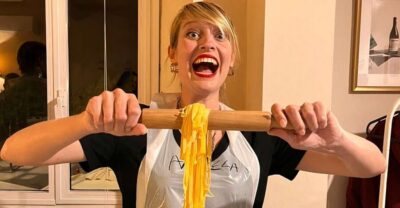
Pasta Making Class with Wine, Limoncello, and Dessert
Read our review →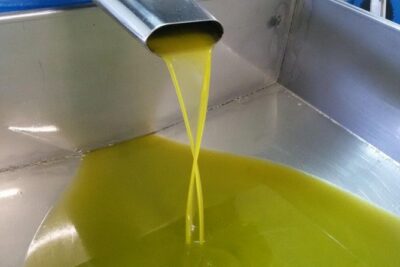
Sorrento Farm and Food Experience including Olive Oil, Limoncello, Wine tasting
Read our review →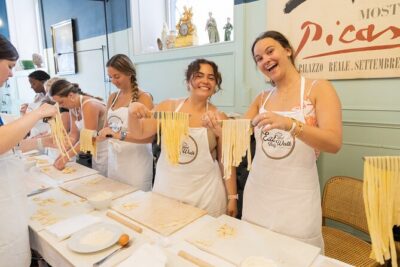
Learn to Make Pasta & Tiramisu with Wine and Limoncello Included
Read our review →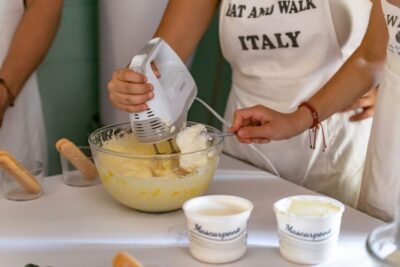
Fettuccine & Tiramisù: Cooking Class with Wine & Limoncello
Read our review →
Coast and Capri Boat Trip with Limoncello Tasting
Read our review →
Pizza Lesson, Wine, and Limoncello at a Local Farm
Read our review →
Small Group Capri Island Boat Ride with Swimming and Limoncello
Read our review →
Pizza School with Wine and Limoncello Tasting in a Local Farm
Read our review →Browse the lists this tour appears in