
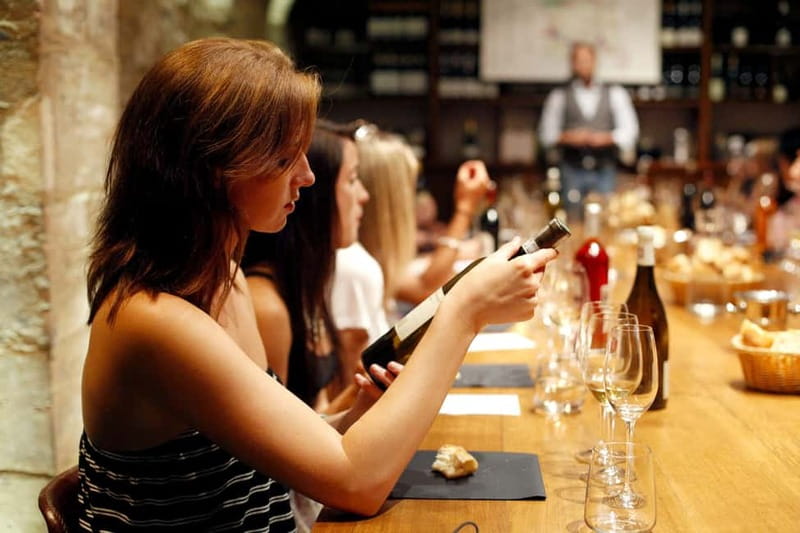
REVIEW · WINE TASTING TOURS
Paris: French Wine Tasting Class with Sommelier
The most useful thing about this Paris wine class is that it teaches you how to make sense of French wine, not just how to drink it. In two hours, you taste six wines from across France, learn the basics of terroir and appellation, and practice reading labels that can seem cryptic at first.
I like the setting in a 17th-century cellar just six minutes from the Louvre, and I like the practical range of the lesson. You get Champagne, white and red wines, regional context, and food-pairing advice in one sitting. The main drawback is that groups can be fairly large, sometimes around 25 people, and side conversations may make it harder to hear the sommelier.
Key points to know before booking
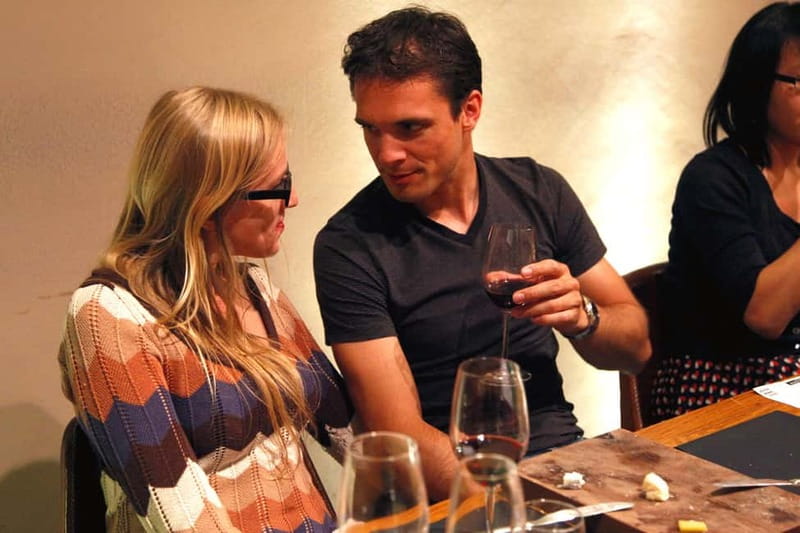
- Six French pours in two hours: One Champagne and five wines representing six French regions.
- A useful label lesson: Learn how French bottles identify place, quality, grapes, and appellation.
- English-speaking sommeliers: Hosts including Laury, Felicity, Paul, Clement, and Jasmina have led sessions.
- A central cellar location: Meet at 68 Rue Jean-Jacques Rousseau, a short walk from the Louvre.
- Cheese costs extra: Add a cheese or charcuterie platter on site for €15.
- Best for curious beginners: You do not need prior wine experience, though serious wine fans can ask detailed questions.
A French wine lesson near the Louvre
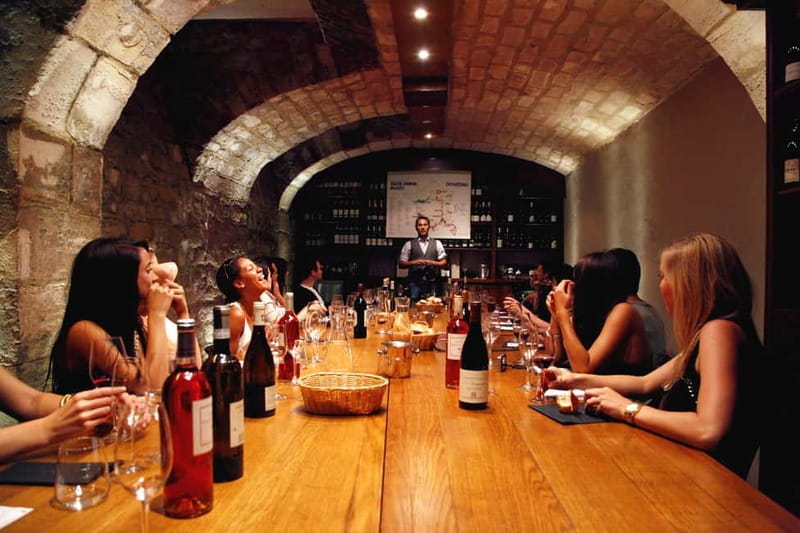
This experience begins at 5pm at Ô Chateau, at 68 Rue Jean-Jacques Rousseau in Paris’s 1st arrondissement. The cellar is close enough to the Louvre to pair neatly with an afternoon at the museum, though you should allow time to walk there rather than arrive breathless from the galleries.
The nearest metro stops are Louvre-Rivoli on Line 1 and Étienne Marcel on Line 4. From either station, the meeting point is about a six-minute walk. The central address also makes this an easy pre-dinner activity, with the class ending around 7pm.
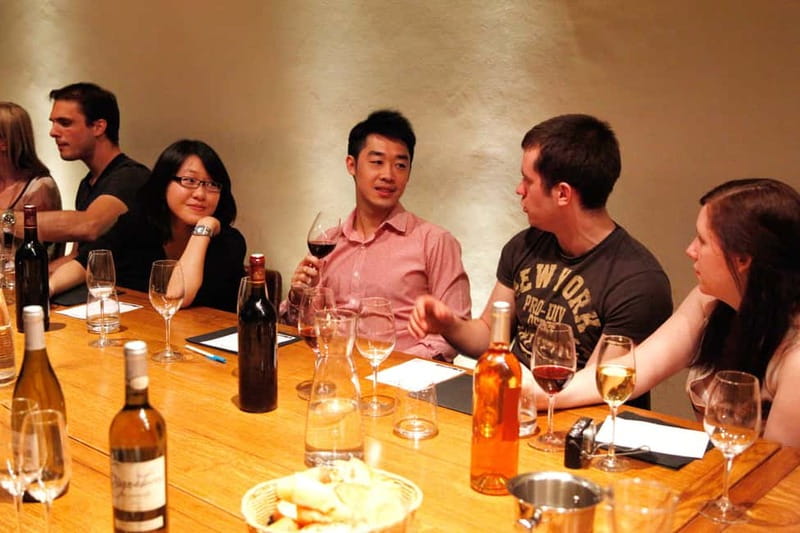
The atmosphere is more social than formal. You sit at a large table with wine glasses, bread, and still water while the sommelier guides the group through the tasting. This is not a silent academic seminar. You will be encouraged to ask questions, compare impressions, and talk with people from other countries.
That relaxed format is one of the class’s strengths. Guides such as Laury, Felicity, Paul, Clement, and Jasmina have been praised for combining humor with clear explanations. The best sessions appear to depend partly on the individual sommelier, but the format gives a good host plenty of room to involve the room.
More Wine Tasting Tours in France
- Montmartre Hill French Gourmet Food and Wine Tasting Walking Tour
★ 5.0 · 2,588 reviews - From Paris: Loire Valley Castles Day Trip With Wine Tasting
★ 4.6 · 1,727 reviews - Paris: Les Caves du Louvre Guided Tour with Wine Tastings
★ 4.7 · 932 reviews
Six wines, six parts of France
The tasting includes one Champagne and five additional French wines from five regions, giving you six wines connected to six major wine areas. The point is not to present a full survey of every French bottle. Two hours is far too short for that. Instead, the sequence gives you a useful first map of French wine.
You learn which grapes are commonly grown in different areas, how local conditions shape a wine’s style, and why the same grape can taste different from one place to another. The lesson also helps explain why French wine labels often emphasize the region or appellation more than the grape variety.
The exact bottles can vary, so you should not book expecting a fixed vintage or specific producer. The value is in the comparison. Tasting several regions in one sitting lets you notice differences in color, aroma, acidity, sweetness, body, and tannin while the information is still fresh.
You also get a bread basket and water. The bread is useful between pours, and water helps pace the evening. The pours are described as generous enough to leave some people pleasantly tipsy by the end, so this is not a tasting where you merely wet your lips and move on.
Champagne first, then the language of tasting
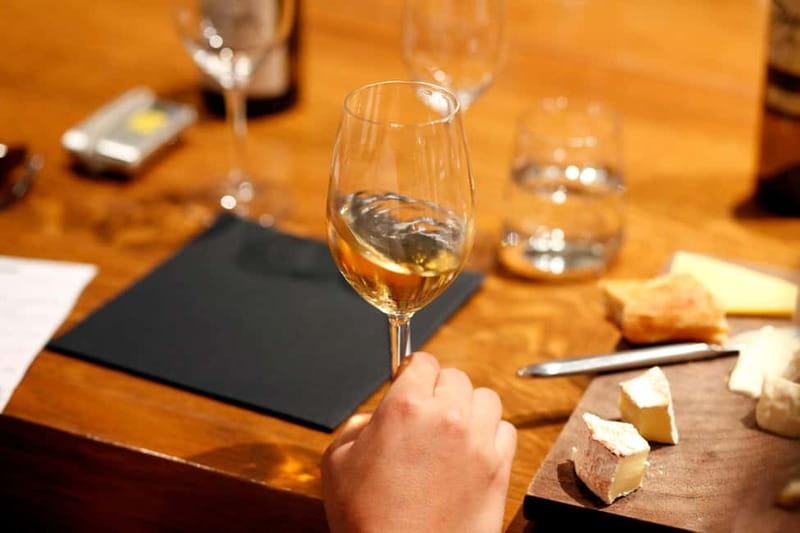
The Champagne portion gives the class a lively start. Your sommelier explains how Champagne is made, introducing the basic idea of sparkling wine production before moving through the other styles.
You will also practice how to taste wine. The method includes looking at the color, smelling the wine, swirling, smelling again, and taking a sip. That simple routine gives you something concrete to do with every glass. It also changes the way you shop for wine later, because you begin to pay attention to appearance and aroma instead of relying only on price or a familiar name.
The class covers tannins, sweetness, acidity, and the way these elements affect the feel of a wine. You can ask basic questions without feeling out of place. Beginners have found the format easy to follow, while people used to California or Italian wines can use the French examples to compare familiar styles with a different labeling system.
The aim is not to turn you into a sommelier in one evening. It is to give you a reliable set of habits. Look at the label. Consider the place. Taste with attention. Notice what you like. Those small skills make ordering wine in Paris less intimidating.
Terroir and appellation without the fuss
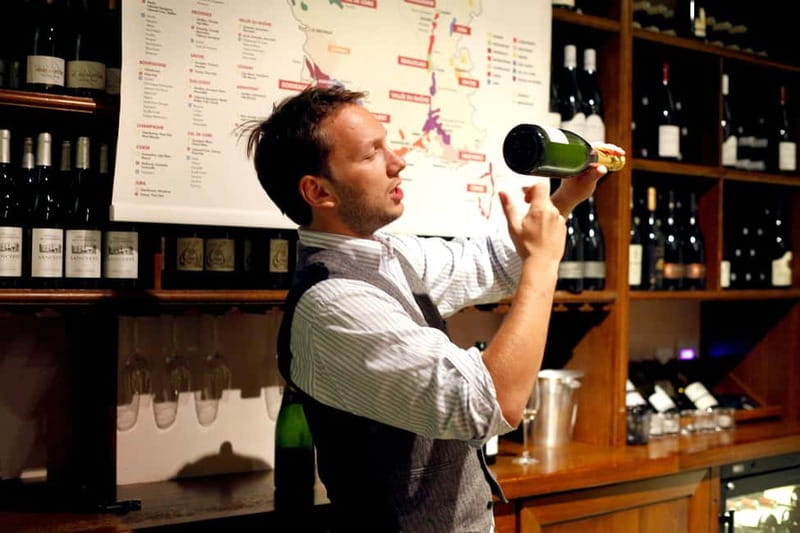
Two French wine terms come up early and often: terroir and appellation. The sommelier explains terroir as the mix of place, soil, climate, and local growing conditions that affects a wine. Appellation refers to the defined geographic and production rules connected with a wine’s name.
These ideas matter because French wine often asks you to understand the place before you understand the grape. A label may tell you the region or appellation, while the grape variety receives less attention than it would on many New World bottles.
The class turns that system into something practical. Rather than memorizing a long list of French names, you connect each wine with a region, the grapes commonly grown there, and the style produced. That is enough to help you make a better choice from a restaurant list or wine-shop shelf.
I especially like this part for anyone who has avoided French wine because the labels seemed too difficult. You will not leave knowing every appellation in France, but you should have a clearer idea of what information to look for and what questions to ask.
More Wine Tasting Tours in Paris
- Paris: Food and Wine Tasting Walking Tour in Le Marais
★ 4.9 · 446 reviews - Paris Art of Pairing Cheese and Wine Tasting in a Cheese Cellar
★ 5.0 · 386 reviews
Food pairing and the optional cheese plate
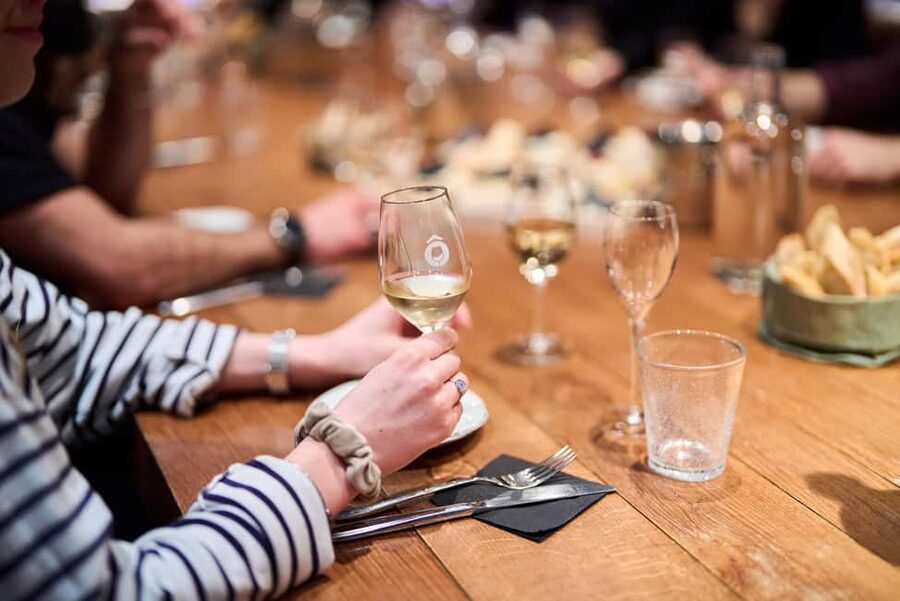
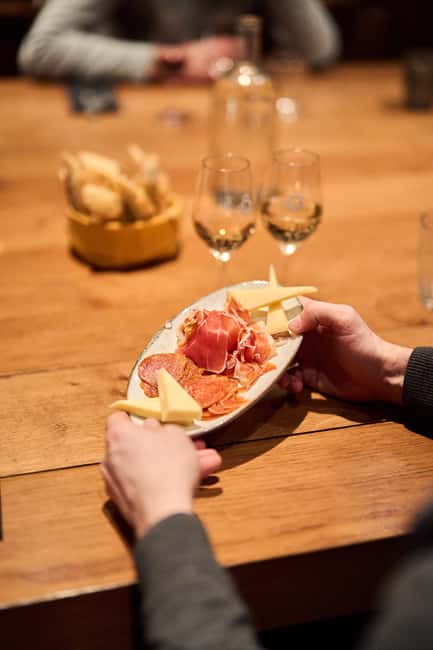
Food pairing is part of the lesson, and bread is included. If you want more substantial food with the tasting, you can add a cheese or charcuterie platter for €15 on site.
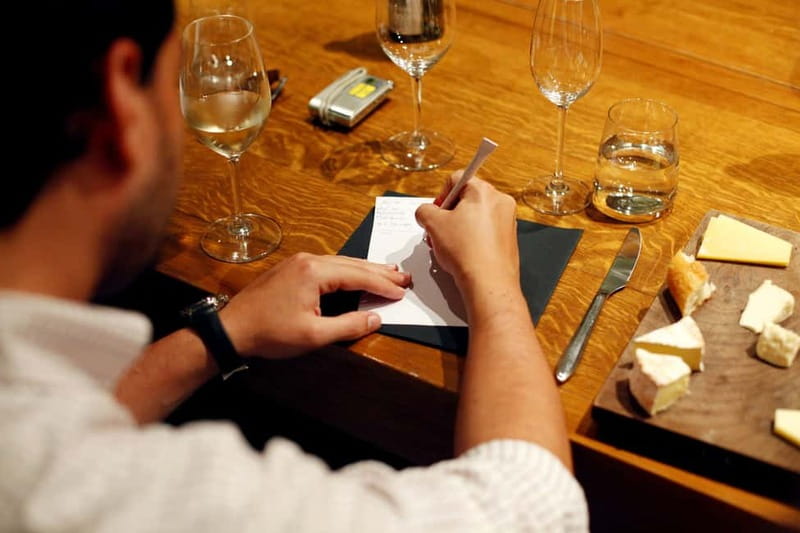
The cheese option is often the better fit for this particular class because it lets you see how salt, cream, and texture change the taste of wine. Charcuterie gives you another useful comparison, especially with fuller reds, but the choice depends on your preferences.
Be clear about the price: cheese and charcuterie are not included in the $88 booking price. The included items are six wine samples, bread, still water, the sommelier’s presentation, and a wine list. Some descriptions of the experience have made the food sound included, so confirm the add-on when you arrive.
The wine list is helpful if you find a bottle you want to buy later. All wines tasted during the class are available for purchase, along with many others. Your sommelier can point you toward bottles and wine shops, and some hosts have offered local buying advice after the tasting.
What the guides add to the evening
The sommelier makes or breaks a class like this, and the hosts have generally received the strongest praise. Clement has been singled out for his clear explanations and strong presentation skills. Laury has been noted for creating a good balance of humor and instruction. Felicity made beginners feel at ease, while Paul has been praised for an informative and enjoyable delivery.
Other named hosts include Jasmina, Jasmine, Kim, Pierre, Preston, Charlotte, and Gerard. The range of names reflects a rotating team rather than a guaranteed guide, so you should not book expecting one particular person unless the company confirms it.
The common thread is an interactive style. A good sommelier asks what the group wants to learn, adjusts the explanation, and welcomes questions. You can ask how Champagne is made, where grape varieties grow, what tannins mean, how to judge sweetness, and which wines work with particular foods.
English is the tour language. Clear English matters in a technical class, and the hosts have been praised for explaining French wine in an accessible way. That makes the session a sound choice if you want more than a simple tasting but do not want an advanced course taught in French.
The cellar setting and group size
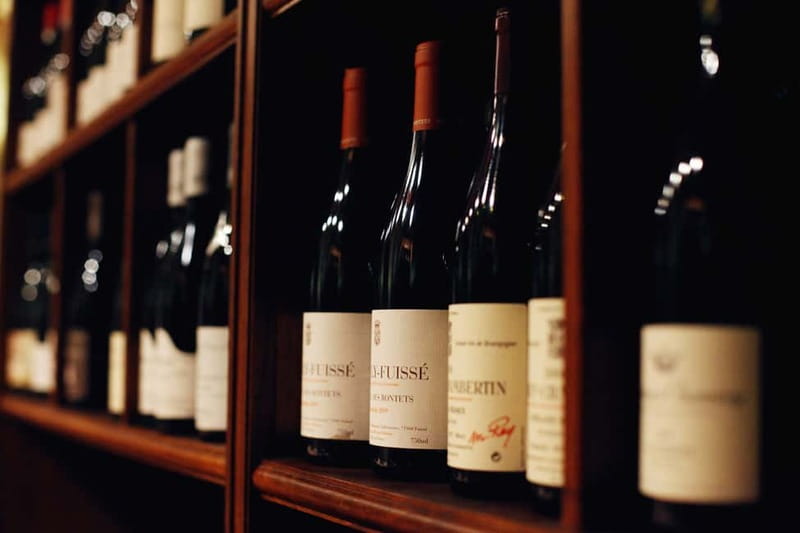
The 17th-century cellar gives the class a sense of place that a modern shop or hotel conference room would lack. It is close to one of Paris’s major sights, yet the wine setting shifts your attention away from museum crowds and toward a slower evening activity.
The room is social and communal. You share a large table, which can be a pleasant way to meet other people during a solo trip or couple’s holiday. Families with adult children have also used the class as a shared activity.
There are tradeoffs. A group of around 25 can feel crowded, particularly if you sit at the back. One attendee found that constant talking made parts of the presentation hard to follow. If you want an intimate, quiet tasting with long personal attention, this may not be the right format.
The cellar can also feel warm, especially in summer. Light clothing is sensible. You will be sitting for two hours, so comfort matters more than dressing up for the Louvre.
Is $88 a fair price?
At $88 per person, this is not the cheapest way to drink six glasses of French wine. You could spend less at a wine bar, especially if your only goal is to sample different bottles.
The price makes more sense if you value the instruction. You are paying for six wines, Champagne, a central historic setting, an English-speaking sommelier, a structured lesson, and the chance to ask questions. The class also gives you tools you can use for the rest of your trip, such as reading labels and ordering with more confidence.
The value is strongest for beginners and for people who already enjoy wine but feel less comfortable with French regions. If you are an experienced wine professional, the material may be basic unless you use the question period to explore more advanced topics.
The optional €15 food plate is reasonable if you want to turn the tasting into a small evening meal, but it is not essential. Bread and water are already included. I would choose the cheese add-on if you want to understand pairing in a more direct way.
How this fits into a Paris evening
The 5pm start works well after sightseeing. You can visit the Louvre earlier, walk to the cellar, and finish around 7pm with time for dinner. Do not plan a demanding activity immediately afterward. Six pours and a warm cellar can leave you pleasantly relaxed, and the class is designed as a social evening rather than a quick stop.
The location is also convenient for continuing into central Paris. You can ask the sommelier for bottle suggestions, buy a bottle, or simply use your new label-reading skills at dinner.
Cancellation is flexible up to 24 hours before the experience for a full refund, and you can reserve now and pay later. Check the available starting time when booking, since schedules can vary.
Who should book this wine class?
I would recommend it to first-time wine tasters, couples looking for an easy pre-dinner activity, solo visitors who enjoy meeting people, and adults traveling with older children. It also suits anyone who likes wine but has never understood French labels.
The class is less suitable if you want a private tasting, a vineyard visit, or a highly technical study of individual producers. You stay in central Paris rather than traveling into the countryside, and the focus is broad education rather than a detailed look at one wine region.
If you are sensitive to noise, try to sit near the sommelier. If you want the most from the session, ask questions early and take notes on the regions and styles you prefer. You can also request the cheese plate at check-in and dress for a potentially warm room.
Should you book it?
Book this class if you want a practical introduction to French wine without leaving central Paris. The combination of six regional pours, Champagne instruction, label reading, and food pairing gives you more than a standard tasting flight.
I would be cautious only if you dislike group activities or expect every wine to be exceptional. The selection is intended to teach comparison, and individual tastes will vary. For most curious visitors, the strongest payoff is not one perfect glass. It is leaving Paris able to read a French label, ask better questions, and choose a bottle with less guesswork.
FAQ
Where does the French wine tasting take place?
It takes place at 68 Rue Jean-Jacques Rousseau in Paris’s 1st arrondissement, in a 17th-century wine cellar near the Louvre.
How far is the meeting point from the Louvre?
The cellar is about a six-minute walk from the Louvre.
Which metro stations are closest?
Use Louvre-Rivoli on Metro Line 1 or Étienne Marcel on Line 4.
What time does the tasting start?
The listed tasting starts at 5pm and ends at about 7pm. Check availability for the exact start time when booking.
How many wines are included?
You taste six French wines in total: one Champagne and five other wines representing five French regions.
Is the tasting conducted in English?
Yes. The experience includes a live English-speaking sommelier.
Is food included?
Bread and still water are included. A cheese or charcuterie platter is available as an optional €15 add-on on site.
Can I buy the wines after the class?
Yes. The wines used in the class are available to buy, along with other wines. Ask your sommelier for help choosing.
Can I cancel for a refund?
You can cancel up to 24 hours in advance for a full refund. Reserve now and pay later is also available.
More Workshops and Classes in Paris
- Rome: Pasta Making Class with Wine, Limoncello, and Dessert
★ 4.9 · 3,177 reviews - Rome Cooking Class: Make Pasta and 3 Spritz Cocktails
★ 5.0 · 2,937 reviews - Barcelona Paella Cooking Class with Market Visit, Tapas & Sangria
★ 5.0 · 2,531 reviews - Fettuccine & Tiramisù: Cooking Class with Wine & Limoncello
★ 4.9 · 2,103 reviews
More Wine Tasting Classes in Paris
- Paris: Wine and Cheese Tasting with a Chef Sommelier
★ 4.7 · 277 reviews - Porto: Douro Valley Wine Tour with a Sommelier & Boat Trip
★ 5.0 · 463 reviews - Port Wine class with 3 or 5 Port tasting and pairings
★ 4.9 · 441 reviews
Just poured in Paris
- Paris: Wine and Cheese Tasting with a Chef Sommelier★ 4.7 · 277 reviews
- Paris: Wine and Cheese Lunch★ 4.9 · 596 reviews
- Paris Art of Pairing Cheese and Wine Tasting in a Cheese Cellar★ 5.0 · 386 reviews
- French Wine, Champagne And Cheese Tasting Paris SECRET WINE DOOR★ 5.0 · 464 reviews
- Paris: Food and Wine Tasting Walking Tour in Le Marais★ 4.9 · 446 reviews
- Paris Montmartre Food & Wine Tour with Eating Europe★ 5.0 · 718 reviews
- Champagne Day Trip with 6 Tastings, Reims and Winery from Paris★ 5.0 · 902 reviews
- Paris: Les Caves du Louvre Guided Tour with Wine Tastings★ 4.7 · 932 reviews
Wine Tasting Tours, compared.
Douro Valley w/ Boat Tour, Wine Tasting & Lunch
Read our review →
Complete Douro Valley Wine Tour with Lunch, Wine Tastings and River Cruise
Read our review →

Small-Group Wine Tasting Experience in the Tuscan Countryside
Read our review →
Montserrat & Cogwheel Train, Gourmet Wine Tasting & Tapas/Lunch
Read our review →
Tuscany & Montepulciano Day Trip with Lunch & Wine Tasting
Read our review →Browse the lists this tour appears in