
REVIEW · WINE TASTING TOURS
Bordeaux: Wine and Trade Museum Entry Ticket & Wine Tasting
Bordeaux wine begins to make sense when you see it in the old cellars where merchants once stored barrels. This experience combines a self-guided museum visit with a short vineyard presentation and tasting, giving you both the story and the glass.
I like the atmospheric vaulted cellars, dating from about 1720, and the practical format: you can explore at your own pace before joining the tasting. I also like the pairing of two local wines with raisins dorés and canelés, two small treats that make the tasting feel tied to Bordeaux rather than like a generic wine stop.
The main thing to consider is that this is not a full guided museum tour. You receive a paper guide or audio guide, then join the presentation and tasting in a small group. Also, the experience advertises two wines, although one recent booking account described receiving three, so the exact selection may vary.
Key points to know before booking
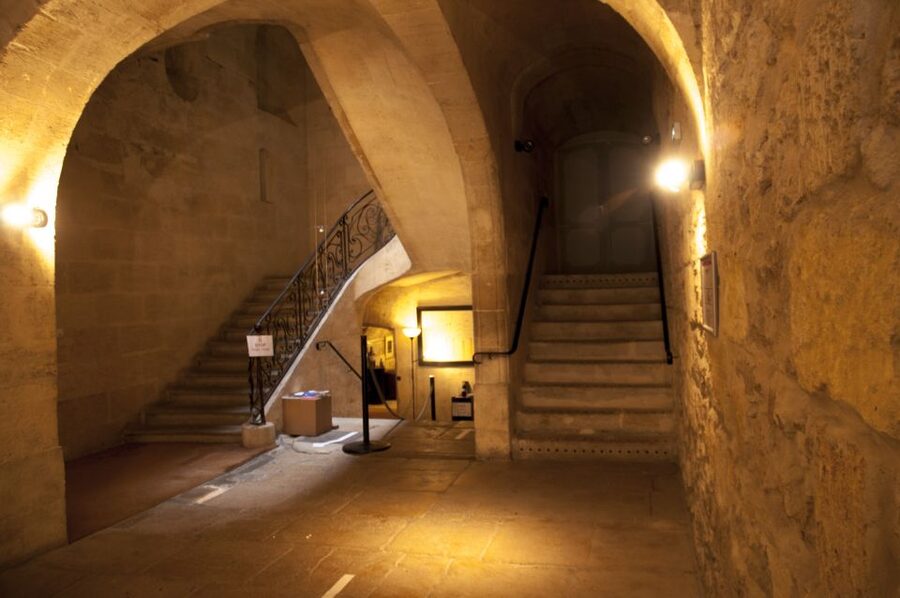
- The cellars date from around 1720: See traditional vaulted spaces connected with barrel storage and the work of coopers.
- The tasting is built around Bordeaux basics: Learn about grape varieties, AOC appellations, terroir, and regional classifications before tasting.
- Local sweets are part of the experience: The wines come with chocolate-coated raisins and canelés de Bordeaux.
- You explore independently first: Choose a paper guidebook or an audio guide in one of 11 available languages.
- The group is capped at nine people: That keeps the presentation and tasting more personal than a large museum visit.
- The price is modest for Bordeaux: At $14 per person, the ticket offers a useful introduction without the cost of a vineyard day trip.
Starting at the former home of a royal wine broker
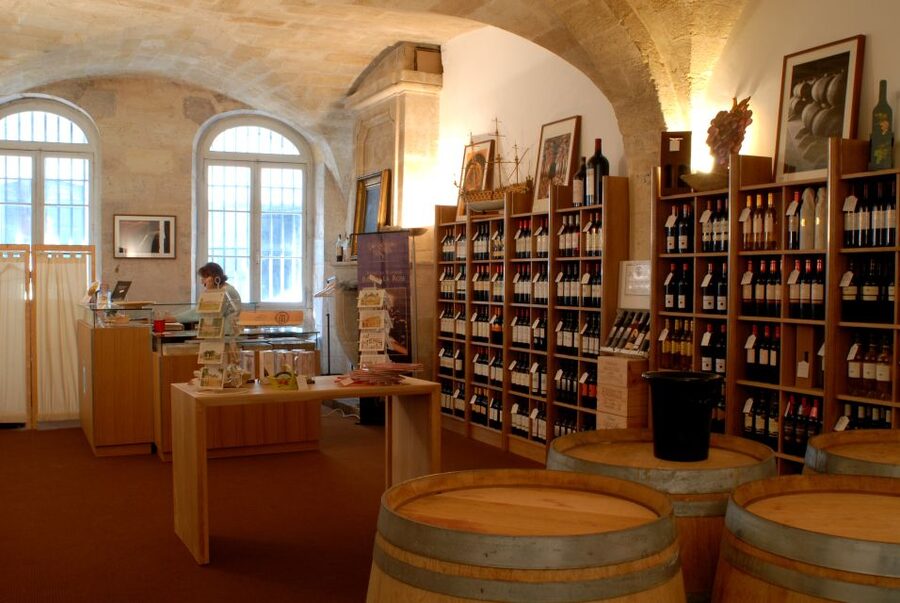
You begin at the Bordeaux Wine and Trade Museum, located in the former residence of Louis XV’s royal broker. That detail gives the visit a useful starting point. This was not simply a private home with a few wine displays added later. The building is tied to the trade network that helped Bordeaux wine reach buyers far beyond the city.
I like this setting because it points you toward the business side of wine. Bordeaux is famous for vineyards and grand estates, but its reputation also depended on merchants, storage, shipping, blending, aging, and sales. The museum focuses on those people and processes over more than three centuries.
You do not begin with a guide leading you room by room. Instead, you receive a paper guidebook or audio guide, depending on the available arrangement, and walk through the museum at your own pace. Audio and written materials are offered in French, Portuguese, Spanish, Russian, Korean, Chinese, Japanese, Italian, English, German, and Dutch.
That choice matters. If you like stopping over a display, reading slowly, or moving on quickly, the self-guided format gives you control. The tradeoff is that the quality of your visit depends partly on how much attention you give the material. This is a museum experience with a scheduled tasting attached, not a continuous guided tour.
More Wine Tasting Tours in Bordeaux
- Bordeaux: Cité du Vin Entry Ticket and Wine Tasting
★ 4.6 · 3,885 reviews - From Bordeaux: Afternoon Saint-Emilion Wine Tasting & snack
★ 4.8 · 1,581 reviews - Medoc or Saint Emilion Wine Tasting and Chateau from Bordeaux
★ 5.0 · 1,415 reviews
What the self-guided museum visit adds
The museum explains how Bordeaux’s wine trade developed and how merchants shaped the city’s international reputation. You can expect the visit to introduce the relationship between producers and négociants, the merchants who bought, stored, marketed, and distributed wine.
The supplied guide materials are especially useful if you are new to Bordeaux wine. Labels can seem like a code of estates, appellations, vintages, and classifications. A self-guided walk lets you take in the basic structure before the tasting puts those ideas into practice.
The museum’s subject is also a good match for visitors who want more than a list of famous châteaux. You will not be visiting a vineyard outside Bordeaux, and there is no promise of a view across working vines. Instead, you are learning how wine became a commercial and cultural force in the city.
The audio guide has been a major strength for many people booking this experience, and the availability of a free audio option is worth noting. It can make the displays easier to follow, particularly if you prefer listening to reading. The paper guide remains a good choice if you want to go at your own speed or share information with companions.
Plan to pay attention to the difference between what the museum shows and what a vineyard visit would offer. Here, the emphasis is trade, storage, history, and explanation. You get context that is often missing from a simple tasting, but you do not get a walk among vines or a meeting with a winemaker at a rural estate.
The 1720s cellars and the practical side of wine
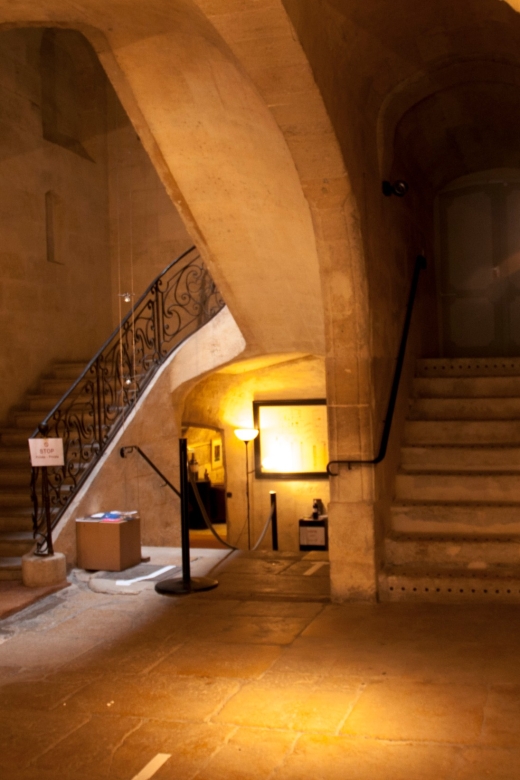
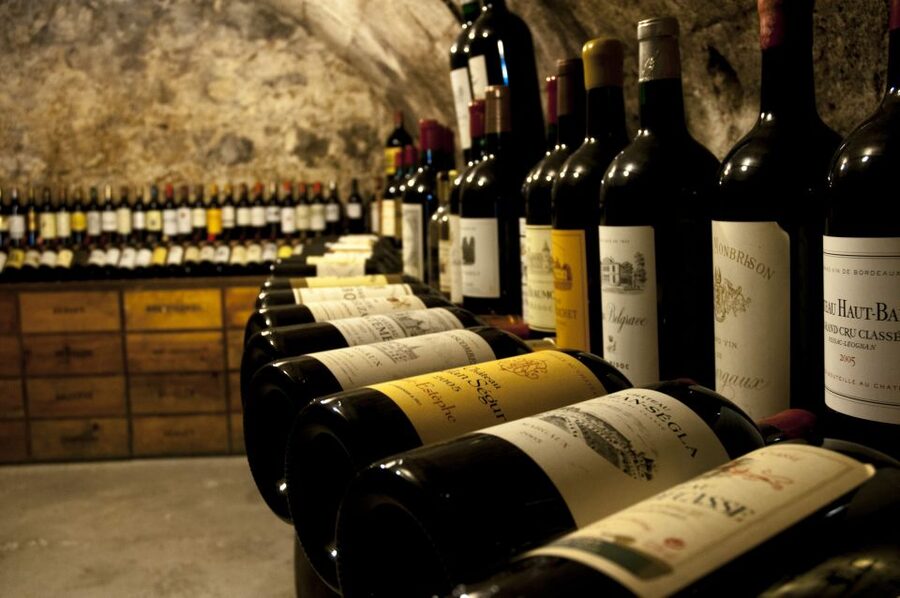
The most atmospheric part of the visit is the pair of vaulted historic cellars, dating to around 1720. These spaces show how wine was kept in traditional barrels and help explain the working conditions of 19th-century Bordeaux merchants.
I find cellars valuable because they make storage part of the wine story. Wine does not go straight from grape to bottle. It rests, ages, and moves through a system of barrels and handling. In these old rooms, you can connect the finished bottle with the older methods that supported Bordeaux’s trade.
The displays also introduce the work of coopers, the craftspeople who made and maintained wooden barrels. That is a useful detail for anyone who has wondered why oak appears so often in wine descriptions. The cellars show the physical setting behind that vocabulary.
Do not expect a large underground complex. The visit covers two historic cellars, and the information provided does not promise a long cellar tour or a working production facility. Their value is their age and connection with the merchant trade, not their size.
This part should suit you if you enjoy old buildings, traditional tools, and the business history behind food and drink. If you only want to taste wine, the museum portion may feel like extra time before the glass arrives. At $14, though, the cellars add a fair amount of context for a small extra cost.
The vineyard presentation turns history into wine basics
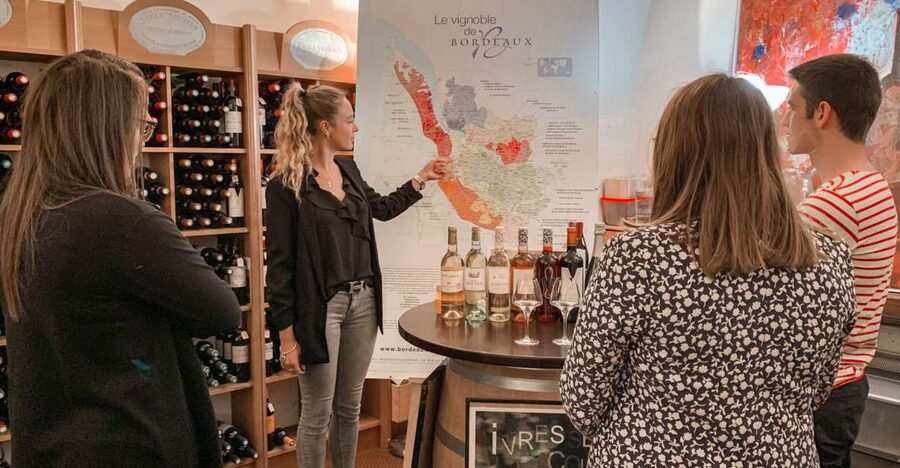
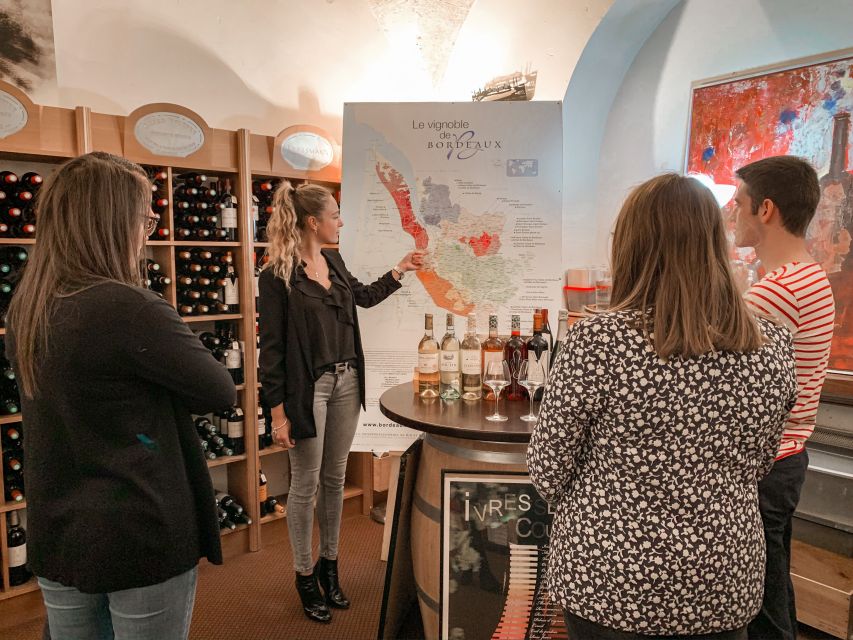
After the museum visit, you join a presentation about the Bordeaux vineyards. This is where the experience shifts from historical setting to practical wine education.
The presentation covers grape varieties, appellations d’origine contrôlée, or AOC, terroir, and regional classifications. These subjects can sound technical, but they answer basic questions you are likely to have while looking at a Bordeaux label.
Grape varieties explain the raw material. AOC rules help define where a wine comes from and which standards apply. Terroir connects the wine to its environment, including the conditions that affect how grapes grow. Regional classifications give you a way to understand why different Bordeaux areas and producers may carry different levels of prestige or price.
I like having this explanation before the tasting. It gives you a few ideas to listen for rather than asking you to judge a wine with no framework. You can pay attention to how the presentation describes the region and then see how the selected wines fit into that picture.
The format is still fairly compact. This is an introduction, not an advanced certification class, and the information provided does not promise a detailed study of every Bordeaux appellation. That is a benefit for beginners, but serious wine students may want a longer tasting or a specialist course afterward.
More Wine Tasting Tours in France
- Saint Emilion Day Trip with Sightseeing Tour & Wine Tastings from Bordeaux
★ 5.0 · 1,120 reviews - Saint Emilion Half-Day Trip with Wine Tasting & Winery Visit from Bordeaux
★ 4.5 · 1,034 reviews - From Bordeaux: Half-Day Saint-Émilion Tour and Wine Tasting
★ 4.7 · 699 reviews - Saint-Emilion Electric Bike Day Tour with Wine Tastings & Lunch
★ 5.0 · 696 reviews
Tasting two local wines with Bordeaux treats
The experience finishes with a guided tasting of two locally selected wines. The tasting is not presented as a free-for-all. The wines are chosen in-house, and the host comments on them after the vineyard presentation.
For a first introduction, two wines are usually enough to keep the tasting focused. You can listen, taste, compare, and ask yourself what changes from one glass to the next. The purpose is not to sample every corner of Bordeaux, but to connect the museum’s ideas with actual wine.
The official format includes two wines. One recent booking account described receiving three, but you should plan on two and treat any additional pour as a possible variation rather than a guaranteed feature. Wine selections can change as local stock changes, and the available information does not identify specific estates or vintages.
The pairing is one of the more distinctive details. You taste the wine with raisins dorés, chocolate-coated raisins, and traditional canelés de Bordeaux. Canelés are small Bordeaux pastries with a dark caramelized exterior and soft center. The raisins add a sweet chocolate note, while the pastry links the tasting to a local specialty.
One booking account wished for a small savory snack, so keep your expectations sensible. The included treats are modest and sweet. They are enough to accompany the tasting, but they are not a meal or a broad food pairing menu.
The guide’s role is important here. The tasting is described as guided, and the small group limit of nine should make it easier to follow the explanation. The strongest praise attached to this experience focuses on the tasting, the guide, and the historical account of Bordeaux wine. You should expect a clear introduction rather than a private sommelier session.
Why the small group size matters
The group is limited to nine participants. That is a useful middle ground. You are not alone with a private guide, but you are also unlikely to be lost in a large crowd during the tasting.
A small group makes the presentation easier to hear and gives you a better chance to ask a short question. It also helps during the wine portion, when a large room can make a guided explanation feel remote.
The group size does not turn the visit into a private tour. The museum walk remains self-guided, and the experience provider does not promise a named personal guide. Host and greeter support is available in 11 languages, which is particularly helpful for an international audience.
If you want a highly personal tour with long conversation about your own wine preferences, this may feel limited. If you want structure, clear explanations, and a manageable tasting group, the format makes good sense.
Is $14 good value in Bordeaux?
At $14 per person, this is an inexpensive way to get a museum entry, historic cellar visit, vineyard presentation, and wine tasting in central Bordeaux. You also receive a paper guidebook, access to the guide materials, two local wines, and the included sweets.
I consider the value strongest for first-time Bordeaux visitors. You get the basic vocabulary needed to understand the region, plus a taste of local wine without committing to a full-day excursion outside the city. The price also makes this easy to add to a day of sightseeing.
The value is less clear if you want a rural vineyard visit, transportation among estates, or an extensive tasting. None of those are included. This is an urban museum experience with a tasting, not a château tour.
The booking terms add flexibility. You can reserve now and pay later, and cancellation is available up to 24 hours before the experience for a full refund. The ticket is valid for one day, with starting times shown according to availability. These details help if your Bordeaux schedule is still shifting.
Who should book this experience?
I would choose this for a visitor who wants a manageable introduction to Bordeaux wine without spending a full day in the countryside. It suits couples, solo visitors, and small groups who enjoy history but do not need every stop to be guided.
It is also a good fit if you are unsure how Bordeaux wine works. The presentation covers the terms that often make wine labels confusing, and the tasting gives you an immediate chance to connect those terms with two glasses.
Families with older children may find the museum interesting, but the wine tasting is clearly the central reward for adults. The included treats make the ending pleasant, though the activity is not designed as a full food experience.
I would be more cautious if you already know Bordeaux wines well. You may find the introductory explanations familiar, and the two-wine tasting may feel brief. In that case, look at this for its cellars and merchant history rather than expecting a specialist tasting.
My verdict: book it for context and a modest tasting
Book this experience if you want Bordeaux wine explained in plain terms, with a short tasting attached to an old city setting. The 1720s cellars, the focus on merchants, and the canelés make it more specific than a standard wine bar stop.
Skip it if your main goal is a working vineyard, a château visit, or a long tasting flight. For everyone else, $14 is a sensible price for learning the basics, seeing historic storage spaces, and tasting local wines in a small group.
FAQ
Where does the experience begin?
It begins at the Wine and Trade Museum in Bordeaux.
How long is the ticket valid?
The ticket is valid for one day.
Is the museum visit guided?
The museum visit is self-guided. You can use a paper guidebook or an audio guide.
Which languages are available?
Materials and host or greeter support are available in French, Portuguese, Spanish, Russian, Korean, Chinese, Japanese, Italian, English, German, and Dutch.
How many wines are included?
The advertised experience includes a guided tasting of two local wines. One booking account described receiving three, but two is the stated format.
What food is included with the tasting?
The tasting includes raisins dorés, or chocolate-coated raisins, and traditional canelés de Bordeaux.
How large is the tasting group?
The group is limited to nine participants.
Is a full guided museum tour included?
No. The museum visit is self-guided, while the Bordeaux vineyard presentation and wine tasting are guided.
More Museum Visits in Bordeaux
- Bordeaux Wine and Trade Museum Admission Ticket with Wine Tasting
★ 4.5 · 599 reviews - Porto: Cálem Cellar Tour, Interactive Museum & Wine Tasting
★ 4.5 · 4,113 reviews - Dublin Irish Whiskey Museum and Gallery Guided Tour with Tasting
★ 5.0 · 3,078 reviews - Munich: Beer and Food Tour with Dinner & Oktoberfest Museum
★ 4.7 · 1,086 reviews
Just poured in Bordeaux
- Professional – Bordeaux Wine and Cheese Tasting with a walking tour★ 5.0 · 218 reviews
- Saint Emilion Full Day Wine and Bike Tour★ 5.0 · 167 reviews
- Medoc Afternoon Wine Tour – 2 Wineries, tastings & delicacies★ 4.5 · 74 reviews
- Discovery of the Bordeaux vineyard in 3 wines★ 5.0 · 133 reviews
- Bordeaux Wine and Trade Museum Admission Ticket with Wine Tasting★ 4.5 · 599 reviews
- Essential Wine Tour with Tasting & Chateau Visits from Bordeaux★ 5.0 · 133 reviews
- Saint-Emilion Small-Group Electric Bike Wine Tour Tastings & Lunch from Bordeaux★ 5.0 · 383 reviews
- Bordeaux Wine Masterclass: Blending workshop with appetizer★ 5.0 · 113 reviews
Wine Tasting Tours, compared.
Douro Valley w/ Boat Tour, Wine Tasting & Lunch
Read our review →
Complete Douro Valley Wine Tour with Lunch, Wine Tastings and River Cruise
Read our review →

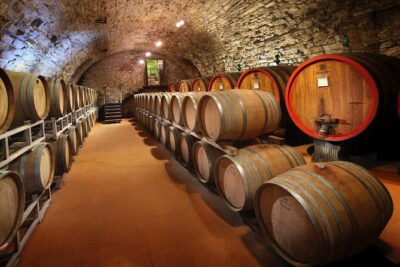
Small-Group Wine Tasting Experience in the Tuscan Countryside
Read our review →
Montserrat & Cogwheel Train, Gourmet Wine Tasting & Tapas/Lunch
Read our review →
Tuscany & Montepulciano Day Trip with Lunch & Wine Tasting
Read our review →Browse the lists this tour appears in