
REVIEW · DRINKS TOURS
Bordeaux Wine Masterclass: Blending workshop with appetizer
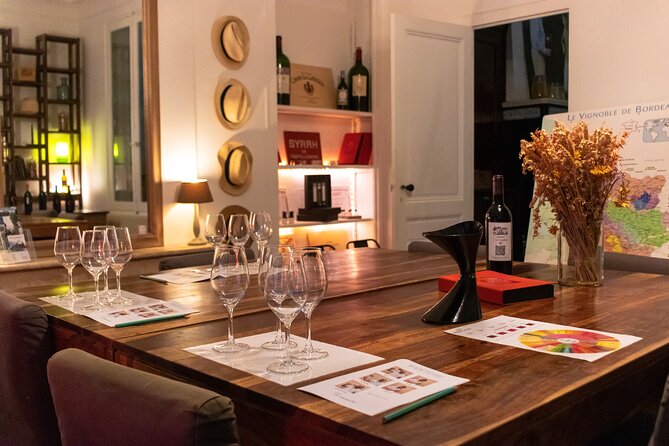
Bordeaux’s best lesson here is hands-on: you do not just taste finished wine, you blend Merlot and Cabernet Sauvignon to make your own Bordeaux-style red. That simple exercise turns abstract wine talk into something you can taste immediately.
I like the broad French lineup, which includes Bordeaux, Burgundy, the Rhône, and the Loire Valley. I also like the small group, capped at 12, because guides such as Gabriel, Victoire, Fabien, Chloé, Dorian, and Hugo have room to answer questions instead of rushing through a script.
The main thing to note is the timing and wine count. The experience is described as roughly 90 minutes in one place and two hours in another, while the wine count is listed as seven in one section and eight in another. Plan on a substantial tasting, but do not expect a full meal.
Key points at a glance
- Blend your own Bordeaux wine: Compare Merlot and Cabernet Sauvignon, then make a personal blend.
- Taste across France: The selection can include wines from Bordeaux, Burgundy, Côtes du Rhône, and the Loire Valley.
- Learn practical skills: Practice reading French labels, identifying aromas, judging color, and using basic tasting language.
- Small English-speaking class: The group maximum is 12, with a professional wine guide leading the session.
- Cheese, meat, bread, and chocolate: The appetizer platter gives you something to eat alongside the wine, though portions are light.
- Easy central meeting point: Start at 10:30 am at 3 Rue d’Enghien in Bordeaux and finish at the same place.
Why the blending exercise matters
Many wine classes stop at swirling, sniffing, and sipping. This one goes a step further by showing you how a Bordeaux wine can be built from different grapes.
Merlot tends to bring softness and fruit, while Cabernet Sauvignon can add structure and firmness. You taste the components, combine them in different proportions, and see how the final drink changes. I like this because it gives you a quick lesson in balance. You are not simply told that blending matters. You get to test the idea yourself.
The exercise also helps explain the familiar Bordeaux split between the Left Bank and Right Bank. The class does not promise a vineyard visit, but the blending activity gives you a useful starting point for understanding why Bordeaux wines can taste so different even when they come from the same broad region.
This is especially helpful if Bordeaux labels have always seemed hard to decode. French wine names often point to a place or appellation rather than the grape variety. By the end, you should have a clearer sense of how grape, place, producer, and appellation work together.
More Workshops and Classes in Bordeaux:
- Bordeaux Super Saver Wine Tasting class and St Emilion region
★ 5.0 · 184 reviews - Guided Bordeaux Wine Tasting Class with 6 Wines and pairings
★ 4.9 · 181 reviews - Workshop Bordeaux wine tasting: 4 reds & charcuterie pairing
★ 5.0 · 72 reviews
A French wine lesson beyond Bordeaux
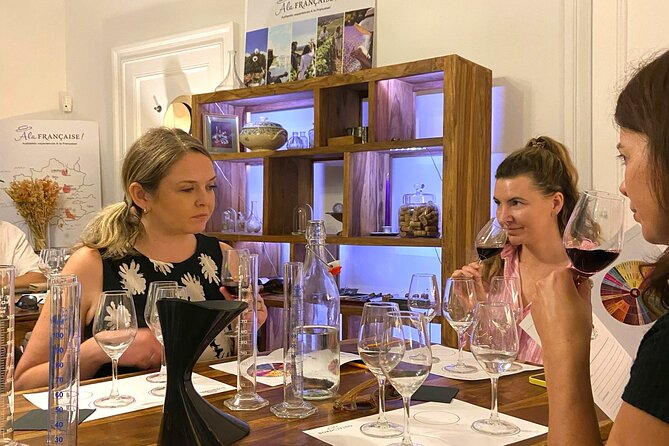
The focus is Bordeaux, but the tasting is not limited to local wine. You may taste examples from Burgundy, Côtes du Rhône, and the Loire Valley, along with Bordeaux selections.
That wider range is a real strength. It lets you compare different French wine traditions in one sitting, rather than tasting several bottles that all share the same local style. You can begin to notice how grape varieties, climate, soil, and winemaking choices shape the result.
The guide introduces terms such as terroir and appellation in plain language. These words can sound grand until you connect them to a glass in front of you. The class is designed to help you identify aromas and flavors, interpret color, and describe the wines you prefer.
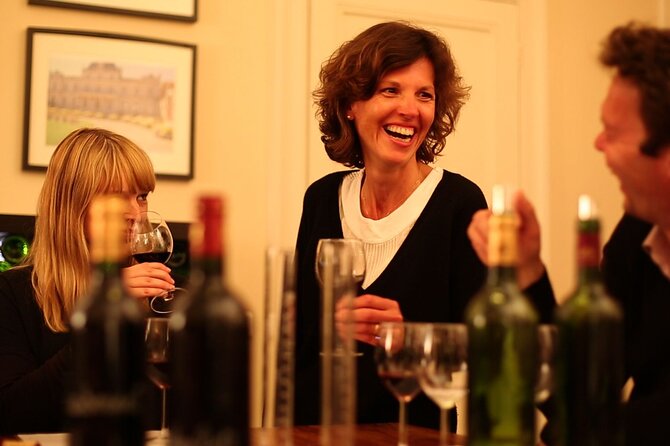
You do not need a trained palate to take part. The experience is aimed at all levels, and the teaching style is informal. Several guides, including Chloe, Carol, Remi, Hector, and Fabien, have been praised for making the lesson easy to follow and open to questions. The specific guide depends on the date of your visit.
What happens during the tasting
You meet at 3 Rue d’Enghien at 10:30 am. There is no hotel pickup, so you need to make your own way there. The activity ends back at the meeting point, which keeps the arrangement simple and avoids spending part of the morning in a vehicle.
The class begins with an overview of French wine regions. This gives you a basic map before the glasses arrive. You learn where Bordeaux fits into France’s wine world and how other major regions differ.
Next comes the tasting portion. The published details promise at least seven French wines, while the fuller description refers to eight. Either way, this is more than a token sample. You get enough comparisons to notice patterns, though you should not expect a full bottle-sized pour of each wine.
The guide discusses the appearance, aromas, flavors, and structure of each wine. You may also take part in smelling exercises designed to help you recognize common wine aromas. These activities can feel a little playful, but they have a practical purpose: they give you words to use when you like a wine but cannot explain why.
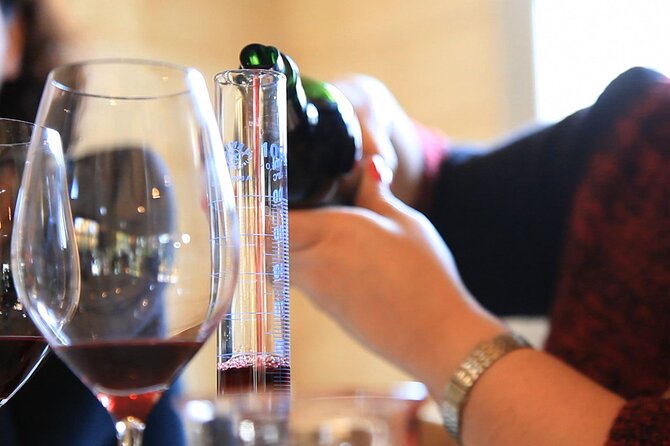
The class then turns toward Bordeaux blending. You work with Merlot and Cabernet Sauvignon, taste the varieties, and combine them. This is the point where the session becomes more than a standard wine flight. You can see how a small change in proportions affects the final character.
At the end, you receive a diploma as a keepsake. It is a lighthearted finish rather than a formal qualification, but it gives the experience a clear ending.
The appetizer plate is useful, not a meal
The food includes French cheese, cured meat, fresh bread, and chocolate. These pairings help you notice how food can change the taste of wine, particularly its acidity, tannin, and fruit character.
The plate also makes the morning more comfortable. Seven or more tastings can feel substantial on an empty stomach, so the food is not just decoration. Still, keep your expectations in check. The appetizer offering is not intended to replace lunch, and one account specifically found the food modest compared with the amount of wine.
If you want a full meal afterward, plan one separately. The 10:30 am start gives you plenty of time to continue with lunch after the session.
More Drinks Tours in Bordeaux:
- Bordeaux: Cité du Vin Entry Ticket and Wine Tasting
★ 4.6 · 3,885 reviews - Bordeaux: River Garonne Cruise with Glass of Wine and Canelé
★ 4.5 · 3,630 reviews - From Bordeaux: Afternoon Saint-Emilion Wine Tasting & snack
★ 4.8 · 1,581 reviews - Medoc or Saint Emilion Wine Tasting and Chateau from Bordeaux
★ 5.0 · 1,415 reviews
How the guides shape the experience
The guide matters greatly in a tasting class. Wine terminology can become dull if it is delivered as a list of facts. Here, the strongest accounts point to guides who keep the atmosphere relaxed while handling detailed questions.
Gabriel has been praised for explaining wine pairing, ratings, and the science behind tasting. Victoire was described as friendly and well prepared, while Fabien helped make blending easy to understand. Chloe received praise for turning the history, tasting, and blending into one clear lesson.
Other named guides include Dorian, Hugo, Remi, Hector, and Carol. Their backgrounds and presentation styles may differ, but the recurring pattern is an English-language session built around conversation and participation. One guide was also noted for fluency in both English and French, which can help if you have questions about French terminology.
The description calls the leader a professional sommelier. One past participant felt the guide did not match that title, so I would treat the experience as a practical introductory class rather than a formal sommelier course. You are paying for guided instruction and tasting, not a professional certification.
Who will get the most from this class
This is a good fit if you want to understand French wine before visiting Bordeaux’s surrounding vineyards. It gives you enough vocabulary to make later tastings less intimidating and helps you recognize why two Bordeaux wines may differ.
It also suits an experienced wine drinker who wants a structured comparison. One particularly useful part for confident tasters is the blind tasting challenge. You can test your ability to identify regional styles without relying on the label.
Couples, small friend groups, and celebrations can all work well here. The class has also been used for a hen party, and the relaxed setting allows social conversation alongside the teaching. The maximum group size of 12 is small enough for participation, but it is not a private tasting.
This may be less suitable if you want a cellar tour, vineyard scenery, or a long meal. You remain at the meeting venue, and the activity is built around instruction rather than countryside views. It is also not suitable for anyone under 18, since the minimum drinking age is 18.
The value of $54.42
At $54.42 per person, the price is reasonable for an organized English-language tasting that includes a guide, at least seven wines, food pairings, and the blending activity.
The value depends on what you want from a Bordeaux wine experience. If you mainly want to drink local wine in a pretty setting, you may prefer a vineyard excursion. If you want to understand what is in your glass, this class gives you more useful instruction than a basic bar tasting.
You also avoid the extra cost and travel time of reaching a château outside Bordeaux. The tradeoff is that the wines come to you, and the session does not include transport, a winery visit, or hotel pickup.
The food is part of the value, but it should be viewed as an appetizer plate. The real value lies in the comparisons and the blending lesson. You can carry those skills into restaurants, wine shops, and later tastings across France.
Practical details before you book
The activity is offered in English and uses a mobile ticket. Confirmation is provided when you book, and most people can participate. Pets are not allowed.
Because the class is often reserved well ahead of time, I would not leave it until the last morning of a short Bordeaux stay. The experience is commonly booked about 29 days in advance, which suggests that popular dates can fill before your arrival.
The cancellation policy is flexible if your plans are still shifting. You can receive a full refund if you cancel at least 24 hours before the start time. Cancellations or changes inside that window are not accepted for a refund, and the local time in Bordeaux controls the deadline.
The experience requires a minimum number of participants. If that minimum is not reached and the class is canceled, you are offered another date or experience, or a full refund.
Is this Bordeaux wine class worth booking?
I would book it if you want a compact, practical introduction to French wine with a clear Bordeaux focus. The strongest parts are the Merlot and Cabernet Sauvignon blending and the chance to compare Bordeaux with other French regions in one sitting.
Choose something else if your priority is a château visit, vineyard views, or a full meal. But for a 90-minute to two-hour lesson near central Bordeaux, the price is fair, the group is kept small, and the format gives beginners and experienced wine drinkers something to do with their glass besides simply sip.
FAQ
Where does the Bordeaux wine masterclass begin?
It begins at 3 Rue d’Enghien, 33000 Bordeaux, France.
What time does the experience start?
The start time is 10:30 am.
How long does the class last?
The duration is listed as approximately one hour and 30 minutes, while the detailed description calls it a two-hour workshop. Plan for roughly 90 minutes to two hours.
How many wines will I taste?
The experience includes at least seven French wines. The detailed description refers to eight wines, so the exact number may vary.
Which French wine regions are included?
The tasting can include Bordeaux, Burgundy, Côtes du Rhône, and the Loire Valley.
Do I make my own wine blend?
Yes. You create a custom blend using Merlot and Cabernet Sauvignon, two grape varieties associated with Bordeaux.
Is food included?
Yes. The package includes a French appetizer platter with cheese, cured meat, fresh bread, and chocolate.
Is the class available in English?
Yes. The experience is offered in English. French language service is not included as a listed feature.
Just poured in Bordeaux
- Saint Emilion Full Day Wine and Bike Tour★ 5.0 · 167 reviews
- Professional – Bordeaux Wine and Cheese Tasting with a walking tour★ 5.0 · 218 reviews
- Discovery of the Bordeaux vineyard in 3 wines★ 5.0 · 133 reviews
- Bordeaux Wine and Trade Museum Admission Ticket with Wine Tasting★ 4.5 · 599 reviews
- Medoc Afternoon Wine Tour – 2 Wineries, tastings & delicacies★ 4.5 · 74 reviews
- Essential Wine Tour with Tasting & Chateau Visits from Bordeaux★ 5.0 · 133 reviews
- Saint-Emilion Small-Group Electric Bike Wine Tour Tastings & Lunch from Bordeaux★ 5.0 · 383 reviews
- Prestige Commented Cruise glass of wine and Canelé in Bordeaux★ 4.0 · 517 reviews
Drinks Tours, compared.
Douro Valley w/ Boat Tour, Wine Tasting & Lunch
Read our review →
Chichen Itza, Cenote & Valladolid Tour with Tequila and Lunch
Read our review →
Complete Douro Valley Wine Tour with Lunch, Wine Tastings and River Cruise
Read our review →
Zakopane: Cable Car, Chocholow Baths, Cheese & Vodka
Read our review →
Zakopane: Cable Car, Chocholow Baths, Cheese & Vodka
Read our review →
Small-Group Wine Tasting Experience in the Tuscan Countryside
Read our review →Browse the lists this tour appears in