
REVIEW · WINE TASTING TOURS
Workshop Bordeaux wine tasting: 4 reds & charcuterie pairing
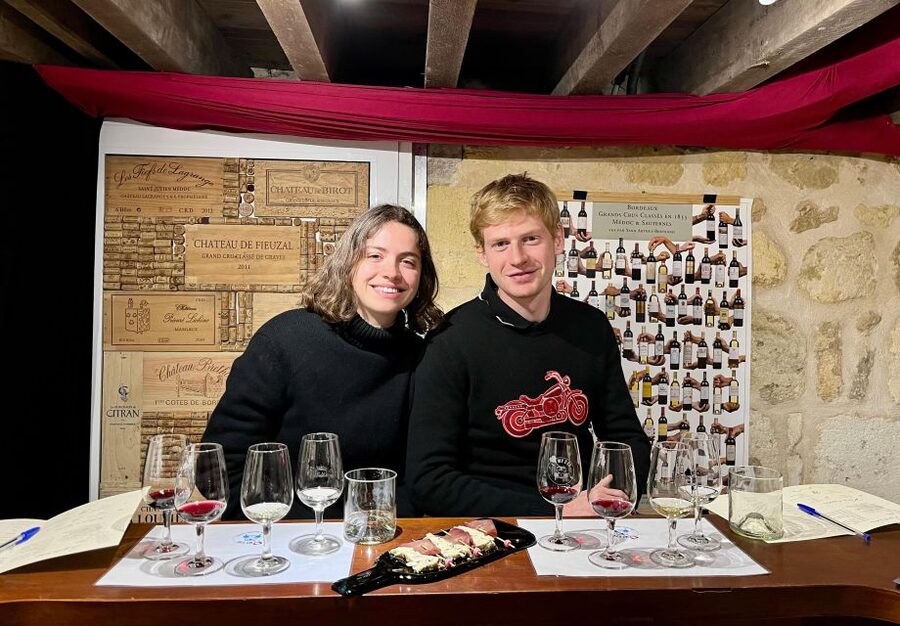
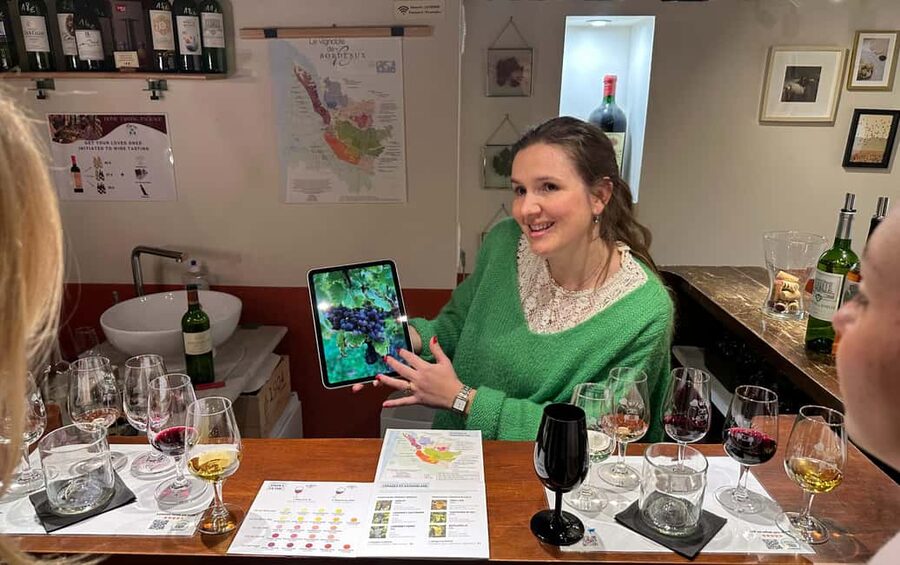
Bordeaux wine can feel like a code, but this one-hour class gives you the key. You’ll taste four reds and a mystery glass while learning why Médoc Cabernet Sauvignon can feel firm, why Saint-Émilion Merlot often feels rounder, and how blending, soil, and ageing change what’s in your glass. Cécilia and Mathilde keep the lesson friendly and conversational rather than turning it into a lecture.
I like the small group, limited to six people, because you can ask direct questions and spend more time tasting than waiting. I also like the practical pairing work: each wine comes with charcuterie, so you learn with your palate instead of memorizing grape names from a chart.
The main limitation is the short length. One hour gives you a clear introduction, not a full wine course, and this experience is not suitable for people with mobility impairments. Still, at $46 per person, it offers a useful and focused introduction to Bordeaux without the cost or travel time of a full-day vineyard trip.
Key points at a glance
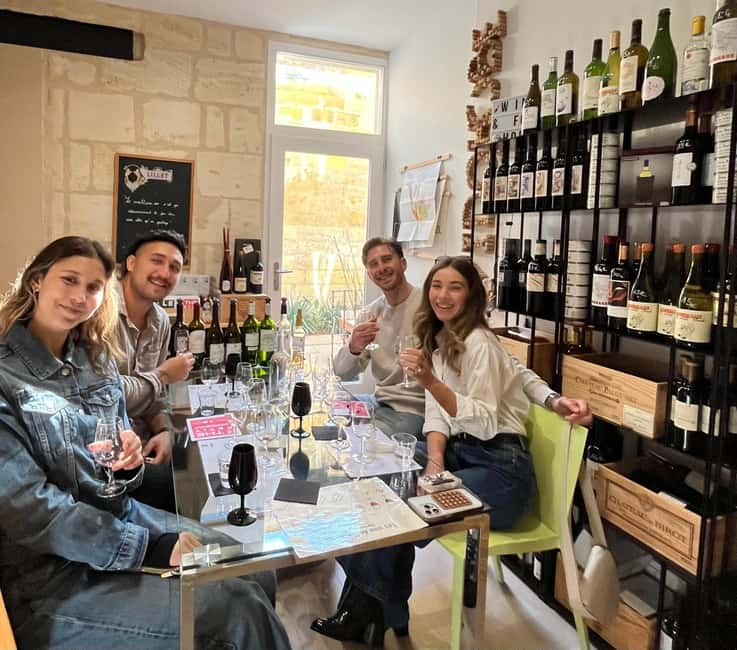
- Four Bordeaux reds plus a mystery glass: Taste different styles, including a mature wine that shows how Bordeaux changes with age.
- Left Bank and Right Bank explained: Compare Cabernet Sauvignon-led Médoc wines with softer Merlot-based Saint-Émilion styles.
- Aroma game included: Use a simple scent exercise to build confidence in describing what you smell.
- Charcuterie with every tasting: See how food changes the taste and feel of each wine.
- A booklet to take home: Keep the tasting method and Bordeaux notes handy after the class.
- A genuinely small setting: With no more than six participants, the format feels personal and easy to follow.
Why this Bordeaux class is worth your hour
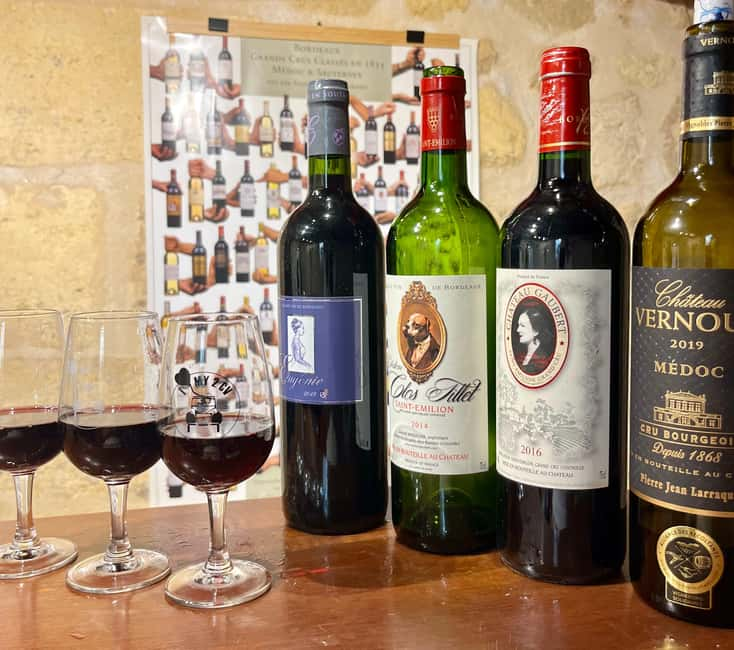
Bordeaux is famous, but fame does not always make its wines easy to understand. Labels can focus on the château or appellation instead of naming the grape, and the same bottle may contain several varieties. This class tackles that confusion in a useful order.
You start with the basic building blocks: grape variety, appellation, blend, terroir, winemaking, and ageing. Those terms can sound grand in a wine shop, but here they connect to what you actually taste. You learn to notice fruit, structure, texture, aroma, and length rather than simply deciding if you like a wine.
That approach suits beginners especially well. You do not need to know the difference between Médoc and Saint-Émilion before arriving. You only need curiosity and a willingness to taste several wines side by side.
Experienced wine drinkers can also get something from the class. The selection includes single-varietal wines, blends from family-run organic estates, prestigious Grand Crus, and a mature wine. The point is not to chase expensive labels. It is to compare choices and see how they shape the glass.
The atmosphere matters, too. The class may take place in a stone-built tasting room, a private courtyard, or an underground cellar, depending on the season. The setting changes, but the small-group format remains the same. A cellar can add a proper Bordeaux feel, while the courtyard may be more pleasant in good weather.
More Wine Tasting Tours in Bordeaux
- Bordeaux: Cité du Vin Entry Ticket and Wine Tasting
★ 4.6 · 3,885 reviews - From Bordeaux: Afternoon Saint-Emilion Wine Tasting & snack
★ 4.8 · 1,581 reviews - Medoc or Saint Emilion Wine Tasting and Chateau from Bordeaux
★ 5.0 · 1,415 reviews
Finding the tasting room near Stalingrad
The address is 25 Avenue Thiers in Bordeaux, about 100 meters from tram A’s Stalingrad stop. That makes this a city-based activity rather than a countryside excursion. You do not need to arrange a rental car, a winery transfer, or a long ride out of town.
The entrance can be easy to miss. The tasting room sits behind a building, and you should look for the Guy Hoquet panel. The correct entrance is the gray door beside it, marked by a bell labeled I ♥️ TASTING.
I would save those directions before setting out. They are simple once you know them, but a hidden entrance can cost you a few rushed minutes, especially if you are trying to arrive exactly on time.
The meeting point also makes this a practical choice for a first or last afternoon in Bordeaux. You can fit it around city sightseeing, and the hour-long length leaves room for dinner or another activity. Hotel pickup and drop-off are not included, so you make your own way to Avenue Thiers.
The first pour: learning how to taste
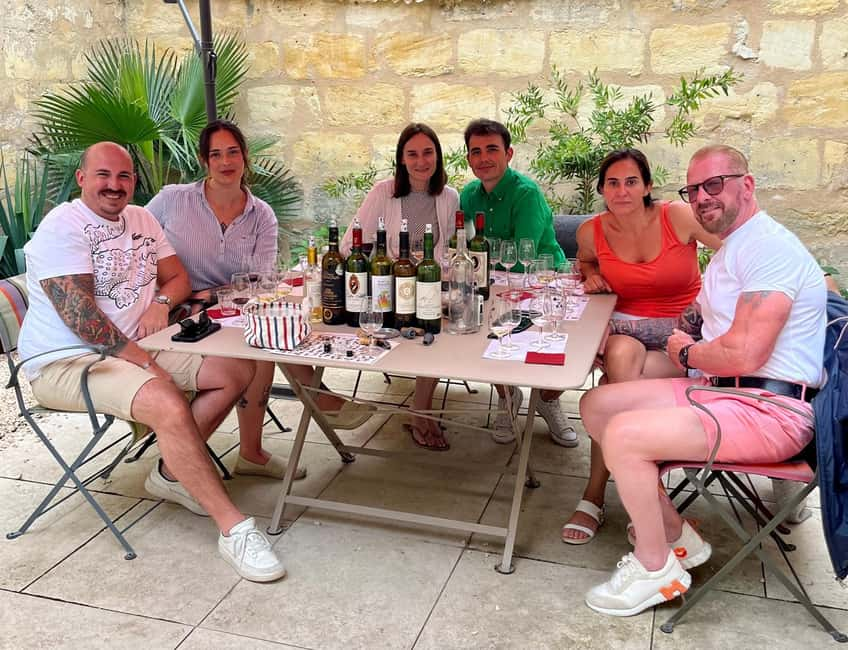
The class begins with a tasting method, not a test. You receive your own booklet, then work through the basic habits of looking, smelling, tasting, and describing wine. The goal is to give you a repeatable process you can use in a restaurant, shop, or vineyard later.
The aroma game is one of the most useful parts for anyone who feels unsure about wine language. You try to identify familiar scents and connect them to the wine in front of you. It is not about producing the perfect answer. It is about training your nose and learning that tasting notes are observations, not a competition.
This relaxed style has an important benefit. You can say a wine smells fruity, earthy, spicy, or simply pleasant without worrying about sounding like a professional. The class is meant to build confidence, and the guides, Cécilia and Mathilde, are trained wine specialists from the Université du Vin.
The teaching also stays social. Past participants have described the session as a conversation rather than a lecture, which is exactly the right format for a small tasting. You should have space to ask why one wine feels dry, why another seems smoother, or what food would work with a bottle you buy later.
Four reds, one mystery glass, and Bordeaux’s two banks
The central part of the class is a flight of four Bordeaux red wines, with one mystery glass added to test your growing instincts. The mystery wine gives the class a playful edge, but the real value is comparison.
You may taste a single-varietal Merlot beside a Cabernet Sauvignon, then compare those examples with Bordeaux blends. This helps you notice grape personality before the other elements complicate the picture. Merlot is often associated with softer fruit and a rounder feel. Cabernet Sauvignon tends to bring firmer structure, darker fruit, and stronger ageing potential.
The class also introduces the Left Bank and Right Bank distinction. On the Left Bank, areas such as Médoc are closely linked with Cabernet Sauvignon-led wines. On the Right Bank, Saint-Émilion is known for Merlot-forward styles. These are broad guides rather than rigid rules, but they give you a useful map for reading Bordeaux labels.
You also look at the role of blending. Bordeaux producers often combine varieties to balance fruit, tannin, acidity, body, and ageing ability. Tasting a blend after a single-varietal wine makes this easier to grasp. You can begin to ask not only what grape you prefer, but why a winemaker might combine several.
The selection includes wines from family organic estates as well as prestigious Grand Crus. That range matters because Bordeaux is not one single style or price level. You get a look at wines made with different goals, from accessible drinking to long-term cellaring.
One mature wine is included as well. This is a welcome detail because young Bordeaux can be dominated by tannin and structure. An older bottle lets you see how fruit, oak, and firmness can soften over time. It also helps explain why people save certain Bordeaux wines instead of opening them immediately.
More Wine Tasting Tours in France
- Saint Emilion Day Trip with Sightseeing Tour & Wine Tastings from Bordeaux
★ 5.0 · 1,120 reviews - Saint Emilion Half-Day Trip with Wine Tasting & Winery Visit from Bordeaux
★ 4.5 · 1,034 reviews - From Bordeaux: Half-Day Saint-Émilion Tour and Wine Tasting
★ 4.7 · 699 reviews - Saint-Emilion Electric Bike Day Tour with Wine Tastings & Lunch
★ 5.0 · 696 reviews
Charcuterie makes the lesson practical
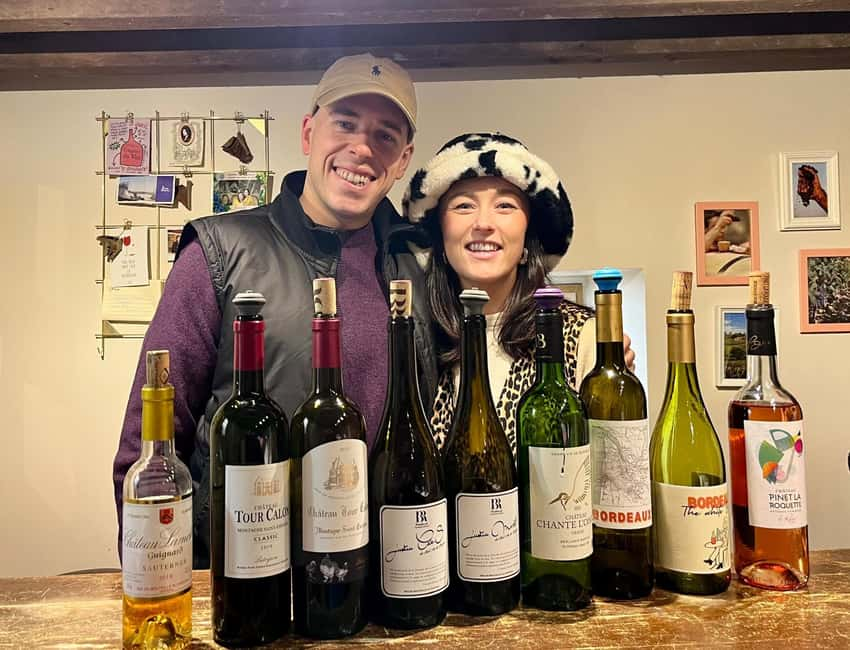
Each tasting comes with artisanal charcuterie chosen to suit the wine. This is more than a snack between pours. Food changes how you experience tannin, acidity, fruit, and alcohol, so pairing is one of the fastest ways to understand a wine’s behavior.
A firm red may feel gentler beside food, while a fruitier wine can seem more balanced with a savory bite. You will not simply be told which combination works. You get to taste the pairing and notice the difference yourself.
This is especially helpful if you plan to order Bordeaux with dinner during your stay. Wine advice can seem abstract until you have tried the same glass with and without food. The class gives you a small but useful set of reference points.
The charcuterie also keeps the hour from feeling too formal. You can talk, taste, and compare without treating the class like an exam. If you are new to red wine, having food alongside the pours makes the experience more comfortable.
The description does not specify the exact meats or portion size, so do not book this as a full meal. Think of the charcuterie as a thoughtful pairing course that supports the wine lesson.
Cécilia and Mathilde set the tone
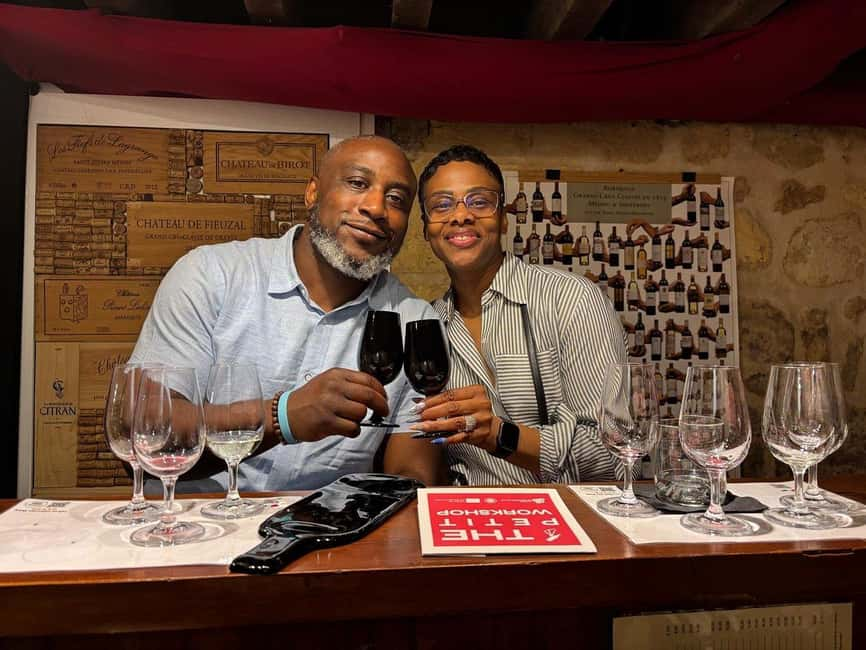
The guides are one of the strongest reasons to choose this experience. Cécilia and Mathilde are certified wine experts trained at the Université du Vin, and their role is not simply to pour glasses. They explain regional styles, answer questions, lead the aroma game, and connect technical ideas to what you taste.
Cécilia has received particular praise for her friendly manner and clear explanations. Mathilde is also described as warm, relaxed, and easy to talk with. That combination matters because a wine class can quickly become intimidating if the guide assumes too much knowledge.
You can expect the teaching to be informative without being stiff. The class has been described as creative and fun, with the host making people feel comfortable even when they are complete beginners. That is useful for couples or families with mixed wine experience, since one person can ask basic questions without slowing down the session.
If you are visiting Bordeaux for several days, ask for food and wine suggestions while you are there. The guide can help connect the lesson to the rest of your visit, and the small group allows for more personal conversation than a large tasting room usually provides.
What the $46 price really buys you
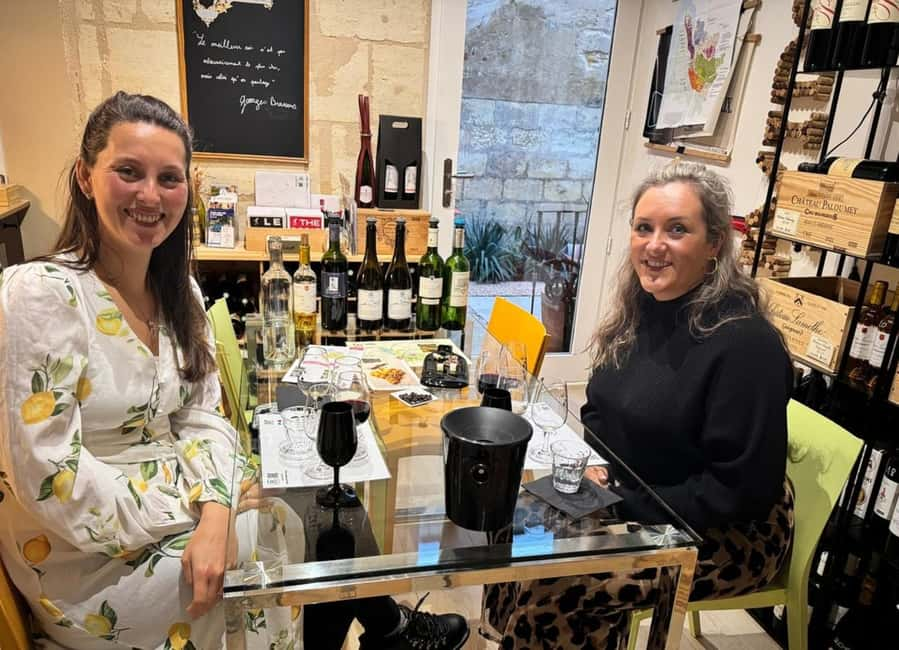
At $46, the class is not the cheapest way to drink wine in Bordeaux. You could buy a bottle and sample it at your accommodation for less. That would not give you four contrasting wines, a mystery glass, guided instruction, charcuterie pairings, an aroma exercise, or a booklet.
The price makes more sense if you value context. You are paying for a concentrated introduction to Bordeaux’s major ideas, presented by a trained guide in a small group. The one-hour format also protects your schedule. You get a focused lesson without committing half a day to transport and cellar visits.
A full-day trip to Médoc or Saint-Émilion can show you vineyards, villages, and estates. This class cannot replace that. It does something different: it gives you a framework that can make those later visits more meaningful. If you already plan to visit both wine regions, the class can help you understand the differences before you arrive.
The included booklet adds modest but real value. You can refer to it when shopping for wine or ordering at a restaurant, instead of trying to remember every term from the class.
Who should book it, and who should choose something else
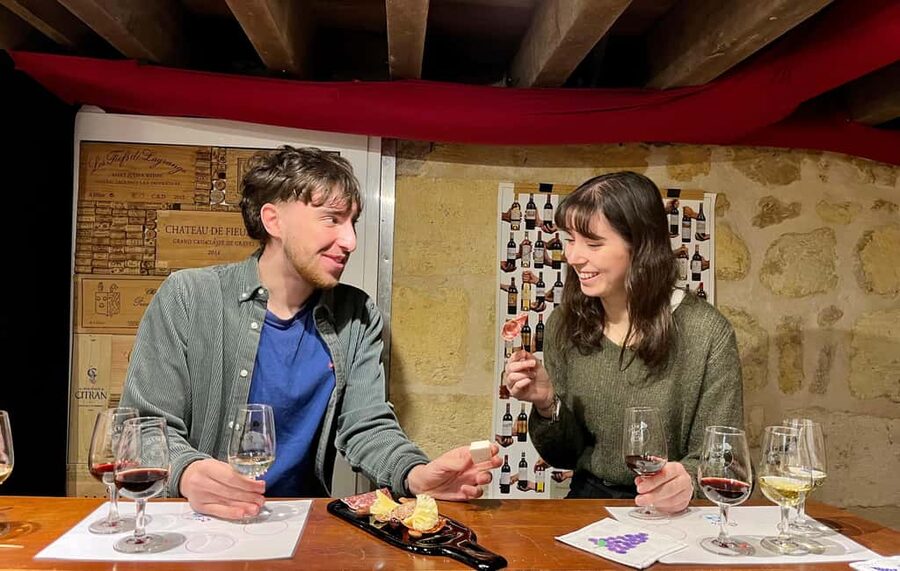
I would recommend this class to first-time Bordeaux visitors who want a clear introduction without a full-day excursion. It also suits wine drinkers who have tasted Bordeaux before but still find the labels and regional categories confusing.
Couples, solo visitors, and small groups should fit comfortably into the format. With a maximum of six participants, the session should feel more personal than a large commercial tasting. If you prefer quiet sightseeing and do not enjoy group conversation, the social nature may be less appealing.
The hour is ideal for a busy city break, but it is also the main constraint. You will learn the essentials, not every Bordeaux appellation or detailed winemaking technique. People seeking a long vineyard visit, estate tour, or extensive food menu should choose a different activity.
People who prefer white wine can be accommodated if they tell the provider ahead of time. A white Bordeaux tasting is available, but you should make that request in advance rather than assume the standard session will change on arrival.
The activity is not suitable for people with mobility impairments. The seasonal settings vary, and no hotel transport is provided, so plan your route to Avenue Thiers carefully.
My call: book it if you want understanding, not just wine
Book this tasting if you want to leave Bordeaux able to explain the basic difference between Left Bank and Right Bank wines, recognize the role of Merlot and Cabernet Sauvignon, and make smarter food pairings. The combination of four reds, one mystery glass, charcuterie, and a take-home booklet gives the hour real substance.
I especially like it as a companion to a separate Médoc or Saint-Émilion excursion. The class brings the regional ideas into one room, while a vineyard trip shows you where those wines come from.
Skip it if your main goal is scenery, château visits, or a long meal. Choose it if you want a friendly, compact lesson with plenty of tasting and direct access to Cécilia or Mathilde. For $46, it is a sensible way to turn Bordeaux wine from a famous name into something you can actually understand.
FAQ
Where does the Bordeaux wine tasting take place?
It takes place at 25 Avenue Thiers, 33100 Bordeaux, about 100 meters from tram A’s Stalingrad stop.
How do I find the entrance?
The tasting room is behind a building. Look for the Guy Hoquet panel, then use the gray door beside it. The bell is labeled I ♥️ TASTING.
How long does the experience last?
The class lasts one hour.
How many wines will I taste?
You will taste four Bordeaux red wines and one mystery glass.
Is food included?
Yes. Artisanal charcuterie is provided as part of the wine and food pairing.
Is a guide included?
Yes. The session has a live guide and may be led by Cécilia or Mathilde.
What languages are available?
The experience is offered in English, French, and Spanish.
Can I request white wine instead of red?
Yes. A white Bordeaux tasting can be arranged for people who prefer white wine, but you should notify the provider in advance.
More Workshops and Classes in Bordeaux
- Bordeaux Super Saver Wine Tasting class and St Emilion region
★ 5.0 · 184 reviews - Guided Bordeaux Wine Tasting Class with 6 Wines and pairings
★ 4.9 · 181 reviews - Bordeaux Wine Masterclass: Blending workshop with appetizer
★ 5.0 · 113 reviews - Rome: Pasta Making Class with Wine, Limoncello, and Dessert
★ 4.9 · 3,177 reviews
Just poured in Bordeaux
- Saint Emilion Full Day Wine and Bike Tour★ 5.0 · 167 reviews
- Professional – Bordeaux Wine and Cheese Tasting with a walking tour★ 5.0 · 218 reviews
- Medoc Afternoon Wine Tour – 2 Wineries, tastings & delicacies★ 4.5 · 74 reviews
- Discovery of the Bordeaux vineyard in 3 wines★ 5.0 · 133 reviews
- Bordeaux Wine and Trade Museum Admission Ticket with Wine Tasting★ 4.5 · 599 reviews
- Bordeaux Wine Masterclass: Blending workshop with appetizer★ 5.0 · 113 reviews
- Essential Wine Tour with Tasting & Chateau Visits from Bordeaux★ 5.0 · 133 reviews
- Saint-Emilion Small-Group Electric Bike Wine Tour Tastings & Lunch from Bordeaux★ 5.0 · 383 reviews
Wine Tasting Tours, compared.
Douro Valley w/ Boat Tour, Wine Tasting & Lunch
Read our review →
Complete Douro Valley Wine Tour with Lunch, Wine Tastings and River Cruise
Read our review →

Small-Group Wine Tasting Experience in the Tuscan Countryside
Read our review →
Montserrat & Cogwheel Train, Gourmet Wine Tasting & Tapas/Lunch
Read our review →
Tuscany & Montepulciano Day Trip with Lunch & Wine Tasting
Read our review →Browse the lists this tour appears in